Every June, older Australians from Victoria, South Australia and New South Wales quietly relocate themselves northward, chasing the dry season. This guide maps the main winter-sun corridors — Queensland's coasts, Western Australia's Kimberley and Coral Coast, and the Northern Territory's Top End — comparing flight times, indicative costs and on-the-ground character so you can decide which suits your pace and budget.
Why Southern Australians Head North in Winter
Melbourne's July average top sits around 13 degrees. Adelaide is not much warmer. Sydney is milder but grey and damp for long stretches. By contrast, Darwin, Broome, Cairns and the Gold Coast are all running daytime temperatures in the mid-to-high twenties through June, July and August, with low humidity in the northern destinations and reliable sunshine along Queensland's east coast. For travellers in their sixties and seventies, that temperature gap is reason enough.
The timing also lines up well with the practical realities of later life. School-holiday crowds are largely absent through June and early July in the northern and western destinations, prices are often more predictable than in peak summer, and the physical demands of sightseeing are easier to manage when you are not sweating through a tropical wet season or a Queensland summer. The dry season in the Top End and Kimberley is genuinely one of Australia's great travel windows.
This guide does not attempt to cover every Queensland beach town or every Kimberley station — there are dedicated articles in this series for both Queensland's Sunshine and Gold Coasts and for Western Australia's Broome and Ningaloo that go into much greater depth. What this guide does is sit one level above: it compares the main destinations side by side so you can make a considered choice before you read deeper.
Queensland's Sunshine Coast and Gold Coast: The Reliable Choice
The Gold Coast and Sunshine Coast are the default winter escape for many older Victorians, and there are good reasons for that. Flights are frequent, short — around two to two-and-a-half hours from Melbourne — and competitively priced. Accommodation ranges from budget motels to well-serviced apartments suited to longer stays of two to four weeks. Public transport, particularly the Gold Coast light rail (G:link) and TransLink buses, means you do not have to hire a car unless you want one.
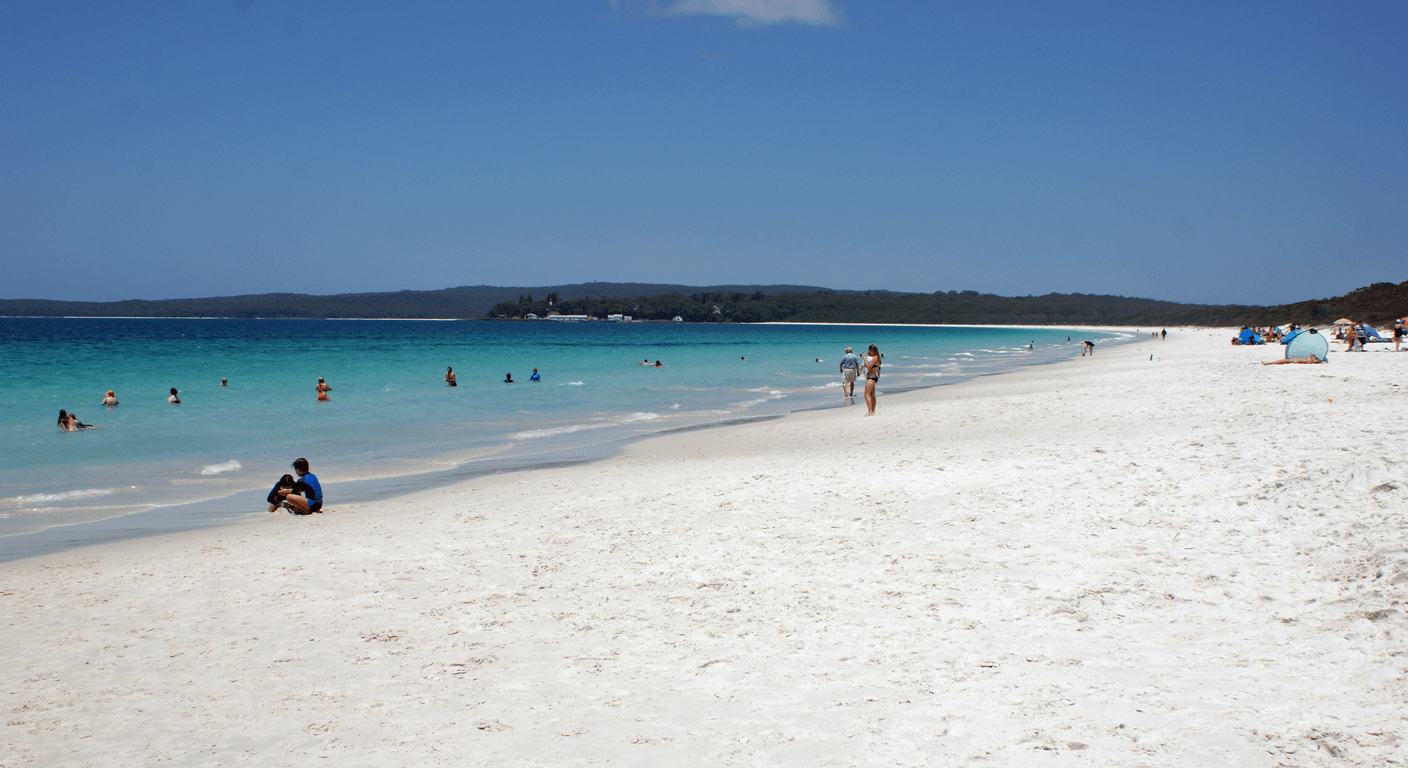
The Gold Coast suits travellers who want a mix of beach, dining and easy day trips, with the northern end of the coast around Broadbeach and Burleigh Heads generally quieter and more walkable than Surfers Paradise. The Sunshine Coast — Noosa in particular — has a slower pace, better suited to those who want to read, walk coastal paths and eat well without feeling they are in the middle of a theme-park precinct. Noosa's main street is flat and manageable; the national park headland walk is moderately graded and rewards the effort.
Indicative return airfares from Melbourne run roughly $300 to $600 depending on how far ahead you book and which carrier you choose — confirm current prices before planning a budget. From Adelaide, add around an hour to the flight time and expect fares in a broadly similar range. From Sydney, the Gold Coast is under an hour and often cheaper. For deeper coverage of both Queensland coasts, refer to the dedicated Queensland articles in this series.
Western Australia's Broome: The Kimberley Gateway
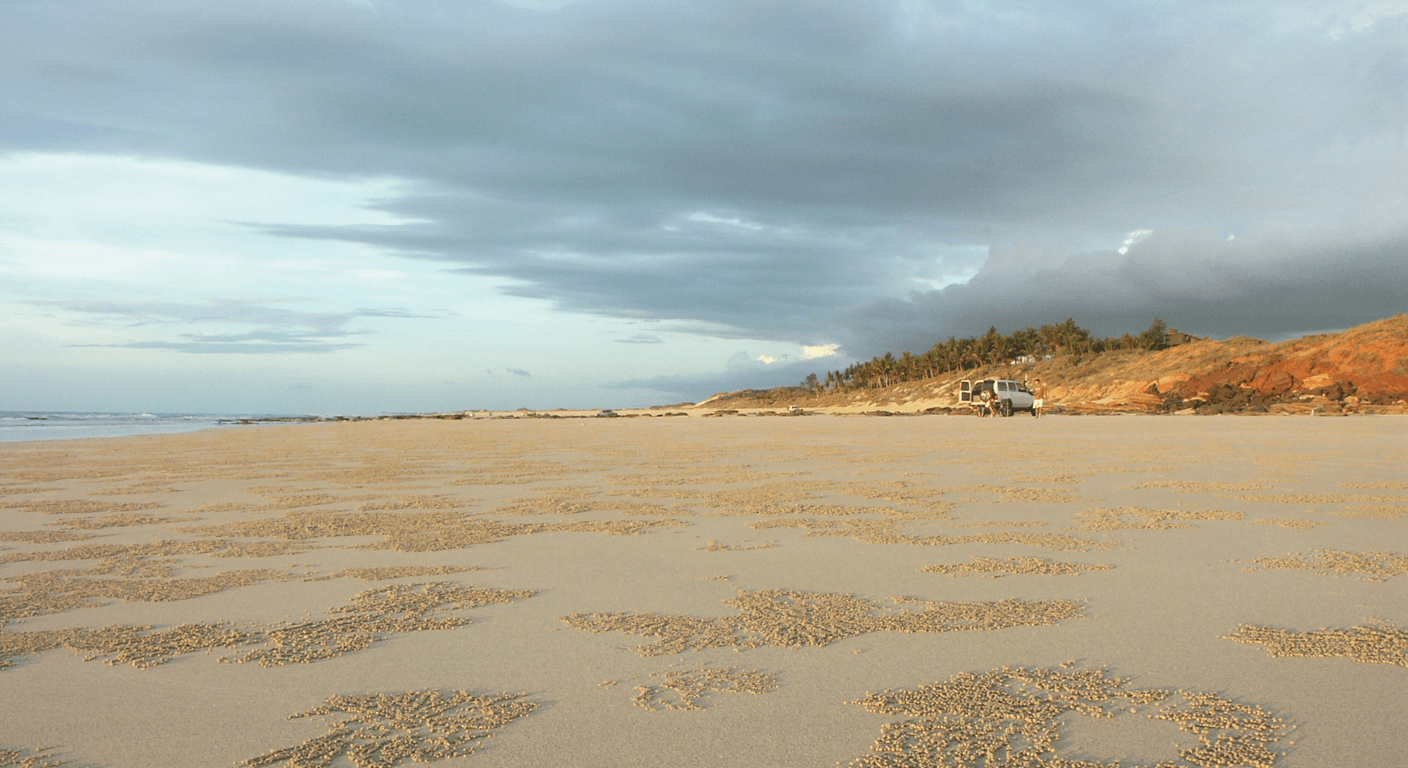
Broome sits at the edge of the Kimberley, roughly 2,240 kilometres north of Perth, and in July it is about as good as Australian winter travel gets. Days are warm and dry — around 29 to 30 degrees — evenings are cool enough for a light jacket, and the light on Cable Beach in the late afternoon has a quality that makes even a mediocre photograph look considered. The town itself is small enough to walk or cycle most of it, with Chinatown's pearl shops and restaurants, the Sun Pictures open-air cinema (the world's oldest operating outdoor cinema), and the foreshore all within easy reach of each other.
Getting there from Melbourne has become more straightforward. Qantas and Virgin both operate direct flights on some days, with travel time around four to four-and-a-half hours; on other schedules you connect through Perth, adding transit time. From Adelaide, most routes still connect through Perth. From Sydney, direct options exist but are less frequent — check current schedules on the airline websites. Indicative return fares from Melbourne range from around $600 to $1,000 or more depending on season and booking window; confirm current prices.
Mobility considerations are worth noting honestly. Cable Beach itself is accessible, with firm sand near the water's edge and a car park close to the beach. However, many of the Kimberley's signature experiences — gorge walks, boat tours on the Horizontal Falls, four-wheel-drive tracks — involve uneven terrain and physical demands that vary considerably. There are operators who run day tours from Broome that require nothing more than the ability to board a small aircraft or a boat. For the full Broome and Kimberley deep-dive, refer to the dedicated Western Australia article in this series.
Western Australia's Ningaloo Reef: The Quieter Coral Coast
Ningaloo sits around 1,200 kilometres north of Perth, centred on the small towns of Exmouth and Coral Bay. It is considerably less well-known internationally than the Great Barrier Reef, which is part of its appeal. The reef runs close to shore — in places you can wade in from the beach and be snorkelling within minutes — and the marine life includes whale sharks (April to July), manta rays year-round, and turtles nesting on the beaches through summer into autumn.
The practical challenge with Ningaloo is access. There is no direct flight from Melbourne or Adelaide to Exmouth; the standard route goes Melbourne or Adelaide to Perth, then a connecting flight to Learmonth Airport, which is about 35 kilometres from Exmouth. Total travel time from Melbourne door-to-door runs to around eight to ten hours depending on connections. Hire car is near-essential once you arrive; the town centres are manageable on foot but the reef access points and attractions are spread across a long stretch of coast.
For over-60s who do not snorkel or who have mobility limitations in the water, Ningaloo is still worth considering — glass-bottom boat tours operate from Coral Bay, whale watching is done from vessels, and the landscape itself, with red Outback country meeting a turquoise sea, is genuinely distinctive. Indicative return fares from Melbourne to Learmonth via Perth run roughly $700 to $1,200 depending on timing; confirm current prices. Accommodation in Exmouth and Coral Bay ranges from caravan parks and self-contained apartments to a small number of mid-range resorts.
The Northern Territory's Top End: Darwin and Beyond
Darwin in the dry season — roughly May to October — is a different city to the sweaty, storm-prone place visitors encounter in the wet. Temperatures sit around 30 to 32 degrees, humidity drops markedly, and the outdoor culture of the city comes fully alive. The Mindil Beach Sunset Market (Thursday and Sunday evenings from April to October) is the social heart of the season, drawing a mix of locals and visitors to eat, browse and watch the sun go down over the Timor Sea. The city's waterfront precinct is flat, well-maintained and easy to navigate at a gentle pace.
Darwin is also the base for two of Australia's genuinely significant natural and cultural destinations: Kakadu National Park and Litchfield National Park. Kakadu, a UNESCO World Heritage site, requires at minimum two days to do it any justice and is best explored with a guide who can provide context for the rock art and the Bininj and Mungguy cultural significance of the country. Litchfield, about 90 minutes south of Darwin, is more compact and includes a series of waterfalls and swimming holes that are accessible and well-maintained. Parks Victoria has no jurisdiction here — information on both parks is through the federal Department of Climate Change, Energy, the Environment and Water and through Tourism NT.
Flight times from Melbourne to Darwin run around four to four-and-a-half hours direct; Qantas and Virgin both operate the route. From Adelaide it is around three hours. From Sydney, roughly four hours. Indicative return fares from Melbourne sit in the range of $500 to $900 depending on timing and carrier; confirm current prices. Darwin itself is a manageable size for older solo travellers — the central business district is compact, taxis and rideshare are available, and the city has a relaxed, unhurried character that suits a slower pace of travel.
How Do These Destinations Compare on Cost and Effort?
As a rough framework for planning purposes: Queensland's coasts are the easiest and cheapest to reach from Victoria and South Australia, with the most infrastructure for longer independent stays. They suit travellers who want simplicity and reliability. Broome and Ningaloo require more planning, longer flights or connections, and a hire car, but deliver a sense of remoteness and natural distinctiveness that the east coast cannot match. The Top End sits somewhere between the two — Darwin is a proper city with good amenities, but the national parks require either a guided tour or confident self-driving.
Accommodation costs vary considerably. Darwin and the Gold Coast both have a wide range of self-contained apartment options well-suited to stays of two weeks or more, which brings the nightly effective cost down. Broome has a smaller accommodation stock and can be tight on availability through peak July; booking three to four months ahead is sensible. Ningaloo's Exmouth has expanded its accommodation base in recent years but remains limited compared to the east coast.
For travellers on a fixed income or a careful budget, the Gold Coast or Sunshine Coast remains the most cost-effective winter escape, particularly for stays of ten days or more where apartment cooking reduces dining costs. For those who prioritise experience over economy and have the physical confidence for some outdoor activity, Broome and the Top End offer something genuinely different from the standard Australian beach holiday. Neither is more 'correct' — the right destination depends entirely on what kind of traveller you are.
Practical Notes for Solo Travellers Over 60
Solo travel in your late sixties to mid-seventies in Australia is, by most practical measures, straightforward. Domestic flights require no special documentation beyond standard ID. Travel insurance becomes more important — not less — as you get older, and premiums for over-60s can vary significantly between providers, so it is worth comparing policies specifically for pre-existing conditions. The Australian Government's Smartraveller website (smartraveller.gov.au) is the right reference for insurance guidance, even for domestic trips if they extend to international connections.
For the northern and western destinations in particular, a few practical habits reduce friction. Booking accommodation and any guided tours before you leave gives you more choices and avoids arriving in Broome in July to find Cable Beach accommodation fully committed. Carrying a basic medical kit and knowing the location of the nearest hospital is sensible in remote areas — Darwin Hospital is a major facility, but Exmouth's medical services are limited. Staying hydrated in dry-heat conditions is more important than many travellers realise; the low humidity of the Kimberley and the Top End makes it easy to underestimate fluid loss.
Connectivity varies. Darwin and the Gold Coast have reliable mobile coverage. Broome's town centre is fine, but coverage drops quickly on Kimberley tracks. Ningaloo's Coral Bay has reasonable coverage; remote reef access points may not. If you rely on a phone for navigation, medical alerts or staying in contact with family, factor connectivity into your planning. A satellite communicator hire is worth considering for any self-drive itinerary that takes you off sealed roads in WA or the NT.
Key takeaways
- Queensland's Sunshine Coast and Gold Coast are the easiest and cheapest winter-sun escape from Melbourne, Adelaide and Sydney, with flights under two-and-a-half hours and strong public transport on the ground.
- Broome in July offers warm dry days, a small walkable town centre and Cable Beach, but requires either a direct flight (now available some days from Melbourne) or a Perth connection.
- Ningaloo Reef's proximity to shore makes it accessible for snorkelling without a boat, but reaching Exmouth requires a Perth connection and a hire car is near-essential.
- Darwin's dry season runs May to October, with the city itself compact and manageable, and Kakadu and Litchfield national parks within day-trip or overnight range.
- Accommodation books out early in Broome for July — three to four months ahead is a practical minimum for peak dry-season travel.
- Travel insurance for pre-existing conditions is essential for all these trips and premiums vary widely; compare policies before booking, not after.
Recommended partners and links
Indicative prices only — always confirm with the operator before booking.
Frequently asked questions
What is the warmest Australian destination to visit in winter from Melbourne?
Darwin, Broome and Cairns all offer daytime temperatures around 29 to 32 degrees through June and July. Darwin and Broome have very low humidity in the dry season, making the heat more comfortable. The Gold Coast is slightly cooler at around 21 to 23 degrees but reliably sunny and less humid than a Queensland summer.
How long is the flight from Melbourne to Broome?
Direct flights from Melbourne to Broome take around four to four-and-a-half hours. Not all schedules are direct; some route through Perth, which adds transit time. Check current schedules with Qantas or Virgin Australia before planning your itinerary.
Is Ningaloo Reef suitable for older travellers who do not snorkel?
Yes. Glass-bottom boat tours operate from Coral Bay and do not require any swimming. Whale watching tours run from April to July and are conducted from vessels. The landscape itself — red Outback country meeting a turquoise coast — is distinctive and rewarding without entering the water.
Do you need a hire car in Darwin?
Darwin's city centre and waterfront are walkable and taxis and rideshare are available. However, to reach Litchfield National Park (about 90 minutes south) or Kakadu (about three hours east), you either need a hire car or a guided tour. For most older travellers, a guided day or overnight tour is a practical alternative to self-driving in unfamiliar territory.
When is the best time for over-50s to visit the Northern Territory and Broome?
June and July are the peak months for comfort and accessibility in both destinations. The dry season runs roughly May to October, but May and September offer slightly lower visitor numbers while still delivering reliable dry weather. August is busy and accommodation prices in Broome in particular reflect that.
Got a tip, a price update or a story from this route? The community would love to hear it.
Share your views on our Facebook page— Seniors and Solo Traveller Stories
- Tourism NT – Plan Your Trip to the Northern Territory
- Tourism Australia – Destination Information
- Tourism Western Australia – Broome and the Kimberley
- Visit Victoria – Interstate Travel Planning
- Australian Government Smartraveller – Travel Insurance Guidance
- PTV – Public Transport Victoria (for pre-trip planning context)
- Qantas – Domestic Flight Routes and Schedules
- Virgin Australia – Domestic Routes