Jervis Bay on the NSW South Coast delivers white sand and calm, blue water without a long-haul flight or a complicated itinerary. For travellers in their 60s and early 70s, it offers a rare combination of easy access, genuine natural beauty, and a relaxed pace that suits a group of friends who want something special without something stressful. Hyams Beach, Booderee National Park, and the little town of Huskisson give you plenty to do across three or four comfortable days.
Why Jervis Bay works so well for a group of friends in their 60s
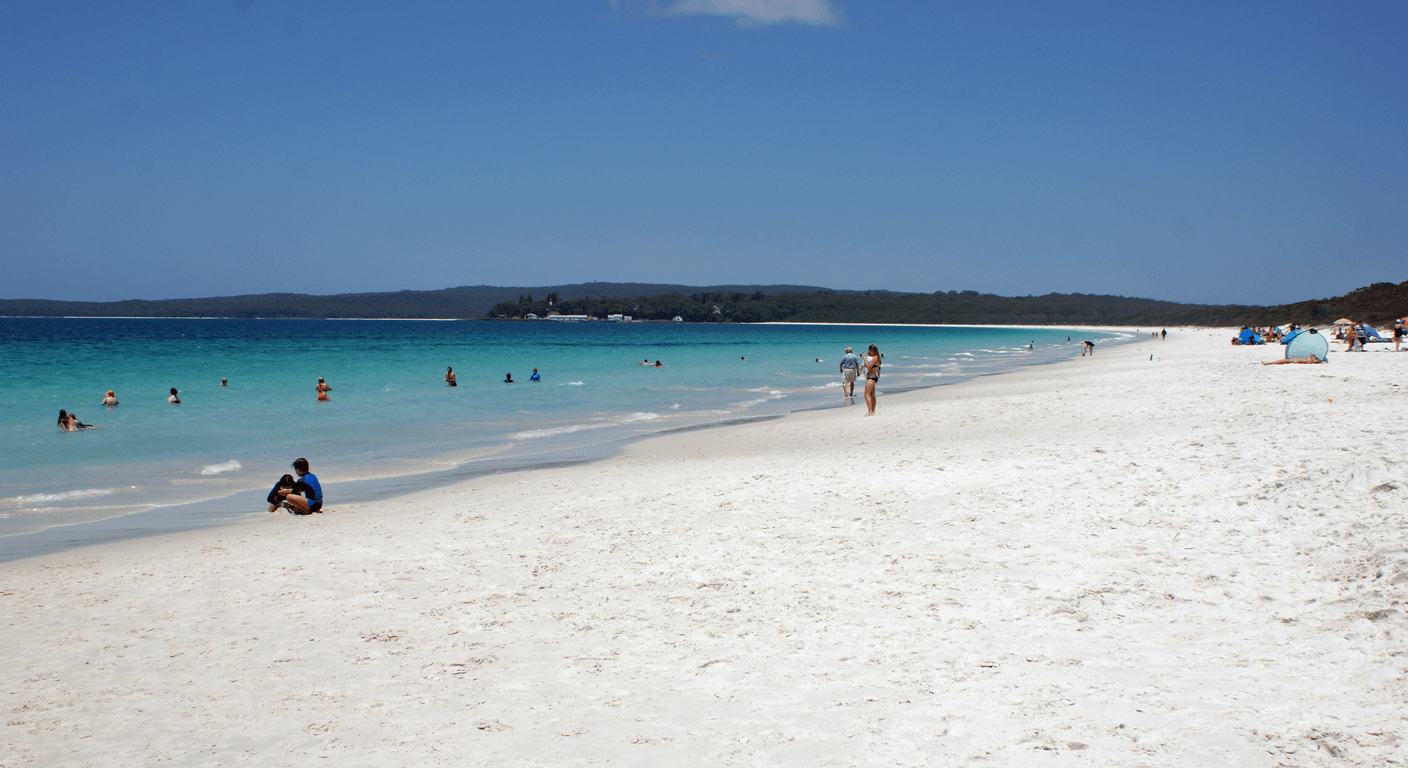
There is a particular pleasure in finding somewhere that looks as though it belongs in a travel magazine but does not require the effort of one. Jervis Bay is exactly that. The water is a clear, deep blue — the kind you associate with somewhere far more exotic — and Hyams Beach holds a Guinness World Record for some of the whitest sand on the planet. None of that requires a long-haul flight, a visa, or a stomach for jet lag.
For a group of women travelling together, the appeal goes beyond the scenery. Huskisson, the main town on the bay, is small enough to feel safe and unhurried but has decent restaurants, a supermarket, and enough accommodation variety to suit different budgets. The pace is gentle by design. Nobody is rushing you, and the natural setting does the work of entertaining you.
The area also has an understated cultural depth worth knowing about. Booderee National Park is jointly managed by the Wreck Bay Aboriginal Community and Parks Australia. Spending time there is not just a walk in a pretty park — it is an encounter with Country that has been cared for across generations. That context adds something real to the experience.
Getting there from Victoria: what are your realistic options?
From regional Victoria, the most practical route is to drive or take the train to Sydney or Canberra first, then continue to Jervis Bay. Direct driving from Melbourne to Huskisson is roughly 900 kilometres and will take the better part of a full day, so most travellers break the journey. Stopping overnight in Goulburn or Nowra on the way is a sensible option and avoids arriving tired.
From Sydney, Huskisson sits around 200 kilometres south. The drive down the Princes Highway and then through Nowra is straightforward on sealed roads and takes roughly two and a half to three hours. If you prefer not to drive, Transport NSW operates coach services from Sydney's Circular Quay and Central Station to Nowra, from where local taxis or a hire car can get you to Huskisson. Check current timetables and fares at transportnsw.info before you plan.
From Canberra, the distance is shorter — around 150 kilometres — and the drive through Bungendore and down to the coast is genuinely lovely. For a group sharing a hire car out of Canberra Airport, this can be a very tidy way to combine a city stay with coastal time. It also means you could fly from Melbourne to Canberra and avoid the long drive entirely, which is worth factoring in if anyone in the group has mobility considerations around long car trips.
Hyams Beach and the white sand: what is it actually like to visit?
The sand at Hyams Beach is genuinely extraordinary — fine, bright white, and cool underfoot even on warm days. The beach itself is not enormous, which means it can feel crowded on summer weekends and school holidays. If you are travelling in a group, aim for a weekday visit or travel in the shoulder seasons of April through May or September through October, when the bay is calmer and the crowds are thinner.
Access to the beach is easy for most travellers. There is a car park close to the sand, a short flat path to the waterline, and public toilets nearby. The water is calm and protected, which makes it comfortable for a swim even if you are not a strong swimmer. There are no surf breaks here — the bay faces east and is sheltered, so the conditions are gentle almost year-round.
A few practical notes for the group: the town of Hyams Beach has a small general store and a cafe, but it is not a full-service town. Stock up in Huskisson, which is about 10 kilometres away, before you head out. Mobile coverage can be patchy in parts of the bay area, so download maps offline before you leave Huskisson.
Booderee National Park: which walks are accessible and which are not?
Booderee National Park covers the southern headland of Jervis Bay and is one of only two places in Australia where land, sea, and botanic garden are all protected under the one national park umbrella. Entry requires a fee paid at the park gate; confirm current rates at parksaustralia.gov.au/booderee before you visit, as fees are reviewed periodically.
For walkers who want a gentle experience, the Green Patch Beach area is the most accessible part of the park. The beach here is flat and easy to reach from the car park, and the surrounding bushland has short, well-maintained paths suitable for most fitness levels. Cave Beach is another option — it has a longer walk in from the car park (roughly 20 minutes each way on a formed path) and is worth it for the sense of seclusion. Both beaches are 2WD accessible.
Some of the more remote areas of the park, including parts of the interior and a handful of the southern beaches, require a 4WD vehicle or a longer walk than most travellers in this age group would want to attempt without preparation. The park map, available at the entrance gate and on the Parks Australia website, marks accessibility clearly. If anyone in the group uses a walking aid, stick to Green Patch and the botanic garden area, which has flat, sealed paths.
Dolphin-watching cruises and on-water experiences
Jervis Bay has a resident pod of bottlenose dolphins that are reliably seen throughout the year, which makes a cruise here a more dependable experience than many wildlife encounters. Operators run morning and afternoon trips from Huskisson Wharf, and the bay's calm, protected water means the ride is comfortable even for those who are not keen sailors.
Jervis Bay Wild is one of the established operators running wildlife cruises from Huskisson. Their boats are modest in size, which means you are not on a crowded tourist ferry — you are close to the water and close to any wildlife that appears. Between June and November, humpback and southern right whales pass through on migration, and sightings are common. Indicative cruise prices are in the range of $40 to $80 per person, but confirm current pricing directly with the operator before booking.
For those who prefer to stay dry, the Huskisson Wharf area is a pleasant place to sit and watch the bay from the shore. The water is clear enough that on calm days you can sometimes see dolphins from the jetty without getting on a boat at all. If anyone in the group has balance concerns or is uncomfortable on small vessels, this is a perfectly good alternative.
Huskisson: where to eat, stay, and spend a slow afternoon
Huskisson is the kind of town that rewards slow movement. The main street, Owen Street, has a cluster of cafes, a good fish and chip shop, a few gift shops, and the Huskisson Hotel, which does reliable pub meals with a view of the water. For a group who wants fresh seafood without fuss, the fish and chip options near the wharf are consistently popular and represent good value — indicative prices for a serve are roughly in the $15 to $25 range, but confirm current pricing locally.
Accommodation in Huskisson runs from budget motel rooms to self-contained holiday houses. For a group of friends, a holiday house with a shared kitchen and living space often works out more economical than separate motel rooms and gives you somewhere to sit together in the evening without needing to go out. Indicative nightly rates for a three-bedroom house in shoulder season start at around $300 to $500 per night, though this varies considerably by season and availability — use platforms like Stayz or direct contact with local accommodation providers, and verify current rates.
The town also has the Jervis Bay Maritime Museum on the waterfront, which is small but genuinely interesting, particularly for anyone curious about the bay's history as a proposed federal territory and its naval connections. Entry is modest — confirm current admission at the museum directly. It is a good option for a slower afternoon or if the weather turns.
Honest notes on 2WD access, mobility, and pacing the trip
The good news for travellers in a standard hire car or their own 2WD vehicle is that the highlights of Jervis Bay — Hyams Beach, Green Patch, Huskisson Wharf, and the main Booderee entry areas — are all accessible on sealed or well-maintained gravel roads. You do not need a 4WD to have a full and satisfying experience here. The 4WD-only areas are the remote southern beaches inside the park, which require beach driving permits and experience. For a group trip focused on scenery, swimming, and food, there is no reason to go near those areas.
Pacing matters on a trip like this. Three full days in the area is comfortable — one day at Hyams Beach and Huskisson, one day in Booderee, and one day for a cruise and a slow afternoon in town. Four days allows you to go at a more relaxed pace, revisit a beach you loved, or do a short drive to nearby Nowra for a change of scene. Nowra has a good regional hospital if anyone has health considerations that make proximity to medical services a priority.
For anyone in the group with significant mobility limitations, it is worth calling ahead to accommodation providers to ask specifically about step-free entry, bathroom configurations, and parking proximity. The same applies to cruise operators — ask about boarding arrangements before you book. Most operators are accustomed to these questions and will give you a straight answer.
Key takeaways
- Hyams Beach holds a Guinness World Record for some of the whitest sand on the planet and is accessible by standard 2WD vehicle.
- Booderee National Park's Green Patch and Cave Beach areas suit most over-50 walkers, with flat paths and easy car park access.
- Jervis Bay's resident bottlenose dolphin pod means wildlife cruise sightings are reliable year-round, not just seasonal.
- From Canberra, Huskisson is roughly 150 kilometres — a short enough drive to make a fly-drive itinerary from Melbourne very practical.
- The 4WD-only beaches inside Booderee are not necessary to visit; the best accessible spots are all on sealed or well-maintained roads.
- A three-to-four day stay covers the highlights at a comfortable pace for a group travelling together.
Recommended partners and links
Indicative prices only — always confirm with the operator before booking.
Frequently asked questions
Is Hyams Beach suitable for older travellers with limited mobility?
Yes, for most mobility levels. The car park is close to the sand, the path to the waterline is short and flat, and the water is calm and sheltered. Public toilets are available nearby. Travellers who use a walking frame or wheelchair should note that the sand itself is soft and may be difficult to cross; a companion or beach wheelchair would help.
Do you need a 4WD to visit Jervis Bay and Booderee National Park?
No. The main visitor areas — Hyams Beach, Green Patch, Cave Beach, and the Booderee Botanic Gardens — are all accessible in a standard 2WD vehicle on sealed or well-maintained roads. A 4WD is only needed for remote southern beaches within the park, which most visitors do not need to access.
How do you get to Huskisson from Sydney without a car?
Transport NSW operates coach services from Sydney's Central Station and Circular Quay to Nowra. From Nowra, you can take a taxi or a pre-arranged hire car to Huskisson, which is roughly 35 kilometres east. Check current timetables and fares at transportnsw.info before you travel.
When is the best time of year to visit Jervis Bay as a senior traveller?
The shoulder seasons of April to May and September to October offer the most comfortable conditions — fewer crowds than summer school holidays, mild temperatures, and settled weather. Whale watching is best from June through November. Summer (December to February) is warm and busy, particularly on weekends.
Is there an entry fee for Booderee National Park, and how do you pay it?
Yes, an entry fee applies at the park gate. It is paid on arrival and covers the duration of your stay. Fees are reviewed periodically, so confirm the current rate at parksaustralia.gov.au/booderee before you visit. The park is open daily and does not generally require advance booking for day visits, though this may change for peak periods.
Got a tip, a price update or a story from this route? The community would love to hear it.
Share your views on our Facebook page— Seniors and Solo Traveller Stories