Uluru sits at the spiritual and geographical heart of Australia, and for travellers in their 60s and 70s, it delivers something rare: a place that genuinely earns its reputation. This guide covers the practical reality of visiting the Red Centre as an older solo traveller — what the walking options actually feel like underfoot, where to sit and watch the light change on the rock, and how to budget honestly for a destination that is remote and priced accordingly.
Why Uluru works well for travellers over 50
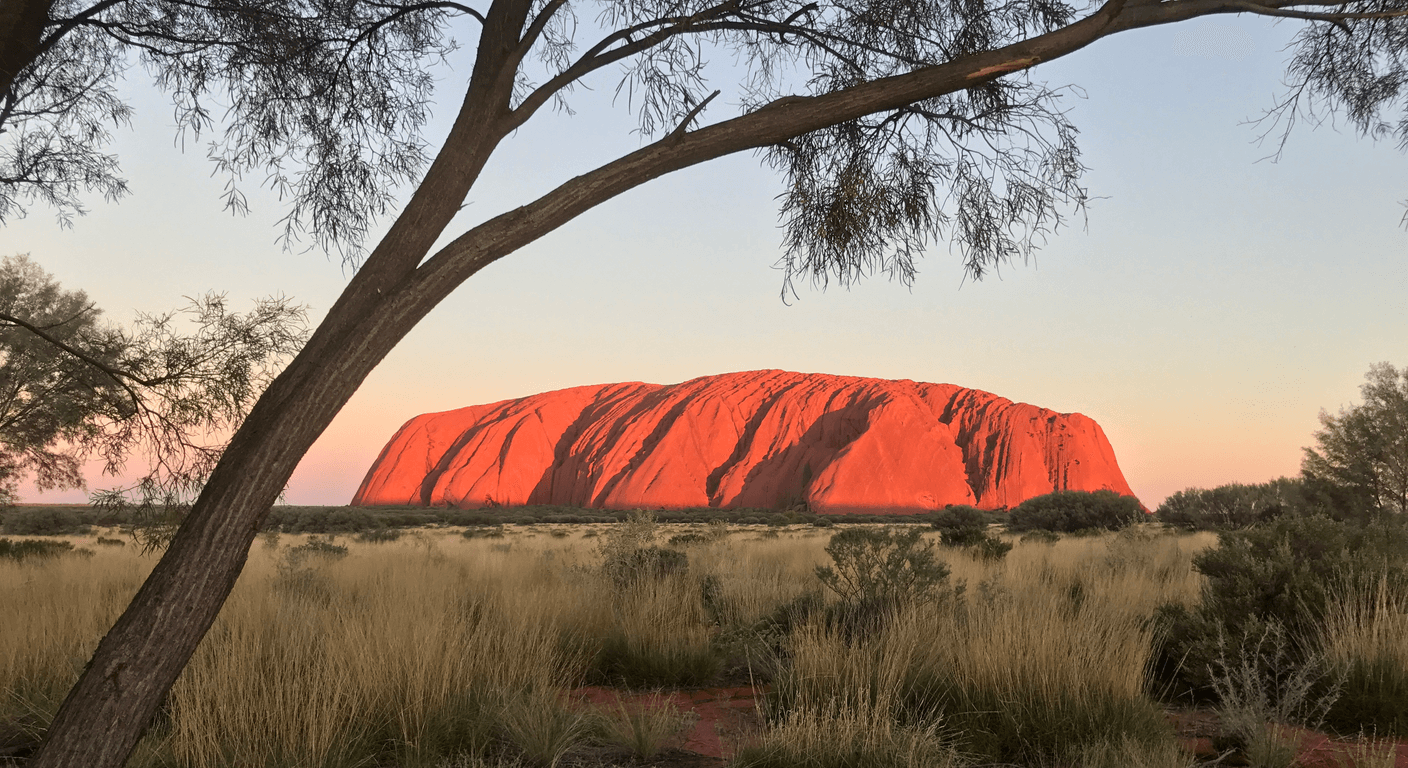
There is a particular kind of travel that suits people who have seen enough of the world to know the difference between a place that photographs well and a place that actually changes you. Uluru is the latter. The rock itself — 348 metres high, 9.4 kilometres around its base — shifts colour through the day in ways that no image quite captures. At dawn it can appear almost purple. By late afternoon it glows a deep ochre-orange that seems to come from within. Sitting quietly in front of it, with a cup of tea and no particular agenda, is one of the more satisfying things you can do in this country.
For older solo travellers, and particularly women travelling alone, Uluru has a practical advantage that is easy to underestimate: it is a contained, well-managed destination. Yulara, the resort township that serves as the only accommodation base, is safe, walkable within its own footprint, and designed around a relatively small number of experiences done well. You are not navigating a sprawling city or managing complex logistics. The guided tours are genuinely good. The other travellers tend to be older, curious, and unhurried. It is a place where solo does not feel like a disadvantage.
The spiritual significance of Uluru to the Anangu traditional owners is central to the experience, not incidental to it. Since the climbing of the rock was permanently closed in October 2019, the focus has shifted entirely to cultural engagement — guided walks, ranger talks, and listening to Tjukurpa, the Anangu law and knowledge system. For many travellers, this shift has made the destination more meaningful, not less.
Getting there: flights from Victoria to Ayers Rock Airport
Ayers Rock Airport (also called Connellan Airport, IATA code AYQ) sits about 5 kilometres from Yulara and is one of those airports that feels genuinely remote — which of course it is. Direct flights from Melbourne operate via Qantas, typically with a flight time of around three hours. Rex Airlines has also serviced the route, though schedules vary by season, so checking both carriers is worthwhile. Flying direct from Melbourne avoids a layover in Alice Springs, which most travellers over a certain age will appreciate.
Book flights as far ahead as your plans allow. This is not an urgency pitch — it is simply that the route has limited capacity and fares do climb as the cooler travel season (May to September) approaches. Indicative return fares from Melbourne start somewhere around $500 to $900, but that range is wide and changes constantly, so treat it as orientation only and check current pricing directly with the airlines. Qantas and Rex both have senior-friendly booking support by phone if online booking is not your preference.
On arrival, resort transfers from the airport to Yulara are available and straightforward to arrange. Ayers Rock Resort operates a shuttle service. You do not need a hire car if you are staying within the resort and joining guided tours, which is the recommended approach for solo travellers who do not want to drive on unfamiliar outback roads.
Where to stay: Yulara is the only option, and it is not cheap
Let this be said plainly: Yulara is remote, and remote means expensive. Ayers Rock Resort operates all accommodation within the township — from the luxury Longitude 131 tented camp through to the Desert Gardens Hotel, the Outback Pioneer Hotel, and the campground with cabin options. There is no town with a budget motel down the road. What you see is what there is, and prices reflect that monopoly. Indicative nightly rates for a standard hotel room run roughly from $350 to $550 per night depending on property and season; confirm all current pricing directly with Voyages at ayersrockresort.com.au.
The Desert Gardens Hotel is a solid choice for older solo travellers. Rooms are comfortable and well-sized, the pool is excellent, and the grounds have views of the rock from certain aspects. The Outback Pioneer is more casual and less expensive, with a lively communal dining area that suits people who do not mind a bit of noise in the evenings. For those who want something quieter and genuinely special, Longitude 131 is in a category of its own — and priced accordingly.
Budget for at least four nights to do the destination justice without feeling rushed. A shorter stay tends to mean cramming experiences into the hottest parts of the day, which is neither comfortable nor necessary. The resort restaurants are reasonable in quality but also carry resort pricing; self-catering is limited, though the IGA supermarket in Yulara sells basics. Factor food costs into your overall budget at perhaps $80 to $120 per day for meals, depending on how you mix restaurant dining with simpler options.
The base walk: what the full loop actually involves
The Uluru Base Walk is 10.6 kilometres around the full circumference of the rock, on a well-maintained, mostly flat gravel path. For a fit walker with no significant mobility issues, it takes roughly three to four hours at a comfortable pace with stops. The terrain is genuinely flat — there is no meaningful elevation gain — but the distance is real, and in warm weather the sun exposure on exposed sections adds considerably to the physical demand. Trekking poles are worth considering for the uneven gravel underfoot on some stretches.
The good news for travellers who want the experience without committing to the full loop is that the base walk does not need to be done in one go, and several sections stand out as particularly worthwhile on their own. The Mala Walk (approximately 2 kilometres return from the Mala car park) passes significant cultural sites and is partly shaded by the rock face itself — this is the section most recommended for those with limited stamina or mobility concerns. The Kuniya Walk at the Mutitjulu waterhole end (roughly 1 kilometre return) is similarly short, shaded in places, and leads to a permanent waterhole that is quietly remarkable.
If the full base walk is on your list, start no later than 7am in the cooler months and earlier still if visiting between October and April. Carry at least two litres of water per person and drink consistently rather than waiting until you feel thirsty. A hat, sunscreen, and light long sleeves are not optional at Uluru — the UV index in the Red Centre is extreme even on mild days. Rangers recommend that anyone feeling unwell, dizzy, or overheated return to shade and vehicle immediately. There is no shame in doing two shorter sections on separate mornings rather than pushing through the full loop in one session.
Sunrise and sunset viewing: where to go, where to sit
The designated sunrise and sunset viewing areas are purpose-built with older visitors clearly in mind — there are car parks immediately adjacent, paved or compacted gravel surfaces, and tiered viewing platforms with seating. The Talinguru Nyakunytjaku sunrise viewing area, on the eastern side of the rock, is the main sunrise spot and has ample seating and toilet facilities. Arriving 30 to 40 minutes before the scheduled sunrise time gives you the pick of seats and time to settle with a thermos of tea before the light begins its performance.
Sunset viewing is managed from two main areas on the western side of the rock. The resort operates a Sounds of Silence dinner at a purpose-set location in the desert that includes sunset views — this is a popular guided experience, wheelchair-accessible with prior arrangement, and includes a three-course meal under the stars. For those who prefer something more independent, the sunset car park areas allow you to set up your own chair and watch the rock's colour shift without booking anything. Many travellers find this approach more peaceful.
Both sunrise and sunset experiences can be combined with a glass of wine or a hot drink from a thermos without any difficulty. The resort sells hamper packages for self-guided sunset viewing if you want something prepared for you. Temperatures at sunrise in the cooler months (May to August) can drop to single figures, so a warm layer is essential even if the afternoon was warm. Do not be caught out by the Red Centre's temperature swings — a 25-degree afternoon can be followed by a 7-degree morning.
Field of Light: the low-effort evening worth doing
Bruce Munro's Field of Light installation — 50,000 solar-powered frosted glass spheres spread across the desert floor — has become one of the defining experiences at Uluru and is particularly well-suited to older travellers. The path through the installation is flat, compacted, and approximately 1.5 kilometres in total. It is done at a gentle stroll, entirely at your own pace, in the cool of the evening after sunset. The lighting is low and atmospheric rather than bright, which means the experience feels quiet and contemplative rather than commercial.
The Field of Light is located near the resort and accessed by shuttle from Yulara — there is no need to drive yourself. The shuttle pickup and drop-off is easy to navigate, and the installation itself is well-staffed with guides available throughout. Bookings are made through Voyages at ayersrockresort.com.au; indicative pricing runs around $45 to $55 per adult for the standard experience, though check current rates as these change seasonally. A 'Dawn to Dusk' package that combines Field of Light with a pre-dawn guided walk is also available and worth considering as a single day's activity if you want a structured but relaxed program.
For travellers who find walking on uneven surfaces challenging, it is worth contacting Voyages directly before booking to confirm current accessibility arrangements — the path is generally manageable for most mobility levels, but the low lighting and some slight surface variation mean it is sensible to check. Wearing closed shoes with grip is recommended over sandals or thongs.
Heat, hydration, and pacing yourself honestly
The Red Centre's heat is not like Melbourne heat. The air is dry, the UV is extreme, and the landscape offers very little natural shade beyond what the rock itself provides. Even in the peak travel months of June and July, midday temperatures routinely sit above 20 degrees with a sun that feels considerably more intense than the thermometer suggests. Between November and March, temperatures regularly exceed 40 degrees and some activities are closed or curtailed for safety. For travellers over 60, particularly those managing blood pressure, cardiovascular conditions, or medications that affect heat tolerance, this is not background information — it is central to planning.
The practical rules are simple and worth following without negotiation: do active outdoor activities before 10am or after 4pm; carry more water than you think you need and drink it steadily; eat something before heading out (blood sugar drops faster in heat); wear a wide-brimmed hat and UV-protective clothing rather than relying on sunscreen alone; and have a plan for returning to shade and air-conditioning if you begin to feel off. The resort accommodation is well air-conditioned, and there is no dishonour in spending the middle hours of the day at the pool or resting in your room.
Travellers managing conditions like diabetes, heart disease, or those taking diuretics should speak with their GP before travelling and carry a summary of their medications. The nearest major hospital is in Alice Springs, roughly 450 kilometres away. Yulara has a medical clinic — Ayers Rock Medical Centre — that handles urgent care and is staffed by nurses and visiting doctors, but it is not a hospital. Travel insurance that covers medical evacuation is not optional for this destination; it is a baseline requirement.
Key takeaways
- Uluru's base walk is flat but 10.6 kilometres long — the Mala Walk and Kuniya Walk offer shorter, partly shaded alternatives that suit most fitness levels.
- Yulara is the only place to stay near Uluru, accommodation is expensive by any measure, and budget planning should start with that fact rather than discover it on arrival.
- Direct flights from Melbourne to Ayers Rock Airport (Connellan) operate via Qantas and Rex, with a flight time of around three hours.
- Sunrise and sunset viewing areas have dedicated car parks, seating, and toilet facilities — no significant walking is required to access the rock's famous light show.
- Field of Light is a flat, 1.5-kilometre evening walk through 50,000 illuminated spheres — low effort, genuinely beautiful, and well-suited to older travellers.
- Travel insurance covering medical evacuation is essential for the Red Centre; the nearest major hospital is in Alice Springs, roughly 450 kilometres from Yulara.
Recommended partners and links
Indicative prices only — always confirm with the operator before booking.
Frequently asked questions
Is Uluru suitable for older travellers with limited fitness or mobility?
Yes, with some planning. The sunrise and sunset viewing areas are accessible directly from car parks with seating provided. The Mala Walk (around 2 kilometres return) and Kuniya Walk (around 1 kilometre return) are the most manageable sections of the base walk and are partly shaded. The Field of Light installation follows a flat, compacted path of about 1.5 kilometres. Travellers with significant mobility limitations should contact Voyages Indigenous Tourism Australia directly at ayersrockresort.com.au to discuss which experiences can be accommodated.
Can you still climb Uluru?
No. The climbing of Uluru was permanently closed in October 2019, in accordance with the wishes of the Anangu traditional owners. The focus at the destination is now entirely on cultural experiences, guided walks, and ranger-led programs around the base of the rock.
What is the best time of year to visit Uluru as an older traveller?
May to August is the most comfortable period, with daytime temperatures typically between 15 and 22 degrees and cool mornings and evenings. This is also peak season, so accommodation books up and prices are at their highest. April and September offer a reasonable balance of mild weather and slightly lower demand. Visiting between November and March means temperatures that regularly exceed 40 degrees, and some outdoor activities are restricted or closed — this period is generally not recommended for older travellers.
How much does a trip to Uluru cost in total?
Costs vary considerably depending on accommodation choice, time of year, and how many guided experiences you book. As a rough orientation only: a return flight from Melbourne might run $500 to $900; accommodation in Yulara typically starts around $250 per night for cabin-style options and rises to $550 or more for hotel rooms; the park entry pass is roughly $38 for three days; and meals and activities add further costs. A four-night trip for a solo traveller might total anywhere from $2,500 to $4,500 or more depending on choices. Always confirm current prices directly with providers before budgeting.
Is Uluru safe for a woman travelling alone?
Yulara is a contained, well-managed resort township and is considered safe for solo female travellers. The guided tour environment means you are rarely alone in the field, and other travellers tend to be older and respectful. The main safety consideration at Uluru is not personal security but rather the environment itself — heat, UV exposure, and remoteness from major medical facilities. Sensible preparation, travel insurance, and not pushing physical limits in the heat address these risks adequately for most travellers.
Got a tip, a price update or a story from this route? The community would love to hear it.
Share your views on our Facebook page— Seniors and Solo Traveller Stories