Newcastle, New South Wales, has quietly grown into one of the east coast's more rewarding weekend destinations for older travellers — and it remains well under the radar compared to Sydney or the Gold Coast. The revitalised harbourfront, a manageable coastal walk, and easy train access from Sydney make it a practical and genuinely enjoyable choice for a solo traveller in their sixties or seventies. This guide covers the key experiences, honest transport details, and what to expect on the ground.
Why Newcastle Works So Well for an Over-50s Weekend
Newcastle is the kind of place that rewards a slower pace. It is not trying to compete with Sydney's scale or the theme-park energy of Queensland's tourist strip. What it offers instead is a genuinely liveable city that has reinvented itself — a former steel and coal town that now has a decent arts scene, a revitalised waterfront, good food, and one of the more pleasant coastal walks on the New South Wales seaboard. For a solo traveller in his sixties who wants substance over spectacle, that balance is close to ideal.
The city is compact enough to navigate without a car, the terrain along the waterfront is mostly flat, and the light rail makes short hops between precincts simple. Accommodation ranges from well-positioned mid-range hotels near the harbour to smaller guesthouses in the suburb of Cooks Hill, which sits just back from the beach strip. A weekend here — Friday evening to Sunday afternoon — gives you enough time to do the main coastal walk, explore the harbourfront properly, and still sit quietly with a coffee and watch the ships come in through the channel.
It also happens to be meaningfully cheaper than a comparable weekend in Sydney or Melbourne. Indicative accommodation costs in a well-located mid-range hotel run roughly $150-$220 per night, though you should check current rates directly with properties and booking platforms. Meals at the harbourfront are priced similarly to inner-city Melbourne — expect to pay around $25-$38 for a main at a sit-down restaurant, with more modest options available at cafes throughout the day.
Getting There: The Train from Sydney
The most straightforward way to reach Newcastle from Melbourne is to fly into Sydney and continue by train. NSW TrainLink operates frequent intercity services from Sydney Central station to Newcastle Interchange, and the journey takes roughly two and a half hours. The trains are comfortable, the seats are generous by rail standards, and the route passes through the Hawkesbury River country, which is worth a window seat on its own. Services run throughout the day, and there is no need to rush for an early departure.
You will need an Opal card to travel on NSW public transport, including the intercity train. Opal cards can be loaded at Sydney Airport, Central Station, and at many convenience stores. The fare from Sydney Central to Newcastle is indicative only — around $8-$17 depending on time of travel and whether you qualify for a concession — but confirm current pricing at the NSW TrainLink website before you travel. A Victorian Seniors Card does not automatically transfer concession entitlements in NSW, so check the current eligibility rules with Transport for NSW.
Newcastle Interchange is the main terminus, and it connects directly to the light rail line that runs along Hunter Street to the waterfront. The walk from the interchange to the Honeysuckle precinct is flat and manageable, but the light rail is there if you prefer not to walk with luggage. If you are flying directly into Newcastle Airport rather than Sydney, Rex Airlines and Qantas Link both operate services from Melbourne, and a taxi or rideshare into the city centre takes around 25-30 minutes.
The Bathers Way Coastal Walk: What to Expect
The Bathers Way is the signposted coastal walking track that connects Nobbys Beach at the northern end of the city with Merewether Beach to the south, a distance of roughly six kilometres one way. It passes through a sequence of ocean baths, headlands, parks, and beachside suburbs, and the views across the Pacific are consistently good without requiring any significant climbing. The track is well-maintained, paved or compacted in most sections, and clearly signed. For most of the route, there are seats at regular intervals.
That said, it is worth being honest about the terrain. There are some sections with steps and uneven ground, particularly around the headlands between Bar Beach and Merewether, and the full six-kilometre length is a solid half-day on foot. A sensible approach for a solo traveller who wants to enjoy the walk without overdoing it is to do it in sections over two days, or to pick the northern section — Nobbys to Newcastle Baths — which is the flattest and arguably the most interesting stretch. The ocean baths themselves are a genuine drawcard: tidal pools cut into the rock platform that have been in use for well over a century.
The walk is best done in the morning before the wind picks up, and the light on the ocean at that hour is worth the early start. There are cafes at Nobbys Beach, Bar Beach, and Merewether Beach, so there is no shortage of places to stop. Dogs are not permitted on most Newcastle beaches during peak hours, which keeps the foreshore relatively calm. Check the City of Newcastle website for current access rules if that matters to your planning.
Nobbys Beach and the Lighthouse
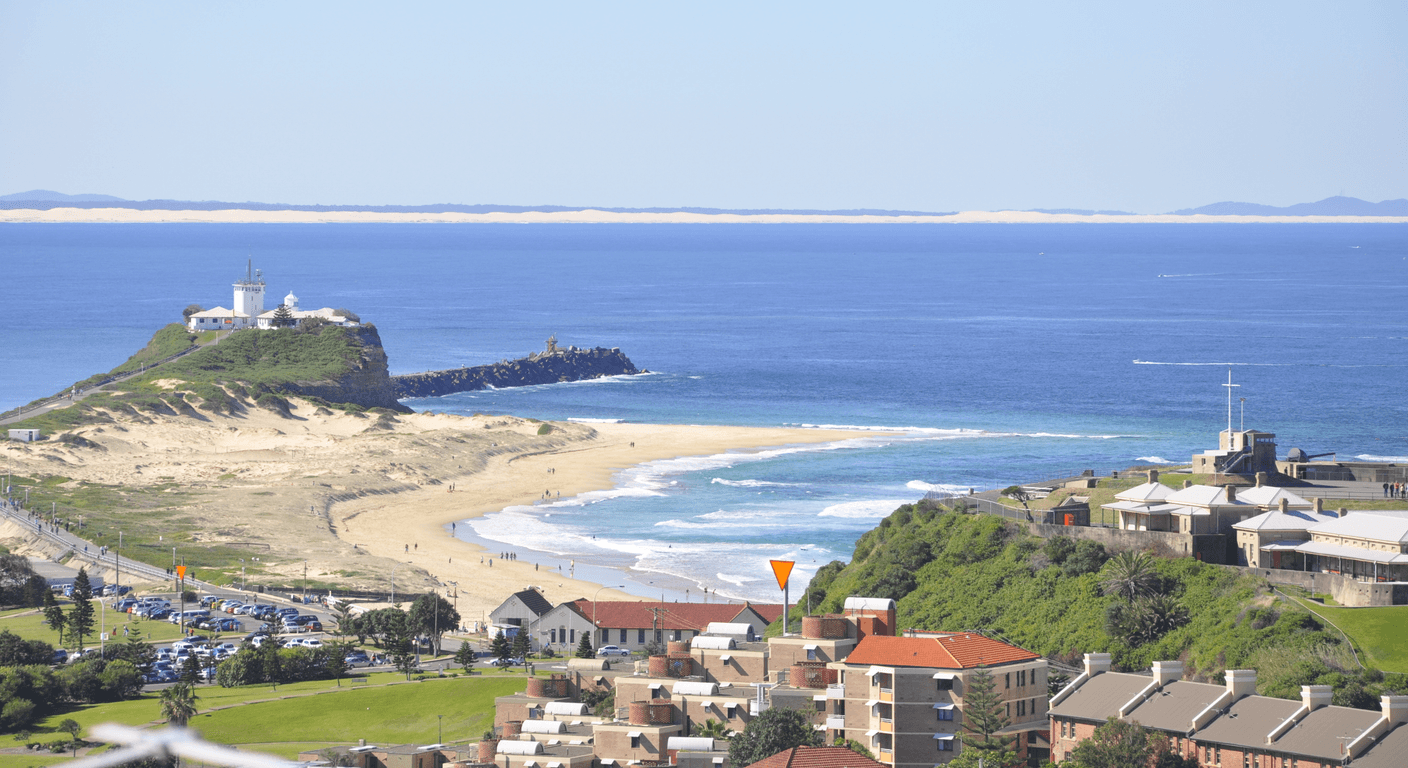
Nobbys Beach sits at the northern tip of Newcastle's beach strip, where the Hunter River meets the ocean. The breakwater walk out to Nobbys Head lighthouse is one of the city's more distinctive short walks — a narrow stone causeway with the river on one side and the open ocean on the other, leading to a small headland with a lighthouse that has guided ships into the Hunter River since the 1850s. The lighthouse itself is not always open for interior visits, but the headland provides a clear view of the channel, and on a morning with container ships moving through, it is a quietly compelling sight.
The beach at Nobbys is patrolled and swimmable, though it faces some swell. The real pleasure for many visitors is simply sitting on the grassy slope above the beach with a coffee from one of the nearby cafes and watching the activity on the water. The area is flat and well-paved, and the amenities — toilets, seating, shade — are all in reasonable order. It is a comfortable starting point for the Bathers Way walk, and easy to reach from the city centre on foot or by light rail to the nearby Civic stop.
The Honeysuckle Precinct and the Revitalised Harbourfront
Honeysuckle is the name given to the redeveloped strip of former industrial waterfront that runs along the western edge of the city, facing the Hunter River. It is now a mix of residential buildings, restaurants, bars, and a broad foreshore promenade. The transformation has taken place over a couple of decades, and the precinct now has enough density of good food and drink options to make it a pleasant base for an evening. The setting — looking across the river to the industrial port activity on the far bank — is more interesting than it sounds, and the contrast between the working harbour and the cafe strip gives the place an honest character that more manufactured waterfronts lack.
For a solo traveller, Honeysuckle is comfortable. There are tables that work well for one person, the lighting in the evenings is decent, and the atmosphere is relaxed rather than loud. The restaurants skew towards modern Australian and seafood, which suits the location. Indicative prices for a main course at a mid-range restaurant run around $28-$38; a glass of Hunter Valley wine by the glass is roughly $12-$18, though confirm current pricing at individual venues. The precinct is also close to several hotels, which makes it convenient to walk back after dinner without needing to think about transport.
The broader city centre behind Honeysuckle has continued to develop, with Hunter Street — once fairly run-down — now home to small bars, independent retailers, and the Newcastle Art Gallery, which is worth a visit if contemporary and regional Australian art is of interest. Entry to the permanent collection is free. The light rail runs along Hunter Street, making it easy to move between the harbourfront and the eastern end of the city where the beach strip begins.
A Day Trip to Lake Macquarie
Lake Macquarie sits immediately south of Newcastle and is one of the largest coastal saltwater lakes in Australia — larger than Sydney Harbour by surface area, though far quieter. It is a natural fit for a day trip from Newcastle, and the contrast with the city's ocean beaches is part of the appeal. The lake is ringed by small townships, many of them relaxed and low-key, and the water is calm enough for gentle kayaking or simply sitting beside. For a traveller who wants a change of pace from the urban harbourfront, it delivers that easily.
The most practical way to reach Lake Macquarie without a car is by bus from Newcastle interchange, with services running to Belmont and several other lakeside suburbs. Travel time varies depending on destination, but Belmont — which has a pleasant foreshore and some good cafes — is around 30-40 minutes by bus. Alternatively, a rideshare is straightforward and gives you more flexibility about where you stop. The Lake Macquarie Visitor Information website at visitlakemac.com.au is a reliable starting point for planning, with current details on walking trails, ferry services, and local attractions including the Dobell House and the Lake Macquarie City Art Gallery in Booragul.
The lake is also home to the Warners Bay foreshore, which has a flat walking path along the water's edge that is well-suited to a relaxed morning. There are cafes along the strip and the setting is genuinely peaceful. If the weather is warm, the lake swimming is good — the water is calm, sheltered, and generally clear. This is the kind of day trip that does not need much planning: take the bus, find a foreshore cafe, walk a little, and come back in the afternoon.
Practical Matters: Accommodation, Pacing, and Getting Around
For a solo traveller, the most practical accommodation options in Newcastle are clustered around the Honeysuckle and Hamilton areas, both of which are flat and well-connected by light rail. A mid-range hotel near the waterfront typically costs roughly $150-$220 per night for a standard room; check current availability and pricing directly with properties or through established booking platforms. Serviced apartments are also available and can offer more space and a kitchenette, which some solo travellers find useful for a two-night stay. Read current reviews carefully, as quality varies and the city's accommodation stock is still evolving.
The Newcastle light rail runs between Wickham and Pacific Park (near Nobbys Beach) and is the most convenient way to move around the city without walking. It uses the Opal card ticketing system, and the stops are well-placed for most visitor destinations. Buses extend the network further south toward the lake and into the broader Hunter region. The city is largely flat in its central and waterfront areas, though some of the residential suburbs to the west involve steeper terrain — not a concern for most of what this guide covers.
A word on pacing: Newcastle rewards a slower schedule. Two nights gives you Friday evening to settle in, a full Saturday for the Bathers Way and the harbourfront, and Sunday morning for Lake Macquarie or a return visit to anywhere that warranted a second look. Trying to pack in more than that risks turning a genuinely restful trip into a logistics exercise. The city is not exhausting to navigate, but it does offer enough to fill a weekend without rushing — and that is about the right fit for a solo traveller who wants to come back feeling rested rather than depleted.
Key takeaways
- Newcastle is roughly two and a half hours from Sydney by NSW TrainLink intercity train, making it a practical weekend destination without the need for a car.
- The Bathers Way coastal walk covers about six kilometres between Nobbys and Merewether beaches, with the northern section being the flattest and most accessible stretch.
- The Honeysuckle harbourfront precinct offers a comfortable, relaxed evening setting with seafood and modern Australian dining at broadly mid-range prices.
- Lake Macquarie — one of Australia's largest coastal saltwater lakes — is accessible by bus from Newcastle interchange and suits a low-key day trip without a car.
- An Opal card is essential for travel on NSW TrainLink and the Newcastle light rail; a Victorian Seniors Card does not automatically transfer concession entitlements in NSW.
- Two nights in Newcastle is a workable and unhurried length of stay for covering the main coastal walk, the harbourfront, and a lake day trip.
Recommended partners and links
Indicative prices only — always confirm with the operator before booking.
Frequently asked questions
How long does the train from Sydney to Newcastle take?
NSW TrainLink intercity trains run from Sydney Central station to Newcastle Interchange in roughly two and a half hours. Services operate throughout the day. Confirm current timetables and fares at nswtrainlink.info before you travel.
Is the Bathers Way coastal walk suitable for older or less mobile travellers?
Much of the Bathers Way is flat and well-paved, particularly the northern section between Nobbys Beach and Newcastle Baths. Some sections near the southern headlands involve steps and uneven ground. Doing the walk in shorter sections over two days is a sensible approach, and there are seats and cafes at regular intervals along the route.
Can you get around Newcastle without a car?
Yes. The Newcastle light rail connects the central city with the waterfront and beach strip, and buses serve the broader region including Lake Macquarie. An Opal card is required for both services and can be loaded at the airport, Central Station in Sydney, or at convenience stores.
Does a Victorian Seniors Card give concession fares on NSW public transport?
Not automatically. Victorian Seniors Card holders should check current eligibility rules with Transport for NSW before travelling, as interstate concession entitlements are not always transferable.
What is the best area to stay in Newcastle for a weekend visit?
Accommodation near the Honeysuckle harbourfront or in the Hamilton suburb offers good access to the waterfront, restaurants, and the light rail. Both areas are relatively flat and convenient for the main visitor precincts. Check current availability and pricing directly with properties.
Got a tip, a price update or a story from this route? The community would love to hear it.
Share your views on our Facebook page— Seniors and Solo Traveller Stories