Kakadu National Park in the Northern Territory is one of Australia's most rewarding long-haul destinations for travellers in their 60s and 70s. With seated wildlife cruises, ancient rock art sites that suit a range of mobility levels, and comfortable lodge-based accommodation, it rewards those who take the time to go slowly and absorb what they see. Timing your visit in the dry season — May to October — is not optional; it is the difference between an accessible, enjoyable trip and one that is cut short by flooded roads and closed sites.
Why Kakadu deserves a place on a Victorian over-50 traveller's list
There is a particular kind of travel that suits people who have moved past the need to rush — where the destination asks you to sit still, look carefully, and let the landscape do the talking. Kakadu is that kind of place. Covering roughly 20,000 square kilometres in the Northern Territory, it is one of the world's largest national parks and carries dual World Heritage listing for both its natural environment and its living Aboriginal cultural heritage. For travellers in their 60s and 70s, that combination of wildlife, ancient art, and deep cultural story offers something genuinely different from a European city break or a coastal cruise.
For Victorian travellers, this is an interstate journey that requires a little planning, but not an extraordinary amount of effort. A direct flight from Melbourne to Darwin runs around three and a half to four hours, and from Darwin, Kakadu's main entry point is roughly a three-hour drive east along the Arnhem Highway. That drive itself is part of the experience — flat, wide, and lined with paperbark wetlands that begin to signal you are somewhere quite unlike home.
What makes Kakadu particularly well-suited to older travellers is that many of its headline experiences are seated, shaded, or short. You are not required to be a hiker to have a meaningful visit. A morning billabong cruise, an hour at a rock art site, and a slow afternoon watching light shift across the escarpment from a lodge veranda — that is a full and satisfying day.
When should you go? The dry season (May to October) is essential
Kakadu has two broad seasons, and for most over-50 travellers — particularly those coming from Victoria for the first time — the dry season is the only practical window. From May through to October, roads are open, walking tracks are accessible, Yellow Water Billabong cruises run on a full schedule, and temperatures, while warm, are manageable. Mornings and evenings are genuinely pleasant, often sitting in the mid-twenties. Midday heat in July and August can still reach the low to mid-thirties, so planning activity in the early morning and late afternoon is sensible.
The wet season, roughly November to April, transforms the park dramatically — floodplains fill, waterfalls run at full force, and the landscape is extraordinary to see. But many roads close, including access to Ubirr, and the humidity and heat in the build-up months of October and November are physically taxing. Several key sites become inaccessible by conventional vehicle. For a first visit, particularly if you are travelling as a couple and managing your own driving, the dry season removes a significant layer of uncertainty.
May and June offer the additional advantage of lower visitor numbers than the peak of July and August, when Cooinda and Jabiru fill quickly and cruise bookings should be made well in advance. If flexibility matters to you — being able to choose your cruise time on the day, or secure a preferred room — aiming for late May or early June is worth considering. Confirm current road and site conditions at the Parks Australia website before you travel, as seasonal timing varies year to year.
Getting to Kakadu from Victoria: flights, Darwin, and the drive in
The standard route for Victorian travellers is a direct flight from Melbourne (Tullamarine) to Darwin, followed by a self-drive or guided tour into the park. Direct flights are operated by Qantas and Jetstar, and the journey takes around three hours and forty minutes. Darwin Airport is compact and straightforward to navigate. Car hire is available at the airport from all major operators; confirm that your hire agreement covers travel on unsealed roads if you plan to venture beyond the main sealed routes, though the core Kakadu sites — Ubirr, Nourlangie, Yellow Water, and the Bowali Visitor Centre — are all accessible on sealed roads.
The drive from Darwin to Cooinda Lodge, which is the main accommodation hub near Yellow Water Billabong, is roughly 250 kilometres and takes around three hours at a relaxed pace. The route follows the Arnhem Highway and then the Kakadu Highway — both sealed, well-maintained in the dry season, and easy to drive. There are fuel stops at Jabiru, the main township inside the park, and it is worth filling the tank there rather than relying on finding fuel further into the park.
Guided tour options are also worth considering, particularly for those who prefer not to self-drive a long route in unfamiliar heat. Several Darwin-based operators run multi-day guided tours into Kakadu with accommodation and activities included. Tourism NT's website provides a current list of licensed operators. For travellers who want the independence of a car but not the full responsibility of planning, a one-way guided drive in followed by a few nights at Cooinda before driving back to Darwin is a workable middle path.
Yellow Water Billabong: the seated wildlife experience that defines Kakadu
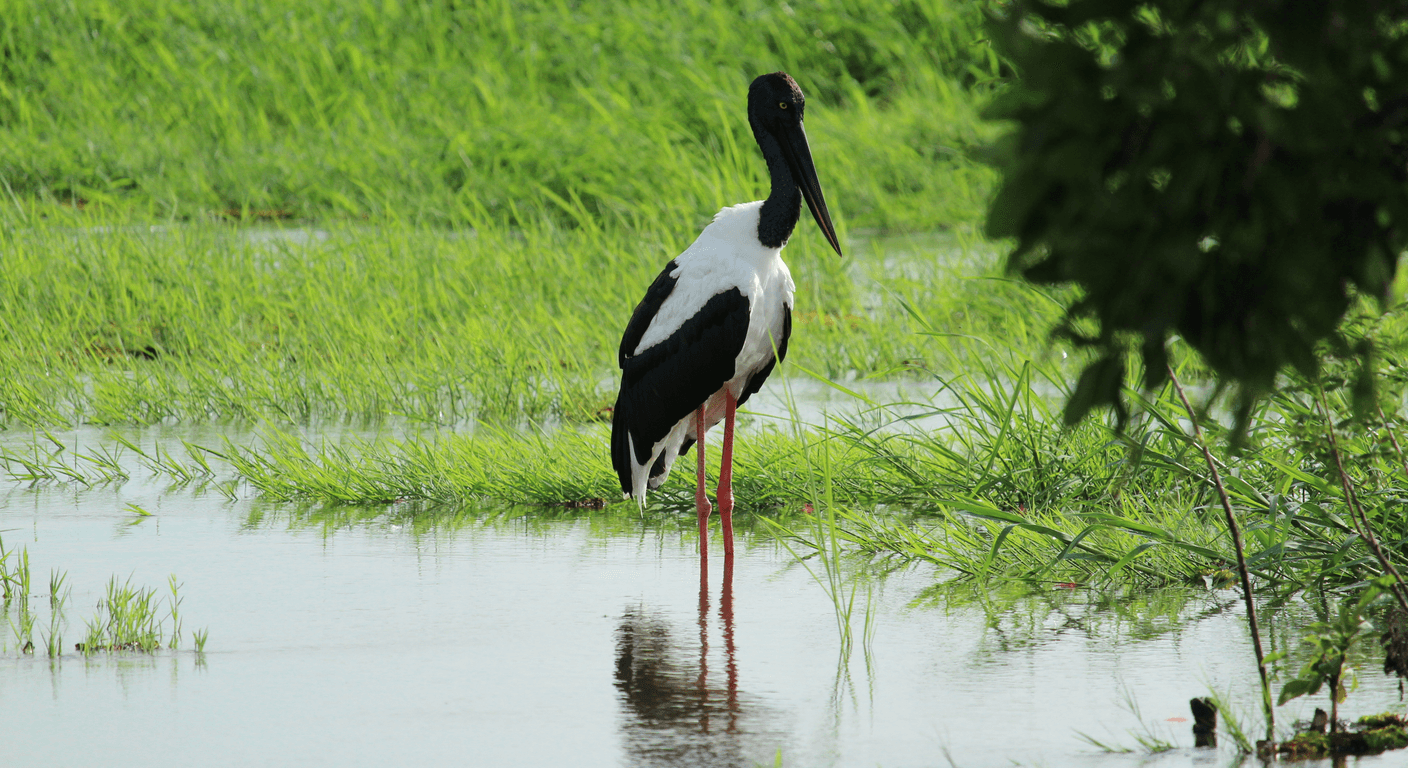
If there is one experience in Kakadu that consistently earns its reputation without requiring anything physically demanding, it is the Yellow Water Billabong cruise. Operated from Cooinda, these guided boat tours move slowly through a system of wetlands and floodplains that shelter an extraordinary concentration of wildlife — saltwater crocodiles, freshwater crocodiles, jabiru storks, magpie geese, sea eagles, and dozens of other waterbird species. You sit on a covered, railed vessel with a knowledgeable guide narrating what you are seeing. There is no walking involved, no uneven ground, and the shade of the canopy makes even a morning in late dry season comfortable.
Cruises run at dawn, mid-morning, and late afternoon, with the dawn and late-afternoon departures generally offering the best light for photography and the most active wildlife. The standard cruise runs around ninety minutes; a two-hour option is also available. Both are well-paced — the boat moves slowly, stops frequently, and there is no sense of being rushed through the experience. For travellers with limited mobility, the boarding pontoon is at water level and relatively straightforward to board, though it is worth contacting the operator in advance if you have specific mobility needs so they can confirm current boarding arrangements.
Bookings are strongly recommended in the peak months of July and August, when the dawn cruise in particular can fill several days ahead. In May or June, walk-in availability is more likely, but booking a day or two ahead is still sensible. The cruise departs from Cooinda, which is also where Cooinda Lodge is located — making it very easy to roll out of bed early, walk a short distance to the boarding area, and be on the water at dawn without any complicated logistics.
Ubirr and Nourlangie: rock art for every level of walker
Kakadu holds some of the oldest and most extensive rock art in the world, and two sites are accessible enough for most over-50 travellers to visit meaningfully. Ubirr, in the north of the park near the East Alligator River, features a short rock art circuit of around one kilometre on a relatively flat, well-formed path. The galleries include X-ray style fish and animal paintings, contact art depicting European goods, and figures that have been painted and repainted over thousands of years. The circuit takes around forty-five minutes at an easy pace and is manageable for most walkers. There is a steeper climb of around 250 metres of rocky ground to the top of the rock for a panoramic view over the Nadab floodplain — this section is uneven and requires sure footing, so it is worth assessing honestly before attempting it. The views from the lower gallery area are also genuinely rewarding.
Nourlangie, in the southern part of the park, has a similar structure — a main rock art circuit of about one and a half kilometres on a flat, sealed path, with an optional extension to Anbangbang Billabong. The main circuit is well-shaded in parts and passes some of the park's most significant paintings, including the figure of Namarrgon, the Lightning Man. The path is broad, even, and suitable for most walkers, including those using walking poles. The extension to the billabong adds another kilometre or so on a graded track and is worth doing in the cooler months for the birdlife and reflections.
At both sites, the cultural interpretation provided by Parks Australia and, where available, by Aboriginal ranger guides adds considerable depth to what you are seeing. The paintings are not museum pieces behind glass — they are part of a living cultural tradition, and listening to an Anbangbang or Bunitj custodian explain the stories behind the images is a different experience from reading a sign. Check the Parks Australia website for current ranger-guided walk schedules, as these vary by season.
Where to stay: lodge-based accommodation in and near the park
For travellers who want to be inside the park and close to Yellow Water, Cooinda Lodge is the natural base. Run by the same operator as the Yellow Water cruises, the lodge offers motel-style rooms, a restaurant, a bar, a pool, and a small shop. Rooms are comfortable and air-conditioned — essential in Kakadu's climate — and the proximity to the Yellow Water departure point is a genuine practical advantage. Indicative room rates are roughly $200–$280 per night, though these vary by season and should be confirmed directly with the lodge. The lodge also has a campground for those who prefer that option, but for travellers prioritising comfort and convenience, the motel rooms are well worth the premium.
Jabiru, the township about 50 kilometres from the park's northern entry, offers an alternative base with a slightly different character. The Mercure Kakadu Crocodile Hotel — shaped, famously, like a crocodile from above — is located in Jabiru and provides comfortable hotel-standard accommodation with a pool and restaurant. It is a reasonable base for exploring Ubirr and Nourlangie, though it requires driving to Yellow Water for the cruise. Indicative rates are roughly similar to Cooinda; confirm current pricing directly with the property.
Both options suit couples travelling together, with double rooms well-configured for two people sharing. For those who prefer to stay outside the park and drive in, Humpty Doo and Batchelor offer cheaper options about an hour's drive from the park boundary, but the logistics of early morning cruise starts make staying inside the park — or at least in Jabiru — a much more practical choice for older travellers who value rest and ease of movement.
Practical matters: park entry, pacing, and what to bring
Park entry to Kakadu is managed by Parks Australia and currently costs around $40 per adult for a seven-day pass. This fee goes directly to the management of the park, which is jointly managed by the Traditional Owners and the Australian Government. You can pay at the park entry stations or in advance online. Always confirm current fees at parksaustralia.gov.au before you travel, as these are subject to change. Entry fees are separate from any cruise, tour, or accommodation costs.
Pacing is everything in Kakadu. The heat, even in the dry season, means that doing too much in the middle of the day is tiring and unnecessary. A sensible day might look like: dawn cruise on Yellow Water, a relaxed breakfast back at the lodge, a mid-morning visit to one rock art site, lunch and a rest through the hottest hours, and a late afternoon walk or sundowner at a lookout. That rhythm allows you to see the park's highlights without exhausting yourself, and it is how many experienced Kakadu visitors naturally fall into travelling here.
Bring more water than you think you need — at least two litres per person for any time spent walking outdoors. A wide-brimmed hat, sunscreen rated SPF 50+, and light long-sleeved shirts are standard. Insect repellent is useful, particularly around billabongs at dawn and dusk. Good walking shoes with grip matter more than hiking boots for the rock art circuits, which involve some uneven rock surfaces. A pair of binoculars transforms the Yellow Water cruise and is one of the most useful things you can pack.
Key takeaways
- Kakadu's dry season runs May to October — this is the only practical window for most over-50 travellers, when roads, sites, and cruises are fully accessible.
- The Yellow Water Billabong cruise is a seated, shaded, guided experience that delivers Kakadu's wildlife without requiring any walking.
- Ubirr's main rock art circuit is around one kilometre on a flat path; Nourlangie's main circuit is around one and a half kilometres on a sealed path — both suit most older walkers.
- From Darwin, the drive to Cooinda Lodge takes around three hours on sealed roads via the Arnhem and Kakadu Highways.
- Park entry is around $40 per adult for seven days — confirm current fees at parksaustralia.gov.au before you visit.
- Staying inside the park at Cooinda Lodge or in Jabiru makes early morning cruise starts and site visits far more manageable than commuting from outside the park.
Recommended partners and links
Indicative prices only — always confirm with the operator before booking.
Frequently asked questions
Is Kakadu suitable for travellers over 60 with limited mobility?
Yes, with some planning. The Yellow Water Billabong cruise is fully seated and requires only a short, flat walk to the boarding pontoon. The main rock art circuits at Ubirr and Nourlangie are on formed, relatively flat paths and suit most walkers. The optional summit climb at Ubirr involves uneven rocky ground and is best skipped if balance or knee issues are a concern. Confirm current accessibility arrangements with Parks Australia and individual operators before you travel.
What is the best time of year for seniors to visit Kakadu?
The dry season, May to October, is strongly recommended for older travellers. Roads are open, all major sites are accessible, and temperatures — while warm — are manageable with early morning and late afternoon activity. July and August are peak season with the largest crowds; late May and early June offer a good balance of accessibility and quieter conditions.
How do you get to Kakadu from Melbourne?
Fly direct from Melbourne (Tullamarine) to Darwin — the flight takes around three hours and forty minutes. From Darwin, drive east along the Arnhem Highway and then the Kakadu Highway to reach the park; Cooinda Lodge near Yellow Water is roughly 250 kilometres from Darwin, about a three-hour drive. Car hire is available at Darwin Airport, or guided tours from Darwin can be arranged through licensed operators listed on the Tourism NT website.
How much does Kakadu National Park entry cost?
Park entry is currently around $40 per adult for a seven-day pass, though fees are subject to change. Always confirm the current fee at parksaustralia.gov.au before you visit. Entry fees are paid at park entry stations or can be purchased online in advance.
Where is the most comfortable place to stay inside Kakadu National Park?
Cooinda Lodge, located near Yellow Water Billabong, is the most convenient option for over-50 travellers. It offers air-conditioned motel-style rooms, a restaurant, a pool, and direct access to the Yellow Water cruise departure point. The Mercure Kakadu Crocodile Hotel in Jabiru is another comfortable option, better positioned for exploring Ubirr and Nourlangie. Indicative rates for both are roughly $200–$280 per night — confirm current pricing directly with each property.
Got a tip, a price update or a story from this route? The community would love to hear it.
Share your views on our Facebook page— Seniors and Solo Traveller Stories