Freycinet National Park on Tasmania's east coast is one of those places that rewards slower travel — the kind where you linger over a view rather than rush to tick it off. For travellers in their 60s and beyond, the question is not whether to go, but how to experience Wineglass Bay in a way that suits your pace and your knees. This guide covers the two main options — the lookout walk and a boat cruise — plus practical detail on getting there from Hobart or Launceston and staying in Coles Bay.
Why Freycinet suits travellers who like to go at their own pace
Freycinet National Park sits on a narrow peninsula about halfway up Tasmania's east coast, roughly 200 kilometres from both Hobart and Launceston. The landscape is distinctive — pink granite peaks called The Hazards rising sharply behind Coles Bay, with a coastline that drops into water of a blue so clear it looks edited. It is the kind of place that photographs well but also holds up in person, and it rewards the sort of traveller who is happy to sit with a view rather than chase the next one.
For travellers in their 60s, Freycinet has an important advantage over many celebrated natural sites: there is genuine choice in how you engage with it. The headline attraction — Wineglass Bay — can be seen from a well-marked lookout reached by a moderate-to-challenging uphill walk, or from the water on a small-group boat cruise that requires no climbing at all. Neither option is a consolation prize. Both give you Wineglass Bay. The question is which experience suits your body and your travel style on the day.
Coles Bay, the small township at the park entrance, is relaxed and unhurried. There is a general store, a handful of cafes and restaurants, and accommodation ranging from budget-friendly holiday parks to the well-regarded Freycinet Lodge. It is a genuine base rather than a transit point, and for a group of friends travelling together, it lends itself to the kind of holiday where mornings are leisurely and the agenda is light.
Getting there: the drive from Hobart or Launceston
Most travellers reach Freycinet by hire car, which gives you the flexibility the peninsula's layout demands. From Hobart, the drive is around two to two-and-a-half hours via the Tasman Highway (A3), heading north through Sorell and Bicheno before turning off at the Coles Bay Road junction. From Launceston, allow a similar time heading south and east. The roads are generally good, though the final stretch into Coles Bay is a single-lane sealed road that requires care when passing oncoming vehicles.
Flying into Hobart is the most straightforward option from Melbourne, with multiple daily flights and a journey of around an hour. Rex Airlines also services Launceston, which works well if you plan to do a loop of the east coast rather than a return trip. Hiring a car at the airport is standard practice — book ahead, particularly in the peak summer months of December to February and during school holidays.
There is no regular public bus service from Hobart or Launceston directly to Coles Bay, which makes a hire car or joining a small-group tour the practical choices for independent travellers. Tassielink operates coach services to Bicheno, the nearest town of size, but the final 30-odd kilometres to Coles Bay requires a separate arrangement. If driving is not an option, Tourism Tasmania's website lists guided tour operators who run multi-day east coast itineraries that include Freycinet.
The Wineglass Bay Lookout Walk: honest grading for over-50 travellers
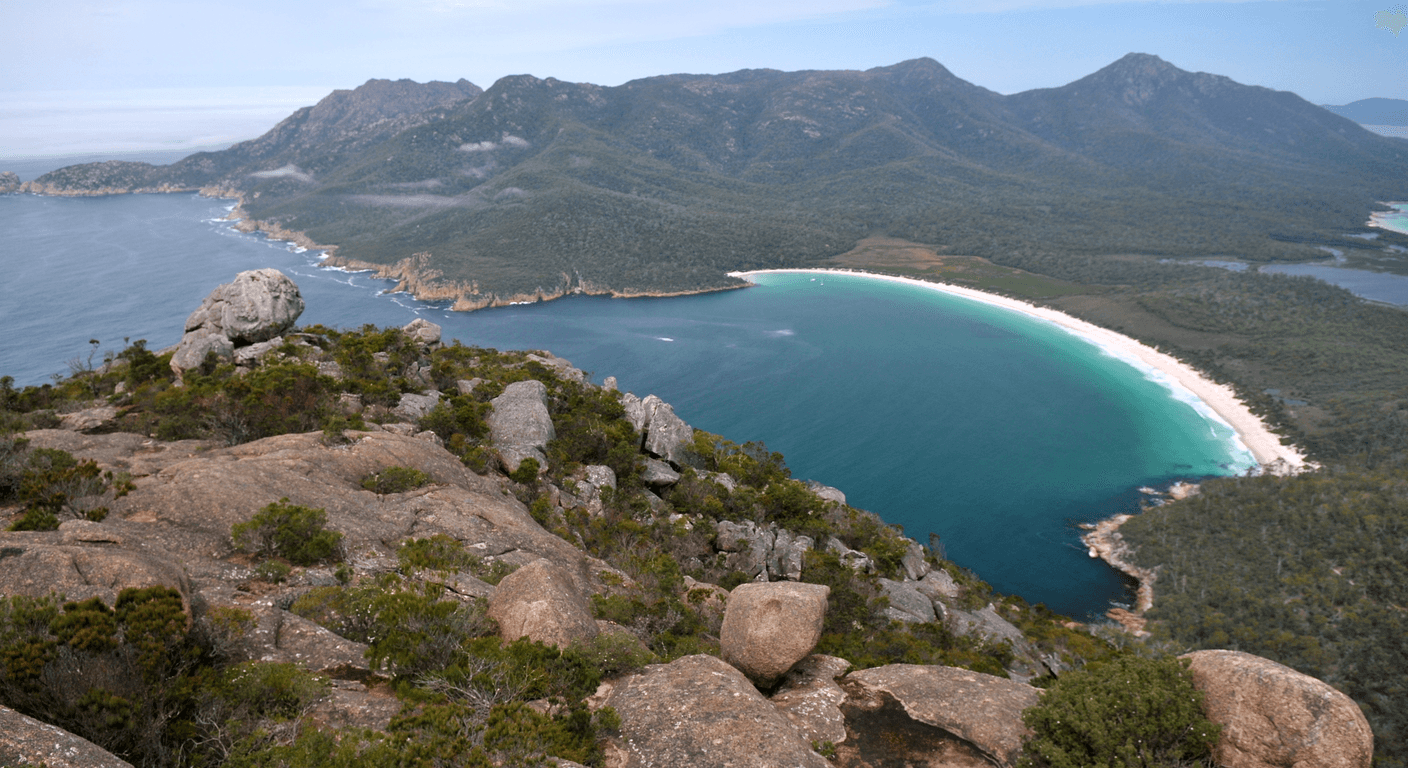
The Wineglass Bay Lookout Track is the walk most visitors attempt, and for good reason — the view from the saddle between two of The Hazards peaks is one of the most recognised in Australia. The track is 2.6 kilometres return from the main car park, with an elevation gain of around 270 metres. Parks Tasmania grades it as Grade 4 (Difficult), and that grading is honest. The climb is not long, but it is steep in bursts, with uneven granite steps and loose gravel on sections of the descent.
For travellers who are reasonably fit and used to walking on uneven surfaces, the lookout is achievable. Trekking poles make a real difference on the descent, and wearing proper walking shoes — not sandals or casual sneakers — is important. Allow around 90 minutes to two hours for the return trip at a comfortable pace, including time at the top. Start early in the morning to avoid the midday heat in summer and to beat the main visitor crowds. Water, a hat, and sun protection are non-negotiable in any season.
Travellers with knee issues, hip replacements, balance concerns, or limited cardiovascular fitness should be honest with themselves about this one. The steps are irregular and the path is not sealed. There is no shame in deciding the boat cruise is the better fit — it genuinely is a different and equally worthwhile experience. The Parks Tasmania website has detailed track notes and current condition updates, which are worth checking before you commit.
The boat cruise option: Wineglass Bay without the climb
Freycinet Adventures runs small-group boat cruises from Coles Bay jetty that take you around the peninsula and into Wineglass Bay from the sea. The perspective from the water is genuinely different from the lookout — you see the full arc of the beach and the way it sits between the granite headlands, and you are likely to encounter wildlife including dolphins, seals, and seabirds that you would not see from the track. The boats are stable and covered, and the group sizes are small enough that it does not feel like a crowded tour.
Boarding requires stepping onto a boat from a jetty, which involves a degree of movement and balance. If you have significant mobility limitations, it is worth calling the operator directly before booking to discuss the boarding process and seating options. Most travellers in their 60s and 70s who are comfortable walking on flat ground find the boarding straightforward. The cruise duration is typically around three hours, and there is usually time to walk briefly on the Wineglass Bay beach itself if the tide and conditions allow.
Indicative pricing is in the range of roughly $150 to $180 per person, though you should confirm current pricing and seasonal availability directly with Freycinet Adventures at their website. Morning departures tend to offer the calmest water and best light. For a group of four or five friends travelling together, booking ahead by several weeks is sensible during the October-to-April period.
Coles Bay as a base: what to expect
Coles Bay is small — a few hundred permanent residents — and that is part of its appeal. The pace is genuinely slow, the main street is short, and the default activity in the evening is sitting on a verandah or walking along the foreshore as the light changes on The Hazards. For a group of friends who have spent their working lives in regional Victoria and are used to landscapes with space and quiet, it will feel immediately comfortable.
Freycinet Lodge is the most established accommodation option, set within the national park itself with cabin-style rooms that open onto bushland. It is well-regarded and accessible, with a restaurant that does solid evening meals. The lodge is a short drive from the main car park and visitor centre. There are also holiday houses and apartments in Coles Bay township that suit groups who prefer a self-catering arrangement — Tourism Tasmania's website lists options across various price points.
The Freycinet Marine Farm, a short drive from Coles Bay, is worth a visit for oysters and mussels eaten at outdoor tables with a view of the water. It is relaxed and informal, and you can buy directly from the growers. The Coles Bay general store covers basics, but for a broader grocery shop you would head to Bicheno, around 30 kilometres north. Petrol is available in Bicheno and is worth topping up there rather than relying on Coles Bay.
How many days do you need, and when should you go?
Two full days in Freycinet is a comfortable minimum for travellers who want to do both the lookout walk and the boat cruise without feeling rushed. Three days allows for a second walk — the Honeymoon Bay circuit and the Wineglass Bay beach walk via the saddle are both manageable options — and time to simply sit in the landscape. For a group trip, three nights in Coles Bay with arrival and departure days in Hobart or Launceston makes for a well-paced week.
The shoulder seasons of autumn (March to May) and spring (September to October) are widely considered the best times to visit. Summer is busy and hot, and the car park at the Wineglass Bay trailhead can fill by mid-morning in peak season. Autumn brings cooler walking temperatures, good light, and noticeably smaller crowds. Winter is quieter still but some boat cruise operators reduce their schedules, so check availability if you are considering a June-to-August trip.
Entry to Freycinet National Park requires a vehicle pass, which is purchased at the park entry station. Indicative pricing is around $35 to $40 per vehicle per day, or a holiday pass valid for eight weeks is available if you are exploring multiple Tasmanian parks. Confirm current fees at parks.tas.gov.au before you travel, as these are reviewed periodically.
Practical tips for travelling as a group of friends
A group of four or five friends sharing a holiday house in Coles Bay is one of the most enjoyable ways to do this trip. Self-catering gives you flexibility over meal times, and the ability to make a late breakfast and head out mid-morning suits the pace of the place. Divide the driving if you are all comfortable behind the wheel — the Tasmanian roads are generally straightforward, though they are narrower and slower than mainland highways and the pace adjusts accordingly.
For friends with different fitness levels, the dual options of lookout walk and boat cruise are genuinely useful. On the day you plan to do Wineglass Bay, those who want to attempt the lookout can do so in the morning while others wait at the car park cafe or explore the flat foreshore walk at Hazards Beach. The group reunites for the afternoon or for the cruise on a separate day. It is a destination that accommodates different physical capacities without anyone feeling left out.
Travel insurance that covers medical evacuation is strongly recommended for any trip to Tasmania, as it is for any interstate travel for travellers in their 60s and 70s. The nearest major hospital is in Hobart. Mobile phone coverage in Coles Bay and along the peninsula is limited — Telstra has the broadest reach in regional Tasmania, and it is worth checking your provider's coverage map before you go. Download offline maps and park information before you leave Hobart or Launceston.
Key takeaways
- Wineglass Bay can be experienced two ways — a Grade 4 lookout walk with steep sections, or a small-group boat cruise from Coles Bay jetty that requires no climbing.
- The drive from Hobart to Coles Bay is around two to two-and-a-half hours via the Tasman Highway; a hire car is the most practical option as no regular public bus runs to Coles Bay.
- Autumn (March to May) and spring (September to October) offer cooler walking temperatures and smaller crowds than the busy summer peak.
- Freycinet Lodge sits within the national park and is a reliable, accessible base; self-catering holiday houses in Coles Bay township suit groups who prefer flexibility.
- A vehicle entry pass to Freycinet National Park costs around $35 to $40 per day — confirm current fees at parks.tas.gov.au before arrival.
- Trekking poles, sturdy walking shoes, and an early start are the three practical essentials for anyone attempting the Wineglass Bay Lookout Track.
Recommended partners and links
Indicative prices only — always confirm with the operator before booking.
Frequently asked questions
Is the Wineglass Bay Lookout Walk suitable for travellers in their 60s and 70s?
The Wineglass Bay Lookout Track is graded Difficult (Grade 4) by Parks Tasmania. It is 2.6 kilometres return with around 270 metres of elevation gain, involving steep sections with uneven granite steps. Travellers who are reasonably fit and comfortable on uneven surfaces can manage it, especially with trekking poles and an early start. Those with knee issues, hip replacements, or balance concerns should honestly assess whether the boat cruise is a better fit.
Can you see Wineglass Bay without doing the walk?
Yes. Freycinet Adventures operates small-group boat cruises from Coles Bay jetty that travel around the peninsula and into Wineglass Bay from the sea. The view from the water shows the full arc of the beach between the granite headlands and offers wildlife sightings not possible from the track. No climbing is required, though boarding the boat from the jetty requires some balance and mobility.
How do you get from Hobart to Freycinet National Park?
The most practical option is a hire car from Hobart Airport, with the drive taking around two to two-and-a-half hours via the Tasman Highway. There is no regular public bus service directly to Coles Bay. Tassielink coaches serve Bicheno, about 30 kilometres away, but you would need a separate arrangement for the final leg. Small-group guided tour operators running east coast itineraries are another option if you prefer not to drive.
What is the best time of year to visit Freycinet as an older traveller?
Autumn (March to May) and spring (September to October) are generally the most comfortable seasons for older travellers. Temperatures are cooler than summer, walking conditions are more pleasant, and the crowds at the Wineglass Bay car park and trailhead are significantly smaller. Winter is quieter but some cruise operators reduce schedules, so check availability before booking a June-to-August trip.
How much does it cost to enter Freycinet National Park?
A vehicle entry pass to Freycinet National Park costs around $35 to $40 per vehicle per day as an indicative figure. An eight-week holiday pass is available if you plan to visit multiple Tasmanian national parks. Always confirm current fees directly at parks.tas.gov.au before you travel, as these are reviewed periodically.
Got a tip, a price update or a story from this route? The community would love to hear it.
Share your views on our Facebook page— Seniors and Solo Traveller Stories