Tropical North Queensland packs a remarkable amount of variety into a short stretch of coastline. A week split between Cairns and Port Douglas gives travellers over 50 a practical, unhurried route through ancient rainforest, Great Barrier Reef waters, and one of Queensland's most relaxed seaside towns. This guide covers the key experiences, honest timing, indicative costs, and the transport and accessibility details that make the difference on a trip this far from Victoria.
Why this part of Queensland suits travellers in their 60s and 70s
The Cairns–Port Douglas corridor is genuinely well set up for older travellers. The distances are manageable, the infrastructure is mature, and the two main experiences — reef and rainforest — can be paced to suit you rather than a group tour schedule. For a couple travelling from Victoria, particularly if one partner is more confident in the water than the other, the mix of activities means nobody is left waiting on a beach while the other snorkels.
Port Douglas, roughly 70 kilometres north of Cairns along the Captain Cook Highway, is a small town that rewards a slower pace. It has good restaurants, a Sunday market, and Four Mile Beach as a long, flat walking option in the cooler morning hours. Cairns is the transport and logistics hub — fly in, pick up a hire car or use transfers, do the rainforest day, then drive north to Port Douglas for the reef portion of the week. That sequence tends to work well.
One honest note for travellers from Melbourne or regional Victoria: Tropical North Queensland is genuinely warm and humid, even outside the wet season. If you or your partner find heat difficult, plan activities before 11am and after 3pm, and factor in afternoon rest time. The region rewards travellers who don't rush it.
Getting there from Victoria: flights, hire cars, and the drive north
Direct flights from Melbourne (Tullamarine) to Cairns run with Qantas, Jetstar, and Virgin Australia. Flight time is roughly three hours. Indicative return fares vary considerably depending on season and lead time — budget travellers might find economy fares around $400–$700 return per person, but prices fluctuate, so check airline websites directly and confirm what is current. Flying into Cairns and out of Cairns keeps logistics simple; there is no need to position a hire car differently.
Hiring a car in Cairns gives you the most flexibility for this itinerary. The drive from Cairns to Port Douglas on the Captain Cook Highway takes around 50 to 60 minutes in normal conditions and is one of the more scenic coastal drives in Australia — the road hugs the hillside above the Coral Sea for a stretch that genuinely warrants pulling over at one of the designated lookouts. The road is in good condition and the drive is straightforward for confident drivers. If driving is not preferred, coach transfers operate between the two towns regularly; Con-X-ion is one established operator worth checking.
Cairns Airport is compact and relatively easy to navigate. Hire car desks are at the terminal, and the airport is only about 10 minutes from the Cairns CBD. For travellers who prefer to settle in before making decisions, spending the first night in Cairns before driving to Port Douglas the following morning is a sensible approach.
The Kuranda experience: Scenic Railway up, Skyrail down (or reverse)
The Kuranda Scenic Railway and Skyrail Rainforest Cableway are best treated as a combination — one up, one down — rather than doing either as an out-and-back. The railway climbs from Cairns through 15 hand-built tunnels and across the Barron Gorge, taking roughly 1 hour 45 minutes. It is a heritage experience, not a high-speed train, and the carriages are heritage-style with open-air sections for photography. The seating is manageable for most older travellers, though the carriages do have steps to board.
Skyrail runs gondola cabins over the rainforest canopy from Smithfield (north of Cairns) to Kuranda, with two stop-off stations — Red Peak and Barron Falls — where you can walk short boardwalk sections through the rainforest. The boardwalks are relatively flat and well-maintained, though some sections involve steps; the stop at Barron Falls is particularly worth the time. The full Skyrail journey takes around 90 minutes including stops.
A practical sequence: take a morning train from Cairns Central station up to Kuranda, spend a couple of hours in the village (the markets and the Rainforestation attraction are nearby), then take Skyrail back down to Smithfield in the early afternoon. From Smithfield, a taxi or rideshare back to Cairns takes around 20 minutes. Book both the railway and Skyrail in advance, particularly in school holiday periods, as capacity is limited. Both operators offer combination packages — check their respective websites for current pricing and senior discounts.
Reef day trips: choosing the right experience for your confidence level
The Great Barrier Reef off Cairns and Port Douglas is accessible via a range of day trip operators, and the experiences vary considerably. For travellers in their 60s and 70s who are comfortable in the water but not strong snorkellers, or who simply want to see the reef without physical exertion, the pontoon-based options are worth understanding. Several operators — including Quicksilver from Port Douglas and Great Adventures from Cairns — run vessels out to moored pontoons on the outer reef. These platforms have underwater viewing chambers, glass-bottom boat sections, and semi-submersible options, meaning you can observe coral and marine life without entering the water at all.
For those who do want to snorkel, the pontoons provide a stable, calm-water entry point with staff assistance and flotation equipment available. The water at the outer reef pontoons is generally calmer than shore-based snorkelling. Introductory dives supervised by instructors are also offered by most operators and can be a genuine option for travellers who have never dived — the operators are experienced at working with older adults and non-swimmers. Confirm with the specific operator what medical requirements apply.
From Port Douglas, Quicksilver Cruises operates a well-established outer reef service to Agincourt Reef, which sits on the ribbon reefs and is considered among the clearer and less crowded sections of the reef accessible by day trip. From Cairns, Great Adventures and Sunlover Reef Cruises are established operators. Check the Great Barrier Reef Marine Park Authority's eye on the reef reporting before travel to understand current reef conditions at the sites you plan to visit. Indicative day trip pricing sits around $270–$310 per person for outer reef pontoon trips, but confirm current pricing directly with operators.
Port Douglas as your base: Four Mile Beach, the Sunday Market, and eating well
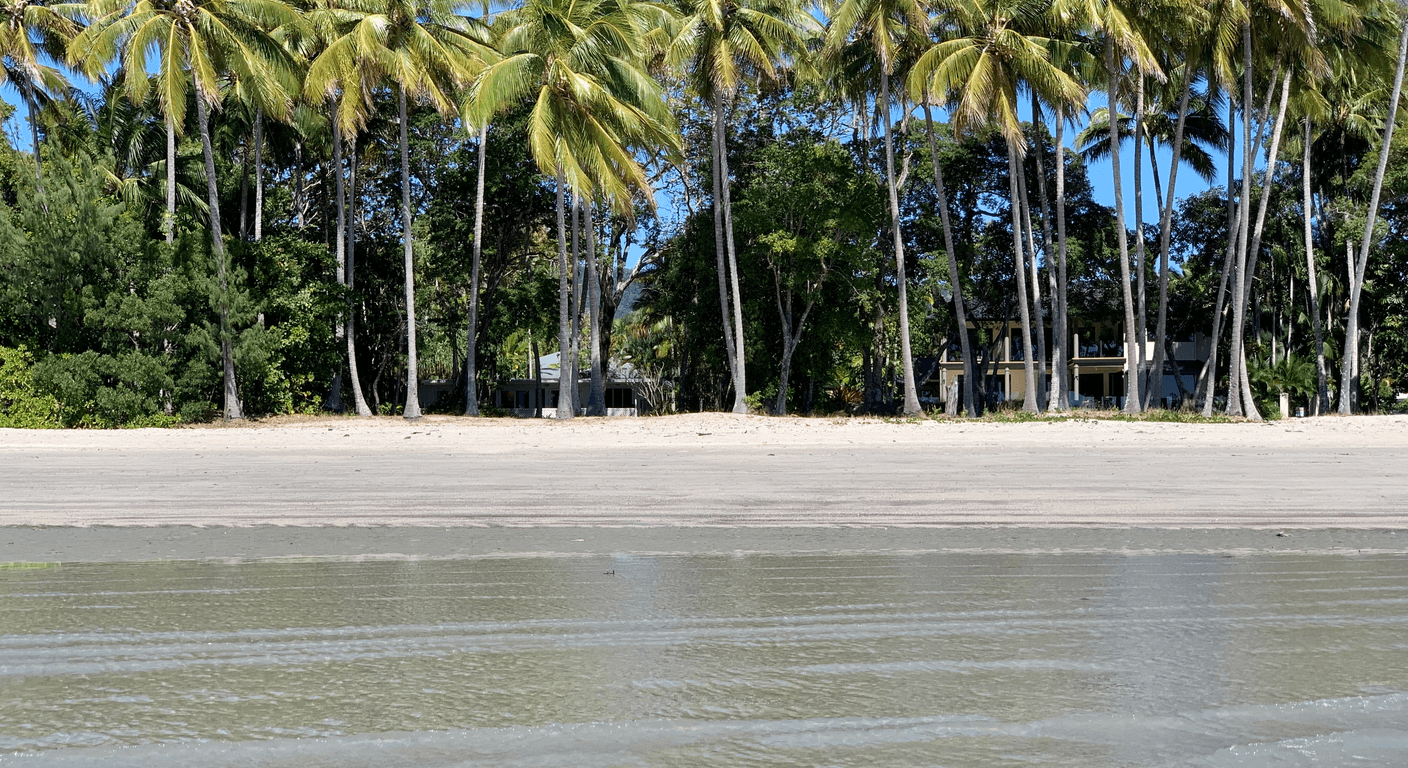
Port Douglas works well as a base for the reef portion of the week. It is a small town — you can walk from most accommodation to the marina, the main street (Macrossan Street), and Four Mile Beach without needing a car. The beach itself is long, flat, and relatively uncrowded in the early morning, making it a genuine option for a daily walk. Note that box jellyfish (marine stingers) are present in inshore waters during the wet season (roughly October to May), so swimming in the sea at that time requires a stinger suit or using the stinger-netted enclosure at the beach. The netted area is free to use.
The Sunday Market at Anzac Park runs weekly and has a mix of local produce, craft, and food stalls — it is a pleasant hour on a Sunday morning without being overwhelming in scale. Macrossan Street has a good range of restaurants and cafes covering most preferences; for travellers who enjoy a leisurely dinner, the town is relaxed enough that booking a table the same day is usually fine outside peak periods.
Accommodation in Port Douglas ranges from resort-style properties with pools and multiple restaurants to smaller self-contained apartments that suit couples who want a kitchenette for breakfasts and light lunches. The Sheraton Grand Mirage and Pullman Port Douglas Sea Temple are two established larger properties with good accessibility features; smaller properties are worth checking directly for room configuration and step access if mobility is a consideration.
Wet season honesty: when to go and what to expect
The wet season in Tropical North Queensland runs roughly from November through to April, with December, January, and February typically the wettest months. During this period, rainfall can be heavy and persistent, the humidity is at its highest, and some roads in the hinterland can close after significant rain. The Daintree River crossing further north can also be affected. That said, the wet season is not uniformly unpleasant — rain often falls in intense afternoon bursts rather than all-day drizzle, and the landscape is vivid and green.
The dry season (roughly May to October) is generally the preferred time for this itinerary. Temperatures are warm but more manageable — Cairns in July might see daytime highs around 26 degrees Celsius — and the reef is accessible without stinger concerns for inshore swimming. June through August is the busiest period, which affects accommodation pricing and availability for popular activities like Kuranda and the reef trips. Booking at least several weeks ahead is sensible in those months.
For travellers coming from Victoria, the contrast with a Melbourne winter makes the dry season particularly appealing. If the wet season is unavoidable — family commitments, cost, or availability — the reef trips still operate, the Kuranda railway and Skyrail still run, and Port Douglas is still functional. Simply be prepared for heat and rain gear, book accommodation with good air conditioning, and build in flexibility on any day you plan to drive into the hinterland.
Practical details: pacing, health, and making the week work
A week is a workable timeframe for this itinerary if you do not try to fill every day. A suggested rough shape: arrive Cairns, one night to settle; Kuranda day (railway and Skyrail); drive to Port Douglas and settle in; one reef day trip; one rest or market day; one optional half-day to Mossman Gorge (around 20 minutes north of Port Douglas, with accessible boardwalks); final night in Port Douglas or return to Cairns for the flight. That leaves a day of buffer, which is worth keeping rather than filling.
Travel insurance that covers pre-existing medical conditions is worth confirming before you depart. Several standard policies exclude conditions common in the over-65 age group; specialist travel insurance providers for older Australians are worth comparing. Cover-More and Tick Travel Insurance are two established Australian providers, but compare policies directly and read the product disclosure statement carefully.
The sun in Tropical North Queensland is significantly stronger than in Victoria. A broad-brimmed hat, SPF 50+ sunscreen, and a long-sleeved shirt for reef days are practical requirements, not optional. Hydration matters more than many travellers expect — carry water on all activities. If either traveller has a cardiac or respiratory condition, a conversation with a GP before departure is worthwhile, particularly regarding the heat and any planned snorkelling or diving activity.
Key takeaways
- The drive from Cairns to Port Douglas takes around 50 to 60 minutes along the Captain Cook Highway — manageable and scenic for confident drivers.
- Outer reef pontoon platforms let travellers observe the Great Barrier Reef through underwater viewing chambers without entering the water.
- The Kuranda Scenic Railway and Skyrail Rainforest Cableway are best combined as a one-way-each journey rather than an out-and-back on either alone.
- Dry season (May to October) avoids marine stingers in inshore waters and offers more manageable humidity for older travellers.
- Port Douglas is small enough to navigate on foot between accommodation, the marina, Macrossan Street, and Four Mile Beach.
- Box jellyfish are present in inshore waters from roughly October to May — use the stinger-netted enclosure at Four Mile Beach during those months.
Recommended partners and links
Indicative prices only — always confirm with the operator before booking.
Frequently asked questions
Is the Great Barrier Reef accessible for older travellers who don't snorkel or dive?
Yes. Several operators run day trips to moored outer reef pontoons that include underwater viewing chambers, glass-bottom boat sections, and semi-submersible rides. These allow you to observe coral and marine life without entering the water. Quicksilver Cruises from Port Douglas and Great Adventures from Cairns are two established operators with these facilities.
How long does it take to drive from Cairns to Port Douglas?
The drive from Cairns to Port Douglas along the Captain Cook Highway takes around 50 to 60 minutes in normal conditions. The road is in good condition and includes a well-known scenic section where the highway runs along a hillside above the Coral Sea.
When is the best time for over-50s to visit Cairns and Port Douglas?
The dry season, roughly May to October, is generally the most comfortable period. Humidity and rainfall are lower, marine stingers are not present in inshore waters, and the reef trips operate reliably. June through August is the busiest period, so booking accommodation and key activities several weeks ahead is sensible.
Can the Kuranda Scenic Railway and Skyrail be done in one day?
Yes, the combination is designed as a day trip. Taking the morning train up from Cairns Central, spending a couple of hours in Kuranda village, then returning on Skyrail to Smithfield in the early afternoon is a comfortable pace for most travellers. Allow a full day and book both in advance.
Is Four Mile Beach in Port Douglas safe to swim at year-round?
During the dry season (roughly May to October) inshore swimming at Four Mile Beach is generally safe. During the wet season (roughly October to May), box jellyfish are present in inshore waters and swimming without a stinger suit is not recommended. A free stinger-netted enclosure is available at the beach during the stinger season.
Got a tip, a price update or a story from this route? The community would love to hear it.
Share your views on our Facebook page— Seniors and Solo Traveller Stories
- Tourism Tropical North Queensland — official regional tourism site
- Skyrail Rainforest Cableway — official site
- Kuranda Scenic Railway — official site
- Quicksilver Cruises — Port Douglas reef trips
- Great Barrier Reef Marine Park Authority — Eye on the Reef reporting
- Queensland Parks and Wildlife Service — Mossman Gorge