Airlie Beach sits on Queensland's Whitsunday Coast and works particularly well as a short, low-fuss base for older travellers who want to see the islands without committing to a multi-night sailing trip. The town is compact, the foreshore is flat and walkable, and day-trip boats leave from the marina a short stroll from most accommodation. For a Victorian travelling solo, it is a straightforward interstate hop that rewards even a four- or five-night stay.
Why Airlie Beach suits a shorter, gentler Whitsundays visit
The Whitsundays have a reputation built on sailing holidays, liveaboard dive trips, and multi-day island-hopping itineraries. That reputation is well earned, but it can make the region feel out of reach for someone who simply wants a few relaxed days beside warm water without signing up for a week at sea. Airlie Beach solves that problem neatly. It is the mainland hub of the Whitsundays, a small town built on a hillside above a sheltered bay, and virtually everything a day visitor or short-stay guest needs is within flat walking distance of the waterfront.
For a solo traveller in their late sixties, the appeal is practical. There is no need to pack and unpack across multiple locations, no pressure to keep pace with a group, and no requirement to manage seasickness for more than a half-day at a time. You base yourself in town, choose your day trips at your own pace, and return each evening to your own room. The marina boardwalk has a solid range of restaurants and cafes, the foreshore lagoon gives you a safe, supervised swim whenever you want one, and the township is small enough that you never feel disoriented.
The climate is the other factor worth understanding before you go. Airlie sits in a tropical zone, and the wet season — roughly November through April — brings humidity, occasional cyclone risk, and marine stingers in the water. For most Victorian travellers, the most comfortable window is May through September: warm and dry, with pleasant evenings and manageable daytime heat. July and August are the peak months and prices reflect that, so May, June, or September can offer a good balance of weather and value.
Getting there from Victoria: flights and the airport experience
The closest airport to Airlie Beach is Proserpine/Whitsunday Coast Airport (PPP), which sits about 35 kilometres south of the town. Direct services from Melbourne (Tullamarine) to Proserpine are operated by Jetstar and Virgin Australia, with flight times of roughly two to two and a half hours. At the time of writing, there are no direct services from Avalon, so Tullamarine is the practical departure point for most Victorians. Confirm current schedules and routes directly with the airlines, as regional services can change seasonally.
The upgraded terminal at Proserpine is a modest regional facility — expect a single baggage carousel, no long corridors, and a straightforward exit to the taxi and transfer zone. For travellers who find large airports tiring, that simplicity is genuinely welcome. From the airport, a pre-booked shuttle or taxi to Airlie Beach takes around 35 to 40 minutes. Whitsunday Transit operates a shuttle service connecting the airport with Airlie Beach and Cannonvale; confirm current timetables and fares at whitsundaytransit.com.au before you travel. Indicative shuttle fares are in the range of $30–$50 AUD per person one way, but confirm current pricing directly.
If mobility or luggage is a consideration, it is worth ringing your accommodation ahead of arrival to ask about transfer options or whether they can recommend a local taxi company. The airport drop-off zone is ground level and step-free, and most Airlie Beach accommodation is accessible by vehicle to the front door, even where the town itself involves some slope.
Where to stay: accommodation options and indicative costs
Airlie Beach has accommodation across a wide range, from backpacker hostels to resort-style hotels. For a solo traveller over 60 who wants comfort without overspending, the mid-range hotel and apartment options near the foreshore are the most practical. A private hotel room with ensuite in a three- to four-star property runs roughly $150–$250 AUD per night in the shoulder season (May–June or September), rising to $220–$320 or more in July–August peak. These are indicative figures only — confirm current rates directly with properties or through a booking platform.
Self-contained apartments are worth considering for stays of four nights or more. Having a small kitchen means you can manage breakfasts and light lunches at your own pace and cost, which suits a solo budget and removes the pressure of eating out for every meal. Several apartment complexes sit within a five-minute flat walk of the lagoon and marina. When assessing properties, it is worth asking specifically about lift access if your room is above ground floor, and about parking if you plan to hire a car for any day trips inland.
The town is compact enough that location matters less than it might in a larger destination. Almost any property described as 'Airlie Beach central' will put you within a ten- to fifteen-minute walk of the marina and lagoon. If walking on a slope is difficult, choose something on the waterfront strip rather than up the hill, and confirm the terrain with the property before booking.
The foreshore lagoon: a free, calm swim any time you like
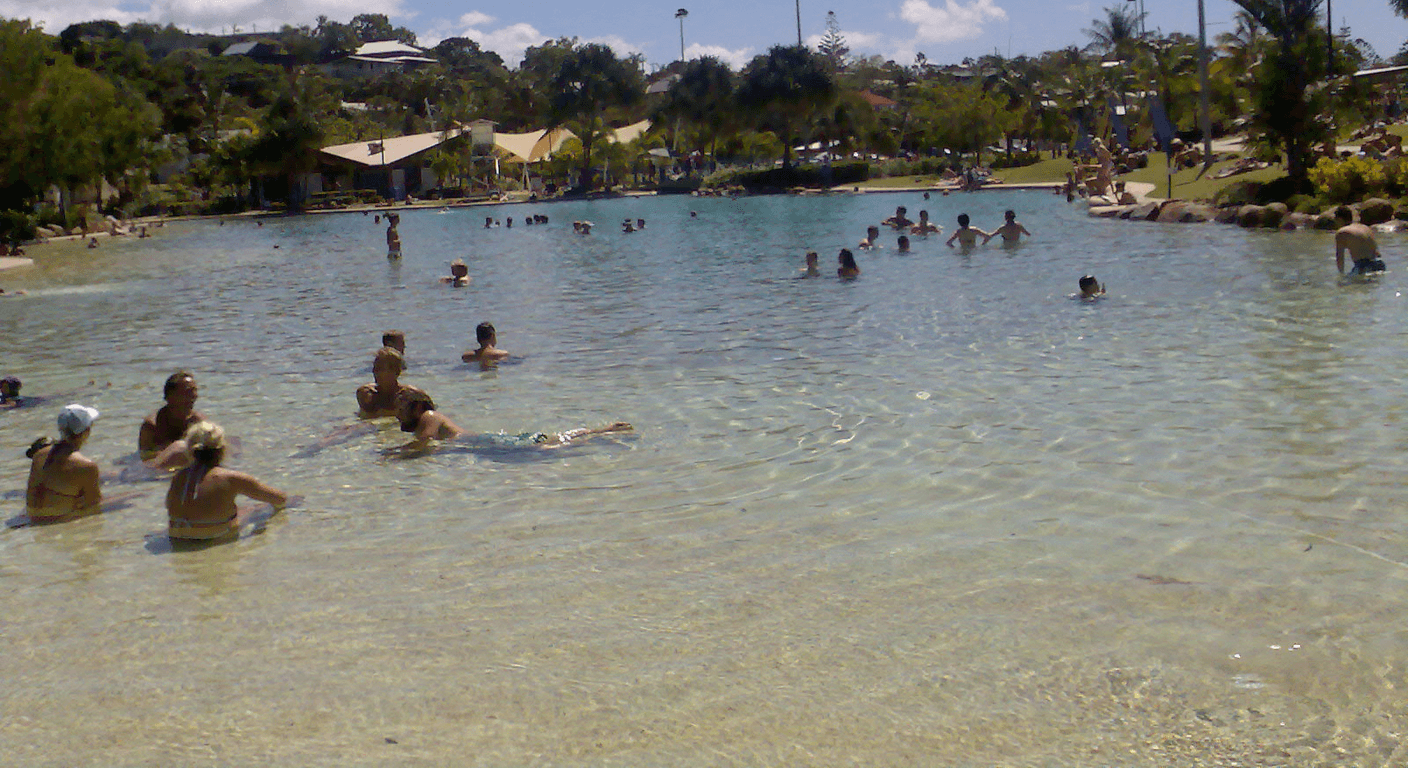
One of Airlie Beach's most practical features for any visitor — and particularly for older travellers — is the Airlie Beach Lagoon, a large, free, stinger-free swimming lagoon on the foreshore managed by Whitsunday Regional Council. It is open daily, patrolled during staffed hours, and set within a grassed parkland with shade shelters, showers, toilets, and nearby cafe seating. Entry is free. The lagoon removes one of the Whitsundays' genuine complications: the presence of marine stingers (including box jellyfish and Irukandji) in open water during the warmer months, which makes unprotected ocean swimming inadvisable for much of the year.
The lagoon is a genuine asset rather than a gimmick. The water is calm, the entry is gradual, and the surrounds are well maintained. For a solo traveller who wants a morning swim before heading out on a day trip, or a cooling dip in the afternoon after returning from the islands, it is simply there and available without booking, fees, or equipment. The parkland around it is also a decent spot for an early morning walk or a quiet hour with a book in the shade.
Accessibility at the lagoon is reasonable, with paved paths around the perimeter and accessible toilet facilities. The pool entry points do involve a short walk across grass or a ramp, so if you use a walking aid, it is worth doing a brief recce on your first morning before committing to a swim session. Confirm current facilities and any seasonal changes with Whitsunday Regional Council before you travel.
Day trips to the islands: what to expect and how to choose
The islands of the Whitsundays — Whitehaven Beach, Hamilton Island, Hook Island, and the outer reef — are all accessible as day trips from Abel Point Marina in Airlie Beach. The marina is roughly a ten-minute flat walk from the town centre, or a short taxi ride if you prefer. Cruise Whitsundays is the main day-trip operator running scheduled departures; their vessels are large, stable, modern catamarans with indoor seating, toilets, and a crew familiar with mixed-ability passenger groups. Individual operators also run smaller boat experiences, but the larger vessels are generally the more comfortable choice for anyone who is cautious about sea conditions.
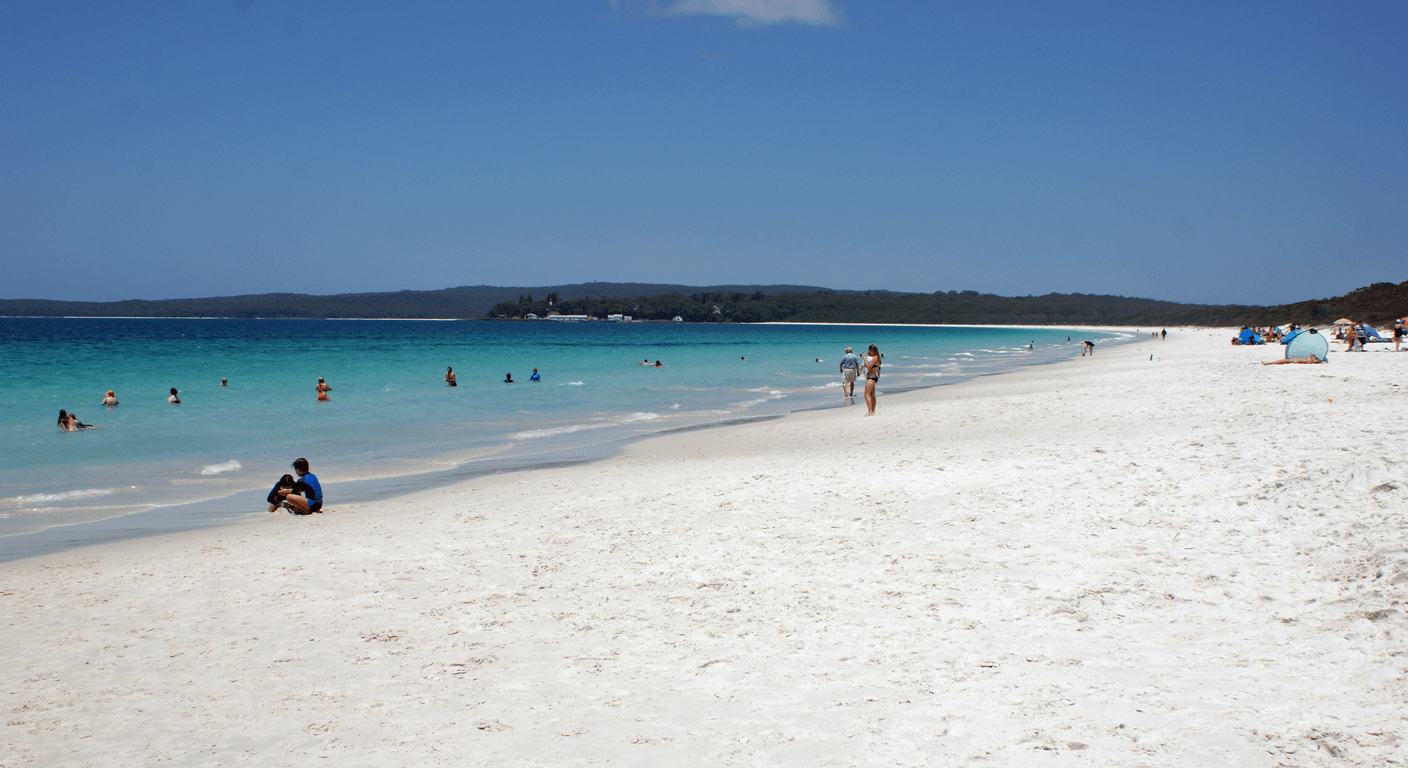
Whitehaven Beach is the signature destination: a long stretch of silica sand on Whitsunday Island, accessible by boat in roughly one to one and a half hours from Airlie. Most day trips include a guided walk to Hill Inlet lookout, which does involve a short, moderately steep bush track. That section is not suitable for people with significant knee or hip limitations, but the beach itself is accessible at the base and worth visiting regardless. The boat ride can involve swell depending on wind conditions, so if you are prone to motion sickness, take appropriate medication before departure.
For a gentler day on the water, a cruise to Hamilton Island gives you the option of exploring the island by golf buggy (available for hire on the island), having lunch at one of the waterfront restaurants, and returning to Airlie in the afternoon — all without any walking on uneven terrain. The Great Barrier Reef day trips to the outer pontoon are also available and suit travellers who want to snorkel or simply observe the reef from a glass-bottom boat or semi-submersible. When choosing a trip, be direct with the operator about any mobility considerations — they can advise which activities on the day are realistic and which to skip.
The marina boardwalk: evenings, dining, and not rushing
One of the quieter pleasures of Airlie Beach is the marina boardwalk in the early evening. Abel Point Marina has a strip of restaurants, cafes, and bars facing the water, and the atmosphere between about 5pm and 8pm is relaxed rather than rowdy. The clientele is a mix of boat owners, day-trippers heading home, and accommodation guests — a demographic that tends toward the settled end of things, which suits a solo diner who wants to eat well without feeling out of place.
The dining options include casual seafood, contemporary Australian, and a handful of international styles. Quality varies, as it does in any tourist town, so asking your accommodation host for a current recommendation is worth doing on arrival. Prices at the marina restaurants are in the moderate to moderately expensive range — indicative mains around $28–$45 AUD — but confirm current menus and prices directly with individual venues. For a lighter evening meal, the cafes around the town centre and the IGA supermarket on the main street give you alternatives without the restaurant price point.
The flat boardwalk surface makes the marina a comfortable evening walk regardless of pace. Lighting is adequate after dark, and the walk from the town centre to the far end of the marina and back is around two to three kilometres — manageable as a gentle post-dinner stroll, or shortened easily if you prefer. There is bench seating at intervals along the boardwalk, which makes it a practical route even for those who need to rest periodically.
Practical notes on pacing, health, and travelling solo
Airlie Beach works well as a destination precisely because it does not demand constant activity. A four- or five-night stay might reasonably include two day trips to the islands, one or two mornings at the lagoon, a half-day exploring the town and surrounds, and the remainder spent reading, eating, and watching the water. That is not a failure to make the most of the destination — it is a sensible way to travel at 60-plus, particularly solo, when there is no one else's schedule to accommodate.
Travel insurance is non-negotiable for any interstate trip, and particularly for one that involves boat trips and water activities. Ensure your policy covers pre-existing conditions and any activity you plan to undertake, including snorkelling if that is on your list. Queensland's UV index is significantly higher than Victoria's even in the cooler months, so sun protection — hat, SPF 50+ sunscreen, and a long-sleeved layer on the boat — is practical rather than optional. Hydration matters more than it might seem in a tropical climate, even when it does not feel oppressively hot.
For a solo male traveller, the social dynamics of Airlie Beach are straightforward. It is not a party town in the way that, say, the Gold Coast can be, but it is not a retiree resort either. The marina and foreshore attract a broad mix of ages, and striking up a conversation over dinner or at the lagoon is easy enough without any particular effort. If you enjoy your own company, the destination accommodates that just as well. The town is safe, well-lit, and small enough that you will quickly develop a sense of where everything is.
Key takeaways
- Airlie Beach is a compact, walkable mainland hub that gives you access to the Whitsundays without committing to a multi-night sailing or liveaboard itinerary.
- The free foreshore lagoon pool is stinger-free, patrolled, and open daily — a practical alternative to open-water swimming for much of the year.
- Proserpine/Whitsunday Coast Airport is a small, low-stress regional terminal with direct services from Melbourne Tullamarine via Jetstar and Virgin Australia.
- Day trips to Whitehaven Beach, Hamilton Island, and the outer reef depart from Abel Point Marina and suit travellers who prefer a single day on the water rather than overnight sailing.
- May through September is the most comfortable travel window for Victorians — warm and dry, with lower humidity and manageable conditions on the water.
- A four- to five-night stay is enough to see the main island highlights without overextending — the town rewards a slower pace rather than punishing it.
Recommended partners and links
Indicative prices only — always confirm with the operator before booking.
Frequently asked questions
Do you need to book a multi-night cruise to see the Whitsundays?
No. Day trips departing from Abel Point Marina in Airlie Beach give independent travellers access to Whitehaven Beach, Hamilton Island, and the outer Great Barrier Reef without any overnight sailing commitment. Operators such as Cruise Whitsundays run scheduled daily departures on large, stable catamarans. You can book individual trips as you go or in advance, and return to your Airlie Beach accommodation each evening.
Is Airlie Beach suitable for travellers with limited mobility?
The foreshore and marina boardwalk are flat and paved, making them accessible for most walkers. The town itself sits on a hill, so accommodation on the waterfront strip is preferable for anyone who finds slopes difficult. The free lagoon pool has accessible facilities, though the entry involves a short grassed section — worth checking in person on arrival. The Hill Inlet lookout walk on Whitehaven Beach involves a moderately steep track and is not suitable for those with significant knee or hip limitations, but the beach itself is accessible at the base. Always discuss mobility needs directly with day-trip operators before booking.
What is the best time of year for a Victorian to visit Airlie Beach?
May through September is the most practical window. Conditions are warm and dry, humidity is lower than in the wet season, and marine stinger risk in open water is reduced. July and August are peak season with higher accommodation prices; May, June, and September offer a good balance of pleasant weather and relative value. Avoid the wet season (November through April) unless you are comfortable with high humidity, stinger risk, and the possibility of cyclone disruption.
How do you get from Proserpine Airport to Airlie Beach?
Whitsunday Transit operates a shuttle service between Proserpine/Whitsunday Coast Airport and Airlie Beach, with a journey time of around 35 to 40 minutes. Taxis and rideshare options are also available from the airport. Pre-booking a transfer is advisable, particularly on arrival late in the day when options may be limited. Confirm current timetables and fares directly with Whitsunday Transit at whitsundaytransit.com.au before you travel.
Is Airlie Beach a reasonable destination for a solo male traveller over 60?
Yes. The town is safe, compact, and easy to navigate independently. Solo dining at the marina restaurants is comfortable and unremarkable — the clientele is a broad mix of ages and the atmosphere is relaxed. Day trips are run on group vessels where solo travellers join other passengers, so there is natural social opportunity without any pressure. The destination suits both those who enjoy their own company and those who are open to conversation.
Got a tip, a price update or a story from this route? The community would love to hear it.
Share your views on our Facebook page— Seniors and Solo Traveller Stories