The Yarra Valley in winter strips back the crowds and the fuss, leaving something that suits a slower pace rather well. Cellar doors light their fires, lunch menus lean hearty, and the vineyards — bare and a little austere — feel like a place you have to yourself. This guide covers where to go, how to get there without a hire car if needed, and what to expect to spend.
Why winter is actually the right time to visit the Yarra Valley
From December through to late February, the Yarra Valley can feel like a managed event rather than a place to simply spend a day. Coaches idle in car parks, cellar doors queue visitors through in rotation, and getting a quiet table for lunch requires either luck or a very early booking. Winter changes that equation entirely. By June, the crowds thin to almost nothing on weekdays, and even weekends feel manageable.
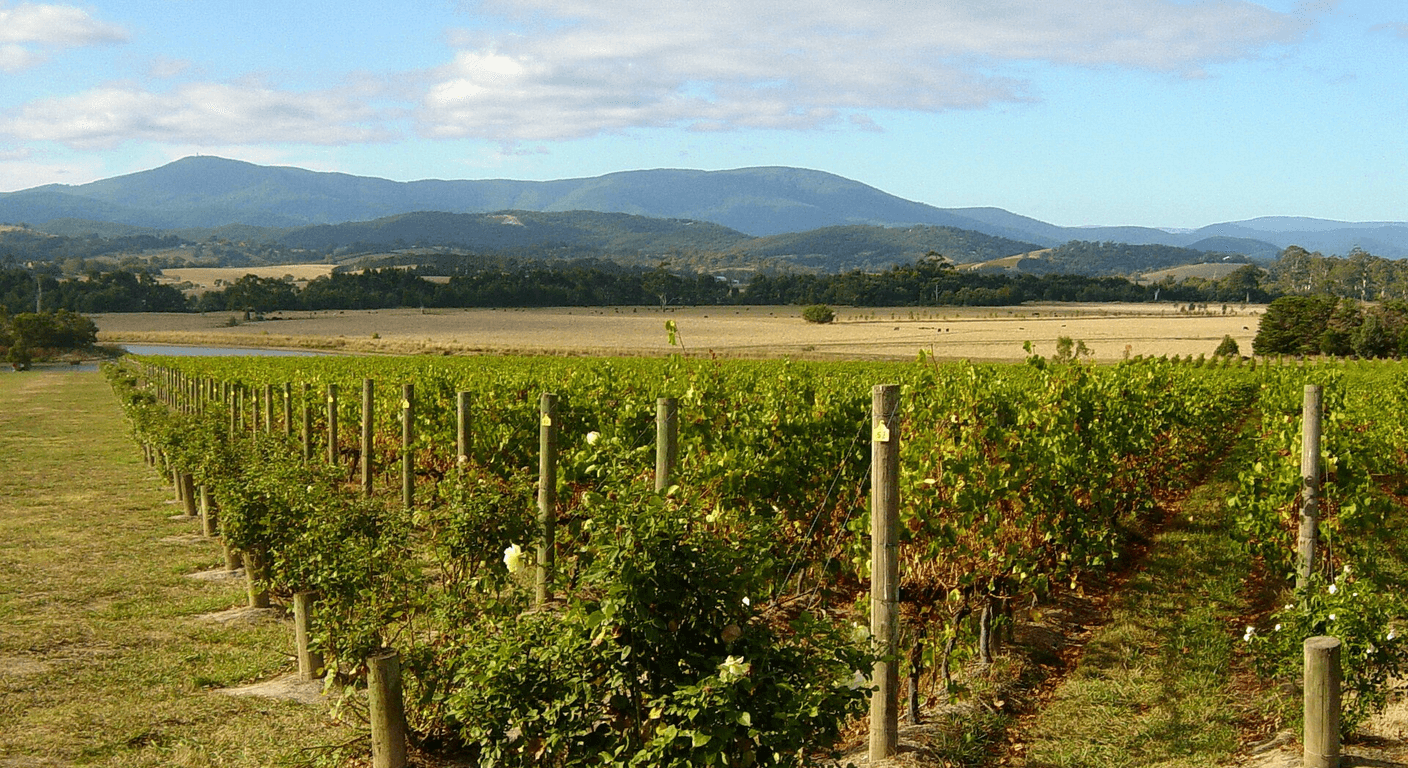
The vines are dormant through July and August, which means the romantic rolling green canopy of the promotional photographs is not what you will find. The rows are bare, the posts and wires exposed, and the hills take on a grey-green, slightly melancholy quality. That is worth knowing before you go. But the trade-off is genuine: a fire burning in a stone or brick cellar door, a menu built around slow braises and root vegetables, staff who have time to actually talk about the wine, and a pace that feels like the valley is letting you in rather than processing you through.
For a solo traveller who values a long, unhurried lunch over ticking off attractions, the Yarra Valley in winter is one of the more satisfying day trips available within an hour or so of Melbourne. The drive east along the Maroondah Highway through Lilydale is straightforward, and the region's main cellar doors are clustered around Coldstream, Healesville, and Yering — close enough to visit two in a day without feeling rushed.
Yering Station: a serious lunch in a heritage setting
Yering Station, on Melba Highway near Yering, is one of the oldest vineyard sites in Victoria, and the cellar door and restaurant occupy a converted farm building that suits winter well. The interior is warm and properly furnished — this is not a shed with a few barrels — and the restaurant runs a lunch service that leans into the season with dishes built around slow cooking and local produce. Mains are indicatively in the $35–$45 range; check the current menu at yering.com before you go.
The wine list covers the estate's pinot noir and chardonnay alongside other varieties, and the staff are unhurried and knowledgeable. Tasting flights are available, and if you are booking a table for lunch, it is worth asking when you reserve whether the tasting fee applies — policies vary and winter can bring more flexibility. The restaurant has good indoor seating and is accessible at ground level, though it is worth calling ahead if mobility is a specific consideration, as the property has some uneven surfaces outside.
A reservation is advisable even in winter, particularly on weekends, because the restaurant is not large. The Yering Station website allows online booking, or a phone call works just as well. Give yourself the full afternoon rather than trying to fit in another stop immediately after — a proper two-course lunch with a glass or two of wine is not a forty-minute exercise.
Domaine Chandon: sparkling wine, a proper room, and no rush
Domaine Chandon, also on Maroondah Highway at Coldstream, is known primarily for its méthode traditionnelle sparkling wines, but the cellar door experience in winter is more than a tasting room visit. The building is architecturally considered, with floor-to-ceiling windows looking out over the vineyard — bare in winter, yes, but the structure of the landscape reads well, and the interior is warm and well-lit.
The food offering at Chandon sits somewhere between a serious cellar door experience and a light restaurant — grazing plates, charcuterie, and seasonal dishes that pair with the wine list. Mains and sharing plates are indicatively in the $30–$42 range; confirm current pricing at chandon.com.au. Tasting flights are a structured part of the visit and the staff are good at explaining the wines without being condescending — a quality that matters when you are spending real money.
Chandon is accessible, with level entry to the main building and good seating options. It is a slightly more polished experience than some smaller cellar doors, which suits some travellers and not others. If you prefer somewhere with a more personal, family-run feel, Punt Road (below) offers a different register entirely.
Punt Road Wines: smaller, quieter, and worth the detour
Punt Road Wines, operating under the Napoleone & Co. umbrella at Coldstream, is a smaller proposition than Yering or Chandon, and that is precisely its appeal in winter. The cellar door is intimate, the range focused on cool-climate varieties including pinot noir, chardonnay, and shiraz, and the staff tend to be genuinely engaged rather than managing volume.
The food offering is lighter — cheese and charcuterie boards rather than a full restaurant menu — so Punt Road works best as a second stop after a proper lunch elsewhere, or as the main event if you are after something informal. Tasting fees are indicatively in the $10–$15 range and are often waived when you are purchasing or have booked ahead; confirm this directly at puntroad.com.au. The setting is pleasant without being showy, and on a quiet winter weekday you may well have the tasting room largely to yourself.
Accessibility is reasonable at ground level, though the property has some gravel paths outside. It is worth a call ahead if you have specific mobility needs. Punt Road is close to both Yering and Chandon, so a morning visit followed by lunch at one of the larger venues — or the reverse — makes for a well-paced day without any significant driving.
Getting there: what you need to know about transport
This is where the Yarra Valley asks something of you that the inner-city food scene does not. Public transport to the cellar door cluster around Coldstream and Yering is genuinely limited. The Lilydale line on the Metro network gets you as far as Lilydale station, but from there to the main cellar doors is a further fifteen to twenty kilometres, and there is no reliable local bus service that connects the dots on a schedule suited to a leisure day.
The practical options are: driving your own car, which is straightforward on the Maroondah Highway and the surrounding roads; booking a small-group day tour from Melbourne, several of which operate specifically for the Yarra Valley wine region and include transport, a guide, and entry to two or three cellar doors; or arranging a taxi or rideshare for the Lilydale-to-vineyard leg if you prefer to take the train to Lilydale first. The Visit Victoria website lists licensed tour operators covering the region and is a good starting point for comparing options. Indicative tour pricing from Melbourne is roughly $120–$180 per person for a small-group day, but this varies considerably — confirm with individual operators.
If you are driving, note that the roads are generally good but can be wet and slow in heavy winter rain, and some of the smaller cellar door access roads are unsealed. Allow extra time and do not feel pressured to rush the return trip in fading afternoon light. If you are on a tour, the logistics are handled for you, which for a solo traveller is often the more relaxed choice regardless of the cost.
What does a cellar door lunch actually cost?
A two-course lunch at Yering Station or Chandon, with a glass of wine, will indicatively sit somewhere between $70 and $100 depending on what you order and whether you add a tasting flight. These are not budget prices, but they are not extraordinary for a restaurant of this quality, and the experience — fire, good wine, unhurried service, a view even in winter — is part of what you are paying for. Tasting fees at most cellar doors in the region are indicatively $10–$30, and many will apply the fee as a credit toward a bottle purchase or waive it entirely if you are booking a table. Always ask.
If you are watching the budget, a lighter approach works well: drive or tour to the region, do a tasting at Punt Road (which is lower-cost and more informal), have a modest lunch from their boards, and spend the money you save on a bottle to take home. The Yarra Valley is not a place that requires you to spend heavily to have a good day — it rewards pacing and selectivity more than volume.
Parking at the main cellar doors is free. There is no entry fee to the cellar door itself at any of the venues listed here. The costs are in what you eat and drink, which is as it should be. All prices noted in this guide are indicative only and should be confirmed directly with venues before you visit.
A few honest notes on the winter experience
The vineyard views in winter are not what the photographs show. If you are expecting lush green rows with leaves catching the afternoon light, you will need to come back in November. What you get instead is the bones of the landscape — the shape of the hills, the structure of the vines, the way the mist sits in the low paddocks on a cold morning. Some people find that more interesting than the postcard version. Others do not, and that is a fair response.
The pace is slower in a way that is not just about crowds. Staff have more time. Lunches run longer. There is less of the slight pressure that comes from a busy summer service where the next sitting is waiting. For a solo traveller, that unhurried quality is worth something real — it is easier to have a genuine conversation with a winemaker or a waiter when neither of you is being moved along.
Winters in the Yarra Valley can be cold and wet. A good jacket, comfortable waterproof shoes, and the expectation that you will spend most of the day indoors will serve you better than hoping for a sunny terrace. Most of the cellar doors listed here have strong indoor spaces specifically because they understand their winter clientele. Go prepared and the weather becomes part of the atmosphere rather than a disappointment.
Key takeaways
- The Yarra Valley in winter is quieter, slower, and more personal than the summer version — a genuine trade for those who value pace over scenery.
- Cellar door tasting fees in the region are often waived when you book a lunch table; always ask when you make your reservation.
- Public transport does not reach the main cellar door cluster — a car, a small-group tour, or a taxi from Lilydale station are the realistic options.
- A two-course cellar door lunch with a glass of wine is indicatively $70–$100 per person; confirm current pricing directly with venues.
- Winter vineyard views are bare and austere — knowing that before you go means it reads as atmosphere rather than disappointment.
- Yering Station, Domaine Chandon, and Punt Road Wines each offer a different register of experience, making it easy to match the day to your mood and budget.
Recommended partners and links
Indicative prices only — always confirm with the operator before booking.
Frequently asked questions
Can you get to Yarra Valley cellar doors without a car?
Public transport reaches Lilydale station on the Metro network, but the main cellar doors around Coldstream and Yering are a further fifteen to twenty kilometres away with no reliable connecting bus. The practical options are driving, booking a small-group wine tour from Melbourne that includes transport, or taking a taxi or rideshare from Lilydale station. The Visit Victoria website lists licensed tour operators for the region.
Are cellar door tasting fees waived if you have lunch?
Many Yarra Valley cellar doors waive or reduce their tasting fee when you book a lunch table, but this is not universal or automatic. It is worth asking directly when you make your reservation. At Punt Road Wines, for example, the tasting fee is often waived with a table booking or a bottle purchase — confirm this when you call or book online.
Are Yarra Valley cellar doors accessible for older travellers with mobility considerations?
The main cellar doors at Yering Station, Domaine Chandon, and Punt Road Wines all have ground-level entry to their primary indoor spaces, but some have uneven surfaces or gravel paths outside. It is always worth calling ahead to describe your specific needs, as staff can usually advise on parking, entry points, and seating arrangements.
What is a realistic budget for a Yarra Valley cellar door lunch day trip?
A two-course lunch with a glass of wine at a cellar door restaurant is indicatively $70–$100 per person, depending on what you order. Add tasting fees of roughly $10–$30 if not waived, and transport costs on top of that — petrol, tour fee, or taxi depending on how you travel. All figures are indicative; confirm current prices directly with venues and tour operators before you go.
Is the Yarra Valley worth visiting in winter if the vines are bare?
That depends on what you are looking for. The vineyard scenery in winter is austere rather than lush, and the promotional photographs of green canopied rows do not reflect what you will see in July or August. What winter does offer is a quieter, more personal experience — smaller crowds, unhurried service, open fires, and seasonal menus. For travellers who prioritise pace and conversation over landscape photography, winter is genuinely one of the better times to visit.
Got a tip, a price update or a story from this route? The community would love to hear it.
Share your views on our Facebook page— Seniors and Solo Traveller Stories