Melbourne does high tea seriously, from storied grand-hotel dining rooms to neighbourhood tea rooms that quietly outperform their price tags. This guide compares the main tiers — classic, mid-range and splurge — on what lands on the stand, how the seating feels for a couple settling in for two hours, and whether the experience justifies the cost. Dietary needs, booking lead times and the quieter weekday sittings that suit a more relaxed pace are all covered honestly.
Why High Tea Works So Well for a Melbourne Couple's Day Out
High tea sits in a comfortable middle ground that suits a couple who want a proper occasion without the demands of a formal dinner. You arrive mid-morning or early afternoon, you settle into a chair for a couple of hours, and the food comes to you in a measured, unhurried way. For anyone who finds a long restaurant dinner tiring, or who simply prefers a lighter, more social meal in daylight hours, it is a sensible and genuinely pleasurable format.
Melbourne's high tea scene has enough range that the choice depends less on budget alone and more on what kind of atmosphere you want to sit inside. A grand hotel gives you architecture and theatre. A heritage tea room gives you intimacy and something that feels closer to a family tradition. A newer garden-adjacent venue gives you light and informality. Each has its own logic, and the price difference between tiers is real but not always proportional to enjoyment.
For couples travelling together or hosting a friend from interstate, high tea also has a useful social structure: the shared stand, the pot of tea that keeps being refilled, the gentle rhythm of savoury before sweet. It encourages conversation in a way that a noisy bistro lunch simply does not. That quality — a room designed for sitting and talking — is worth factoring into your choice alongside the food itself.
The Grand-Hotel Tier: What You Are Actually Paying For
The Langham Melbourne on Southgate and The Hotel Windsor on Spring Street are the two venues most consistently cited when someone asks for Melbourne's definitive high tea experience. Both occupy heritage or prestige buildings, both have staff who have been doing this for years, and both carry indicative prices in the $95–$115 per person range before beverages. That figure is not cheap, and it is worth being clear-eyed about what it buys you.
What you are paying for at this tier is primarily the room and the service. The Langham's Melba restaurant is a large, well-appointed space with upholstered chairs and enough distance between tables that a conversation stays private. The Windsor's high tea takes place in the hotel's heritage-listed interior, which carries genuine Victorian grandeur without feeling like a museum. At both venues, the stands arrive dressed properly — finger sandwiches with real fillings (smoked salmon, egg and watercress, cucumber with herb cream cheese), freshly baked scones with proper clotted cream and jam, and a selection of patisserie that reflects the kitchen's actual skill.
The honest caveat is that the food itself, while good, is rarely what a guest remembers most. It is the experience of being looked after in a beautiful room that justifies the price. If you or your partner have significant mobility concerns, both venues are accessible — The Langham via lift from Southgate, The Windsor with level entry from Spring Street — but it is worth calling ahead to request seating that does not require navigating steps or tight corridors. Both venues can accommodate this without fuss when asked in advance.
The Heritage Tea Room Tier: Hopetoun and Its Peers
Hopetoun Tea Rooms, tucked inside the Block Arcade off Collins Street, is one of Melbourne's oldest tea rooms and still one of its most characterful. The setting is genuinely historic — the arcade dates to 1892 — and the room itself is small, tiled and a little cramped by grand-hotel standards, but that is part of what makes it feel different. Indicative pricing sits around $55–$75 per person for a set high tea, which represents notably better value than the hotel tier for food quality that is genuinely comparable.
The trade-off is comfort and noise. Hopetoun's chairs are upright and the tables are close together, which means the room fills quickly and conversation from neighbouring tables blends into your own. For a couple who find background noise tiring, or who have any hearing difficulty, this is worth knowing before you book. A weekday sitting — Tuesday through Thursday, before noon — is significantly quieter and the staff are less stretched. Booking at least two weeks ahead is advisable for weekends; weekday slots are more available but still worth securing.
Other venues in this tier worth considering include the tea room at the National Trust property Rippon Lea Estate in Elsternwick, which offers a more garden-house atmosphere, and various hotel lounges that run afternoon tea at comparable prices without the grand-hotel overhead. The quality at this tier varies more than at the top end, so reading recent visitor accounts on each venue's own social channels or the venue's booking page is a reasonable step before committing.
The Garden and Newer Venue Tier: Jardin Tan and the Light-Filled Alternatives
Jardin Tan, the cafe and events space within the Royal Botanic Gardens Melbourne on Birdwood Avenue, has built a high tea offering that leans into its garden setting rather than competing with hotel formality. Indicative pricing is around $60–$80 per person, and the atmosphere is distinctly different — more natural light, a view of the gardens, and a tone that is relaxed without being casual. For a couple who find grand hotel dining rooms a little formal or airless, this is a genuinely appealing alternative.
The food at this tier tends toward lighter, more seasonal interpretations of the classic stand. You may find native ingredient flavours appearing in the patisserie, or savoury items that reflect a more contemporary Australian kitchen sensibility. This is not universally better than the traditional approach — if you want a properly executed classic scone with clotted cream, the garden venues do not always match the hotel kitchens — but for someone who finds the traditional format a little heavy, the lighter touch is welcome.
Accessibility at Jardin Tan is generally good — the Botanic Gardens has paved paths and the venue itself is at ground level — but the walk from the car park or tram stop involves some distance. The number 8 tram along Domain Road stops nearby, and the venue can advise on the most direct approach from the gate if you contact them ahead of your visit. Parking within the gardens is limited and can be a short walk from the cafe, so a tram or taxi drop-off is worth considering.
What Is Actually on the Stand, and How Dietary Needs Are Handled
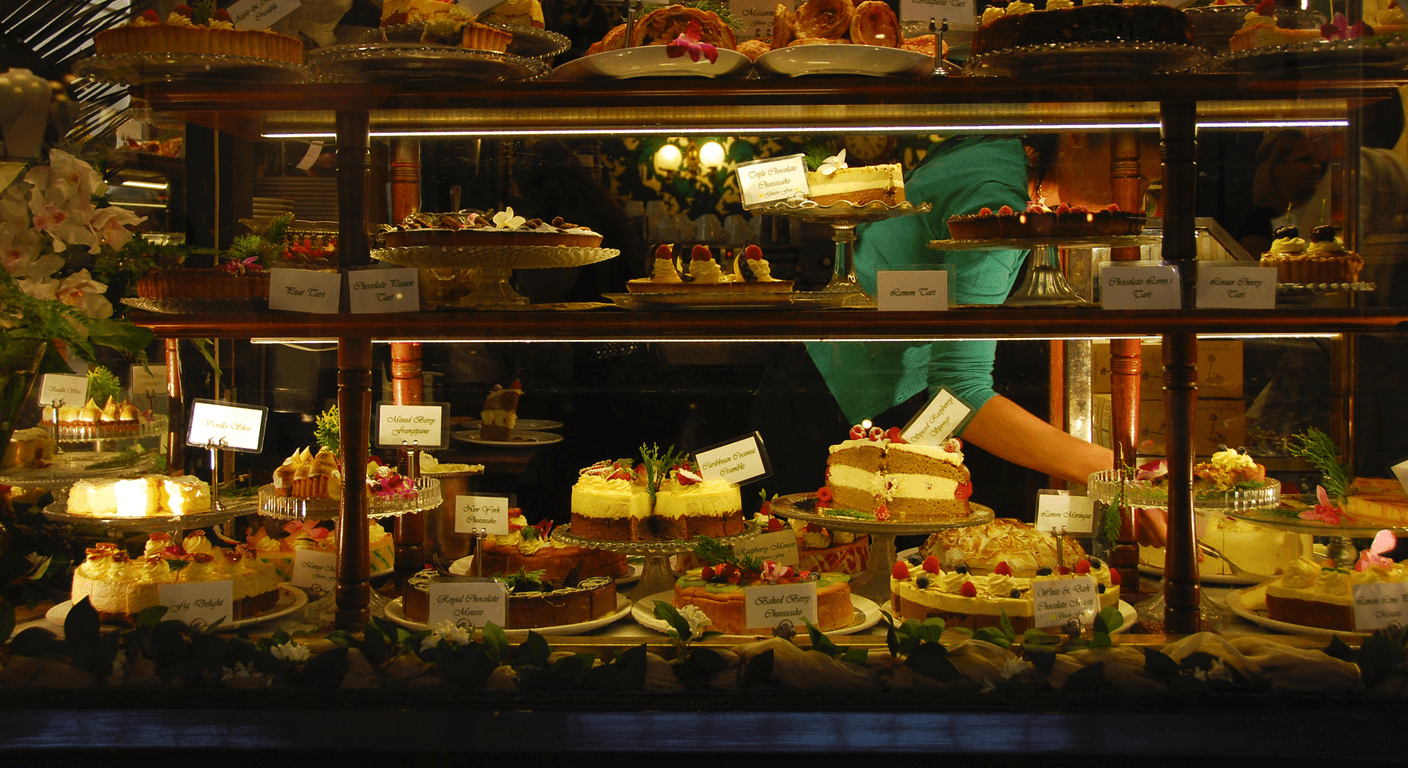
Across all tiers, a standard high tea stand runs three layers: savoury on the bottom (finger sandwiches, occasionally a small savoury tart or blini), scones in the middle (plain and fruit, served warm, with accompaniments), and patisserie on top (petit fours, small cakes, macarons, seasonal tarts). The quality of the scone is often the most reliable indicator of a kitchen's commitment to the format — a properly risen, freshly baked scone is not difficult to achieve but it requires attention, and the difference between a good one and a reheated one is immediately apparent.
Dietary handling varies meaningfully between venues and is worth discussing directly when you book, not as an afterthought. The grand hotel venues — The Langham and The Windsor in particular — have established processes for gluten-free, vegetarian and dairy-free requests, and both can produce a fully substituted stand rather than simply removing items. Some venues now offer a dedicated plant-based high tea menu as a standard option. The heritage tea room tier is more variable: Hopetoun can accommodate some dietary needs but its kitchen is smaller and the substitutions may be less elaborate.
One practical note for couples where one person has dietary requirements: it is worth asking whether the venue serves each person's stand individually or shares a single mixed stand between two. Individual stands make dietary management far simpler and avoid the awkward negotiation over which item belongs to whom. Most venues at the hotel tier default to individual service; some tea rooms still present a shared stand. Confirming this when you book prevents a small but unnecessary complication on the day.
Seating Comfort, Noise Levels and the Case for a Weekday Sitting
Seating comfort is an underrated factor in high tea enjoyment, particularly for a couple planning to spend two hours at a table. Upholstered armchairs or banquette seating with back support make a genuine difference over that duration. The grand hotel venues generally provide this; heritage tea rooms and some garden venues use upright dining chairs that are adequate but not designed for a long, relaxed sit. If back or hip comfort is a consideration, it is worth asking the venue specifically what seating is available and whether a particular table or area can be reserved.
Noise is the other variable that rarely appears in a venue's own marketing. Weekend high tea sittings at popular venues — Hopetoun especially, but also the hotel venues on busy afternoons — can be surprisingly loud. A room full of groups celebrating birthdays and milestones generates a level of ambient noise that some people find tiring, particularly those with any hearing loss. The weekday sitting, typically Tuesday through Thursday between 11am and 1pm, is consistently quieter at every venue in this guide. It is also easier to book, often available with shorter lead times, and sometimes carries a modest discount — worth asking about when you call.
For couples where one partner uses a walking frame or wheelchair, or where fatigue is a factor in planning, the practical logistics matter as much as the venue's reputation. Proximity to public transport, the distance from the entry to the table, and the availability of accessible bathroom facilities are all reasonable questions to ask before you book. Every venue listed here can answer these questions; the ones that cannot or will not are worth crossing off the list regardless of how appealing the menu looks.
Where the Splurge Is Worth It, and Where It Is Not
The honest answer is that the splurge is worth it when the room itself is part of what you want from the occasion. If you or your partner have been to Melbourne many times and want to mark an anniversary, a birthday or a reunion with something that feels genuinely special and unhurried, The Langham or The Windsor delivers that in a way that Hopetoun, for all its charm, simply cannot. The architecture, the service cadence and the sense of occasion are real, and the premium you pay is at least partly going toward something tangible.
The splurge is less clearly worth it when the primary interest is the food. At the $100-per-person mark, the patisserie is accomplished but not dramatically superior to what a skilled pastry kitchen at the mid-range tier produces. A couple who care deeply about the quality of the scone and the precision of the sandwich fillings will find those things done well at Hopetoun or Jardin Tan for considerably less outlay. The food gap between tiers is real but it is not as wide as the price gap.
A middle path that works well for many couples is to do the splurge once — perhaps on a special occasion — and to return to the mid-range tier for the more regular treat. Melbourne's high tea scene is deep enough that rotating through venues over several visits is a pleasure in itself, and the familiarity of a neighbourhood tea room you return to has its own value that no grand hotel can quite replicate. The best high tea is often simply the one where you felt most at ease.
Key takeaways
- Melbourne's high tea tiers range from around $55 to $115 per person, indicatively — the price gap is real but the food quality gap is narrower than it appears.
- Grand hotel venues like The Langham and The Windsor charge a premium primarily for the room and service, not just the food on the stand.
- Hopetoun Tea Rooms in the Block Arcade offers comparable food quality to hotel venues at a lower indicative price, but the seating is upright and the room gets noisy on weekends.
- Weekday sittings — Tuesday through Thursday before noon — are quieter, easier to book and sometimes discounted across most Melbourne high tea venues.
- Dietary needs including gluten-free and plant-based are handled best at the grand hotel tier; always discuss requirements when booking, not on arrival.
- Seating comfort, noise level and accessibility logistics matter as much as the menu for a couple planning a two-hour sit — ask each venue directly before you commit.
Recommended partners and links
Indicative prices only — always confirm with the operator before booking.
Frequently asked questions
How far ahead do you need to book high tea in Melbourne?
Weekend sittings at popular venues like Hopetoun Tea Rooms and The Langham typically require two to four weeks' notice, sometimes more during school holidays or the lead-up to Mother's Day. Weekday sittings are generally available with one to two weeks' notice, and occasionally at shorter notice. Booking directly through the venue's website or by phone is the most reliable approach.
Which Melbourne high tea venues are most accessible for people with mobility needs?
The Langham Melbourne and The Windsor both have lift or level access and can accommodate wheelchairs and walking frames; contacting them in advance to request a suitable table is advisable. Jardin Tan at the Royal Botanic Gardens is at ground level but involves a walk from the tram or car park entry. Hopetoun Tea Rooms inside the Block Arcade is accessible via the arcade itself, though the room is compact and tables are close together.
Do Melbourne high tea venues cater for gluten-free or plant-based diets?
Most venues across all tiers can accommodate gluten-free and vegetarian requirements with advance notice. The grand hotel venues — The Langham and The Windsor — have established processes for dietary substitutions and can produce a fully adapted stand. Some venues now offer a dedicated plant-based high tea menu. Always confirm your requirements at the time of booking rather than on arrival, and ask whether the substituted items will be served on a separate stand or mixed with standard items.
Is a $100-per-person high tea at a Melbourne grand hotel actually worth the cost?
It depends on what you are valuing. If the occasion, the architecture and the quality of service are central to your enjoyment, the grand hotel tier delivers something genuinely different from cheaper alternatives. If your main interest is the food on the stand, the quality difference between the hotel tier and a well-regarded tea room like Hopetoun is narrower than the price difference suggests. For a one-off special occasion, the splurge is reasonable; for a regular treat, the mid-range tier offers better value.
What is the quietest time to do high tea in Melbourne if noise is a concern?
A weekday sitting between Tuesday and Thursday, starting between 11am and noon, is consistently the quietest time at every Melbourne high tea venue. Weekend sittings, particularly on Saturdays, attract larger groups celebrating occasions and the ambient noise level rises accordingly. If hearing difficulty or a preference for a calm environment is a factor, specifying a weekday booking and requesting a table away from the main entry or kitchen is worth doing when you reserve.
Got a tip, a price update or a story from this route? The community would love to hear it.
Share your views on our Facebook page— Seniors and Solo Traveller Stories