The Queen Victoria Winter Night Market runs on Wednesday evenings through July and August, transforming Melbourne's historic market precinct into a lantern-lit food and drink destination. Entry is free, the food stalls are varied and reasonably priced, and for travellers over 60 who are comfortable on their feet for an hour or so, it offers a genuine taste of a Melbourne winter evening. Those who need to sit for longer will want a plan B, and this guide covers both.
What is the Queen Victoria Winter Night Market?
Every Wednesday evening through July and August, the Queen Victoria Market sheds its daytime produce identity and becomes the Winter Night Market. The open-air sheds and surrounding laneways fill with food stalls, warm drinks, and live music, all running from around 5pm to 10pm. Entry to the market precinct is free, which makes it an accessible option for travellers watching their budget without sacrificing the atmosphere.
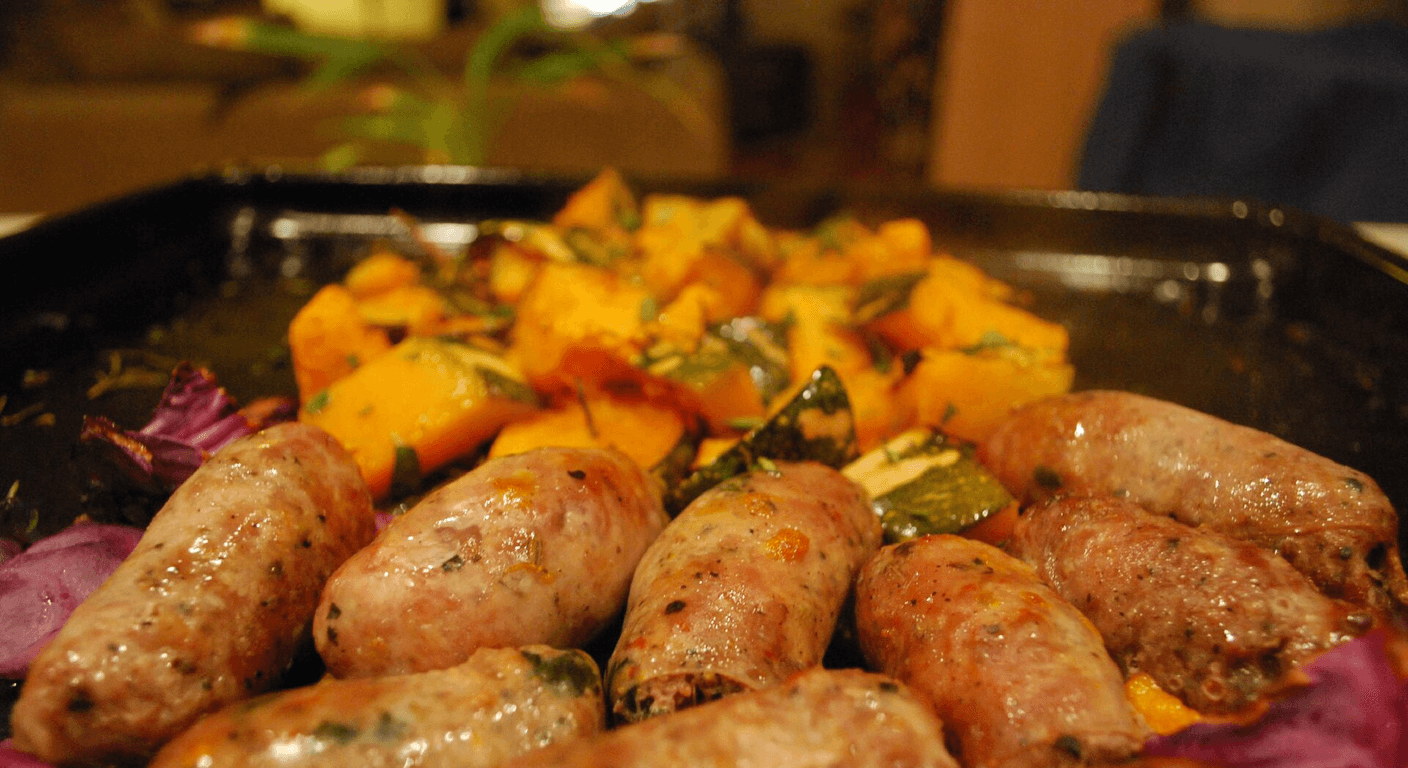
The market has been running this winter format for well over a decade, and it has settled into a rhythm that Melburnians know well. The offering leans heavily into street food — think wood-fired dishes, dumplings, braised meats, mulled wine, and hot cider — rather than produce shopping. For a couple who enjoys grazing their way through a meal rather than sitting down to a set menu, the format suits well. The key is going in with realistic expectations about comfort and pacing.
How much does it cost to eat at the Winter Night Market?
Entry to the market is free. Food and drink is where the spending happens, and most savoury dishes at the stalls are priced in the roughly $10 to $18 range per serve, with some premium items sitting higher. A couple sharing two or three dishes and a warm drink each can expect to spend somewhere in the indicative range of $60 to $90 for the evening, depending on choices. These are indicative figures only — confirm current stall pricing when you arrive, as it varies by operator and season.
Drinks tend to be a separate purchase. Mulled wine, craft beer, and non-alcoholic warm options like spiced apple cider are usually available from dedicated drink stalls. Budget around $10 to $14 per drink as a rough guide, though again, confirm on the night. There are no hidden charges or booking fees — you simply walk in, choose what appeals, and pay at each stall directly.
For those who want to keep costs down further, eating before you go and treating the market as a one-dish-and-a-drink experience is a perfectly reasonable approach. The atmosphere is the attraction as much as the food, and nobody is checking how much you spend.
How do you get there by tram?
The Queen Victoria Market sits on the corner of Victoria and Elizabeth Streets in Melbourne's CBD fringe, and it is well served by public transport. Tram routes 24 and 30 both stop close to the market on Elizabeth Street, making them the most direct tram options from the southern CBD and Flinders Street corridor. Route 57 along Flemington Road also brings you to the northern end of the market. Check the PTV Journey Planner at ptv.vic.gov.au for the stop closest to your starting point.
Victorian Seniors Card holders travelling on a Myki card are entitled to the concession fare on metropolitan trams, which reduces the cost considerably. If you are not already set up with a Myki, they can be purchased and loaded at major train stations and some convenience stores. The tram ride from the CBD is short — often under ten minutes from stops near Flinders Street — which makes the return trip in the cold manageable rather than arduous.
For those driving, paid parking is available in the market's own car park off Peel Street, but Wednesday evenings can fill it quickly by 6pm. If mobility is a consideration and driving makes things easier, arriving by 5:15pm gives you the best chance of a convenient space. Confirm current parking arrangements and costs on the QVM website before you go.
What are crowd levels like, and when is the best time to arrive?
Arriving around 5pm to 5:30pm gives you the most comfortable experience. Stall queues are shorter, the walking paths through the sheds are navigable without being pressed by crowds, and you can take your time reading menus without feeling rushed. By 7pm the market is noticeably busier, and by 8pm it reaches its peak — narrow paths between stalls become congested, and the noise level rises considerably.
For a couple in their seventies, the earlier window is the practical choice. You get the full experience, the food is fresh, and you are heading back to warmth before the coldest part of a Melbourne winter night sets in. The market runs until 10pm, but there is no reason to stay until then unless you are enjoying it and feeling comfortable. Pacing yourself is the point.
Be aware that Wednesdays during school holidays can draw larger family crowds, which affects both the queues and the noise level. If you prefer a quieter evening, mid-July weekdays outside school holiday periods tend to be the most relaxed. Check the Victorian school holiday calendar if timing matters to you.
Is the Winter Night Market accessible and comfortable for over-60s?
This is where honesty matters. The Winter Night Market is predominantly a standing and walking event. Seating exists — there are bench tables and some tiered seating areas scattered through the precinct — but it is limited relative to the number of visitors, and by 6pm most of it is taken. If you need to sit down regularly, or if extended standing on hard ground causes discomfort, the market in its current format may not suit a full evening visit.
The ground surfaces inside the sheds are largely flat and paved, which is manageable for most mobility levels, but the outdoor sections can include uneven cobblestone-style paving. Sensible footwear — warm, flat-soled, and comfortable — is more important here than it might be at a restaurant. A walking stick or similar aid is not out of place and will not draw any attention.
For anyone who finds the standing element a genuine barrier, the better approach is a short visit of 30 to 45 minutes — enough to soak up the atmosphere, grab a dish and a warm drink, and then move on to a nearby seated venue. This is not a compromise; it is a sensible way to enjoy the market without pushing beyond what is comfortable.
Where can you sit nearby if the market is too crowded?
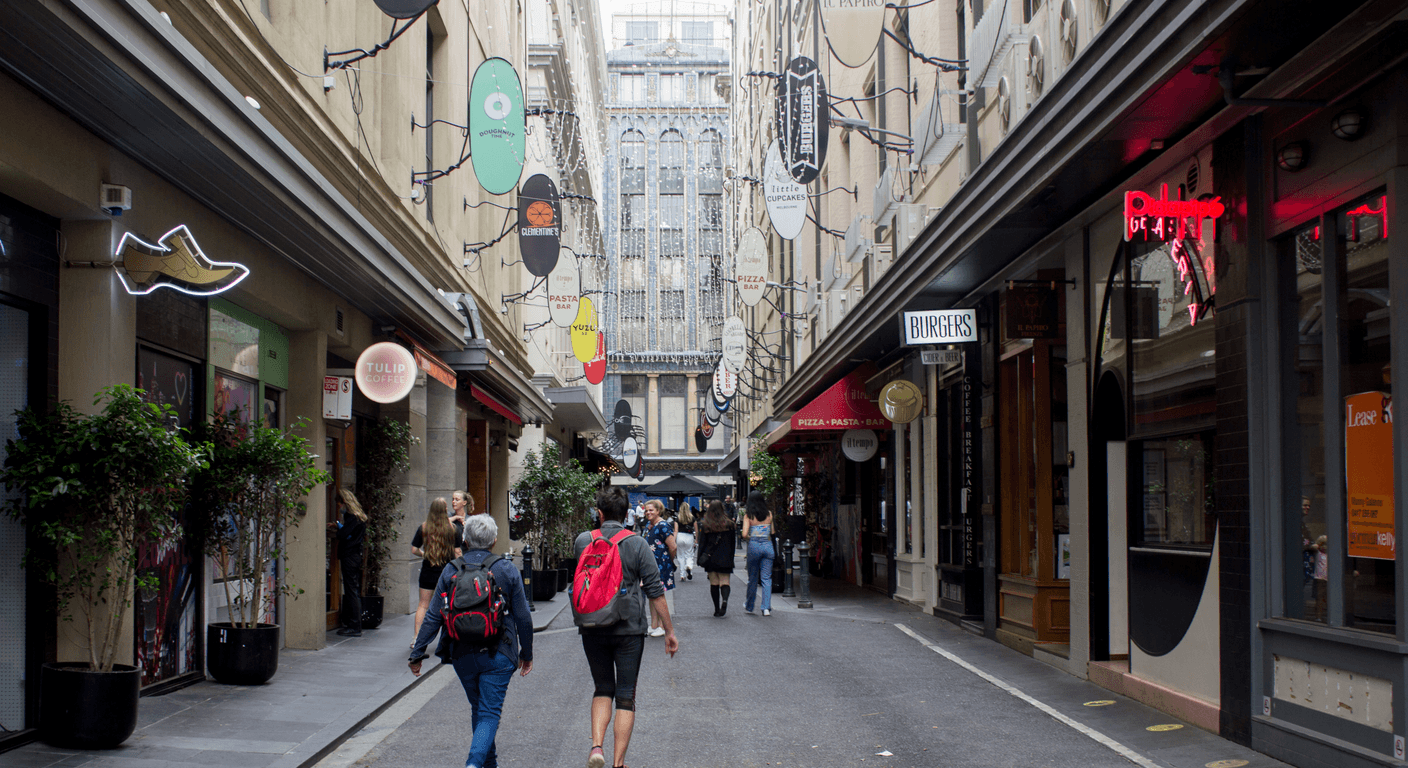
The streets immediately surrounding the Queen Victoria Market have a good spread of cafes and restaurants that operate on Wednesday evenings. Hardware Lane, a short walk south into the CBD, has a cluster of Italian and European-style eateries with indoor seating and table service — well suited to a couple who wants a proper sit-down meal before or after a brief market stroll. Lygon Street in Carlton is a short tram or taxi ride north and offers a broader range of Greek and Italian restaurants with comfortable, unhurried dining.
For something lower-key, the Boilerhouse Food Hall inside the market precinct itself has some indoor seating and a more sheltered environment than the open-air stalls, though it too fills up on busy nights. It is worth noting as an option if the weather turns sharp or the main market area becomes too congested.
Planning a hybrid evening — a sit-down meal at a nearby restaurant followed by a short walk through the market for dessert or a drink — is a genuinely enjoyable way to structure the night. You get the best of both without the discomfort of standing for two hours in a July wind.
What should you wear and bring?
Melbourne in July is reliably cold after dark, with temperatures commonly dropping to between four and ten degrees Celsius by 7pm. A warm coat is not optional — it is the single most important thing you bring. Layering works well: a thermal base layer, a mid-layer jumper, and a wind-resistant outer coat will see you through comfortably. A scarf and warm hat are worth the pocket space.
The 'rug up' advice is not just a cliché here. Standing still at a stall queue for five minutes in a cold wind is a different experience from walking briskly. Gloves make handling food and drinks at the stalls much more comfortable, and they are easy to slip off and pocket when needed. Comfortable, closed-toe shoes with some insulation — not fashion footwear — are the right call.
Bring your Myki card, a small amount of cash as backup (most stalls accept card, but not all), and your phone charged for the return journey. A small backpack or cross-body bag keeps your hands free for food and drinks without worrying about bags on the ground. Leave anything bulky at your accommodation.
Key takeaways
- Entry to the Queen Victoria Winter Night Market is free; budget roughly $60–$90 for food and drinks for two, though confirm current stall prices on arrival.
- Tram routes 24 and 30 on Elizabeth Street offer direct access from the CBD, and Victorian Seniors Card holders travel on the concession Myki fare.
- Arriving between 5pm and 5:30pm means shorter queues, navigable crowds, and a more relaxed pace compared to the 8pm peak.
- Seating inside the market is limited and fills quickly — those who need to sit regularly should plan a nearby restaurant as part of the evening.
- Flat-soled, warm, closed-toe shoes and a proper winter coat are the two things most likely to determine whether you enjoy the night.
- A hybrid evening — dinner at a seated nearby restaurant plus a short market stroll for dessert or a drink — suits couples who want atmosphere without two hours on their feet.
Recommended partners and links
Indicative prices only — always confirm with the operator before booking.
Frequently asked questions
Is entry to the Queen Victoria Winter Night Market free?
Yes, entry to the Queen Victoria Winter Night Market is free. You pay only for food and drinks at individual stalls, which are typically priced in the roughly $10 to $18 range per dish. Confirm current stall pricing on the QVM website or on arrival, as it varies by operator.
Which tram goes to the Queen Victoria Market on Wednesday nights?
Tram routes 24 and 30 on Elizabeth Street stop close to the Queen Victoria Market and are the most direct options from the southern CBD. Route 57 along Flemington Road serves the northern end of the precinct. Use the PTV Journey Planner at ptv.vic.gov.au for the stop nearest your starting point.
Is the Queen Victoria Winter Night Market suitable for people with mobility limitations?
The market is primarily a standing and walking event with limited bench seating that fills quickly. The indoor shed areas are largely flat and paved, but some outdoor sections have uneven surfaces. For those who need to sit regularly, a short visit of 30 to 45 minutes combined with a nearby seated restaurant is a more comfortable approach than expecting to spend a full evening there.
What time is the Queen Victoria Winter Night Market least crowded?
The market is least crowded in the first hour after opening, roughly 5pm to 6pm. By 7pm crowds build noticeably, and 8pm is typically the busiest period. Arriving at 5pm to 5:30pm gives you the best access to seating, shorter stall queues, and a more relaxed atmosphere.
When does the Queen Victoria Winter Night Market run in 2026?
The Winter Night Market typically runs on Wednesday evenings through July and August each year. Confirm the exact 2026 dates and any program changes directly on the Queen Victoria Market website at qvm.com.au before you plan your visit.
Got a tip, a price update or a story from this route? The community would love to hear it.
Share your views on our Facebook page— Seniors and Solo Traveller Stories