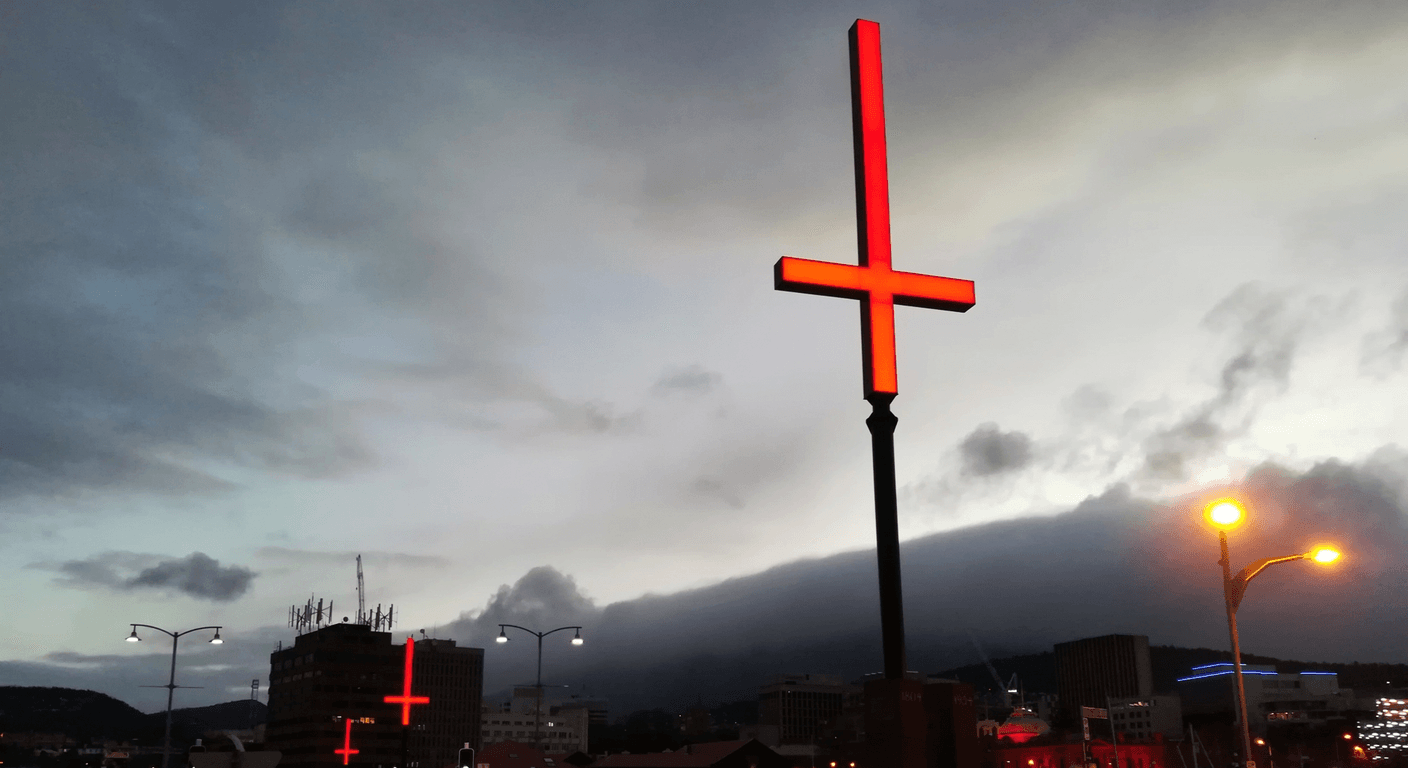
MONA — the Museum of Old and New Art — sits carved into the sandstone cliffs of Berriedale, about twelve kilometres north of Hobart's city centre. For older travellers, particularly those visiting as a couple or joining a small group, the underground galleries and the ferry crossing from the waterfront combine to make this one of the most distinctive cultural experiences in Australia. This guide covers everything you need to know to pace it well, navigate the site comfortably, and leave with a clear sense of whether it suits you.
What is MONA and why does it matter for older travellers?
MONA — the Museum of Old and New Art — is a privately owned museum founded by David Walsh and opened in 2011. It is built almost entirely underground, tunnelled into the dolerite and sandstone of a peninsula on the Derwent River. The collection spans ancient Egyptian artefacts, Roman antiquities, and challenging contemporary works, all displayed together without conventional wall labels. Instead, visitors use a device called 'the O' — an iPod-based guide — to navigate at their own pace.
For travellers in their sixties and seventies, MONA offers something genuinely rare: a world-class cultural institution that rewards slow, thoughtful exploration rather than rushing through rooms. There is no single correct path through the galleries. You can spend two hours or five, depending on what holds your attention. That flexibility suits older visitors well, particularly those who find the pressure of timed entry or crowded guided tours tiring.
It is worth being clear-eyed from the start: some works at MONA are sexually explicit, viscerally confronting, or deliberately unsettling. This is not a museum that softens its edges. If you are visiting with a partner or friend who is sensitive to graphic imagery, it is worth reading the content notes on the MONA website before you go, so there are no unwelcome surprises underground.
The ferry from Hobart waterfront: the smarter way to arrive
The Mona Roma ferry departs from Brooke Street Pier on the Hobart waterfront and travels up the Derwent River to MONA's private dock. The crossing takes roughly twenty-five minutes each way and the boats — Mona Roma I and Mona Roma II — are comfortable, with indoor seating and outdoor decks. For most visitors, this is far preferable to driving, and for older travellers it removes the stress of finding parking on a busy day.
The ferry experience itself is part of the visit. The Derwent is wide and the views of the mountain and the river bends are genuinely pleasant. Staff on board are helpful, and boarding at Brooke Street Pier is straightforward — the pier is well-signed from Sullivan's Cove and Salamanca Place, both of which are central to most Hobart accommodation. Getting to the pier on foot from the CBD involves a flat, manageable walk along the waterfront.
Ferries run on a schedule that is tied to MONA's opening hours, and the last return departure is timed to allow a full day at the museum. Check the current timetable on the MONA website before you travel, as seasonal changes apply. The return ferry ticket is indicatively priced at around $30–$40 AUD per person, though you should confirm current fares directly with MONA when booking. Tickets can be purchased as part of a combined ferry-and-entry package, which simplifies the logistics considerably.
Driving versus the ferry: an honest comparison
MONA is accessible by car and has on-site parking, which can be useful if you have mobility equipment or prefer not to manage the pier and boat boarding. The drive from central Hobart takes around twenty minutes via the Brooker Highway and is not complicated. However, parking fills quickly on popular days, and the drop-off zone at MONA's entrance still requires some walking across the site to reach the main descent point.
For most couples travelling together without significant mobility restrictions, the ferry is the recommended approach. It removes the driving and parking variables, delivers you directly to MONA's waterfront dock, and gives you a genuine sense of arriving somewhere special. The dock-to-entry path at MONA is relatively short, with some uneven ground near the water's edge — if one of you uses a walking aid or has balance concerns, take it slowly on the dock.
If you are driving because a member of your party has limited mobility, MONA does have accessible parking and drop-off arrangements. Contact MONA directly before your visit to confirm current accessibility provisions, as these can change with site works or events.
Navigating the underground galleries: lifts, levels and pacing
MONA's galleries descend three levels into the earth. The primary means of moving between levels is a central lift, which is spacious and well-maintained. There are also dramatic spiral staircases for those who prefer them, but the lift is entirely practical and there is no stigma in using it — many visitors do. The galleries themselves are mostly level once you are on a floor, though some sections have uneven stone surfaces or low lighting that requires care.
The lighting throughout MONA is intentionally dim in many areas, which creates atmosphere but can be challenging if your eyes take longer to adjust, as is common with age. Give yourself time to pause and let your vision settle when moving between bright outdoor areas and darker gallery spaces. Wear comfortable, flat-soled shoes — the floors are often stone or polished concrete and can feel slippery in soft-soled footwear.
There are seating areas scattered through the galleries, and the pace is entirely self-directed. If you find a particular work absorbing — and some are genuinely extraordinary — you can sit and spend as long as you like. There is no pressure to move on. For couples, the O device allows each person to explore independently and then compare notes, which many find is the most satisfying way to experience MONA together.
Honest notes on the art: what to expect
MONA does not curate for comfort. The collection includes works dealing with death, sexuality, bodily functions, and religious provocation. Some pieces are large-scale and immersive in ways that can feel overwhelming in an enclosed underground space. Others are quiet, meditative, and deeply moving. The range is genuinely wide, and most visitors find that the confronting works are outnumbered by the fascinating and the beautiful.
The O device includes a feature that lets you mark works as 'love' or 'hate', and it also provides context and commentary that goes far beyond a standard museum label. For visitors who like to understand what they are looking at, the O is genuinely useful. For those who prefer to respond instinctively, it can be set aside. There is no wrong way to move through the collection.
Travellers from Indian Australian backgrounds, or those with a strong connection to classical or devotional art traditions, may find some works jarring in the way they treat religious or cultural symbols. This is worth knowing in advance. At the same time, the ancient collection — which includes Egyptian mummies, Roman coins, and early Christian artefacts — is thoughtfully presented and likely to be of real interest to anyone with a broad cultural curiosity.
Where to eat at MONA and back at the Hobart waterfront
MONA has several dining options on site, ranging from casual to more considered. The Source restaurant is the flagship dining room, set above the galleries with views across the Derwent, and it serves a menu that changes with the seasons. It is a good choice for a relaxed lunch if you want to make a full day of the visit. There are also more casual options including a bar and a café near the entrance, which suit a mid-morning coffee or a light snack between gallery visits.
The on-site food is generally well-regarded, though prices reflect the destination nature of the venue — lunch for two at The Source would be roughly $80–$120 AUD indicatively, depending on what you order. Confirm current menus and whether a reservation is advisable by checking the MONA website before your visit, particularly on weekends or during festival periods when the site is busier.
If you prefer to eat back in Hobart, the waterfront area around Salamanca Place and Sullivan's Cove has a strong range of restaurants and cafés suited to a relaxed post-museum meal. The Salamanca Market runs on Saturday mornings and is an easy walk from the ferry pier. For a quieter lunch, the streets behind Salamanca Place — particularly Hampden Road in Battery Point — offer smaller, neighbourhood-style options that tend to be less crowded than the waterfront strip.
Planning your MONA visit: practical tips for over-50 travellers
MONA is open Wednesday through Monday and is closed on Tuesdays. Opening hours are generally from 10am, with last entry a few hours before closing — check the current schedule on the MONA website as hours vary seasonally and during events. Arriving on the first ferry of the day means you will have the galleries largely to yourself for the first hour or so, which is a significant advantage in terms of pace and atmosphere.
Entry pricing is indicatively around $35–$40 AUD for adults, though Tasmanian residents enter free. There is no specific seniors concession listed separately at the time of writing, but this should be confirmed directly with MONA before booking, as pricing structures are reviewed periodically. The combined ferry-and-entry ticket is the most convenient option for visitors coming from central Hobart.
Wear layers. The underground galleries are cool year-round, which is welcome in summer but can feel cold after an hour or two in winter. A light jacket or cardigan tucked into a bag is sensible. Mobile phone coverage inside the galleries is limited, so if you and your travelling companion plan to separate and meet up later, agree on a meeting point near the lift or the café before you go in.
Key takeaways
- The Mona Roma ferry from Brooke Street Pier is the most comfortable and scenic way for older travellers to reach MONA, avoiding parking and delivering you directly to the museum's private dock.
- MONA's underground galleries are lift-accessible across all three levels, making the site navigable for visitors who cannot manage extended stair use.
- Some works in MONA's collection are sexually explicit or confronting — reading the content notes on the MONA website before visiting helps set expectations.
- Adult entry to MONA is indicatively around $35–$40 AUD; Tasmanian residents enter free, and a combined ferry-and-entry ticket simplifies booking.
- The underground galleries are consistently cool year-round, so a light layer is worth packing regardless of the season.
- MONA rewards slow, self-directed exploration — there is no set path through the galleries, which suits older travellers who prefer to set their own pace.
Recommended partners and links
Indicative prices only — always confirm with the operator before booking.
Frequently asked questions
Is MONA accessible for visitors with limited mobility?
MONA has a central lift connecting all three underground gallery levels, making the main collection accessible without stairs. Some areas near the waterfront dock and parts of the outdoor grounds have uneven surfaces, so visitors with balance or mobility concerns should take care and consider contacting MONA directly before visiting to confirm current accessibility arrangements.
How long does a visit to MONA typically take?
Most visitors spend between two and four hours at MONA, though the self-directed format means you can take longer if you wish. Allowing a full day — including the ferry crossing, gallery time, and lunch on site — is a comfortable approach for older travellers who prefer not to rush.
Is there a seniors discount at MONA?
At the time of writing, MONA does not list a separate seniors concession, though Tasmanian residents enter free. Pricing is reviewed periodically, so check the current entry fees directly on the MONA website at mona.net.au before booking.
Can you drive to MONA instead of taking the ferry?
Yes, MONA is accessible by car with on-site parking, and this may suit visitors with mobility equipment or those who find boat boarding difficult. However, the ferry from Brooke Street Pier in central Hobart is generally the more relaxed and enjoyable option for most older visitors, removing the need to navigate parking on a busy day.
Is the art at MONA suitable for all tastes?
Not necessarily. MONA's collection includes works that are sexually explicit, confronting, or deliberately provocative. The museum is transparent about this and provides content information on its website. Visitors who prefer traditional or family-oriented art museums may find some sections uncomfortable, though the collection also includes ancient artefacts, quiet contemplative works, and pieces of genuine beauty.
Got a tip, a price update or a story from this route? The community would love to hear it.
Share your views on our Facebook page— Seniors and Solo Traveller Stories