Darwin carries more history per square kilometre than most Australian cities dare to claim, and a good part of it is free to explore. A single day spent moving between the Museum and Art Gallery of the Northern Territory, the Defence of Darwin Experience, and East Point Reserve gives older travellers a genuine, unhurried encounter with the city's wartime past and its remarkable cultural collections. This guide is shaped for couples who want substance over rush, with honest notes on Darwin's heat, shaded rest points, and how to pace the day sensibly.
Why Darwin rewards a slow, culture-focused day
Darwin is not a city that needs to be rushed. For couples who have spent time in Melbourne or Sydney chasing packed itineraries, Darwin offers a different rhythm — fewer crowds, a compact cultural precinct near Fannie Bay, and a wartime story that most Australians know far less well than they should. On 19 February 1942, Darwin was bombed by Japanese aircraft in the largest foreign attack ever carried out on Australian soil. More aircraft took part than in the attack on Pearl Harbor. That fact alone tends to stop people in their tracks.
The good news for travellers watching their budget is that the main cultural sites here are either free or very modestly priced. MAGNT charges nothing for general entry. East Point Reserve is an open public space. The Defence of Darwin Experience carries a small admission fee, but it is the kind of considered, well-presented museum that earns its keep. A day moving between these three sites, with proper breaks in the shade, adds up to one of the more satisfying cultural days available anywhere in northern Australia.
Darwin's heat is real and should not be dismissed. During the dry season the temperature sits in the low-to-mid 30s Celsius, with strong UV even on overcast days. Both MAGNT and the Defence of Darwin Experience are fully air-conditioned, and East Point Reserve has shaded picnic shelters near the car park. Plan to be outdoors only in the cooler parts of the morning, and carry water at all times.
Getting around: car hire, taxis, and the Darwin bus
The three sites sit in a loose arc along the Fannie Bay and East Point peninsula, roughly five to eight kilometres from Darwin CBD. A hire car is the most comfortable option for couples, giving you control over timing and the ability to park close to entrances — which matters when the sun is doing its work. The MAGNT car park on Conacher Street is shaded in part by mature trees, and the Defence of Darwin Experience has a sealed car park directly adjacent to the building.
If you would rather not drive, Darwin's public bus network is serviceable. Route 4 from the Darwin Interchange passes near Fannie Bay and connects to the broader network. Check current timetables and stop locations directly with Public Transport NT (nt.gov.au) before you travel, as services can be infrequent on some days. Taxis and rideshare are available throughout Darwin and can be a practical middle ground for a couple — the distances involved keep fares modest.
Mobility notes worth knowing: MAGNT is a large, flat building with accessible entrances and lifts between gallery levels. The Defence of Darwin Experience is purpose-built and fully accessible. East Point Reserve's gun emplacements and heritage structures involve some uneven ground and grass paths; the main interpretive signs and the fortification closest to the car park are reachable without significant walking, but the full loop of the reserve is better suited to those comfortable on their feet for 30–40 minutes on open ground.
Morning: the Museum and Art Gallery of the Northern Territory
Start at MAGNT when it opens at 9.00 am. The building is on Conacher Street, Fannie Bay, set back from the water with a pleasant outlook over Fannie Bay itself. Free entry makes it an easy decision, and the collections reward genuine time. The natural history galleries cover the ecology of the Top End in depth. The Indigenous art collection is one of the strongest regional holdings in the country, representing artistic traditions from across the Northern Territory.
The Cyclone Tracy exhibit is the one that tends to hold people longest. Tracy struck Darwin on Christmas Eve 1974, destroying most of the city. The exhibit includes an audio room where visitors can hear the recorded sound of the cyclone — a deeply unsettling experience that gives you a visceral sense of what residents endured. It is not a loud or sensationalised presentation; it is quiet and considered, and it lands. Allow at least 20 minutes in that room alone.
Plan to spend two hours at MAGNT without feeling rushed. There is a café on site for a mid-morning break — useful for rehydrating before you move on. The gallery shop carries a good range of NT-made art and craft if you are looking for something meaningful to bring home. Confirm current opening hours at magnt.net.au before your visit, as holiday periods can affect times.
Late morning: the Defence of Darwin Experience
From MAGNT, the Defence of Darwin Experience is a short drive along East Point Road — under ten minutes by car. The museum sits within East Point Reserve and is dedicated entirely to the 1942 bombing and Darwin's broader role in the Pacific War. It is the kind of place that benefits from a good night's sleep beforehand; there is real depth here, and it deserves your attention.
The interpretive displays move chronologically through the lead-up to the attack, the bombing itself, the loss of life (at least 235 people died, with some historians placing the figure higher), and Darwin's subsequent transformation into a major Allied base. There are genuine artefacts, oral history recordings from survivors, and a well-produced film presentation. For anyone with a family connection to the Second World War — and many Greek Australians of this generation do — the human dimension of the exhibits can carry particular weight.
Entry costs around $15–$20 per adult at the time of writing, but confirm the current price at defenceofdarwin.nt.gov.au before you go. Allow 90 minutes to two hours. The building is fully air-conditioned and has accessible toilets. There is a small seating area inside if you need to rest mid-visit. The staff are knowledgeable and generally happy to talk with visitors who have questions — do not hesitate to ask.
After lunch: East Point Reserve and the gun emplacements
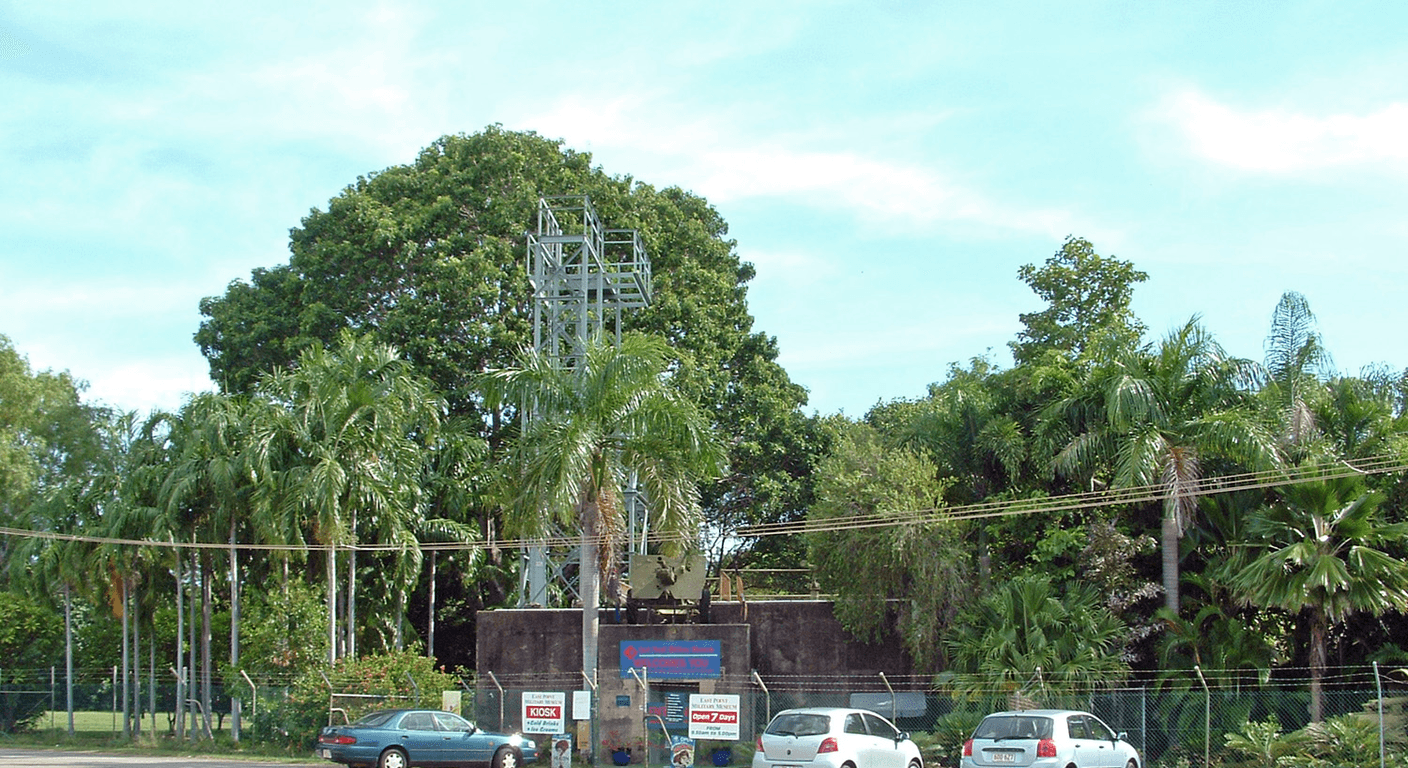
East Point Reserve adjoins the Defence of Darwin Experience and is free to enter. The reserve occupies the tip of the East Point peninsula and contains several surviving WWII fortifications, including the impressive 9.2-inch coastal gun emplacement at Battery Point. These guns were installed to defend Darwin Harbour and, while they never fired in anger at an enemy vessel, their presence here is a tangible connection to the wartime period you have just been reading about inside the museum.
The gun emplacement near the car park is the most accessible. The concrete structure is largely intact, and interpretive signage explains how the battery was operated. It is worth pausing here simply to look out over the harbour and consider the view those gunners would have had. The reserve also has a lake (Lake Alexander) with a designated swimming area — popular with locals — and shaded picnic tables where you can eat lunch brought from the city or picked up at a nearby café.
The heat at East Point in the middle of the day is not trivial. A sensible approach is to do the outdoor portion of the reserve in the early afternoon on a dry-season day, stay in the shaded areas, and not push beyond what feels comfortable. The reserve covers a large area, but the key heritage sites are concentrated near the eastern end close to the museum. You do not need to walk the full perimeter to get genuine value from the visit.
Pacing the day: rest, shade, and eating well
A culture day in Darwin's heat requires more deliberate pacing than a day in Melbourne. The sequence described here — MAGNT in the cool of the morning, the Defence of Darwin Experience in the late morning moving to midday (indoors and air-conditioned), and East Point Reserve in the early afternoon with shade breaks — is designed to keep outdoor exposure to the cooler parts of the day. If either of you finds the heat taxing, the museums offer extended rest opportunities without any pressure to keep moving.
Lunch is worth planning in advance. There are no cafés inside East Point Reserve itself beyond the MAGNT café. A short drive back toward Darwin CBD opens up options along the Stuart Highway and in the Parap area, where the Parap Village Market (held Saturday mornings) and several local cafés cater to a relaxed pace. Alternatively, packing a simple lunch and eating at the reserve's shaded picnic tables keeps the day self-contained and unhurried.
If either traveller uses a walking stick, a rollator, or simply prefers not to stand for long periods, all three sites accommodate this without fuss. MAGNT has seating throughout the galleries. The Defence of Darwin Experience has benches in the film screening area and near the main exhibits. At East Point, the car park is close to the main fortification, so extended walking is optional rather than required. Darwin's cultural institutions have generally been thoughtful about accessibility, but it is always worth phoning ahead if you have specific requirements.
Practical information for the day
Darwin's dry season runs roughly from May to October, and that is when this kind of day is most manageable. Humidity drops significantly, temperatures are warm rather than oppressive, and rain is rare. The wet season (November to April) brings intense heat, high humidity, and afternoon storms that can disrupt outdoor plans — not impossible to visit, but a more demanding experience for older travellers. Check the Bureau of Meteorology (bom.gov.au) for current Darwin forecasts before you finalise plans.
Sun protection is non-negotiable. A hat with a wide brim, SPF 50+ sunscreen reapplied through the day, and lightweight long sleeves all make a material difference. A refillable water bottle — topped up at the museum water stations — keeps you hydrated without the ongoing cost of buying bottled water. Both museums have accessible toilets. The Defence of Darwin Experience and MAGNT both have car parks; East Point Reserve has a large free car park near the heritage precinct.
For current opening hours, admission prices, and any temporary closures, go directly to the official sites: magnt.net.au, defenceofdarwin.nt.gov.au, and darwin.nt.gov.au for East Point Reserve information. Opening hours and fees do change, and it is always better to confirm before you make the drive.
Key takeaways
- MAGNT on Fannie Bay offers free general entry and houses one of Australia's most affecting Cyclone Tracy exhibits.
- The Defence of Darwin Experience is the most complete account of the 1942 bombing available anywhere, with a small but justified admission fee.
- East Point Reserve's coastal gun emplacements are free to visit and sit within easy reach of the Defence of Darwin Experience car park.
- Darwin's dry season (May to October) is the most comfortable time for older travellers to manage a full culture day outdoors.
- All three sites have good accessibility for travellers who prefer to avoid long walks or uneven terrain.
- A hire car gives couples the most flexibility, but Darwin's public bus network connects Fannie Bay to the CBD if driving is not preferred.
Recommended partners and links
Indicative prices only — always confirm with the operator before booking.
Frequently asked questions
Is entry to the Museum and Art Gallery of the Northern Territory really free?
Yes, general entry to MAGNT on Conacher Street, Fannie Bay is free of charge. Some temporary or travelling exhibitions may carry a separate fee, so check magnt.net.au for current details before your visit.
How much does the Defence of Darwin Experience cost to enter?
Entry is around $15–$20 per adult at the time of writing, though this is indicative only. Confirm the current admission price directly at defenceofdarwin.nt.gov.au before you visit.
Is East Point Reserve suitable for travellers with limited mobility?
The main car park at East Point Reserve is close to the primary gun emplacement and interpretive signage, so travellers who prefer not to walk long distances can still access the key heritage features. The broader reserve involves grass and uneven paths, but these are optional.
What is the best time of year to do this Darwin culture day?
The dry season, roughly May to October, is the most comfortable time. Temperatures are warm but manageable, humidity is lower, and afternoon storms are uncommon. The wet season is possible but significantly more demanding due to heat and humidity.
Can you do all three sites in one day without feeling rushed?
Yes, with an early start at MAGNT around 9.00 am, two hours there, 90 minutes to two hours at the Defence of Darwin Experience, and a visit to East Point Reserve in the early afternoon, the day fits comfortably within daylight hours and allows for proper rest breaks.
Got a tip, a price update or a story from this route? The community would love to hear it.
Share your views on our Facebook page— Seniors and Solo Traveller Stories