Victoria's V/Line network offers genuine fare savings for seniors, but the rules around concession eligibility, ticketing systems, and what counts as a valid ID trip up many travellers. This plain-English guide walks you through exactly how the Victorian Seniors Card concession works on V/Line trains and coaches, where the gaps are, and how solo travellers fare compared with couples.
What Is the Victorian Seniors Card and Why Does It Matter on V/Line?
The Victorian Seniors Card is a free card issued by the Victorian Government to residents aged 60 and over who are not in full-time paid employment. It is the key that unlocks concession fares on V/Line trains and coaches throughout regional Victoria. Without it — or without another accepted concession card such as a Pensioner Concession Card — you pay the full adult fare, which can be considerably higher on longer regional routes.
For a 69-year-old travelling solo from Melbourne to, say, Bendigo or Warrnambool, the difference between a full adult fare and a Seniors Card concession fare is meaningful over the course of a year. V/Line publishes indicative concession fares at around 50 per cent of the full adult rate, though you should always confirm current pricing directly at vline.com.au before travelling, as fares are subject to review.
Applying for the Victorian Seniors Card is straightforward and costs nothing. You can apply online through vic.gov.au or at selected Service Victoria locations. The card arrives by post and is yours to keep. If you have recently turned 60 or moved to Victoria, getting this card sorted before you plan any regional travel is one of the most practical things you can do.
myki or Paper Ticket — Which One Do You Actually Need?
This is where a lot of seniors hit their first point of confusion, and honestly, the system does not make it easy. On V/Line services, both myki and paper tickets are used, but they serve different situations. For shorter V/Line trips that fall within the metropolitan myki zone — broadly, services that operate within the two-hour myki zone boundary — a concession myki card is the right tool. You load money onto a myki registered in your name with concession status, and the fare is calculated automatically.
For longer regional V/Line journeys that go beyond the myki boundary, you need a V/Line paper ticket purchased separately. These can be bought at staffed V/Line stations, through the V/Line website, or via the V/Line phone booking line. You still present your Victorian Seniors Card (or other concession card) at the point of purchase to receive the concession rate. The ticket is then your proof of travel for the full journey.
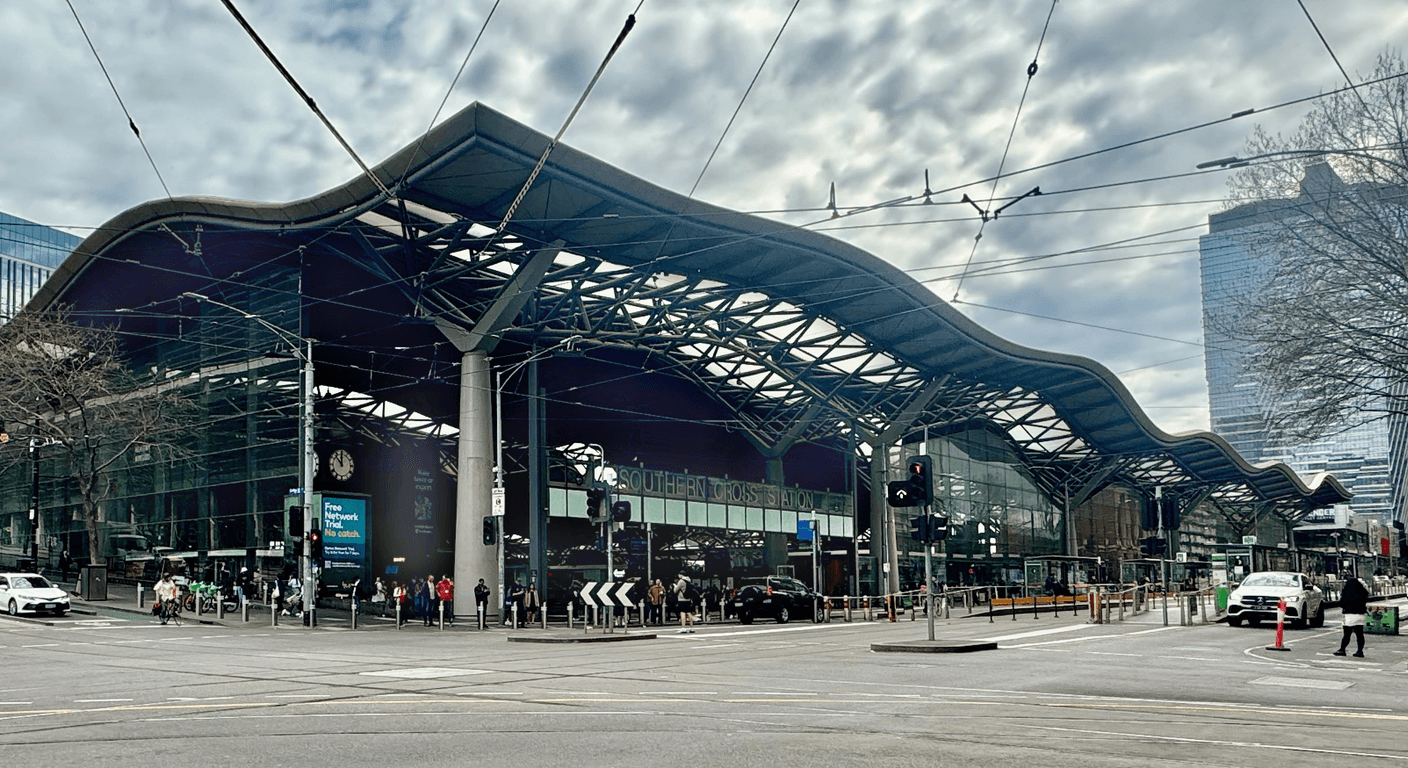
The practical upshot: if you are travelling from Southern Cross Station to Ballarat, Geelong, Bendigo, or further afield, you will generally need a V/Line paper ticket, not just your myki. Carrying both a loaded concession myki and your Seniors Card is sensible if your travel regularly mixes metropolitan and regional legs. Staff at Southern Cross and larger regional stations can clarify which applies to your specific route — and it is worth asking before you tap on, not after.
The ID Rule: Why You Must Carry Your Physical Card
Here is a rule that catches people out more often than it should: your Victorian Seniors Card must be carried physically when you travel on a concession ticket. A photo on your phone is not accepted as valid proof of concession entitlement for V/Line travel. If a ticket inspector asks to see your concession card and you cannot produce the physical card, you can be asked to pay the difference to a full adult fare.
This is not a technicality that inspectors overlook. V/Line and PTV have a duty to verify that concession fares are being used by eligible passengers, and the physical card is the accepted standard. The same applies if you are using a concession myki — the myki itself carries concession status once registered correctly, but if you are asked to verify your eligibility, the physical Seniors Card is what you show.
If your card is lost or damaged, contact the Victorian Seniors Card program through vic.gov.au to arrange a replacement before your next trip. It is worth keeping a note of your card number separately in case you need to report it missing. The card is free to replace, but there is a processing period, so do not leave it until the week before a planned journey.
How Does This Compare With Interstate Rail Concessions?
If you are planning to travel beyond Victoria — to Sydney on the XPT, or to Adelaide on the Overland or via other connections — the picture becomes considerably more complicated, and it is worth being honest about the gaps. The Victorian Seniors Card is a Victorian Government card. It is not automatically recognised by interstate rail operators or by NSW TrainLink, which operates the Sydney-Melbourne XPT service.
NSW TrainLink has its own concession arrangements, primarily tied to the NSW Senior or the Commonwealth Seniors Health Card for Australian residents. For Victorians travelling on the XPT, the relevant concession to investigate is whether your Pensioner Concession Card (if you hold one through Services Australia) is accepted, rather than your Victorian Seniors Card alone. The XPT booking system is managed through NSW TrainLink's website, and concession eligibility rules differ from V/Line's. Always check directly with NSW TrainLink at transportnsw.info before assuming your Victorian card will be honoured.
The Great Southern Rail services — The Overland between Melbourne and Adelaide, and longer-distance trains — have their own fare structures and concession arrangements, which vary by train and booking class. Indicative concession savings exist but are not always as deep as the V/Line 50 per cent concession. The honest advice is: never assume your Victorian Seniors Card travels with you across state borders. Research each operator separately, and budget conservatively until you have confirmed eligibility in writing or directly with the operator.
Booking Assisted Travel and Wheelchair Spaces on V/Line
V/Line offers an Assisted Travel service designed for passengers who need additional support — whether due to mobility limitations, vision impairment, or other access needs. This is not a service only for passengers with severe disabilities; it is available to anyone who would benefit from staff assistance boarding, alighting, or navigating a station. You can arrange assisted travel by contacting V/Line directly through their customer service line or via the Accessible Travel section of vline.com.au. Giving at least 24 hours notice is strongly recommended, and for peak-period travel, more notice is better.
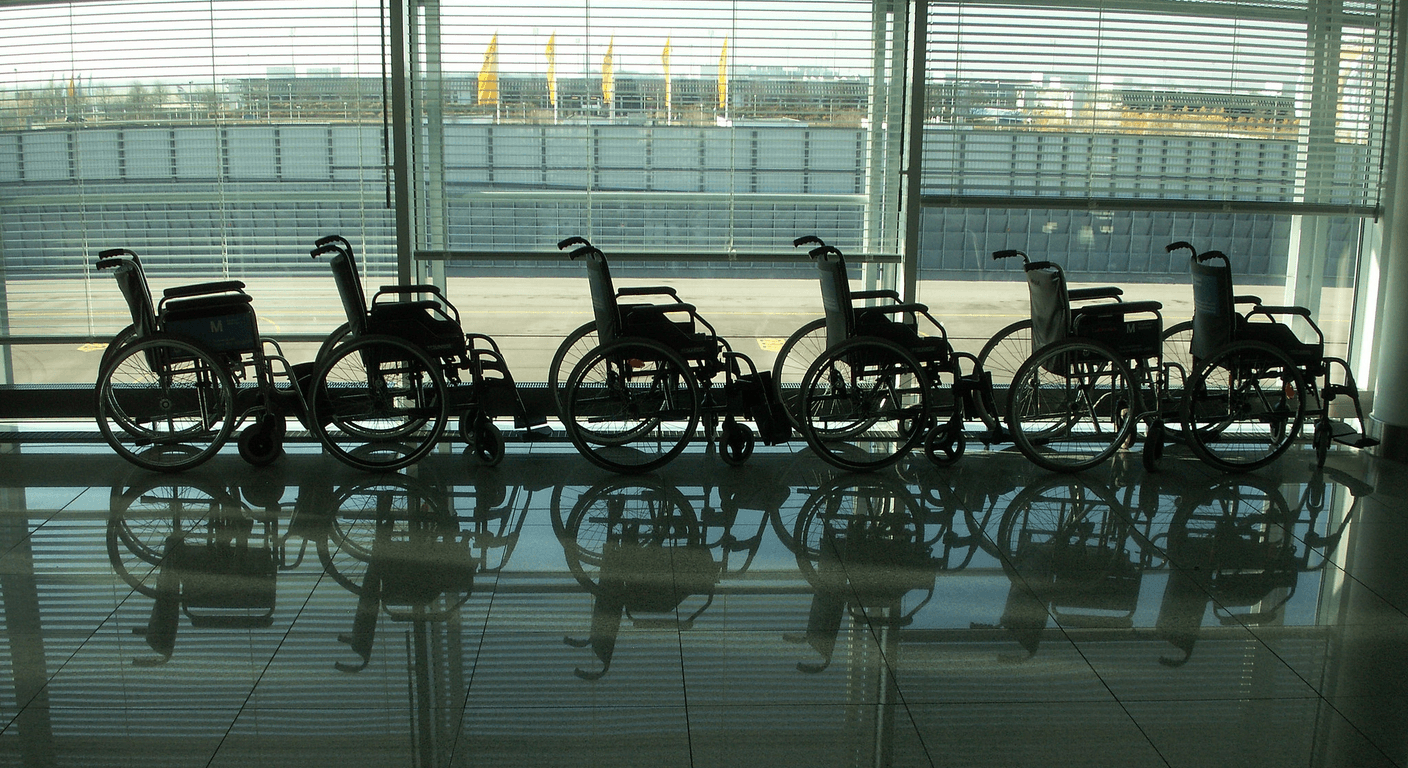
On V/Line trains, wheelchair spaces are available but are limited — typically one or two per service. These spaces must be reserved in advance; you cannot simply arrive and expect a wheelchair space to be free. When booking, specifically request the wheelchair space and confirm it is confirmed on your ticket. V/Line's accessible travel team can advise on which specific services have level boarding or require a ramp, as this varies by station and rolling stock.
For travellers who do not use a wheelchair but find long walks between platforms difficult, it is worth knowing that some regional stations have limited staffing, and not all platforms have lifts. Checking the specific accessibility features of your departure and arrival station before booking — through the PTV website or V/Line's accessibility pages — saves unwelcome surprises on the day. Travelling off-peak also tends to mean quieter stations and more time to board without feeling rushed.
Quiet Carriages: What to Expect and Where to Sit
V/Line designates quiet carriages on many of its longer services, typically at one end of the train. These carriages are intended for passengers who want to travel without loud phone conversations or audio playing through speakers. For a solo traveller who values a settled journey — time to read, think, or simply watch the landscape — the quiet carriage is often the best choice.
The quiet carriage designation is an expectation, not a guarantee enforced by staff in the way that, say, a reserved seat is. If other passengers are noisy, you can politely indicate the carriage's purpose, but V/Line staff are not always present to intervene. That said, in practice, quiet carriages on regional V/Line services tend to attract passengers who genuinely want a quieter ride, and the expectation is usually respected.
When booking a V/Line paper ticket for a seat reservation, you can request seating in the quiet carriage. It is worth specifying this at the time of booking rather than hoping to find a seat there on the day, particularly on busy Friday afternoon or Sunday evening services when trains fill up. If you have mobility considerations, also check that the quiet carriage is accessible from the platform at your boarding station.
The Solo Traveller and the Concession Rate: A Fair Deal
One aspect of the V/Line concession that deserves to be stated plainly: the concession rate is per person, not per booking. A solo traveller pays exactly the same concession fare per seat as someone travelling as part of a couple. There is no couple's discount that penalises you for travelling alone, and there is no single supplement added to your ticket because you are not sharing a seat with someone else.
This is worth noting because solo travellers in the broader travel industry — particularly in cruising and escorted tours — routinely face single supplements that can add 50 to 100 per cent to the cost of a trip. On V/Line, and on Australian rail generally, the ticketing model is seat-based, not cabin-based, so the solo traveller is on a genuinely equal footing. Your concession entitlement is individual, your ticket price reflects your seat, and your journey costs what it costs regardless of your relationship status.
For the solo traveller aged 60 and over who is building a pattern of independent regional travel in Victoria, this matters both practically and in terms of confidence. You are not being penalised for choosing to travel on your own terms. The system, for all its ticketing complexity, does not discriminate against you on that front — and that is worth acknowledging clearly.
Key takeaways
- The Victorian Seniors Card gives eligible Victorians aged 60-plus roughly 50 per cent off V/Line fares — but you must carry the physical card at all times when travelling on a concession ticket.
- For longer regional V/Line journeys beyond the myki zone, you need a V/Line paper ticket, not just a loaded myki card.
- The Victorian Seniors Card is not automatically recognised by interstate rail operators such as NSW TrainLink — check concession eligibility separately for each operator before booking.
- Wheelchair spaces on V/Line trains are limited and must be reserved in advance through V/Line's Assisted Travel service.
- V/Line concession fares are per-seat, not per-booking — solo travellers pay the same concession rate as those travelling in pairs, with no single supplement applied.
- Quiet carriages are available on many V/Line services and can be requested at the time of booking a reserved seat.
Recommended partners and links
Indicative prices only — always confirm with the operator before booking.
Frequently asked questions
Who is eligible for the V/Line seniors concession fare?
Victorian residents aged 60 and over who are not in full-time paid employment are eligible for a Victorian Seniors Card, which entitles them to concession fares on V/Line trains and coaches. Other accepted concession cards include the Pensioner Concession Card issued by Services Australia. You must carry the physical card when travelling.
Can I use my myki concession card for all V/Line journeys?
No. A concession myki is used for V/Line trips that fall within the metropolitan myki zone boundary. For longer regional journeys beyond that boundary — such as Melbourne to Ballarat, Bendigo, or Warrnambool — you need a separately purchased V/Line paper ticket at the concession rate. Station staff can confirm which applies to your route.
Does my Victorian Seniors Card work on interstate trains like the Sydney-Melbourne XPT?
Not automatically. The Victorian Seniors Card is a state-issued card and is not guaranteed to be recognised by interstate operators. NSW TrainLink, which runs the XPT, has its own concession arrangements. Check directly with each interstate operator before booking, and do not assume your Victorian card will be accepted.
How do I book a wheelchair space or assisted travel on V/Line?
Contact V/Line's customer service team directly and request assisted travel and a wheelchair space reservation at the time of booking. Give at least 24 hours notice, more if possible. Wheelchair spaces are limited per service and cannot be guaranteed without advance reservation. Details are at vline.com.au under Accessible Travel.
Do solo travellers pay more than couples for the V/Line concession fare?
No. V/Line fares are priced per seat, not per booking. A solo traveller pays exactly the same concession fare for their seat as someone travelling with a partner. There is no single supplement on V/Line or on Australian rail ticketing generally.
Got a tip, a price update or a story from this route? The community would love to hear it.
Share your views on our Facebook page— Seniors and Solo Traveller Stories