Tasmania is very much a driving state, but that does not mean you are stuck without a car. This guide covers Metro Tasmania's concession bus fares for seniors in Hobart and Launceston, plus the intercity coach routes that connect Hobart to Launceston, Devonport, and the East Coast — practical detail for older travellers who prefer not to drive or simply want a break from the wheel.
Why Tasmania Without a Car Is Worth Considering
Most travel advice about Tasmania opens and closes with 'hire a car'. That is fair enough — the wilderness areas, the Huon Valley, and the remote east coast genuinely reward having your own wheels. But for older travellers, particularly couples who have decided one of them is done with unfamiliar roads, or anyone who finds long driving days tiring, the cities of Hobart and Launceston are surprisingly manageable by bus.
The key is realistic expectations. You are not going to replicate a road trip by coach alone, and the regional bus network is thinner than what most Victorians are used to. What you can do is spend several comfortable days in Hobart, several more in Launceston, travel between the two by coach, and make a reasonable stab at Devonport or the East Coast with some planning. For a traveller who wants a slower, place-based trip rather than a loop of highlights, this works well.
There is also a practical financial argument. Between coach fares and city buses, a couple travelling on concession cards will spend considerably less than they would on a hire car, fuel, and parking — particularly if they are based in walkable inner-city accommodation. That saving is worth factoring into the decision honestly.
What Is Metro Tasmania and Which Cities Does It Cover?
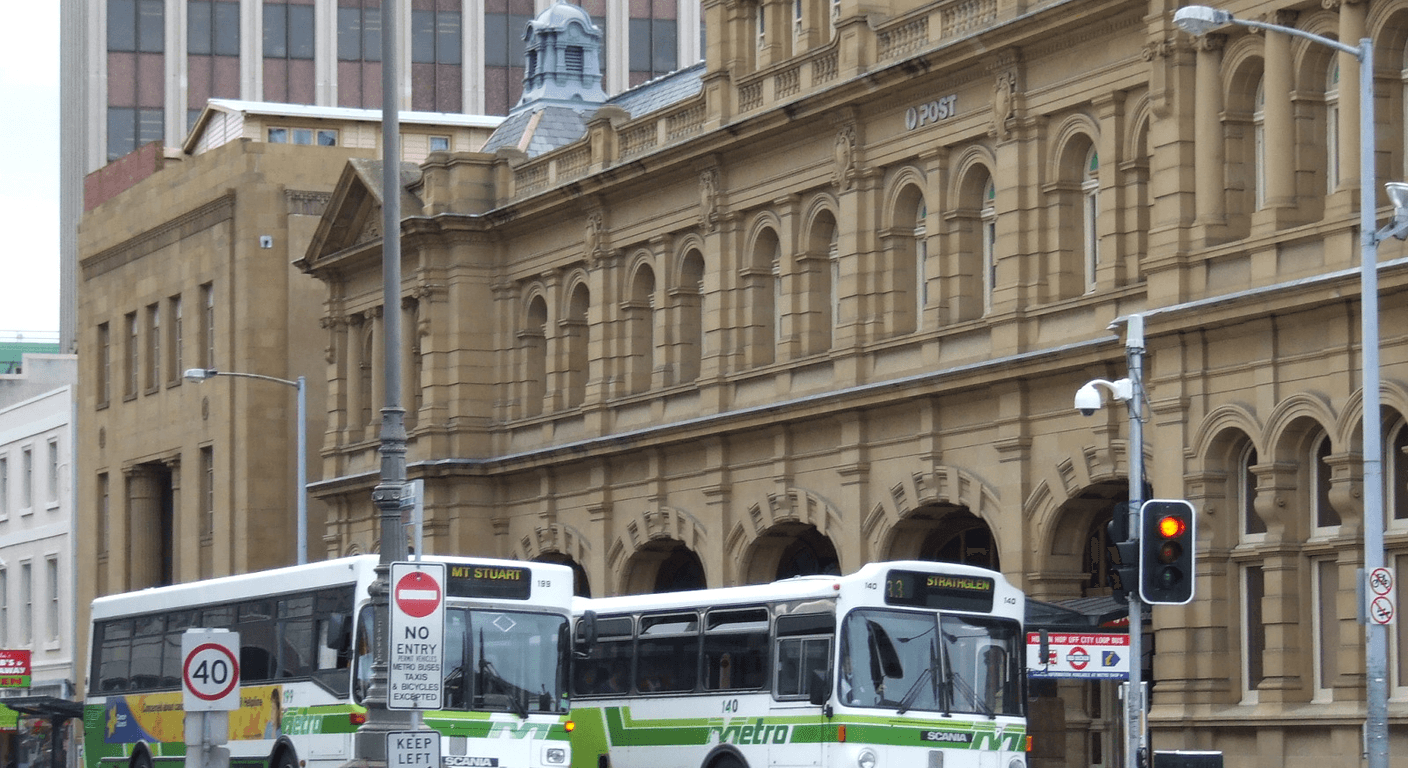
Metro Tasmania is the state government's urban bus operator, running services in Hobart, Launceston, and Burnie. In Hobart, the network covers the inner city, the eastern shore suburbs, and corridors out to Glenorchy, Kingston, and Huonville direction. In Launceston, Metro runs routes across the city and out toward Prospect and Youngtown. The Burnie network is smaller but connects the CBD and nearby suburbs.
For most visitors staying in the Hobart CBD or Battery Point, or in central Launceston, Metro buses are a practical way to reach MONA (via the ferry or the Moonah bus corridor), the Salamanca precinct, the Hobart waterfront, Royal Tasmanian Botanical Gardens, and the Launceston Cataract Gorge area. Not every attraction is a short walk from a stop, but the central routes are reliable and reasonably frequent on weekdays.
Services thin out on Sundays and public holidays, and some suburban routes run less frequently in the evenings. If your itinerary includes a Sunday visit to an outer suburb, it is worth checking the timetable at metrotas.com.au before you commit. The website has a journey planner that is straightforward to use on a phone or tablet.
How Do Senior Concession Fares Work on Metro Tasmania?
Metro Tasmania offers concession fares to holders of an Australian Government Pensioner Concession Card, a Commonwealth Seniors Health Card, or a state-issued seniors card. Victorian travellers who hold a valid Seniors Card issued by the Victorian Government are generally eligible for concession rates in Tasmania — but it is essential to confirm this with Metro Tasmania directly, as concession eligibility rules can change and vary by card type. The Metro Tasmania website at metrotas.com.au is the authoritative source.
Fares are paid using either a Greencard (Metro Tasmania's reloadable smartcard) or cash. The Greencard gives a small discount over cash fares and is available at Metro Tasmania customer service outlets and some newsagents. For a short visit, some travellers find cash simpler; for a stay of a week or more, the Greencard can be worthwhile. Indicative concession single fares are roughly in the $1.50–$2.50 AUD range depending on the zone, but you should confirm current fares at metrotas.com.au before you travel, as these figures are indicative only and subject to change.
One thing worth noting for couples: each person needs to present their own concession card. There is no 'companion concession' arrangement on Metro Tasmania. Cards are checked by drivers on request, so carry yours in an accessible spot rather than buried in a bag. The process is low-key and unhurried — Tasmanian bus drivers tend to be patient.
Getting Between Hobart and Launceston by Coach
Redline Coaches operates the main intercity coach service between Hobart and Launceston, with several departures a day in each direction. The journey takes roughly two to two and a half hours depending on the service and any stops along the way. Coaches depart from central locations in both cities — in Hobart from near the CBD, in Launceston from the city centre — which makes them accessible without a taxi if your accommodation is centrally located.
Redline also connects Launceston to Devonport and Burnie, which is useful if you are arriving or departing via the Spirit of Tasmania ferry. The Devonport to Launceston leg takes roughly an hour and a quarter. Booking ahead is sensible, particularly in peak season (December through February and school holidays), though the coaches are not the kind of service that sells out weeks in advance under normal conditions. Check current timetables and fares at redlinecoaches.com.au.
Concession pricing on Redline varies — the operator's website lists current fare categories, and it is worth asking specifically about senior or pensioner concessions when booking, as these are not always prominently displayed. Indicative one-way fares from Hobart to Launceston are roughly in the $40–$55 AUD range at the time of writing, but confirm this directly with Redline before booking. The coaches are comfortable, with luggage storage beneath and reasonable legroom for taller passengers.
What About the East Coast and More Remote Areas?
Tassielink Transit operates regional coach routes that reach areas Redline does not, including services toward the Freycinet Peninsula (for Coles Bay and Wineglass Bay), Bicheno, and St Helens on the East Coast. These are not frequent services — in some cases one or two departures a week — and they are designed primarily for residents and backpackers rather than day-trippers. That said, they are a legitimate option for travellers who want to spend several nights at a coastal destination without driving.
The practical approach for the East Coast is to book accommodation in a town the coach actually reaches — Swansea, Bicheno, or St Helens — rather than expecting the bus to drop you at a specific attraction. From a base in Bicheno, for instance, you can walk to the penguin viewing area in the evening and take a local tour to Freycinet. It requires more planning than driving yourself, but it is doable and can be a genuinely relaxed way to experience the coast.
Tassielink's timetables and booking are available at tassielink.com.au. The Transport for Tasmania website at transport.tas.gov.au also has an overview of regional services and is a useful starting point for understanding what connects where. Always confirm current schedules directly with the operator, as seasonal timetables apply.
Practical Accessibility and Comfort Notes
Metro Tasmania's newer buses are low-floor and have priority seating near the front, which is helpful if boarding and alighting is a consideration. Older buses in the fleet may not have the same level of accessibility, and this varies by route. If mobility is a significant factor, it is worth contacting Metro Tasmania in advance to ask about accessible services on the specific routes you plan to use. The metrotas.com.au website has accessibility information, and the customer service team can advise by phone.
Intercity coaches on Redline and Tassielink involve a step up to board, and luggage goes into undercarriage compartments that require some bending. For travellers with moderate mobility limitations, this is manageable with a bit of time and a helpful driver — most are accommodating. If you use a walking frame or need specific assistance, contact the operator before booking to confirm what support is available.
Hobart's central streets around Salamanca Place and the waterfront are reasonably flat and pleasant to walk, which matters if you are combining buses with walking between stops and cafes. Launceston's city centre is similarly walkable, though the Cataract Gorge involves some uneven paths. Both cities have taxi and rideshare options for days when you want a door-to-door option without the bus.
Planning Your Trip: What to Sort Before You Leave Victoria
Before you travel, check that your concession card is current and that you understand which card you will be presenting — Victorian Seniors Card, Commonwealth Seniors Health Card, or Pensioner Concession Card. Each has different eligibility rules for interstate use, and Metro Tasmania's website is the place to confirm which cards they accept. It is a simple check that saves any awkwardness at the bus door.
Download the Metro Tasmania app or bookmark metrotas.com.au on your phone for journey planning on the go. Redline and Tassielink both have online booking, and it is worth reserving intercity seats for your key travel days, even if you do not strictly have to. Having a confirmed seat on a specific departure makes the trip feel more organised, which matters when you are navigating an unfamiliar city without the backup of a hire car.
Finally, think about where you stay. In Hobart, accommodation within easy walking distance of Elizabeth Street or the waterfront puts you close to several Metro routes and the ferry terminal for MONA. In Launceston, the CBD is compact and most of what you want to see is reachable on foot or by a short bus ride. Choosing your base carefully is probably the single most useful thing you can do to make a car-free Tasmania trip work well.
Key takeaways
- Metro Tasmania runs urban buses in Hobart, Launceston, and Burnie, with concession fares available to eligible seniors — confirm your card type is accepted at metrotas.com.au before you travel.
- Redline Coaches connects Hobart and Launceston several times daily, with the journey taking roughly two to two and a half hours — check current fares and timetables at redlinecoaches.com.au.
- Tassielink Transit reaches the East Coast, Freycinet Peninsula area, and other regional destinations, though services are infrequent — always confirm current schedules at tassielink.com.au.
- A car-free Tasmania trip works best as a place-based itinerary with several nights in each city, rather than a loop of dispersed highlights.
- Indicative Metro Tasmania concession fares are roughly $1.50–$2.50 AUD per trip depending on zone, but these figures are indicative only — confirm current prices directly with Metro Tasmania.
- Choosing centrally located accommodation in Hobart or Launceston is the most practical single step you can take to make car-free travel in Tasmania comfortable and low-stress.
Recommended partners and links
Indicative prices only — always confirm with the operator before booking.
Frequently asked questions
Can Victorian seniors use their Seniors Card for concession bus fares on Metro Tasmania?
Victorian Seniors Card holders may be eligible for concession fares on Metro Tasmania, but eligibility rules vary by card type and can change. Confirm directly with Metro Tasmania at metrotas.com.au or by phone before you travel, so there are no surprises at the bus door.
How do you pay for Metro Tasmania buses — is a smartcard necessary?
You can pay with cash or with a Greencard, which is Metro Tasmania's reloadable smartcard. The Greencard offers a small fare discount over cash. For a short visit, cash is perfectly workable; for a longer stay, the Greencard can save a modest amount. Greencards are available at Metro Tasmania customer service outlets.
Is there a direct coach from Hobart to Launceston, and how long does it take?
Yes. Redline Coaches runs several services daily between Hobart and Launceston. The journey takes roughly two to two and a half hours. Booking ahead online at redlinecoaches.com.au is recommended, particularly during peak travel periods.
Can you reach the Freycinet Peninsula or Bicheno by public transport from Hobart?
Tassielink Transit operates regional coach services toward the East Coast, including stops near Coles Bay (for Freycinet) and Bicheno. Services are infrequent — sometimes only a few departures per week — so this option suits travellers who plan to stay several nights in one place rather than day-tripping. Check current timetables at tassielink.com.au.
Is it realistic for an older couple to visit Tasmania without hiring a car at all?
For a city-focused trip to Hobart and Launceston with an intercity coach connection, yes — it is realistic and can be comfortable and affordable. For reaching remote wilderness areas, the west coast, or many national park trailheads, a hire car remains the practical choice. A hybrid approach — flying or ferrying in, basing yourself in the cities by bus, and taking a guided day tour for one or two specific nature experiences — works well for many older travellers.
Got a tip, a price update or a story from this route? The community would love to hear it.
Share your views on our Facebook page— Seniors and Solo Traveller Stories