NSW TrainLink's regional rail network connects Sydney to some of New South Wales' most rewarding destinations — Canberra, the Central West, and the North Coast — at fares that become genuinely good value once you factor in concession discounts available to older travellers. For Victorians aged 60 and over, understanding which cards are accepted, how to book the right seat, and what to expect from the rolling stock makes a real difference to the experience. This guide covers the practical detail so the journey feels considered, not complicated.
Why NSW TrainLink suits older travellers making longer journeys
There is something quietly satisfying about a long-distance train journey done properly — a decent seat, a view that changes slowly enough to actually take in, and no airport security line in sight. NSW TrainLink's regional network operates exactly this kind of travel, connecting Sydney with Canberra, Orange, Dubbo, Tamworth, Armidale, and the coastal corridor up to Casino and beyond. For a couple travelling from Victoria, it is a natural extension of V/Line services or a standalone trip into regional NSW.
The network suits older travellers well for a few specific reasons. The distances involved — several hours rather than a day and a half — are manageable without being trivial. The trains have toilets, and on most regional services there is a café or buffet car. You board at platform level or with minimal steps on most major stations. And critically, the fare structure includes genuine concession pricing for seniors cardholders, which makes the cost of a return journey to Canberra or the Blue Mountains considerably more reasonable than flying, once you account for getting to and from airports.
That said, it pays to know what you are buying. NSW TrainLink operates different types of rolling stock on different routes, and comfort levels vary meaningfully. Going in with accurate expectations — not inflated ones — means you arrive in a good mood rather than a grumpy one.
Which concession cards are accepted, and how do the discounts work?
NSW TrainLink offers a concession fare that is broadly around half the full adult fare, though the exact discount and eligibility rules are worth reading carefully. The NSW Seniors Card is accepted, as are interstate seniors cards from other Australian states and territories — which means a Victorian Seniors Card is recognised. You will need to carry the physical card and present it when asked. Booking online under a concession fare without having the card available can result in being asked to pay the difference on the day, so keep it in your wallet rather than left at home.
Pensioner Concession Cards issued by Services Australia (the federal card linked to the Age Pension or Disability Support Pension) are also accepted and may attract the same or a similar concession rate. If you hold both a Victorian Seniors Card and a Pensioner Concession Card, it is worth checking which one applies on the specific ticket you are purchasing, as the rules can differ by ticket type. The authoritative source for current eligibility is the Transport for NSW website at transportnsw.info — always confirm before you book, as concession conditions do change.
One practical note: when booking online through nswtrainlink.info, you select the concession fare at the time of purchase. The system does not automatically verify your card; it operates on trust with the expectation that you carry proof. If you are booking by phone (which some travellers prefer), the NSW TrainLink booking line staff can walk you through the fare options and confirm what documentation you need to bring.
The Sydney to Canberra route: what to expect
The Sydney–Canberra corridor is one of NSW TrainLink's busiest intercity routes, and for good reason. The journey runs roughly three to four hours depending on the service, passing through the Southern Highlands and descending onto the Monaro tableland. It is a comfortable, practical way to reach Canberra without the fuss of Canberra Airport, and for travellers coming from Melbourne, it pairs well with a V/Line or coach connection via Albury or Wodonga.
Trains on this corridor have generally been operated by the XPT (Express Passenger Train), which has assigned seating in a traditional carriage layout — two seats either side of a central aisle in economy, with wider seats and more legroom in first class. First class on the XPT is worth considering if you find standard train seats uncomfortable over longer periods; the difference in fare is not dramatic, and the seats are noticeably better. Check the current fare gap between economy and first class concession when you book, as it shifts seasonally.
Canberra's Kingston station (the main terminus, now operated as Canberra Railway Station on Wentworth Avenue) is a reasonable distance from the city centre, so factor in a taxi, rideshare, or local bus connection to your accommodation. ACTION buses serve the station, though frequency varies. If mobility is a consideration, a rideshare or pre-booked taxi is the more predictable option on arrival.
The Central West and beyond: Orange, Bathurst, Dubbo
The western lines out of Sydney — through Penrith, the Blue Mountains, Lithgow, Bathurst, Orange, and on to Dubbo — offer some of the most scenically varied rail travel in New South Wales. The descent from the Blue Mountains through the Zig Zag country and into the western plains is genuinely interesting to watch from a train window, particularly in the morning light. These are longer journeys — Dubbo from Sydney is around six hours — so they suit travellers who genuinely enjoy the process of getting somewhere by rail.
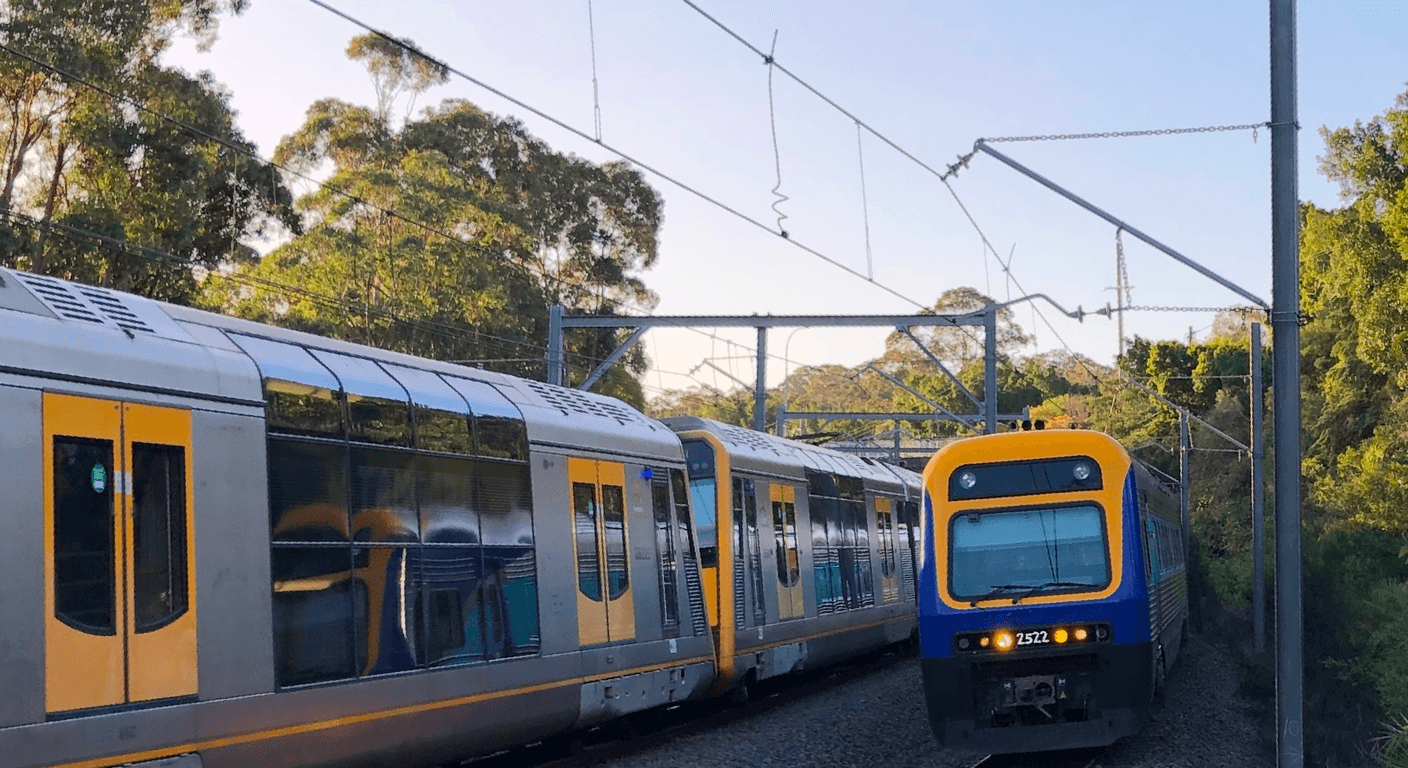
Intercity services on parts of this corridor have been transitioning to newer rolling stock in recent years, with the NSW Government's fleet renewal programme affecting some routes. The experience can vary depending on which service you are on — some runs use the newer intercity trains (designed primarily for the inner-network electrified lines) while longer regional legs may still use the XPT or Endeavour diesel railcars. The Endeavour units are smaller, with a more basic café trolley rather than a full buffet, and the seats are comfortable enough for a few hours but less so for a six-hour run. Worth knowing before you commit to a full day in the chair.
Bathurst and Orange both make worthwhile overnight or two-night stops. Orange in particular has a well-regarded food and wine scene that tends to appeal to travellers who enjoy a slower pace and good regional produce. Both towns have accommodation within walking distance or a short cab ride from the station.
The NSW North Coast corridor: Sydney to Casino (and connecting to Queensland)
The North Coast line runs from Sydney through Newcastle, Taree, Port Macquarie (by coach connection), Kempsey, Coffs Harbour, Grafton, and up to Casino — where passengers can connect to Queensland services. This is one of the longer NSW TrainLink journeys, and it is operated by XPT overnight on some services, which means a sleeper option exists. For a couple, a sleeper compartment on the overnight XPT is a practical way to cover the distance without a full day sitting upright: you board in Sydney in the evening and wake up somewhere around Grafton or Casino.
The sleeper fare is higher than economy, and concession pricing on sleeper accommodation has its own rules — confirm the current concession eligibility for sleeping berths directly with NSW TrainLink, as it is not always a straightforward application of the standard discount. That said, when you factor in a night's accommodation you are not paying for separately, the overall cost can compare favourably with flying to Ballina or Coffs Harbour and then hiring a car.
For travellers interested in the North Coast but not wanting a full overnight journey, a staged approach works well: Sydney to Port Macquarie by train and coach, a few nights there, then continuing north. Port Macquarie is not directly on the rail line but is served by a connecting coach from Wauchope station, a short distance inland. The coordination between train and coach is managed by NSW TrainLink and is part of the through-ticketing system — your single booking covers both legs.
Booking ahead: seats, timing, and what actually matters
NSW TrainLink regional services use reserved seating, which is a significant practical advantage over some other rail systems. You know exactly where you are sitting before you board, you can choose a window or aisle, and you can request seats near the accessible toilet if that matters to you. Booking opens several months in advance on most routes, and while there is no dramatic early-bird discount structure like a budget airline, booking early does give you the best choice of seats — particularly if you want two seats together on the same side of the carriage for a couple travelling side by side.
The online booking system at nswtrainlink.info is reasonably straightforward, though some travellers find the phone booking line more comfortable, particularly when navigating concession fare options or asking questions about accessibility. The NSW TrainLink contact number is listed on the website. If you have specific mobility requirements — a walking frame, difficulty with steps, or a need for accessible seating — call ahead and discuss this when booking rather than hoping it works out on the day.
Timing your departure sensibly makes a difference to comfort. Mid-morning services tend to be less crowded than Friday afternoon or Sunday evening runs, which attract a mix of students, workers, and weekend travellers. A Tuesday or Wednesday departure from Melbourne to Sydney by overnight coach or V/Line, then a Thursday morning train into regional NSW, is a pattern that tends to give you a calm, uncrowded journey.
Honest comfort notes: what the trains are actually like
The XPT, which operates on the longer corridors, is now several decades old. It is not a modern high-speed train. The ride can be rough on some sections of track, particularly at night, and the carriages show their age in terms of fittings. Economy seats are padded and recline modestly; they are adequate for three to four hours and manageable for six with a cushion and some movement. The onboard café car serves hot drinks, basic snacks, and simple meals — functional rather than memorable. Bring your own food if you have particular dietary requirements or preferences.
First class on the XPT is a meaningfully different experience: wider seats, more legroom, and a quieter carriage. If back or hip discomfort is a consideration, first class concession fare is worth calculating. The price difference is often less than many travellers expect, and for a six-hour journey it can be the difference between arriving refreshed and arriving stiff.
The newer intercity trains introduced on some corridors are more modern in feel — better air conditioning, cleaner interiors — but they were designed primarily for shorter electrified routes and the seating layout is denser. Whether they suit a long regional journey depends on the specific service. The honest answer is that NSW TrainLink's fleet is in a period of transition, and the experience varies by route and day. Checking which train type operates your specific service (the booking system usually indicates this, or staff can tell you) is a sensible step before committing.
Key takeaways
- Victorian Seniors Cards are accepted for NSW TrainLink concession fares — carry the physical card and confirm eligibility at transportnsw.info before booking.
- The Sydney–Canberra XPT service takes roughly three to four hours and is one of the most practical rail alternatives to flying for older travellers.
- First class concession fares on the XPT offer meaningfully better seating for longer journeys and are worth costing out if comfort is a priority.
- The overnight XPT to Casino on the North Coast includes sleeper options — when the cost of a night's accommodation is factored in, the fare can compare well with flying.
- Reserved seating on NSW TrainLink regional services means you can choose your seat in advance, request accessible positions, and plan the journey properly.
- Comfort levels vary significantly across NSW TrainLink's fleet — asking which train type operates your route before booking is practical, not fussy.
Recommended partners and links
Indicative prices only — always confirm with the operator before booking.
Frequently asked questions
Can a Victorian Seniors Card be used for discounted NSW TrainLink fares?
Yes. Interstate seniors cards, including the Victorian Seniors Card, are accepted for NSW TrainLink concession fares. You need to carry the physical card and present it if asked. Always confirm current eligibility and fare conditions at transportnsw.info before booking, as rules can change.
How far in advance should you book NSW TrainLink regional seats?
NSW TrainLink regional services use reserved seating, and booking opens several months ahead on most routes. Booking early gives the best choice of seats — particularly important for couples wanting to sit together — though there is no steep penalty for booking closer to travel. Check nswtrainlink.info for the current booking window on your route.
Is the overnight train to the NSW North Coast a reasonable option for older travellers?
For many travellers, yes. The overnight XPT to Casino includes sleeper compartments, meaning you cover the distance while sleeping rather than sitting upright for ten-plus hours. The sleeper fare is higher than economy, and concession pricing for sleeper accommodation has separate conditions — confirm these directly with NSW TrainLink before assuming the standard discount applies.
What is the actual comfort level like on NSW TrainLink regional trains?
It depends on the route and rolling stock. The XPT — used on longer corridors including Sydney to Canberra and the North Coast — is an older train with adequate but not modern seating. First class offers noticeably better seats and more space. The Endeavour diesel railcars used on some shorter regional runs are functional for a few hours. The newer intercity trains are modern but designed for shorter routes. Asking which train type runs your service before booking is worthwhile.
How does the Sydney to Canberra train compare to flying for older travellers?
The train avoids the airport experience entirely — no security queues, no baggage restrictions, no transit to a city-edge airport. The journey takes roughly three to four hours, with reserved seating and onboard toilets. At concession fare rates, the cost is often competitive with budget airfares once airport transfers are added. Canberra Railway Station is a few kilometres from the city centre, so a taxi or rideshare connection to accommodation is needed on arrival.
Got a tip, a price update or a story from this route? The community would love to hear it.
Share your views on our Facebook page— Seniors and Solo Traveller Stories