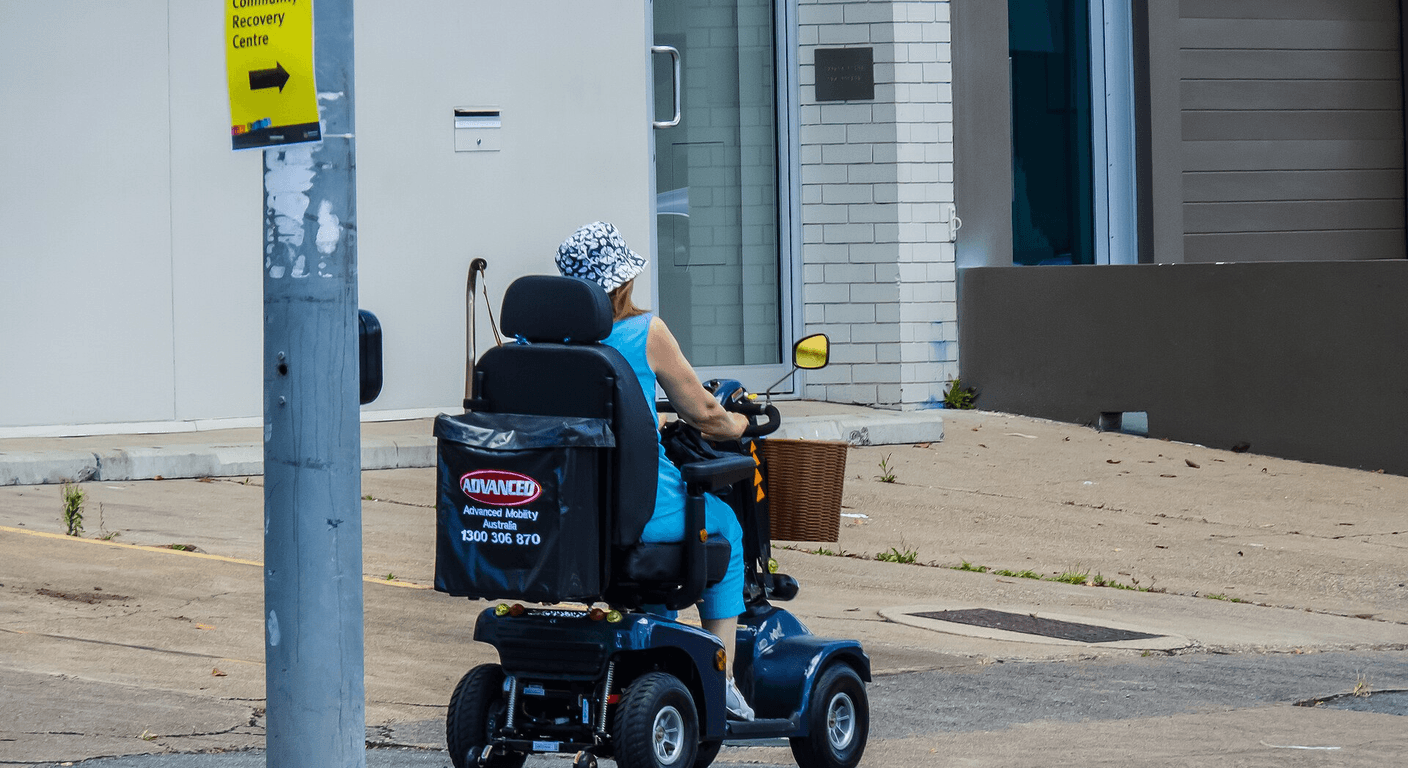
When a walker, shower chair or mobility scooter becomes part of daily life, the questions multiply fast: hire or buy, new or second-hand, and is there government help? Victoria's Statewide Equipment Program (SWEP) offers subsidised aids to eligible residents, but navigating assessments, hire markets and scooter rules takes a little groundwork. This guide walks through the practical steps so you can move forward with confidence.
What is SWEP and who can access it?
The Statewide Equipment Program, known as SWEP, is a Victorian Government initiative that subsidises essential aids and equipment for people with a permanent or long-term disability or condition — including many age-related conditions that affect Victorians in their sixties and beyond. The program covers a broad catalogue: walking frames, crutches, shower chairs, commodes, hospital beds, pressure mattresses and more. It is administered by Wellways Australia on behalf of the Victorian Department of Health.
Eligibility is not automatic with age. To access SWEP, you generally need to be a Victorian resident, hold a valid Medicare card, and have a clinical need assessed by a registered health professional — most commonly an occupational therapist (OT). The program is means-tested for some equipment categories, and income or asset thresholds apply to certain items. Because those thresholds are reviewed and updated by the government, you should check the current figures directly on the SWEP website or by calling SWEP on 1300 747 937 rather than relying on any fixed number quoted in a guide like this one.
SWEP does not cover every type of aid. Mobility scooters, for example, are not part of the standard SWEP catalogue for most applicants — they tend to fall under different funding streams such as NDIS or Home Care Packages, depending on your situation. The SWEP website lists its current equipment catalogue clearly, so it is worth browsing there first to understand what is and is not available before booking an assessment.
How does an OT assessment work, and do you need a referral?
An occupational therapist assessment is the gateway to SWEP. The OT evaluates your functional needs, home environment and the specific equipment that would help you live safely and independently. For SWEP purposes, the assessment must be conducted by a SWEP-registered OT — not every private OT automatically qualifies, so it is worth confirming registration before you book.
You do not always need a GP referral to see an OT privately, though your GP can be a useful starting point and may be able to refer you through a Medicare chronic disease management plan, which can subsidise a number of allied health visits per year. If you are already receiving a Home Care Package through My Aged Care, your package may fund the OT assessment itself — ask your package provider before paying out of pocket.
Community Health Centres across Victoria often have OTs on staff and can conduct SWEP assessments at low or no cost for eligible patients. Searching the healthdirect service finder at healthdirect.gov.au is a practical way to locate a community health OT near you. For those in regional Victoria, telehealth OT assessments have become more common and SWEP can advise on whether that pathway is available for your equipment request.
Hiring versus buying mobility aids: when does each make sense?
Hiring makes a lot of sense when the need is temporary — recovering from a hip replacement, hosting a relative who needs a shower chair, or trialling a piece of equipment before committing to a purchase. Short-term hire through providers such as Independence Australia or Red Cross Equipment Hire (where available in your region) typically runs on weekly or monthly rates. Indicative weekly costs for a basic shower chair or walking frame are in the range of a few dollars to around $20–$30, but confirm current rates directly with the provider as these change.
Buying outright suits long-term, ongoing needs — and often works out cheaper over twelve months or more. If you are purchasing through SWEP with a subsidy, you pay a co-payment (the amount depends on your income and the item) and SWEP covers the balance. If you are self-funding, major retailers such as Aidacare, Independence Australia and Medline stock a wide range; your OT can advise on appropriate specifications so you are not paying for features you do not need or, equally, buying something that falls short.
For travellers specifically, hiring at your destination can be a practical solution. Several hire companies operate nationally and some allow advance booking of equipment to be delivered to a hotel or holiday rental. When planning a trip interstate or to a regional area, it is worth searching 'mobility aid hire' plus the destination town and contacting the provider well ahead of your departure date to confirm availability.
Navigating the second-hand market safely
Second-hand mobility aids — walkers, shower chairs, wheeled frames — appear regularly on Facebook Marketplace, Gumtree and community noticeboards. The prices can be very low, and for simple, low-risk items like a basic four-wheel walker, a second-hand purchase can be perfectly reasonable provided you inspect it carefully for rust, worn tyres, loose joints or damaged brakes before handing over any money.
Higher-risk or higher-complexity items deserve more caution. Power wheelchairs, electric scooters and pressure mattresses involve safety standards, battery condition and calibration that are genuinely difficult to assess without expertise. For these, either buy new with a warranty, use a reputable refurbished equipment supplier who offers a service check, or access funding programs that cover new equipment. Your OT can advise on whether a second-hand item is appropriate for your specific clinical need.
Hygiene is a real consideration with items like shower chairs, commodes and mattresses. Many organisations — including some Red Cross branches and community health centres — have historically offered refurbished equipment that has been cleaned and checked to a standard. Ask about any cleaning or inspection process before accepting second-hand equipment for intimate use. The National Disability Insurance Scheme's assistive technology guidance, available at ndis.gov.au, includes useful information on quality and safety standards for assistive technology that applies equally to non-NDIS purchasers as general reference.
Where to hire or buy mobility aids and home medical equipment?
In Victoria, several established providers cover hire and retail across metropolitan Melbourne and regional areas. Independence Australia has a network of stores and an online shop with hire options. Aidacare operates showrooms across Victoria where you can see and trial equipment before purchasing. Red Cross Equipment Hire has historically operated in parts of Victoria and is worth checking for your specific area at redcross.org.au. Community health centres in your local government area may also maintain a small loan pool of basic items at no or low cost.
For those accessing funding through My Aged Care's Commonwealth Home Support Programme (CHSP) or a Home Care Package, your package coordinator or CHSP provider can arrange equipment through approved suppliers — often at a subsidised rate or at no direct out-of-pocket cost to you, depending on your package level. Start that conversation by contacting My Aged Care on 1800 200 422 or visiting myagedcare.gov.au.
Online retailers ship nationally and can be useful for straightforward items like walking sticks, bath rails or non-slip mats. However, for anything that needs to fit your body correctly — a walker at the right height, a wheelchair with the right seat width — it is strongly advisable to have an in-person fitting or at least a phone consultation with a qualified OT or the retailer's assistive technology advisor before ordering.
Mobility scooters: footpath rules, public transport and what to know before you buy
Mobility scooters occupy an interesting space in Victorian road rules. Under current VicRoads guidelines, a mobility scooter used by a person with a disability is classified as a 'motorised wheelchair' for the purposes of road rules, meaning the rider generally has the same rights and responsibilities as a pedestrian on footpaths. That means footpath use is permitted, but riders are expected to travel at a safe speed (walking pace is the general expectation) and give way to pedestrians. VicRoads publishes guidance on this; check vicroads.vic.gov.au for the current position as rules can be updated.
On Melbourne's public transport network, folding mobility scooters that meet PTV's size and weight guidelines are generally permitted on trains, trams and buses, but larger Class 3 scooters face restrictions. PTV's accessibility page at ptv.vic.gov.au outlines current size limits and boarding procedures. It is worth calling PTV's accessibility line before your first trip with a scooter to confirm your specific model is compliant — staff are generally helpful and the conversation avoids an unpleasant surprise at the station.
Before purchasing a scooter, consider where you will store it, whether your home has a power point accessible for overnight charging, and how you will transport it in a car if needed. A SWEP-registered OT or an assistive technology specialist can help you match scooter type to your environment and mobility needs. As noted, SWEP does not typically fund scooters for most applicants, so funding routes to explore include NDIS (if you are a participant), Home Care Package funds, or self-funding. Indicative prices for a basic mobility scooter start from around $1,500–$2,500 for a simple three-wheel model, rising considerably for heavy-duty or all-terrain versions — treat these as rough orientation figures only and confirm current pricing with suppliers.
Getting professional advice — and why it matters
It can be tempting to skip the OT assessment and simply buy the cheapest walker on the shelf. For low-risk items, that might be fine. But the wrong height, the wrong wheel configuration or an ill-fitted shower chair can actually increase fall risk rather than reduce it — which is the opposite of the intention. An OT assessment is an investment in getting the right equipment the first time, and in many cases it is funded or subsidised through the pathways described above.
For more complex decisions — whether to access NDIS versus a Home Care Package, how equipment funding interacts with your pension or superannuation, or the tax implications of claiming medical equipment — seek advice from the relevant professional. A financial counsellor accredited with the Financial Counselling Australia network (financialcounsellingaustralia.org.au) can assist with cost-related questions. A social worker attached to your local community health service can help navigate the system. This guide provides general orientation only and nothing here should be read as financial, legal or medical advice.
Victoria's Seniors Card holders may also find that some equipment retailers offer modest discounts; it is always worth asking. The Seniors Card program is managed by the Victorian Government and details are at seniorsonline.vic.gov.au. Similarly, some private health insurance extras covers include a benefit for mobility aids — check your policy's product disclosure statement or call your insurer directly, as coverage varies significantly between funds and tiers.
Key takeaways
- SWEP is Victoria's government-subsidised equipment program — eligibility requires a SWEP-registered OT assessment, Victorian residency and a Medicare card.
- Income or asset thresholds apply to some SWEP items; always check current figures directly at swep.vic.gov.au rather than relying on any fixed number in a guide.
- Hiring mobility aids makes sense for short-term or trial needs; buying is typically more economical for ongoing, long-term use.
- Second-hand aids can be safe for simple items, but power wheelchairs and pressure mattresses warrant a professional check or purchase from a reputable refurbisher.
- Mobility scooters are generally permitted on Victorian footpaths at walking pace, but larger models face restrictions on PTV trains, trams and buses — check ptv.vic.gov.au before travelling.
- My Aged Care (1800 200 422) and NDIS are the main funding routes for mobility scooters, as SWEP does not typically cover them for most applicants.
Recommended partners and links
Indicative prices only — always confirm with the operator before booking.
Frequently asked questions
Where to hire or buy mobility aids and home medical equipment?
In Victoria, established hire and retail providers include Independence Australia (independenceaustralia.com), Aidacare, and Red Cross Equipment Hire in some regions. Community health centres often maintain a small loan pool of basic items at low or no cost. My Aged Care package providers can also arrange equipment through approved suppliers at subsidised rates — contact My Aged Care on 1800 200 422 or visit myagedcare.gov.au to find out what your package level covers.
What does SWEP cover and how do you apply?
SWEP covers a range of aids including walking frames, shower chairs, commodes, hospital beds and pressure mattresses. It does not typically cover mobility scooters. To apply, you need a SWEP-registered occupational therapist to assess your needs and submit a referral on your behalf. Start at swep.vic.gov.au or call 1300 747 937 to find a registered OT and understand current eligibility criteria.
Can you use a mobility scooter on Melbourne footpaths and public transport?
Under current VicRoads guidelines, mobility scooters used by people with a disability are treated similarly to pedestrians on footpaths and walking pace is expected. On public transport, smaller folding scooters meeting PTV's size guidelines are generally permitted, but larger Class 3 models face restrictions. Check vicroads.vic.gov.au for road rules and ptv.vic.gov.au for current public transport access guidelines before your first trip.
Is a GP referral needed to access a SWEP-funded OT assessment?
A GP referral is not always required to see an OT privately, but your GP may be able to refer you under a Medicare chronic disease management plan, which subsidises a set number of allied health visits per year. If you hold a Home Care Package, your package may fund the OT assessment — ask your package provider before paying out of pocket. Community health centres often provide OT assessments at low or no cost for eligible patients without a formal referral.
Are second-hand mobility aids safe to buy?
For simple items like a basic four-wheel walker or a standard walking stick, a second-hand purchase can be reasonable provided you inspect for rust, worn parts and damaged brakes. For complex items — power wheelchairs, electric scooters, pressure mattresses — the risks are higher and a professional check or purchase from a reputable refurbisher is strongly advisable. For intimate-use items like shower chairs and commodes, ask about any cleaning and inspection process before accepting second-hand equipment.
Got a tip, a price update or a story from this route? The community would love to hear it.
Share your views on our Facebook page— Seniors and Solo Traveller Stories
- SWEP Victoria — Statewide Equipment Program
- My Aged Care — equipment and assistive technology
- NDIS — assistive technology guidance
- VicRoads — motorised wheelchairs and mobility scooters
- Public Transport Victoria — accessibility
- Seniors Online Victoria — Seniors Card
- Financial Counselling Australia — find a counsellor
- Healthdirect — service finder for community health and OTs