Melbourne's CBD laneways hide some of the city's most satisfying winter eating — bowls of laksa, pho, and broth-heavy soups served in narrow, atmospheric spaces that most visitors never find. This guide steers you beyond the well-worn Degraves Street strip toward lesser-known spots like Somerset Place and Katherine Place, with honest notes on getting there, getting comfortable, and pacing the day so it feels like a pleasure rather than a mission. For travellers over 50 who want warmth, flavour, and a proper sit-down without spending a fortune, Melbourne's laneway soup bars deliver all three.
Why Melbourne's hidden laneways are worth seeking out in winter
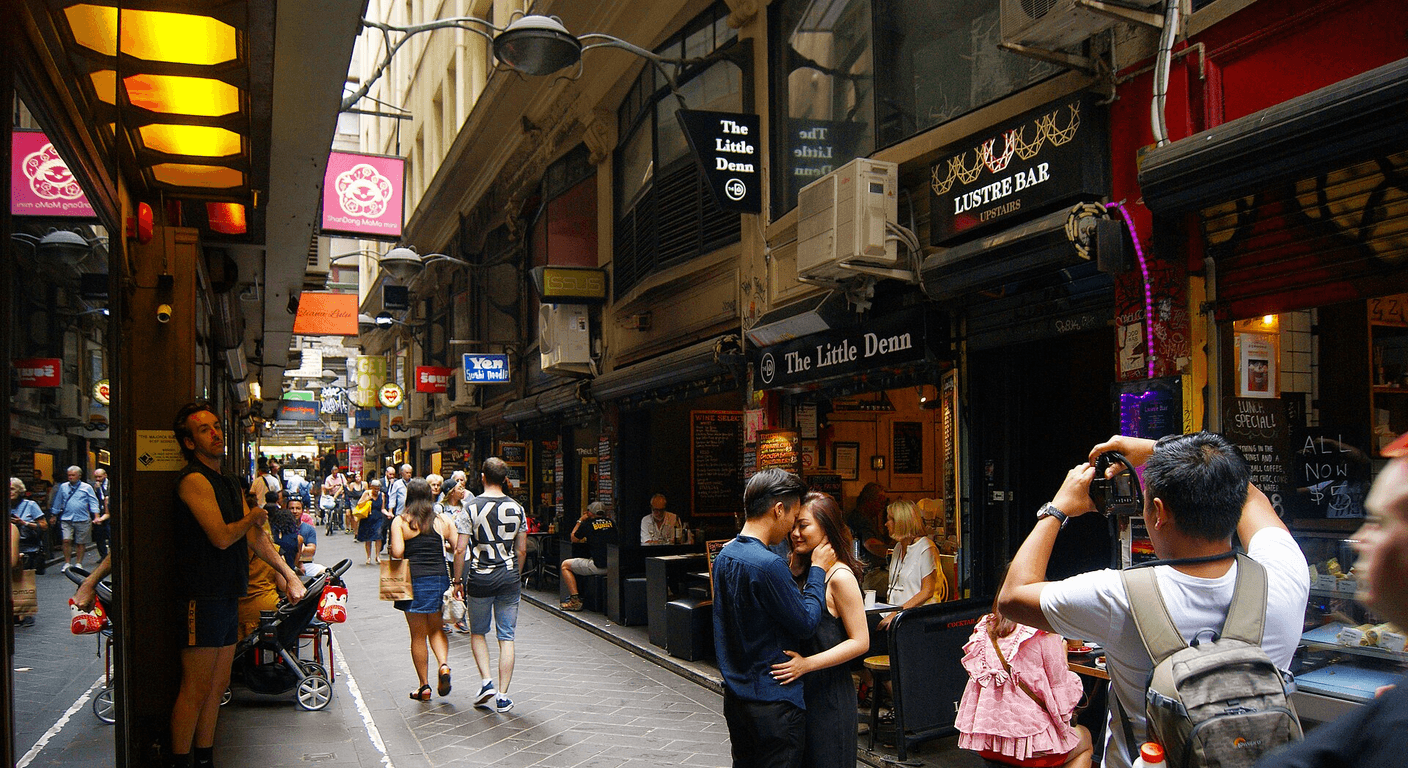
Degraves Street gets the photographs and the foot traffic, but Melbourne's laneway food culture runs much deeper than that one strip. On a cold July or August afternoon, the city's lesser-known laneways offer something Degraves rarely can: quiet. The kind of quiet where you can actually hear your companion across a small table, feel the warmth of a proper bowl of broth, and take your time without someone hovering for the table.
For a group of friends travelling in from regional Victoria, this matters more than it might for younger travellers who are happy to queue and move on quickly. The laneway soup bars described in this guide are the sort of places where the staff are used to a lunch trade that lingers — where a refill of tea is offered without being asked and where a bowl of laksa arrives with enough complexity that you want to eat it slowly. That is the whole point.
The other practical reality is cost. A proper bowl of pho, laksa, or congee in these spots runs roughly $12 to $18, confirm current prices on arrival or by checking with the venue directly. That puts a satisfying, warming lunch well within reach for a day trip that is already paying for the V/Line fare from regional Victoria.
Getting there: using the Free Tram Zone to reach the laneways
The Free Tram Zone covers the entire Melbourne CBD grid and extends along key corridors, which means that once you arrive at Southern Cross Station by V/Line, you can board any tram heading into the city without touching your Myki card. Routes 96, 86, and 35 (the City Circle) all pass through or near the laneway precinct around Flinders Lane, Collins Street, and Bourke Street. The City Circle tram is the most leisurely option and stops close to the eastern end of the CBD where several of the smaller laneways cluster.
From Southern Cross, the walk to the laneway precinct around Katherine Place and Somerset Place is around 600 to 700 metres along Flinders Lane — manageable for many, but not for everyone, particularly on a cold day. Taking a tram one or two stops east on Flinders Street or Collins Street reduces the walk considerably. Check the PTV journey planner at ptv.vic.gov.au before you travel so you can confirm which stop puts you closest to your chosen laneway.
A practical note: trams in the Free Tram Zone do not require you to tap on or off, but if your journey extends beyond the zone boundaries you will need a Myki with sufficient credit. For a day that stays within the CBD, a Myki is not required at all, which simplifies things considerably for infrequent public transport users.
Somerset Place and Katherine Place: what to expect on the ground
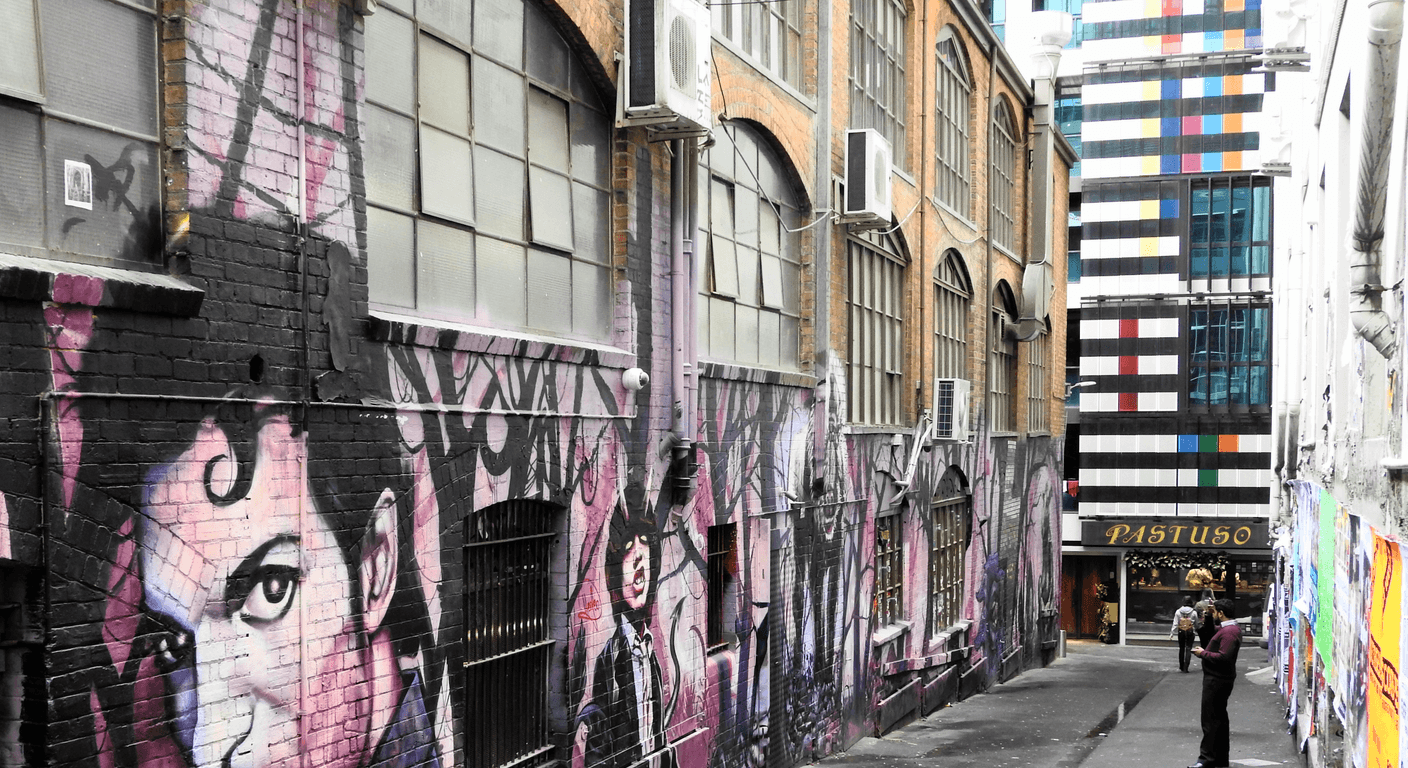
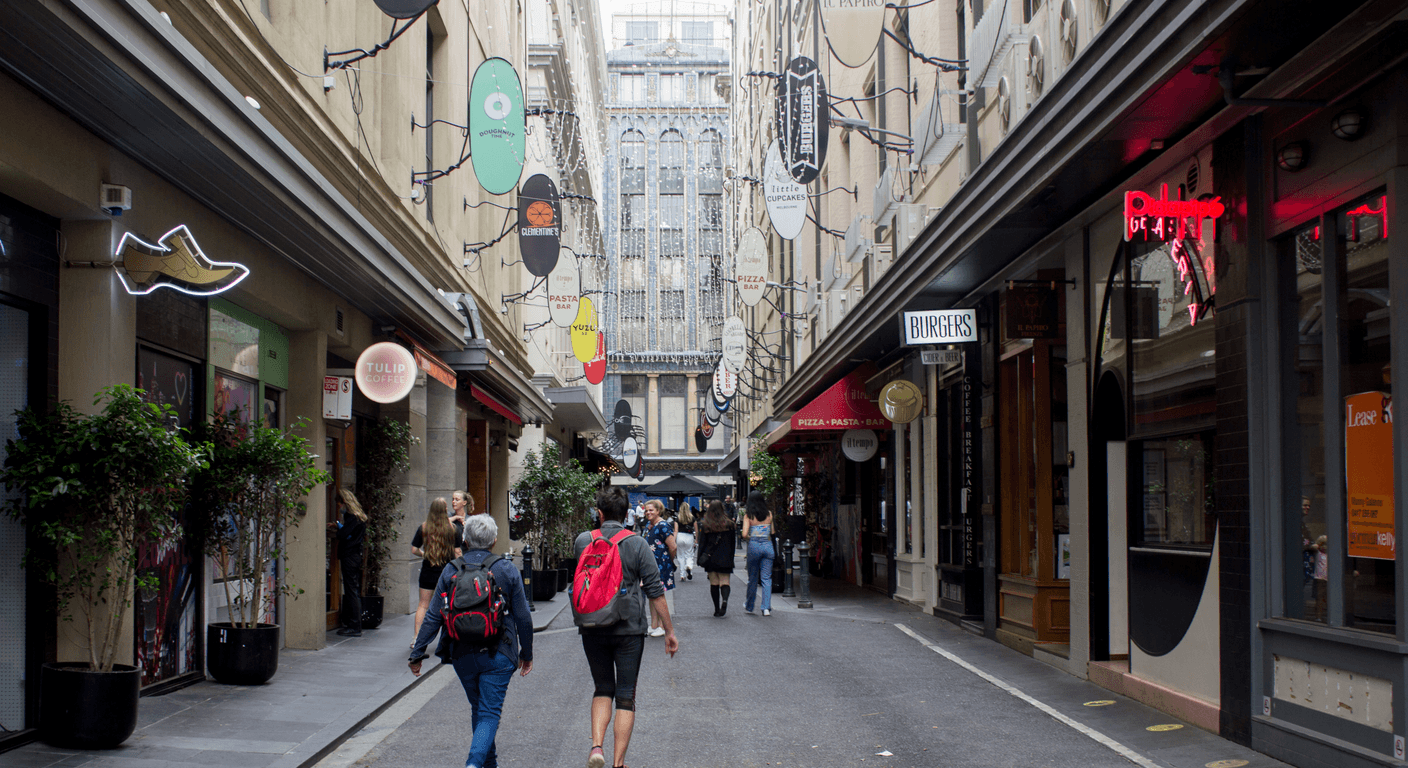
Somerset Place runs between Flinders Lane and Little Collins Street, east of Swanston Street. It is narrow, partially sheltered, and far quieter than the main laneway tourist circuit. Katherine Place is nearby, tucked between Flinders Lane and Collins Street in the eastern CBD. Both have a working-neighbourhood feel — they serve the office crowd at lunch and slow down by mid-afternoon, which is precisely when a group of friends arriving by V/Line might find themselves there.
The cobblestones in both laneways are the honest complication here. They are uneven, and on a wet winter day they can be slippery. For anyone using a walking stick, a wheelie walker, or orthopedic footwear, it is worth pausing at the laneway entrance to assess the surface before committing. Several of the eateries in these laneways have a small step at the entrance, and interior seating tends to be compact — bench seating along walls or small two-person tables. It is not inaccessible, but it is not purpose-designed for mobility aids either.
The practical strategy is to scout the entrance before the group sits down. Most staff are straightforward about whether there is a step, whether a wider chair is available, or whether a seat near the door (less draught, easier exit) can be arranged. Arriving between 11:30am and noon, before the main lunch push, gives you the best chance of choosing your table rather than being squeezed into whatever is left.
Three venues worth knowing about
Hu Tong Dumpling Bar has a presence in the CBD laneway precinct and is well regarded for its Shanghainese-style soups and broths. The xiao long bao (soup dumplings) are a slower, more deliberate eat than a bowl of noodles — ideal if the group wants to share and take their time. Indicative cost for a serve of dumplings with a soup is roughly $15 to $18 per person; confirm current pricing directly with the venue. The space at the Market Lane location has more room than some competitors, though seating is still compact by Australian suburban standards.
Stalactites on Lonsdale Street, while not technically a laneway venue, operates around the clock and is one of Melbourne's most consistent winter warmth options for a group that wants to sit without a time limit. The Greek lemon chicken soup (avgolemono) is a genuine cold-weather restorative, and the menu covers a wide enough range that a group with different preferences can all find something. Indicative cost for soup and bread is around $12 to $16; check with the venue for current prices. The space is larger and more navigable for mobility aids than most laneway spots.
For laksa specifically, Laksa King in Flemington is the name that comes up consistently among people who take their laksa seriously, though it requires a short tram ride beyond the Free Tram Zone. Within the CBD laneway orbit, smaller Malaysian-leaning eateries around Little Bourke Street and the streets feeding off it serve curry laksa and assam laksa at roughly $14 to $17 a bowl — again, confirm pricing on arrival. The broth is the point: rich, fragrant, and warming in a way that a sandwich at a café simply is not on a Melbourne winter afternoon.
How to pace the day: one laneway, one long sit
The instinct when visiting Melbourne's laneways for the first time is to move through several of them — a coffee here, a dumpling there, a browse through a bookshop. That is a reasonable approach in good weather when you are feeling energetic. On a cold winter's day with cobblestones underfoot and a group that has already travelled in from regional Victoria, it is a recipe for fatigue before 2pm.
A more satisfying structure is to choose one laneway and one venue, arrive at a comfortable pace around midday, and treat lunch as the centrepiece of the day rather than a refuelling stop. Order the bowl you actually want, not the quickest thing on the menu. Ask for tea or warm water to keep the table warm between courses. Let the conversation go where it goes. The venue is not going to rush you if you are not rushing yourself.
After lunch, if the group has energy, a slow walk along Flinders Lane toward the NGV International at St Kilda Road is an option — flat footpath, well-maintained, and the NGV's permanent collection is free. Alternatively, the State Library of Victoria on Swanston Street is a ten-minute walk north and has excellent seating in the La Trobe Reading Room, which is warm, beautiful, and costs nothing. Both are realistic afternoon options that do not require booking and do not require speed.
Accessibility: the honest picture for walkers and wheelie walkers
Melbourne's historic laneways were not designed with mobility in mind, and it would be misleading to suggest otherwise. The cobblestone surfaces, narrow entries, step thresholds, and compact interiors are genuine challenges for anyone using a wheelie walker or relying on a walking stick for stability. That does not mean these places are off-limits, but it does mean doing a little reconnaissance before committing the group.
The most practical approach is to look up the venue's address on Google Street View before you travel so you can see the entrance. Calling ahead is also worth doing — most small eateries are direct about their access situation and will tell you honestly whether a wheelie walker can get through the door and whether there is a step. Some have a small ramp or a staff member who can assist; others simply cannot accommodate larger mobility aids and it is better to know that before you arrive.
For groups where one or more members have significant mobility limitations, the nearby venues on wider streets — Lonsdale Street, Swanston Street, or the food courts in Melbourne Central or Emporium Melbourne — offer a more accessible alternative with similar price points. Melbourne Central's food precinct in particular is fully accessible, warm, and has a wide range of Asian soup-based options at similar indicative price points to the laneways.
What to order and what to look for on a winter menu
The bowl worth ordering in winter is the one with the longest-cooked broth — the one where the base has been simmering since early morning. In Malaysian-style laksa, that means a curry laksa with a coconut milk base rather than a lighter assam version, though both are valid. In Vietnamese-style pho, it means asking whether the broth is house-made (most good pho places in Melbourne's CBD are), and choosing a cut of beef — brisket or tendon — that benefits from slow cooking rather than the quick-cook sliced options.
If the group includes someone who does not eat meat, congee is the most reliable winter option across cuisines. A well-made congee with ginger, century egg, and fried shallots is deeply warming and consistently available at Melbourne's Chinese-leaning laneway venues. It is also easier to eat slowly and comfortably than noodle soups, which can be awkward for anyone with limited hand dexterity.
Portion sizes at laneway venues tend toward the generous, so ordering one dish each and sharing a small side is usually plenty. Resist the urge to over-order in the first round — it is always possible to add another dish, and the point of the outing is to sit comfortably and enjoy the food, not to work through a large spread. A pot of jasmine tea or chrysanthemum tea between the group is worth asking for; most venues will provide it at no extra cost or for a very small charge.
Key takeaways
- Melbourne's lesser-known laneways like Somerset Place and Katherine Place offer quieter, more relaxed winter dining than the busy Degraves Street strip.
- A bowl of laksa, pho, or congee in Melbourne's CBD laneway venues costs roughly $12 to $18 — confirm current prices directly with each venue.
- The Free Tram Zone covers the entire CBD, so regional visitors arriving at Southern Cross Station can reach the laneway precinct without a Myki card.
- Cobblestones and small entry steps are genuine accessibility challenges in historic laneways — calling ahead to check access before you arrive saves frustration.
- Pacing the day around one laneway and one long, unhurried lunch is more satisfying than a multi-stop crawl, especially in cold weather.
- The NGV International and the State Library of Victoria are both flat, warm, and free to enter — reliable afternoon options after a laneway lunch.
Recommended partners and links
Indicative prices only — always confirm with the operator before booking.
Frequently asked questions
Is the Free Tram Zone enough to get me to Melbourne's hidden laneways from Southern Cross Station?
Yes. The Free Tram Zone covers the full CBD grid, and trams running east along Flinders Street or Collins Street will take you within a short walk of laneways like Somerset Place and Katherine Place without any cost. You do not need a Myki card if you stay within the zone. Check ptv.vic.gov.au for the current zone map and stop locations.
Are Melbourne's CBD laneways accessible for someone using a wheelie walker?
Many historic laneways have cobblestone surfaces and narrow entries with small steps, which can be difficult for wheelie walkers and walking sticks. It is worth calling the specific venue ahead of your visit to ask about step access and interior space. For fully accessible alternatives with similar food options, Melbourne Central's food precinct on Swanston Street is a practical choice.
How much should I budget for a laneway soup lunch in Melbourne's CBD?
A bowl of laksa, pho, or congee at Melbourne CBD laneway venues typically costs roughly $12 to $18 per person. Prices are indicative only — confirm current pricing with each venue before you order, as costs can change seasonally.
What is the best time to arrive at a Melbourne laneway eatery to get a comfortable seat?
Arriving between 11:30am and noon, before the main office lunch rush, gives you the best choice of seating and the most relaxed service. By 12:30pm many small laneway venues fill quickly. Mid-afternoon, from around 2pm onward, is another quieter window if you prefer a late lunch.
Which soup is the most practical to eat if I have limited hand dexterity or find noodles difficult?
Congee is the easiest option — it is eaten with a spoon, requires no chopstick skill, and is available at most Chinese-leaning laneway venues. A congee with ginger and fried shallots is also one of the most warming and satisfying winter choices on any Melbourne laneway menu.
Got a tip, a price update or a story from this route? The community would love to hear it.
Share your views on our Facebook page— Seniors and Solo Traveller Stories