Lake Mountain Alpine Resort, roughly two hours from Melbourne, offers a rare chance to walk through snow-covered alpine bush without strapping on a pair of skis. For older travellers who want the atmosphere of a proper snow day — the cold air, the white-dusted trees, the warmth of a hut afterwards — it delivers that without demanding athletic effort. This guide covers the drive, the boardwalks, the toboggans, and the practicalities of getting there safely in winter.
Why Lake Mountain works well for older travellers who just want snow
Lake Mountain sits at around 1,480 metres above sea level in the Yarra Ranges, north-east of Melbourne. Unlike Falls Creek or Mount Buller, it has no ski lifts and no downhill runs, which means the crowds it attracts are families with toboggans, cross-country skiers, and people who simply want to stand in the snow and feel it under their boots. That mix makes it a more relaxed environment than the bigger ski resorts, and the pace suits anyone who prefers a gentle wander over a physical challenge.
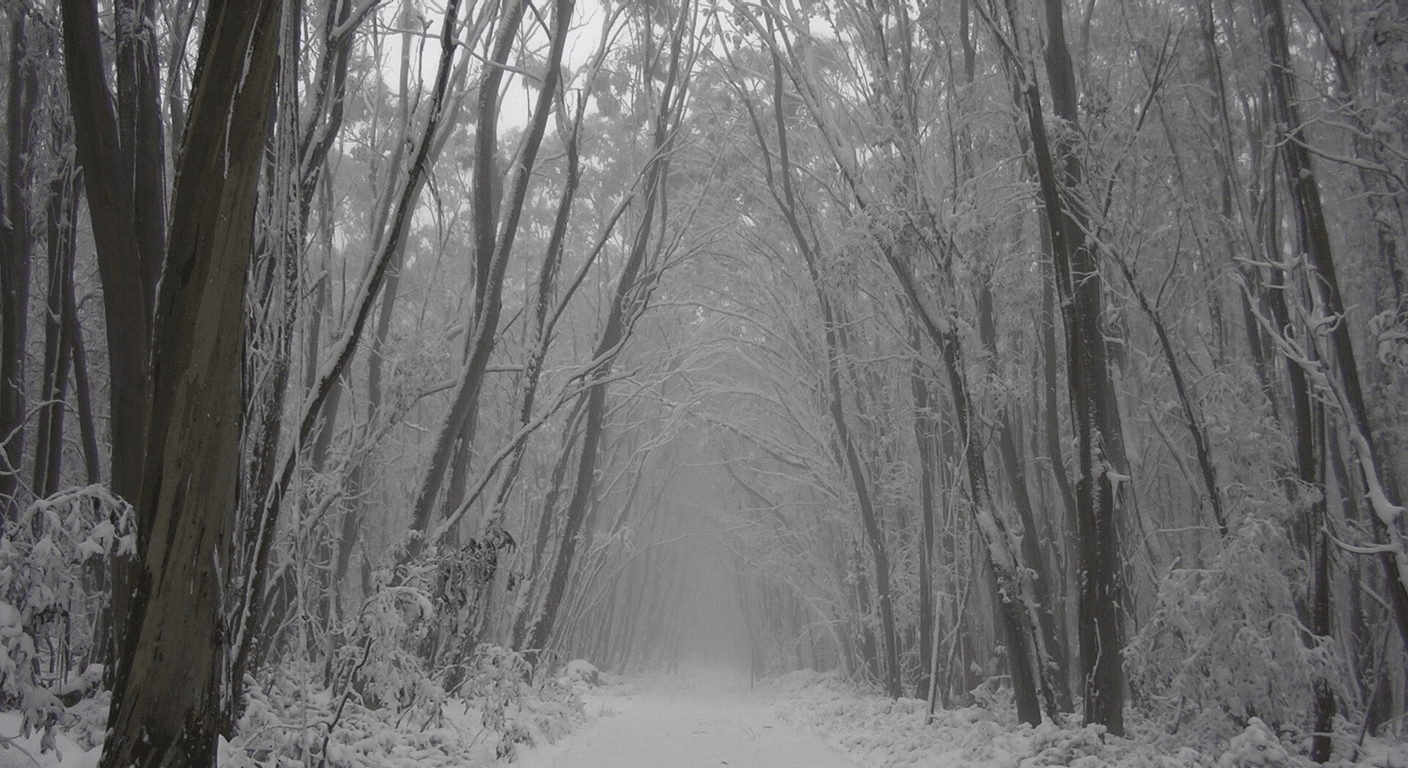
The resort's trail network is largely flat to gently rolling, and a boardwalk system allows visitors to move through the snow-gum landscape without sinking into deep powder. On a clear day the scenery is quietly beautiful in that understated Australian bush way — pale trunks, grey-green foliage dusted white, and a stillness that feels genuinely removed from the city. For a couple wanting a memorable winter outing that does not require specialist gear or fitness, this is one of the more honest options in Victoria.
It is worth being straightforward about one thing: Lake Mountain's snow is not guaranteed. The resort operates when natural or machine-made snow allows, and conditions change quickly at this altitude. Checking the resort's snow report on the official website before you leave home is not optional — it is essential planning.
How far is Lake Mountain from Melbourne, and what is the drive like?
The drive from Melbourne's eastern suburbs to Lake Mountain takes roughly two hours under normal conditions. From the CBD, the most common route follows the Maroondah Highway through Lilydale and Healesville, then continues through Narbethong and Marysville before the final climb to the resort. The road through the Yarra Ranges is genuinely pleasant in winter — winding through tall eucalypt forest with occasional valley views — but it demands full attention and a degree of confidence behind the wheel.
The section between Marysville and the resort summit is where conditions become more demanding in winter. The road can be icy, and chains may be required — legally required, not just recommended — when snow or ice is present. Parks Victoria and the resort website publish up-to-date chain requirements, and these should be checked the morning of your trip. Carrying chains and knowing how to fit them, or having roadside assistance cover that includes chain fitting, is genuinely important for this drive. If either of those conditions feels uncertain, the coach option described later in this guide is the sensible alternative.
Petrol up before Marysville rather than relying on finding fuel further along. Marysville itself is a pleasant small town with cafes and bakeries, and many visitors stop there on the way home to warm up and eat before the return drive. Parking at the resort is a paid area — confirm current parking fees on the Lake Mountain website before you go.
What can you actually do at Lake Mountain if you are not skiing?
Tobogganing is the headline activity for non-skiers, and it is more fun than it sounds for people who have not done it since childhood. Lake Mountain has dedicated toboggan slopes that are separate from the cross-country ski trails. Toboggans can be hired from the resort's equipment hire facility — indicative hire costs have been around a few dollars per hour or a flat daily rate, but prices change seasonally, so confirm current hire costs on the official website. You do not need to be particularly fit to toboggan, though getting up and down the slope does require some mobility and a willingness to get cold and damp.
The boardwalk network is the quieter alternative and arguably the more suitable choice for travellers who want the experience of being in snow without the physical demands of a slope. The boardwalks are groomed and relatively even underfoot, though ice can form on timber surfaces, so non-slip footwear with good ankle support is strongly recommended. The walks range from short loops near the village centre to longer trails through the snow gums. The shorter loops are accessible for most fitness levels and give a genuine sense of the alpine landscape.
The resort has warming huts and a central lodge area with food and beverage service. After an hour or two outside, sitting down with a hot drink and watching other visitors come in red-faced from the cold is a perfectly valid way to spend part of the day. The facilities are not luxurious, but they are functional and warm, and the atmosphere on a busy winter weekend has a genuine community feel.
Is public transport an option, or is a car or coach tour the realistic way to get there?
Public transport does not serve Lake Mountain directly, and this is worth being honest about from the outset. There is no V/Line train or bus route that connects Melbourne to the resort. Reaching Marysville by public transport involves a combination of train and connecting bus services that are infrequent and not well-suited to a winter day trip with a time-sensitive return. For most people reading this, the realistic options are driving your own car, travelling with someone who is driving, or joining an organised coach tour.
Organised coach transfers to Lake Mountain operate during the snow season, typically departing from Melbourne's eastern suburbs or the CBD. Mansfield-Mt Buller Bus Lines has offered season transfers to Lake Mountain in previous years — check their website for current 2026 season schedules and fares, as these are confirmed closer to the season opening. Some general tour operators also include Lake Mountain in winter day tour packages, which can be worth considering if driving in alpine conditions feels like too much.
A coach tour removes the stress of chain requirements, icy roads, and parking, and allows both people in a couple to simply look out the window and enjoy the drive. For a 73-year-old who may be cautious about driving in unfamiliar winter conditions, or whose partner does not drive, this is a straightforward and comfortable solution. The trade-off is that you work to someone else's schedule, which is worth factoring into your decision.
What should you wear and bring for a snow day at Lake Mountain?
Layering is the practical principle here. A thermal base layer, a mid-layer such as a fleece or down vest, and a waterproof outer jacket covers most conditions at Lake Mountain in winter. Temperatures at the summit regularly sit between zero and five degrees Celsius on a snow day, and wind chill can make it feel colder. Gloves and a warm hat are not optional — bare hands become uncomfortable within minutes in those conditions, and for older travellers, staying warm is a matter of comfort and safety, not just preference.
Footwear is where people most often underestimate the conditions. Waterproof boots with a non-slip sole and ankle support make the difference between a pleasant walk and a miserable one. Ordinary leather shoes or canvas sneakers will be wet and cold within ten minutes on snow. If you do not own suitable boots, it is worth sourcing a pair before the trip — many outdoor retailers carry affordable options that do not require a large investment.
Beyond clothing, bring sunscreen. Snow reflects UV strongly, and even on an overcast day the exposure at altitude is higher than most people expect. Pack snacks and water, as resort food and drink is available but can be expensive. A small backpack to carry layers you remove as you warm up is useful. And if you are driving, make sure your car has a full tank, your mobile is charged, and you have the road conditions hotline or Parks Victoria website bookmarked.
Accessibility and pacing: what to be realistic about
Lake Mountain is more accessible than the larger ski resorts, but it is not fully flat terrain, and ice and uneven snow surfaces create genuine hazards for anyone with reduced balance or mobility. The boardwalks are the most accessible option on site and are recommended for anyone who uses a walking stick, has knee or hip concerns, or simply prefers not to risk a fall. The resort's accessibility information is available on their official website, and it is worth reviewing this before the trip rather than discovering limitations on the day.
Pacing matters on a snow day in ways that are easy to underestimate. The cold makes physical activity feel easier than it is, and the novelty of the environment encourages people to keep going longer than they might otherwise. Building in a genuine rest period in the warming hut, eating something warm mid-morning, and allowing time for a slower return to the car are all sensible habits. A full snow day at Lake Mountain does not need to mean six hours on the trails — two or three hours outside followed by lunch in Marysville on the way home is a very complete and satisfying outing.
For anyone with heart or respiratory conditions, the altitude at Lake Mountain is modest compared to higher resorts, but cold dry air can still affect breathing. If this is a consideration, speaking with a GP before the trip is the right step, not something to wave away. Most people in reasonable health have no issues, but it is better to go with clear information than to guess.
Making the most of Marysville on the way home
Marysville is a small town about 30 minutes below Lake Mountain, and stopping there on the return journey transforms a day trip into something that feels more complete. The town was severely affected by the 2009 Black Saturday bushfires and has rebuilt steadily over the years — it has a quiet resilience about it. There are cafes, a bakery, and a handful of small shops, and on a winter afternoon when the snow day crowd is heading home, it is a good place to sit, eat, and let the body warm back up before the longer drive to Melbourne.
Bruno's Art and Sculpture Garden in Marysville is worth knowing about — it is a distinctive outdoor garden created by local artist Bruno Torfs and is open year-round. It suits a short, gentle wander and provides a different kind of beauty to the alpine landscape visited earlier in the day. Check current opening hours and entry details directly with the operator before visiting. The combination of a snow morning at Lake Mountain and a quiet afternoon in Marysville makes for a well-rounded day that does not feel rushed.
Key takeaways
- Lake Mountain is roughly two hours from Melbourne and offers snow without skiing — making it one of Victoria's most accessible alpine day trips for older travellers.
- Chain requirements on the road to the resort are legally enforced when conditions demand them — check the resort website and Parks Victoria for current road conditions before you leave.
- The boardwalk network allows visitors to experience the snow-gum landscape without deep snow underfoot, which suits anyone with mobility concerns more than the toboggan slopes.
- There is no direct public transport to Lake Mountain — a private car or an organised coach transfer are the realistic options for most visitors.
- Layering, waterproof boots with non-slip soles, and gloves are not optional extras — they are the baseline for a comfortable and safe snow day at this altitude.
- Stopping in Marysville on the return journey for a warm meal rounds out the day and gives the body time to recover before the drive back to Melbourne.
Recommended partners and links
Indicative prices only — always confirm with the operator before booking.
Frequently asked questions
Do you need to ski or snowboard to enjoy Lake Mountain in winter?
No. Lake Mountain has no downhill ski runs or lifts. Visitors who do not ski can use the boardwalks, hire a toboggan, or simply walk the groomed trails through the snow-gum bush. It is one of the few Victorian alpine destinations specifically suited to non-skiers.
Are snow chains required to drive to Lake Mountain?
Snow chains may be legally required on the road to Lake Mountain when ice or snow is present. Requirements are enforced by police and can change rapidly with conditions. Check the Lake Mountain Alpine Resort website and Parks Victoria for current chain requirements on the morning of your visit.
Can you get to Lake Mountain by public transport?
There is no direct public transport service to Lake Mountain. V/Line and local bus services do not connect Melbourne to the resort in a practical way for a day trip. Most visitors drive or join an organised coach transfer. Check with operators such as Mansfield-Mt Buller Bus Lines for current season coach services.
How much does it cost to visit Lake Mountain, and do you pay to enter?
Lake Mountain charges entry fees and separate fees for toboggan hire and parking. Indicative costs have changed from season to season, so confirm all current fees on the official Lake Mountain Alpine Resort website at lakemountainresort.com.au before your visit.
Is Lake Mountain suitable for someone with limited mobility or balance concerns?
The boardwalk network at Lake Mountain is the most accessible option on site and is recommended for visitors with knee, hip, or balance concerns. Ice can form on boardwalk surfaces, so non-slip footwear is essential. The resort's official website publishes accessibility information, and it is worth reviewing this before the trip.
Got a tip, a price update or a story from this route? The community would love to hear it.
Share your views on our Facebook page— Seniors and Solo Traveller Stories