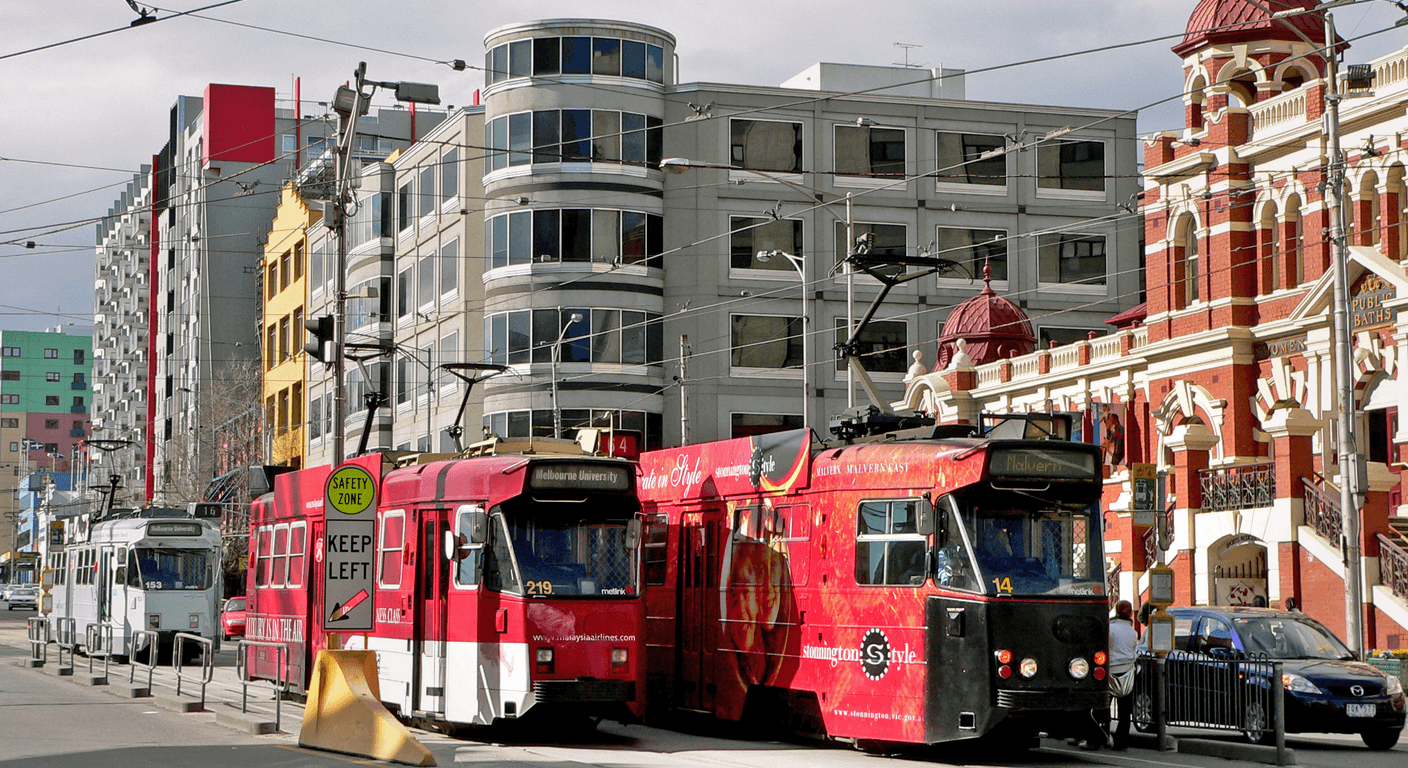
Melbourne's Free Tram Zone lets you spend a full day exploring the CBD, Docklands and Southbank without touching your wallet for transport. In winter, when daylight is shorter and the cold bites, the trick is to plan a loop that keeps you moving between warm indoor spaces. This guide lays out a practical, paced day for travellers aged 60 and over who want to make the most of what the city offers — freely.
Why Winter Is Actually a Good Time for a Free Tram Day
There is a common assumption that Melbourne in winter means miserable weather and shortened horizons. In practice, a cold day in the city can be exactly the right prompt to slow down, go deeper into the places you might rush past in summer, and let the tram do the legwork between warm interiors. The Free Tram Zone covers the heart of Melbourne — the CBD grid, Docklands to the west and Southbank to the south — and in winter, those indoor destinations feel especially worthwhile.
Daylight in Melbourne during June and July runs from roughly 7:30 am to 5:15 pm. That is a narrower window than summer, but it is more than enough for a well-paced loop if you start by 10 am. The goal is not to sprint between landmarks but to settle into each stop, take your time with a hot drink, and use the tram as a warm corridor between experiences. For travellers who find long walks tiring or who prefer to avoid being on their feet for hours without a break, this kind of day is genuinely comfortable.
The other advantage of winter is quieter galleries and a more relaxed city pace. The queues at the State Library reading room and the NGV are noticeably shorter on a cool Tuesday in July than on a summer weekend. If you have been meaning to visit these places properly — not just glance at them — winter gives you that chance.
Understanding the Free Tram Zone: Where Does the Fare Kick In?
The Free Tram Zone is a specific geographic area, not a blanket rule for all Melbourne trams. It covers the CBD grid bounded roughly by Spring Street to the east, Flinders Street to the south, Spencer Street to the west, and La Trobe Street to the north. It also extends west along Harbour Esplanade into Docklands, and south along St Kilda Road as far as the Arts Centre stop. You do not need a Myki card or any ticket while you are travelling within this zone.
The confusion starts at the edges. If you board a tram inside the Free Tram Zone but ride it past the boundary — for example, continuing south on the Route 96 beyond the Arts Centre toward St Kilda, or east on Route 86 beyond Spring Street — you are in a paid zone and will need a valid Myki. The tram does not stop or announce the boundary change in a way that always registers. The practical rule: if you are staying within the CBD, Docklands and Southbank triangle, you are fine. If you are not sure, check the map on the PTV website before you board.
For this day trip, the entire suggested loop sits comfortably inside the Free Tram Zone. You will not need a Myki at all, which is genuinely useful if you are visiting from regional Victoria or interstate and have not loaded one. That said, if you plan to extend the day into Fitzroy, Richmond or St Kilda, you will need to tap on. It is worth having a Myki ready for that contingency rather than scrambling at the stop.
Morning: State Library to the CBD Grid (10 am – 12:30 pm)
A good starting point is the State Library of Victoria on Swanston Street. Trams running along Swanston Street — Routes 1, 3, 5, 6, 8, 16, 64, 67 and 72 among others — all stop directly outside or very close to the library. The La Trobe Street reading room, with its domed ceiling and tiered galleries, is one of the more quietly magnificent interiors in Melbourne and costs nothing to enter. The library also holds rotating free exhibitions on Victorian history, literature and culture. Allow an hour here without feeling rushed.
From the library, a short walk south along Swanston Street takes you into the heart of the CBD retail and laneway precinct. For those who find walking distances a consideration: the block between La Trobe and Bourke Streets is roughly 400 metres, and the ground is flat and paved throughout. The laneways — Degraves, Centre Place, Hardware Lane — are narrow but generally accessible, though some have cobblestones that can be uneven underfoot. Wear shoes with a firm sole rather than soft-soled walking sandals in winter.
By late morning, Emporium Melbourne on Lonsdale Street offers a sensible warm pause. The food court on the lower ground level runs a wide range of cuisines, and the seating is generous. A bowl of soup or a hot lunch here costs roughly $12–$18 depending on what you choose — confirm current prices at the venue. The building is fully accessible with lifts throughout, and the ground-floor entry from Lonsdale Street is level. It is a practical spot to sit, warm up and regroup before the afternoon leg.
Afternoon: Southbank and the NGV (1 pm – 3:30 pm)
From the CBD, board any southbound tram on Swanston Street and ride to the Flinders Street Station stop, or simply walk the short distance south across the pedestrian bridge over the Yarra. The Southbank Promenade runs along the river and connects to the Arts Precinct, where the National Gallery of Victoria sits on St Kilda Road. The walk from Flinders Street Station to the NGV main entrance is around 700 metres along a flat, paved path beside the river. If that distance is more than comfortable, a tram running south on St Kilda Road — Route 58 or Route 1, depending on the stop — can drop you closer.
The NGV's permanent collection is free and spans international and Australian work across multiple floors. In winter, the internal courtyard with its stained glass ceiling is a particular draw — it is sheltered, visually arresting and a good place to rest. Ticketed special exhibitions run alongside the permanent collection; prices vary and should be confirmed at ngv.vic.gov.au. Allow 90 minutes to two hours if you are moving at a comfortable pace. The NGV has lifts, accessible bathrooms and a café on the ground floor.
After the NGV, the Southbank dining and bar precinct along the promenade is an option for a late-afternoon coffee or early dinner, though prices at the riverside venues reflect their location. A coffee here runs roughly $5–$7 — confirm current prices. Alternatively, the Arts Centre Melbourne building next door to the NGV has a more modest café and is worth a brief look inside for its distinctive spire and foyer, which is publicly accessible.
Late Afternoon: Docklands Loop Before Dark (3:30 pm – 5 pm)
In winter, the light starts to soften by 4 pm and is largely gone by 5:15 pm. If you want to see Docklands in daylight, the timing matters. From Southbank, the most straightforward route is to head back north through the CBD via tram or a short walk to Flinders Street, then pick up the Route 35 City Circle tram or board a Route 11 or Route 48 tram heading west along Collins Street toward Harbour Esplanade.
Docklands is a waterfront precinct that took shape over the 2000s and still has a slightly unfinished feel in parts, but the harbour basin, public artworks and the wide promenade around NewQuay are pleasant in the late afternoon. The area is very flat and easy to walk — the loop around the main basin at NewQuay is roughly 1.5 kilometres on a sealed path. There are benches at regular intervals. Waterfront City, the main retail and dining hub, has indoor seating and a supermarket if you want to pick up anything for the journey home.
The public artwork scattered through Docklands is free and worth a slow look. The large-scale sculptures and the Webb Bridge — a pedestrian and cycling bridge with a distinctive woven structure — are particular features. Webb Bridge connects the Docklands promenade to Southbank if you want to make a full loop on foot, though at roughly 1.8 kilometres from NewQuay to the NGV end, that is a longer walk and best judged against energy levels at that point in the day.
Pacing, Warmth and Practical Comfort Through the Day
The single most important thing for a winter day in the city is layering. Melbourne's winter temperatures typically sit between 7°C and 14°C, with a wind chill off the Yarra and the bay that can make exposed areas feel colder. A warm inner layer, a wind-resistant outer jacket and a scarf cover most conditions. Gloves are worth having if your hands feel the cold. Waterproof shoes are sensible given the likelihood of at least some light rain.
For travellers managing joint pain, fatigue or reduced mobility, the rhythm of this day is designed around indoor pauses rather than continuous walking. The longest single walk suggested — from Flinders Street to the NGV — is around 700 metres on flat ground. Each indoor stop offers seating, warmth and a natural rest. Trams in Melbourne are step-on with a small gap at street level; some stops have raised platforms that make boarding easier, while others require a small step up. If boarding from a raised platform stop, the gap between the platform and the tram floor is minimal. If you are unsure about a specific stop, the PTV website lists accessibility features by stop.
Carry a water bottle and a small snack. Food and drink in the CBD is easy to find but can be priced at tourist-area rates. Having something in your bag means you are not dependent on finding a café at the exact moment you want one. Public toilets are available at the State Library, the NGV, Emporium and throughout Docklands at Waterfront City — all free to use.
Getting to the Free Tram Zone from Regional Victoria or the Suburbs
If you are coming from regional Victoria by V/Line train, you will arrive at Southern Cross Station on Spencer Street — which sits on the western edge of the Free Tram Zone. You can board a tram directly from outside the station without paying a fare. The journey into the CBD from Southern Cross takes just a few minutes on any eastbound tram along Collins or Bourke Street. Check vline.com.au for current timetables and fares from your origin.
From Melbourne's suburban train network, Flinders Street Station is the most central arrival point. Again, it sits within the Free Tram Zone, so you can step off the train and onto a tram at no extra cost. If you are driving from the suburbs or from a regional area, parking in the CBD on a weekday costs roughly $25–$50 for a full day at a central car park — confirm current rates with Wilson Parking or Secure Parking via their websites. Arriving by public transport and leaving the car at a suburban station park-and-ride is a more economical approach on a day when the whole point is keeping costs low.
For those who prefer a structured entry point, the Melbourne Visitor Centre at Federation Square (corner of Flinders and Swanston Streets) is a useful first stop. It is free to enter, staffed by knowledgeable volunteers, and can provide current maps and information about what is on in the city that day. Federation Square is also a tram interchange, making it a natural hub to orient yourself before the day begins.
Key takeaways
- The Free Tram Zone covers the CBD grid, Docklands and Southbank — no Myki needed while you stay within those boundaries.
- Melbourne's winter daylight runs roughly 7:30 am to 5:15 pm, so starting by 10 am gives a comfortable full day.
- The State Library of Victoria and the NGV permanent collection are both free to enter and offer substantial indoor time out of the cold.
- The Free Tram Zone boundary is not announced on the tram — if you ride past it without a Myki, you are travelling without a valid ticket.
- The longest suggested walk in this loop is around 700 metres on flat, paved ground — the rest of the day is done by tram.
- Docklands is best visited before 5 pm in winter if you want to see the waterfront in daylight.
Recommended partners and links
Indicative prices only — always confirm with the operator before booking.
Frequently asked questions
Do you need a Myki card to use the Free Tram Zone?
No. Within the Free Tram Zone — which covers the Melbourne CBD grid, Docklands and Southbank as far as the Arts Centre stop on St Kilda Road — tram travel is free and no Myki card or ticket is required. If you plan to travel outside the zone at any point, you will need a valid Myki.
Where exactly does the Free Tram Zone end?
The Free Tram Zone is bounded roughly by Spring Street to the east, Flinders Street to the south, Spencer Street to the west and La Trobe Street to the north, with extensions into Docklands along Harbour Esplanade and south along St Kilda Road to the Arts Centre stop. Beyond these boundaries, standard PTV fares apply. The current map is available on the PTV website at ptv.vic.gov.au.
Is the Free Tram Zone day trip accessible for people with limited mobility?
The suggested loop uses flat, paved routes throughout the CBD, Southbank and Docklands. The longest single walk is around 700 metres. The State Library, NGV and Emporium are all fully accessible with lifts. Some CBD laneways have uneven cobblestones and can be avoided. Tram boarding varies by stop — some stops have raised platforms that reduce the step gap. Check the PTV website for accessibility details at specific stops.
What are the best free indoor stops in the Free Tram Zone in winter?
The State Library of Victoria on Swanston Street offers free entry to its reading rooms and rotating exhibitions. The NGV on St Kilda Road has a free permanent collection spanning international and Australian art. Federation Square and its public spaces are sheltered and free. Emporium Melbourne on Lonsdale Street provides a warm, seated food court with a wide range of options. All four are within the Free Tram Zone.
How do you get to the Free Tram Zone from regional Victoria?
V/Line trains from regional Victoria arrive at Southern Cross Station on Spencer Street, which is on the western edge of the Free Tram Zone. You can board a tram directly outside the station at no cost. Check current V/Line timetables and fares from your origin at vline.com.au.
Got a tip, a price update or a story from this route? The community would love to hear it.
Share your views on our Facebook page— Seniors and Solo Traveller Stories