Melbourne has a generous live music culture that costs nothing to enjoy, from Sunday afternoon pub bands and Southbank buskers to free foyer concerts at the city's major arts venues. For a group of friends visiting from regional Victoria, knowing where to look — and when — makes all the difference between stumbling across something lovely and missing it entirely. This guide maps the reliable free sessions, explains how each works, and is honest about noise levels and seating so you can pace yourselves comfortably.
Why Melbourne's Free Music Scene Works Well for a Friends Group
Melbourne takes live music seriously in a way that few cities do, and a meaningful slice of that culture is genuinely free. The city's live music venues are protected by local planning laws, community concerts are embedded in neighbourhood life, and major arts institutions treat their foyers as public spaces rather than waiting rooms. For a group travelling in from regional Victoria for a day or a weekend, this means you can build a full day around music without spending a cent on tickets.
The practical advantage of free sessions is flexibility. There is no pressure to arrive at a set time, no ticket to lose, and no awkwardness if one person in the group wants to leave early. You can drift in, find a spot, listen for twenty minutes or two hours, and move on. That kind of low-stakes experience suits a friends group well — nobody has to be the organiser, and nobody feels guilty for stepping out.
That said, free does not always mean quiet or seated. This guide is honest about which sessions suit a relaxed afternoon and which are better suited to those who do not mind standing in a noisy pub front bar. Knowing the difference in advance means you arrive at the right venue for the mood you are in.
Pub Front-Bar Sessions: What to Expect and Which Suit Over-60s
Melbourne's pub music tradition is old and still very much alive. The front bar of a good inner-city pub on a Saturday afternoon or Sunday can have a local band playing original music or covers for no cover charge. The Prince of Wales in St Kilda, the Tote in Collingwood, and the Espy (Esplanade Hotel) in St Kilda all have histories of free or low-cost sessions, though programming changes frequently. Always check the venue's own website or social pages before travelling in.
Honesty matters here: pub front-bar sessions are typically loud, the seating is limited and often bar stools rather than chairs with backs, and the lighting is dim. For a group with anyone managing hearing aids, the mix of live music and ambient pub noise can make conversation difficult. If that sounds like a deterrent, the Sunday afternoon sessions tend to start earlier — often around 3pm — and are less crowded than evening shows, which gives you a better chance of finding a table with chairs near (but not directly in front of) the speakers.
The Espy in St Kilda is worth mentioning specifically because it has multiple rooms and a rooftop, which means the sound spills rather than overwhelms in some areas. The front bar stage is lively; the back areas are quieter. St Kilda is a straightforward tram ride from the CBD on the 96 or 16 tram routes. Check the Espy's website directly at espyhotel.com.au for current free session listings.
Free Foyer and Outdoor Concerts at Melbourne's Major Arts Venues
The Melbourne Recital Centre on Southbank runs a program called Lunchtime Series and occasional free foyer events that are among the best-kept secrets in the city. The Elisabeth Murdoch Hall foyer has good acoustics, cushioned seating options, and a calm atmosphere that is genuinely suited to older listeners. These events are typically 45–60 minutes and run at lunchtime on weekdays. The programming ranges from solo instrumentalists to small chamber ensembles. Check the What's On page at melbournerecital.com.au and filter by free events.
Arts Centre Melbourne, on St Kilda Road, also runs free public performances in its Hamer Hall foyer and outdoor spaces, particularly during festival periods and as part of its broader public programming. The Sidney Myer Music Bowl in the Kings Domain hosts free outdoor concerts, particularly in the warmer months from October through March. The Bowl has grassed seating and some hard seating; bring a folding cushion or a light picnic blanket if you plan to stay a while. Check artscentremelbourne.com.au and the City of Melbourne's What's On page for Bowl programming.
Federation Square, while primarily a civic space, hosts free live performances on its main stage and in the Atrium. Programming is variable — it can be amplified pop, acoustic folk, or cultural performance — but the square has seating, cafes nearby, and is fully accessible. The ACMI (Australian Centre for the Moving Image) at Federation Square sometimes incorporates live music into exhibition openings and public events; worth checking acmi.net.au if your visit overlaps with an opening.
Buskers Worth Stopping For: Bourke Street and Southbank
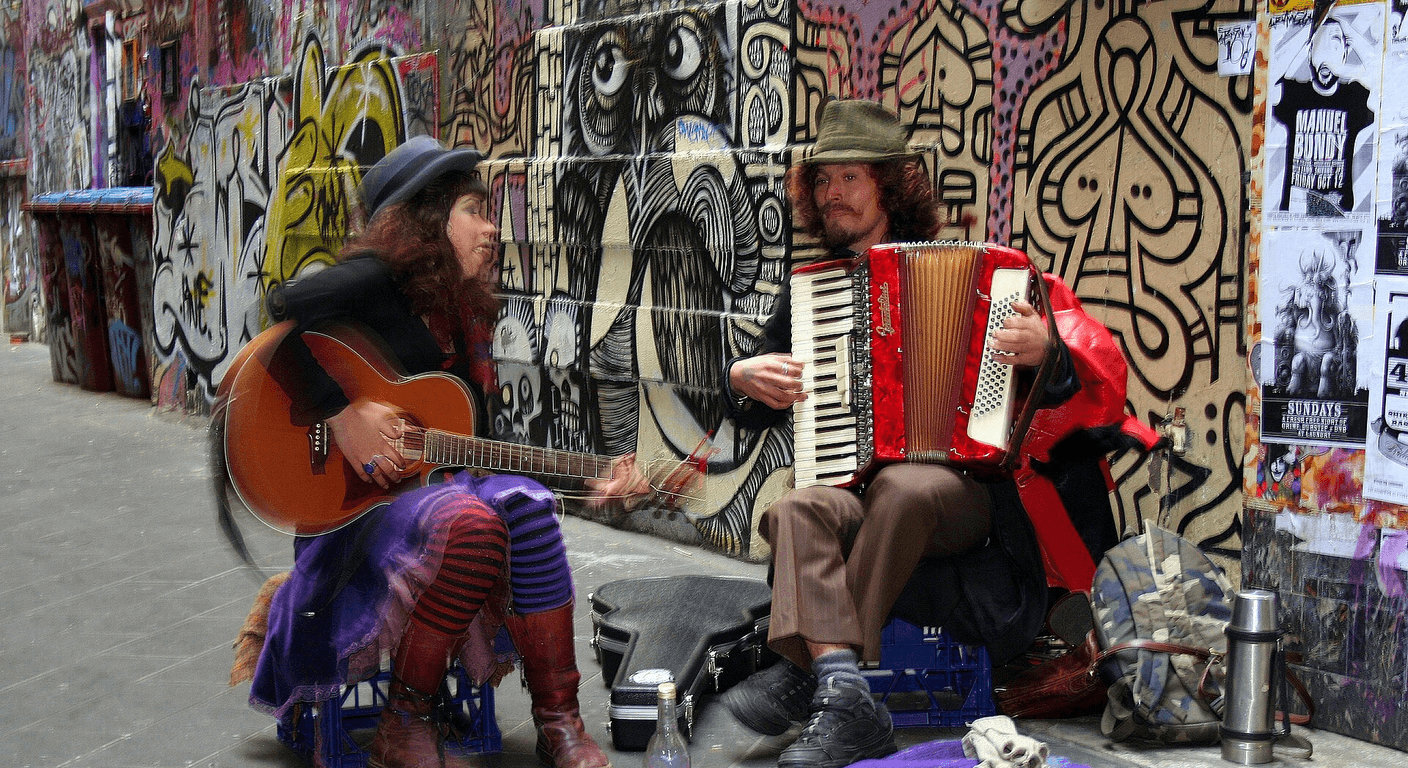
Melbourne's busking culture has a licensing system run by the City of Melbourne, which means the performers you encounter on Bourke Street Mall and along Southbank have auditioned for their spots. The standard is genuinely high. You will find classical violinists, jazz duos, Latin guitarists, and the occasional full acoustic band. The Southbank Promenade, particularly the stretch between the Arts Centre spire and the Queensbridge Square, is one of the more reliably musical stretches of public space in Australia.
Bourke Street Mall is busiest on weekdays during lunch hour and on Saturday mornings. If you are sensitive to crowd noise, the mid-morning window between 10am and noon on a weekday tends to have good performers with thinner crowds. Southbank in the late afternoon — say 3pm to 5pm — can be particularly pleasant, with performers setting up before the dinner crowd arrives and the light on the river being kind.
There is no obligation to stop, and no obligation to tip. That said, the etiquette is straightforward: if you stand and listen for more than a couple of minutes, a coin or a note in the case is a fair acknowledgement of the performance. Most buskers have a hat, an open instrument case, or a small jar. There is no awkwardness about putting in a small amount — $2 or $5 is entirely appropriate. If you have enjoyed a longer set, $10 is generous and genuinely appreciated.
Conservatorium and University Student Recitals
The Melbourne Conservatorium of Music, part of the University of Melbourne, runs a regular public recital program throughout the academic year, typically from March through November. Many of these events are free and open to the public without registration, though some require a free ticket reserved online. The standard of performance is often excellent — these are advanced students in their final years of study, and the repertoire tends to be ambitious.
Recitals are held in the Conservatorium's own spaces on Parkville campus and occasionally in partner venues around the city. The room sizes are intimate, the acoustics are designed for music, and seating is proper chairs. For a group that appreciates classical music, chamber music, or vocal performance, this is one of the most rewarding free options in Melbourne. Check conservatorium.unimelb.edu.au/events for the current schedule and to register where required.
Other universities with music programs — including the Australian Institute of Music and the Royal Melbourne Institute of Technology — also offer occasional free public recitals and ensemble performances. It is worth searching their events pages if your visit falls during semester time. These tend to be less well-publicised than Conservatorium events, so a direct search of the institution's website is more reliable than general listings.
Community and Church Concerts: The Quieter Side of Melbourne's Music Life
Melbourne's community music scene includes amateur orchestras, choral societies, and brass bands that perform free or low-cost public concerts throughout the year. The Melbourne Symphony Orchestra runs community engagement events, and various community orchestras — including the Melbourne Community Orchestra and the Boroondara Symphony Orchestra — perform free or by-donation concerts in local halls and parks. These are not professional-grade performances in the way a Conservatorium recital is, but they are warm, well-intentioned, and often held in pleasant venues with good seating.
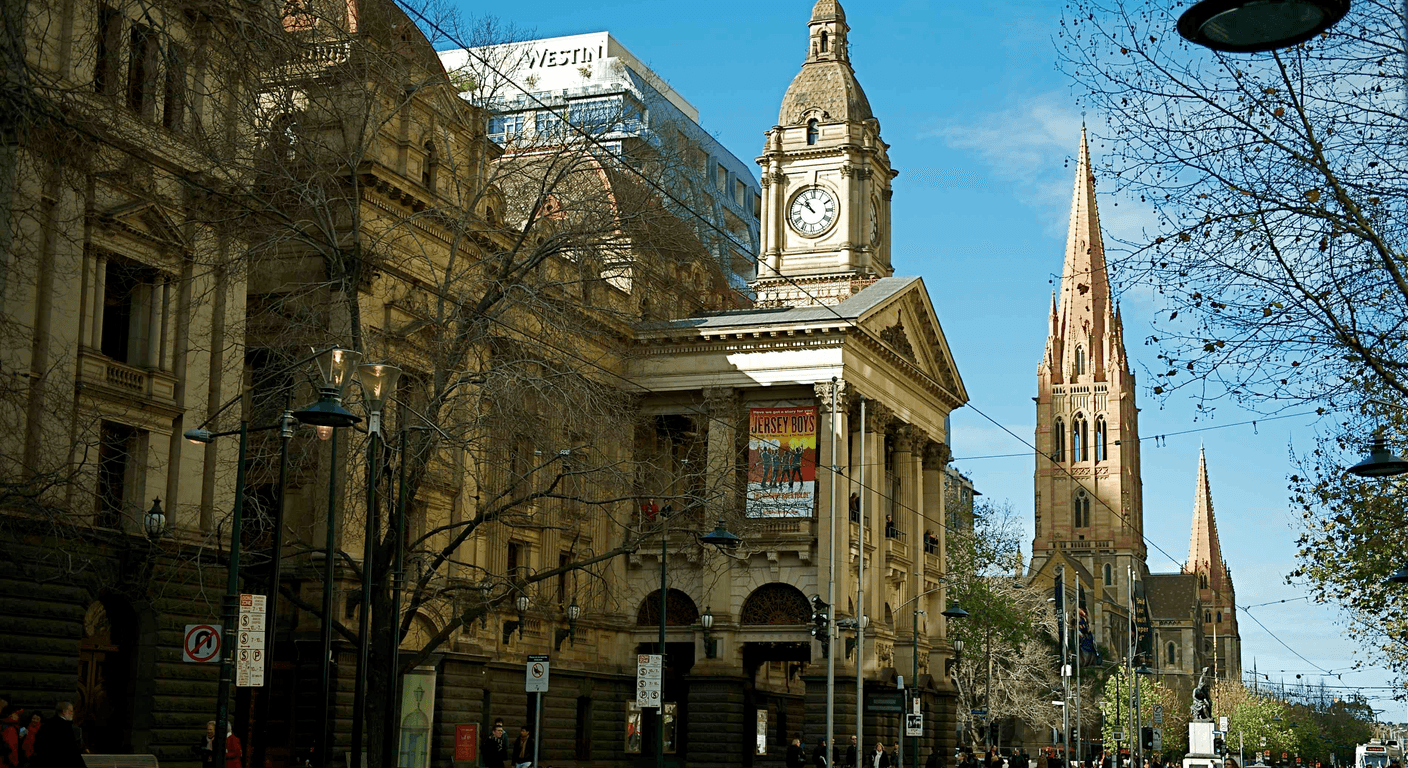
Churches are an underrated venue for free music in Melbourne. St Paul's Cathedral on Flinders Street and St Patrick's Cathedral on Cathedral Place both have choral traditions and host free public concerts and choral evensong services that are open to visitors of all backgrounds. The acoustic in both buildings is exceptional. St Paul's in particular has a long-running organ recital series; check stpaulscathedral.org.au for scheduling. These events are quiet, seated, and well-suited to a group that wants a genuinely unhurried musical experience.
The Uniting Church network and other denominations also host community music events, particularly around Easter and Christmas, but also throughout the year. The City of Melbourne's What's On page at melbourne.vic.gov.au/whatson is the most efficient single place to search for community concerts by suburb or date. You can filter by free events and by category to narrow results without having to check individual venue sites.
How to Check Listings and Plan the Day
The most reliable approach for a group visiting from regional Victoria is to check listings in the week before travel rather than months ahead, because free event programming — particularly for foyer concerts and pub sessions — is often confirmed only a few weeks out. The City of Melbourne's What's On site, the Melbourne Recital Centre's website, and the Arts Centre Melbourne's What's On page are the three most useful starting points. For pub sessions, go directly to the venue's website or their Facebook page, as that is where most inner-city venues post their weekly music schedules.
When planning a day around free music, consider building in a lunch break in between sessions. A midday foyer concert at the Recital Centre followed by a walk along Southbank to hear buskers, and then an afternoon pub session in St Kilda, makes for a full and varied day without requiring any ticket purchases. Trams connect all of these precincts: the free City Circle tram covers the CBD, and the 96 and 16 trams run to St Kilda. PTV journey planner at ptv.vic.gov.au is the most accurate tool for planning tram routes.
For the group's comfort, it is worth identifying in advance which venues have accessible toilets and seating. The Recital Centre, Arts Centre Melbourne, and Federation Square all have full accessibility. Pub venues vary considerably — some front bars have no accessible toilet on the ground floor, and seating is limited. Calling ahead to confirm is not excessive; venues are generally straightforward about what they have.
Key takeaways
- Melbourne's major arts venues — including the Melbourne Recital Centre and Arts Centre Melbourne — regularly offer free foyer and outdoor concerts that are quiet, seated, and suited to older listeners.
- Pub front-bar sessions are free but often loud and low on seating; Sunday afternoon sessions tend to be calmer and less crowded than evening shows.
- Melbourne's licensed buskers on Southbank and Bourke Street Mall have auditioned for their spots, and the standard is reliably high — no tip is obligatory, but a small amount is fair for a set you have genuinely enjoyed.
- The Melbourne Conservatorium of Music runs free and low-cost public recitals throughout the academic year, often in purpose-built acoustic spaces with proper seating.
- St Paul's Cathedral and St Patrick's Cathedral both offer free choral and organ events in exceptional acoustic settings, open to all visitors.
- The City of Melbourne's What's On page at melbourne.vic.gov.au/whatson is the most efficient single source for searching free music events by date and suburb.
Recommended partners and links
Indicative prices only — always confirm with the operator before booking.
Frequently asked questions
Are there free live music events in Melbourne that are suitable for older listeners with hearing aids?
Yes. The Melbourne Recital Centre's free foyer events and Melbourne Conservatorium recitals are held in purpose-designed acoustic spaces with lower ambient noise than pub venues, making them more manageable for listeners using hearing aids. Church concerts at St Paul's Cathedral and St Patrick's Cathedral are also quiet and seated. Pub sessions and outdoor busking are less predictable for hearing aid users because of ambient crowd noise.
When do free pub music sessions happen in Melbourne?
Most free pub sessions happen on Saturday afternoons and Sunday afternoons, typically starting between 2pm and 4pm. Some venues also run free weeknight sessions. Programming changes weekly, so check the individual venue's website or Facebook page in the days before your visit rather than relying on general listings.
Do you need to book for free concerts at the Melbourne Recital Centre?
Some free events at the Melbourne Recital Centre are walk-in, while others require a free ticket reserved online. Check the specific event listing at melbournerecital.com.au/whats-on to confirm whether registration is needed before you travel in.
How do you find out about free community concerts and church music in Melbourne?
The City of Melbourne's What's On page at melbourne.vic.gov.au/whatson allows you to filter by free events and by category. For church music specifically, check stpaulscathedral.org.au for St Paul's organ and choral events. Community orchestra concerts are best found through the individual ensemble's website or through a general search of their name and 'free concert Melbourne'.
Is there any etiquette around tipping Melbourne buskers?
There is no obligation to tip a Melbourne busker, but if you stop and listen for more than a couple of minutes, placing a small amount — around $2 to $5 — in their hat or instrument case is a fair acknowledgement. Most buskers will not approach you for a tip; the expectation is simply that if you enjoyed the performance, you contribute what feels right.
Got a tip, a price update or a story from this route? The community would love to hear it.
Share your views on our Facebook page— Seniors and Solo Traveller Stories