Victor Harbor sits about an hour south of Adelaide on the Fleurieu Peninsula, and it punches well above its size for a day trip. The flat waterfront, the horse-drawn tram to Granite Island, and reliable seasonal whale watching from the bluff make it a genuinely comfortable outing for travellers in their 60s and 70s who want scenery and interest without punishing terrain.
Why Victor Harbor Works So Well for Over-50 Travellers
Victor Harbor is the kind of place that rewards a slower pace rather than punishing it. The town sits on the Southern Ocean, roughly 83 kilometres south of Adelaide, and its central activity strip — the Esplanade and the causeway area — is almost entirely flat. For a traveller who prefers to move at a considered pace, that matters more than any number of scenic lookouts that require a strenuous climb.
The combination of things to do here is well-suited to a full day out without feeling rushed. You have the horse-drawn tram ride to Granite Island, the whale watching bluff walk, a handful of good cafes and the Encounter Coast Discovery Centre, plus the simple pleasure of watching the Southern Ocean from a bench on the foreshore. None of it demands fitness heroics.
For a solo male traveller based in Victoria, this is an easy bolt-on to a few days in Adelaide — or a standalone reason to cross the border for a long weekend. South Australia's Seniors Card is accepted at a number of local businesses, so it is worth carrying it and asking at each venue.
Getting There from Adelaide: What Are Your Options?
The most straightforward way to reach Victor Harbor from Adelaide is by car. The drive via the South Eastern Freeway and then the Fleurieu Highway takes around 80 to 90 minutes depending on traffic, and parking near the Esplanade is generally straightforward outside peak holiday periods. Hiring a car from Adelaide CBD or the airport gives you full flexibility over timing, which matters when whale watching is weather-dependent.
If you prefer not to drive, coach services operate from Adelaide's central bus station. Services are run by regional operators and the timetables can be limited, so checking current schedules through the Adelaide Metro website or the operator directly is essential before you plan. Indicatively, a return coach fare has been in the range of $10–$20 each way, but confirm current pricing. Journey time is roughly 90 minutes to two hours.
Organised day tours from Adelaide also run to Victor Harbor, particularly during the whale watching season. These can suit solo travellers who would rather not navigate unfamiliar roads, and they sometimes include guided commentary on the whale watching and local history. The South Australian Tourism Commission website lists current operators.
The Horse-Drawn Tram to Granite Island: Is It Worth It?
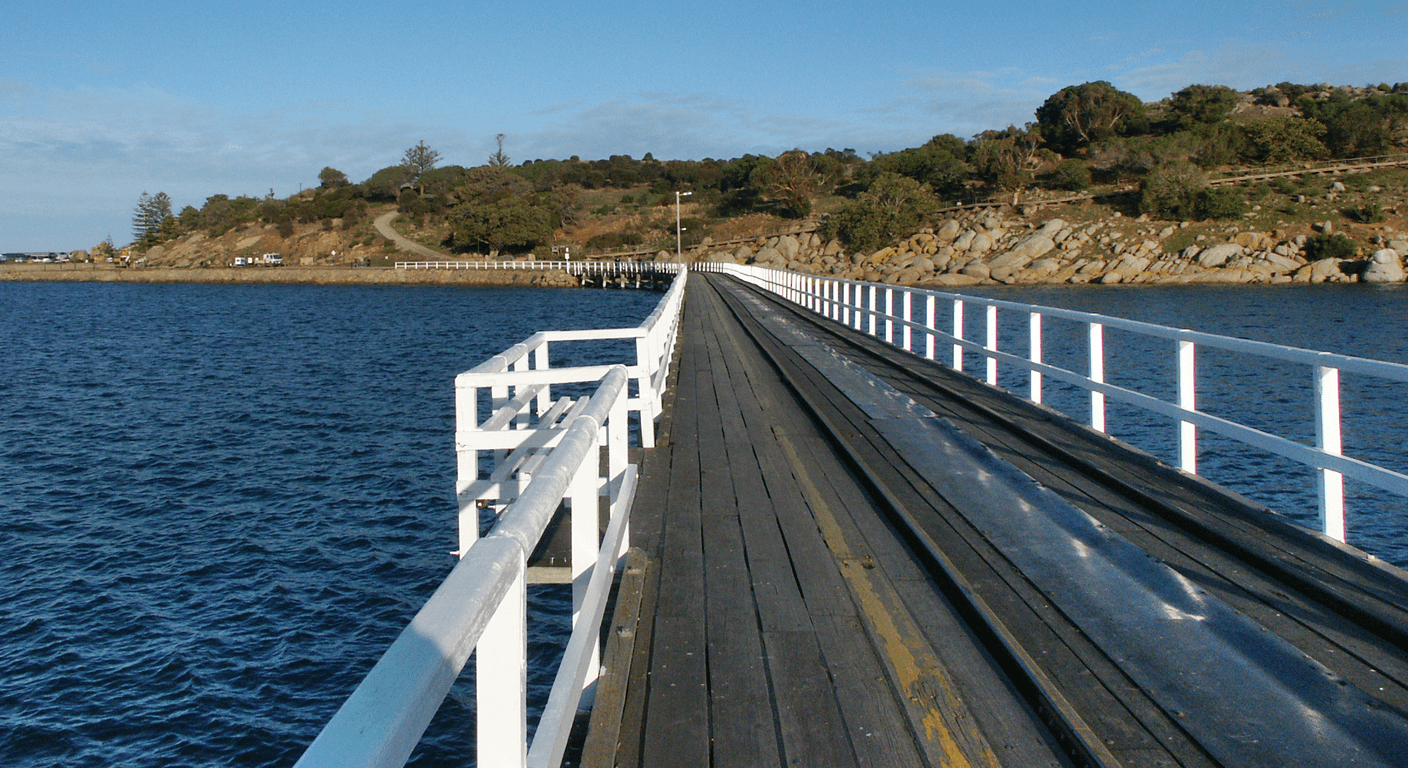
The short answer is yes, particularly if you have any hesitation about walking the causeway on foot. The causeway stretches about 630 metres from the mainland to Granite Island, and while it is a flat, paved path, it is exposed to Southern Ocean wind and can feel longer than it looks when the weather turns. The horse-drawn tram covers the same distance at a gentle clip, and the ride itself is part of the experience — it is one of the last regular horse-drawn tram services operating in Australia.
The tram runs regularly throughout the day, weather permitting. Passengers board near the Victor Harbor foreshore and the journey takes around 10 to 15 minutes each way. The carriages are open-sided, so dress for the conditions regardless of how fine the morning looks. The return fare is indicatively around $15–$20 per adult, though you should confirm current pricing directly with the operator at horsedrawntram.com.au before you go.
Once on Granite Island, a walking trail circles the island and takes around 45 minutes at a relaxed pace. The terrain is uneven in sections — granite outcrops and gravel paths — so sturdy footwear is a practical requirement rather than a suggestion. The island is home to a small colony of little penguins, visible on guided evening tours rather than during day visits. From the island's higher points, the views back across Encounter Bay are worth the modest effort of getting there.
Whale Watching at Victor Harbor: When to Go and What to Expect
Southern right whales migrate into Encounter Bay between roughly May and October each year to calve and nurse their young in the sheltered waters. Victor Harbor sits at the eastern end of that bay, and the whales frequently come close enough to shore to be seen clearly from the foreshore and from the elevated lookout points near the bluff at the end of the Esplanade. This is free, land-based whale watching — no boat required.
The best vantage point in town is generally the Bluff (also known as Rosetta Head), a rocky headland about a kilometre west of the main town centre. There is a walking track to the summit that is moderately steep in sections, and it may not suit everyone depending on fitness and mobility. However, the foreshore itself and the area near the causeway offer solid sightlines across the bay, and whales are regularly spotted from sea level. Binoculars are genuinely useful here.
Sightings are never guaranteed on any given day, and the whales move at their own schedule. Early mornings and calm days tend to offer better visibility. The Victor Harbor Visitor Information Centre (located on the Esplanade) can often advise on recent sighting activity, which helps you decide where to position yourself on arrival. There is no dedicated whale watching cruise operation based at Victor Harbor itself, so land-based viewing is the primary option for a day visit.
Walking the Waterfront: What the Town Has to Offer
The Victor Harbor Esplanade is a genuinely pleasant stretch of flat, paved foreshore that runs along the bay for several hundred metres. There are benches at regular intervals, public toilets near the main town area, and enough cafes and bakeries to make a long, unhurried morning entirely comfortable. For a solo traveller who enjoys people-watching and a good flat white, this is a reliable patch.
The Encounter Coast Discovery Centre, run by the City of Victor Harbor, covers the local history of the region — the whaling era, the Ngarrindjeri people who have lived along this coastline for thousands of years, and the ecological significance of the bay. It is a modest but well-presented interpretive centre and a reasonable wet-weather option. Check current opening hours and entry fees with the council directly via victor.sa.gov.au.
Victor Harbor township has a compact main street (Ocean Street) with independent shops, a pharmacy, a supermarket and a post office — all within easy walking distance of the foreshore. It is a town that has retained a certain unhurried character, which suits a day where the point is to look at the ocean and slow down rather than tick off a list.
Practical Matters: Accessibility, Costs and Timing
The flat terrain of the Victor Harbor foreshore and Esplanade makes it one of the more accessible coastal towns in South Australia for travellers with reduced mobility or those who tire easily on uneven ground. The horse-drawn tram is a seated experience and avoids the causeway walk entirely. The Granite Island circuit trail, however, does have uneven sections and should be assessed on the day based on conditions and individual comfort. The Bluff walk is not suitable for anyone with significant mobility limitations.
In terms of indicative costs for a day visit: the horse-drawn tram is roughly $15–$20 return per adult, a cafe lunch is around $20–$35, and the Encounter Coast Discovery Centre has a modest entry fee — confirm all of these directly before your visit, as prices change. Parking near the Esplanade is generally free or low-cost, though this can vary during school holidays and public holidays. The whale watching itself costs nothing.
Timing your visit outside Victorian and South Australian school holidays will mean a quieter experience and easier parking. The whale watching window of May to October aligns neatly with the cooler months, so dressing in layers is sensible. The Southern Ocean wind can arrive quickly even on clear days, and the Granite Island causeway area is particularly exposed. A light waterproof jacket is worth packing regardless of the forecast.
Making a Day of It: A Suggested Order for the Day
Arriving by mid-morning gives you time to walk to the foreshore, get your bearings, and scan the bay for whale activity before the day warms up. Starting with a coffee on the Esplanade and a conversation with the visitor centre about recent sightings is a practical first step. From there, the horse-drawn tram is a natural next move — the service runs through the day but getting across to Granite Island before midday means you have the afternoon for the foreshore and the Bluff.
After returning from Granite Island, a relaxed lunch in town — there are several cafes within a short walk of the causeway — sets you up for an afternoon scan of the bay from the foreshore or, if the legs are willing, the walk toward the Bluff for a higher vantage point over Encounter Bay. Late afternoon light over the Southern Ocean is worth staying for if you are not in a hurry to get back to Adelaide.
For those returning by coach, checking the afternoon departure times before you leave Adelaide is essential — services are not frequent, and missing the last coach means arranging alternative transport. Drivers have more flexibility, but keeping an eye on the return journey time in winter means arriving home before dark.
Key takeaways
- Victor Harbor's flat Esplanade and foreshore make it one of South Australia's most accessible coastal day trips for travellers in their 60s and 70s.
- The horse-drawn tram across the causeway to Granite Island is a practical and genuinely enjoyable alternative to walking the exposed 630-metre causeway on foot.
- Southern right whales are typically seen in Encounter Bay from May to October and can often be spotted from the foreshore at no cost.
- The drive from Adelaide takes around 80 to 90 minutes; coach services exist but timetables are limited, so confirm schedules before you travel.
- Sturdy footwear and a windproof layer are practical necessities, not optional extras, given the Southern Ocean exposure.
- The South Australian Seniors Card is worth carrying — a number of Victor Harbor businesses and attractions offer discounts, so it pays to ask.
Recommended partners and links
Indicative prices only — always confirm with the operator before booking.
Frequently asked questions
When is the best time to see whales at Victor Harbor?
Southern right whales are typically present in Encounter Bay from around May to October each year, when they migrate to the sheltered waters to calve. Sightings are most reliable in the cooler months, roughly June to September, though individual days vary depending on weather and whale movement. The Victor Harbor Visitor Information Centre can advise on recent sighting activity when you arrive.
Is the horse-drawn tram to Granite Island suitable for older travellers with limited mobility?
The tram ride itself is a seated, gentle experience and is generally suitable for travellers who find walking the 630-metre causeway difficult due to wind exposure or stamina. The Granite Island circuit trail, however, involves uneven granite and gravel surfaces in sections, so it should be assessed on the day based on individual mobility and conditions. Sturdy footwear is recommended.
How do you get from Adelaide to Victor Harbor without a car?
Regional coach services operate between Adelaide's central bus station and Victor Harbor, with a journey time of roughly 90 minutes to two hours. Timetables are limited, so checking current schedules through the Adelaide Metro website or the relevant operator before you travel is essential. Organised day tours from Adelaide are another option and can suit solo travellers who prefer not to navigate unfamiliar roads.
Is there a cost to watch whales at Victor Harbor?
Land-based whale watching from the Victor Harbor foreshore and Esplanade is free. No boat tour or entry fee is required. Binoculars are helpful for spotting whales at distance, and the elevated Bluff (Rosetta Head) lookout offers a wider vantage point over Encounter Bay, though the walk to the summit is moderately steep.
Does the South Australian Seniors Card provide discounts at Victor Harbor?
A number of businesses and attractions in Victor Harbor accept the South Australian Seniors Card, and it is worth asking at each venue including the horse-drawn tram and the Encounter Coast Discovery Centre. Victorian travellers should check whether their state Seniors Card is recognised, or consider obtaining an interstate visitor concession — the South Australian government website has current information on card eligibility.
Got a tip, a price update or a story from this route? The community would love to hear it.
Share your views on our Facebook page— Seniors and Solo Traveller Stories