The Tasman Peninsula packs an extraordinary amount of Tasmanian history and coastal drama into a single day. From the sea-carved arches at Eaglehawk Neck to the sober grandeur of Port Arthur, a well-paced day trip from Hobart suits travellers who want substance without the multi-day commitment of the Three Capes walk. This guide is written for the solo traveller aged 60-plus who wants honest walk grades, real logistics, and no wasted steps.
Why the Tasman Peninsula works as a single day
The Tasman Peninsula is about 90 minutes south-east of Hobart by car or coach, and the main attractions form a loose chain along Arthur Highway. That geography is genuinely helpful for a day trip: you move through Eaglehawk Neck and the coastal formations on the way in, then give the bulk of your time to Port Arthur before heading back before dark. There is no need to rush, and there is no need to walk far at any single stop.
This guide covers the single-day version of the peninsula, not the Three Capes Track — that is a multi-day walk requiring reasonable fitness and advance booking. What is described here are short, manageable viewing walks at the geological formations, the historic isthmus at Eaglehawk Neck, and the broad, largely flat grounds of Port Arthur. A traveller with average mobility can do all of it comfortably.
One honest caveat: the Tasman Peninsula deserves more than a day. If you have the time, a two-day version allows you to slow down at Port Arthur and take the harbour cruise without watching the clock. But for a traveller based in Hobart with a single free day, the itinerary below is well-tested and unhurried.
Getting there from Hobart: what are your options?
The most flexible option is hiring a car in Hobart, which puts you in control of timing at each stop. The drive follows the A3 through Sorell and Copping before picking up Arthur Highway toward Eaglehawk Neck. Allow 90 minutes from the Hobart CBD under normal conditions. Fuel up before Sorell — there are limited options further along the highway.
If you prefer not to drive, Tassielink Transit operates coach services from Hobart to Port Arthur, with stops including Eaglehawk Neck. Services are not frequent, so check current timetables at tassielink.com.au well before your trip. The coach is a practical option for a traveller who is comfortable with fixed departure times. Return services in the late afternoon are the ones to check carefully.
Small-group guided day tours from Hobart are worth considering for a solo traveller. They handle the driving, include a local guide for Port Arthur, and typically stop at the coastal formations en route. Under Down Under Tours is one established operator; Discover Tasmania's website lists others. A guided tour costs more than self-driving but eliminates navigation and parking, and the social dimension of a small group can suit a solo traveller well.
Eaglehawk Neck: what is it and how long does it take?
Eaglehawk Neck is the narrow isthmus — barely 100 metres wide at its narrowest point — that connects the Tasman Peninsula to the Forestier Peninsula. In convict times, a line of chained dogs was kept here to prevent escapes from the Port Arthur penal settlement. A sign and a small historic information board mark the spot today. It takes around 10–15 minutes to stop, read, and take in the view. The ground is flat and paved near the lookout.
The Neck itself is a striking piece of geography: Officers Beach on one side, Eaglehawk Bay on the other, with the ocean visible in both directions from roughly the same spot. It is worth pausing here rather than treating it as a drive-through, because the sense of isolation that defined the convict experience becomes immediately legible when you stand on it.
There is a small cluster of accommodation and a cafe at Eaglehawk Neck township, which sits just beyond the isthmus. For a day trip, a coffee stop here is reasonable if you are driving yourself. The cafe options are modest but functional.
The coastal formations: Tasman Arch and Devils Kitchen
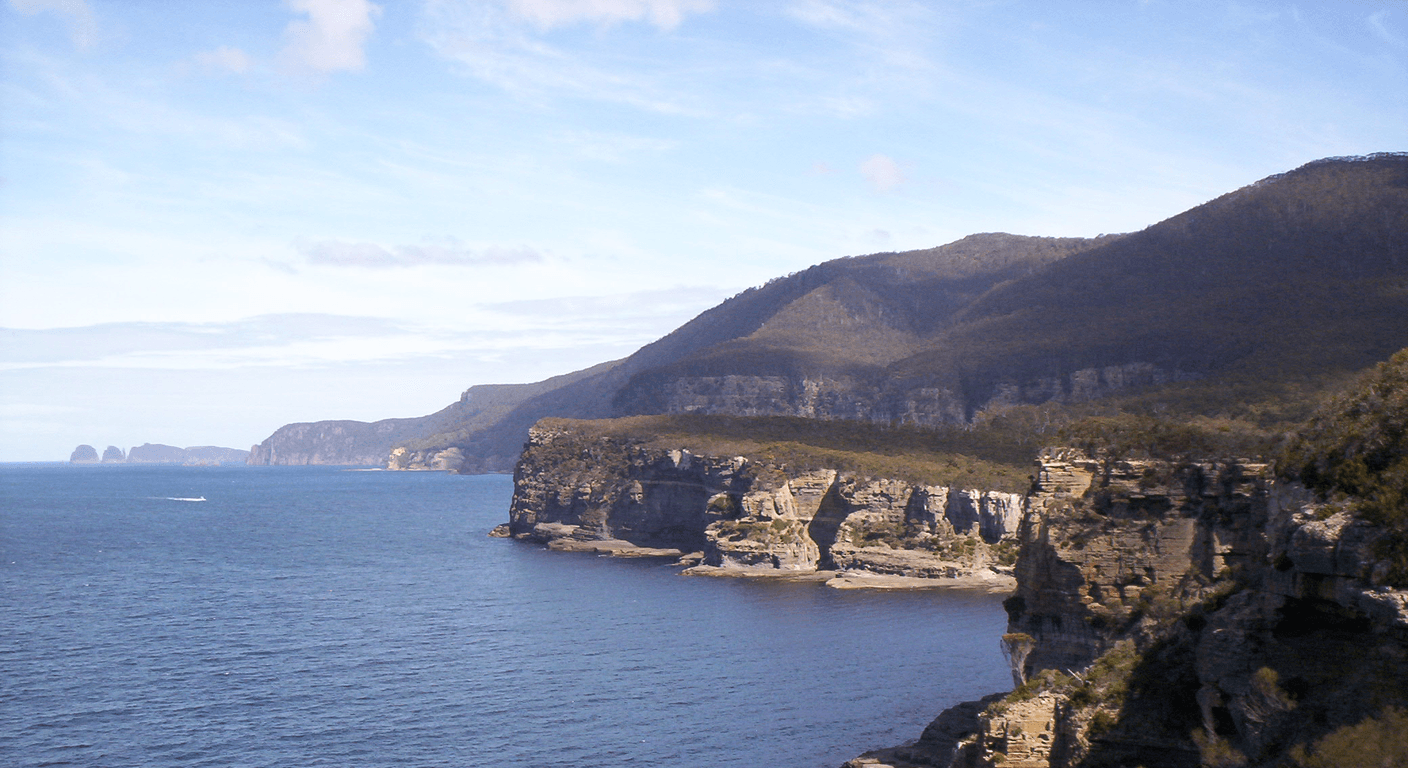
A few kilometres past Eaglehawk Neck, a signed turn-off leads to the dolerite coastal formations — Tasman Arch, Devils Kitchen, the Blowhole, and Tessellated Pavement. These are among the most photographed geological features in Tasmania, and they are genuinely worth the stop. The short walking paths between the main viewing platforms are mostly flat gravel and compacted earth, with some gentle undulation. Walk grades here are low — Parks Victoria would classify them as easy to moderate. Allow 30–45 minutes to see the main features without rushing.
Tasman Arch is a natural rock arch formed by the collapse of a sea cave, with a sheer drop to the ocean below. The viewing area is fenced and accessible. Devils Kitchen is a collapsed sea cave that creates a dramatic vertical chasm; again, the viewing platform is fenced. Neither requires you to scramble or descend steep terrain to get a clear view. Tessellated Pavement — a flat rock shelf with a distinctive tile-like pattern — involves a short descent to the water's edge and is best attempted only by those comfortable on uneven, sometimes slippery rock.
Blowhole Road, which leads to these formations, is managed by Parks Victoria. Check parks.vic.gov.au or the Tasmanian Parks and Wildlife Service at parks.tas.gov.au for any current track conditions or closures. There are toilets and basic facilities at the car park.
Port Arthur Historic Site: how to make the most of your time
Port Arthur is the anchor of the day and deserves at least three to four hours. The site is a former convict settlement that operated from 1833 to 1877, and it is now one of Australia's most significant heritage sites and part of the Australian Convict Sites UNESCO World Heritage listing. The grounds are extensive, but you do not need to cover every building to have a meaningful visit. Prioritise the Penitentiary, the Church ruins, the Model Prison, and the Separate Prison if time is limited.
Entry includes a guided walking tour (departures roughly every 30 minutes) and a harbour cruise. Both are included in the standard admission price, which is around AUD $45–$50 for adults — confirm the current rate at portarthur.org.au. The guided walking tour lasts about 40 minutes and covers the core of the site at a relaxed pace. The harbour cruise is 25–30 minutes and offers a different perspective on the scale of the settlement. For a solo traveller, the guided tour is a good way to orient yourself before exploring independently.
Mobility note: the main pathways through Port Arthur are sealed and reasonably flat, though some areas involve grass and uneven ground. A mobility scooter and wheelchair hire service is available on-site — confirm availability when booking. The Visitor Centre has a café and clean facilities. Given the emotional weight of the site — Port Arthur also carries the memory of the 1996 tragedy — some visitors find they need a quiet moment; there is a memorial garden near the entrance.
Pacing the day: a practical sequence
Leave Hobart by 8:00–8:30am. This gives you time to reach Eaglehawk Neck by around 9:45am for a 15-minute stop, then continue to the coastal formations for 30–45 minutes, arriving at Port Arthur by around 11:00–11:30am. That allows three and a half to four hours at Port Arthur, including a sit-down lunch, before a mid-afternoon departure. If you are driving, you are back in Hobart well before dark.
Lunch at Port Arthur is straightforward — the on-site café handles the volume of visitors and serves hot food. It is not a destination meal, but it is adequate and saves time. If you prefer, there are a couple of options in the Taranna township a few kilometres before the site entrance.
One thing worth noting for a solo traveller: the guided tour at Port Arthur is a good way to be around other people in a structured way without needing to arrange anything. The groups are typically mixed in age and background, and the guides are knowledgeable. It is also simply easier to absorb the history with context rather than reading every panel alone.
What to bring, and a few honest practical notes
Tasmania's weather is changeable at any time of year, and the Tasman Peninsula coastline is exposed. A light waterproof layer is sensible even in summer. Comfortable walking shoes with grip are more useful than sneakers for the coastal formation paths, which can be damp. Sun protection matters on clear days — the harbour cruise and open sections of Port Arthur offer little shade.
There is an ATM at the Port Arthur Visitor Centre, but carrying some cash is wise for smaller stops along the way. Mobile coverage is patchy between Hobart and the peninsula — download an offline map before you leave, or pick up a paper map at the Hobart visitor information centre on Davey Street.
For a traveller coming from Victoria, this is a day trip that works well as part of a longer Hobart stay of three or four nights. It pairs naturally with MONA (Museum of Old and New Art) on another day, and the Huon Valley on a third. The Tasman Peninsula does not need to be rushed or combined with anything else — it has enough weight on its own to fill a day and leave you thinking.
Key takeaways
- The Tasman Peninsula is around 90 minutes from Hobart and covers Eaglehawk Neck, the dolerite coastal formations, and Port Arthur in a single manageable day.
- Tasman Arch and Devils Kitchen involve short, mostly flat viewing paths suitable for travellers with average mobility.
- Port Arthur entry (around AUD $45–$50, indicative) includes a guided walking tour and harbour cruise — allow at least three to four hours on site.
- Small-group guided tours from Hobart handle the driving and provide context at Port Arthur, which suits solo travellers who prefer not to self-drive.
- The main pathways at Port Arthur are sealed and largely flat; mobility scooter and wheelchair hire is available on-site, subject to availability.
- This itinerary is the single-day version of the peninsula, entirely separate from the multi-day Three Capes Track walk.
Recommended partners and links
Indicative prices only — always confirm with the operator before booking.
Frequently asked questions
How far is the Tasman Peninsula from Hobart?
The Tasman Peninsula is roughly 90 minutes by car from the Hobart CBD via Arthur Highway. Coach services operate from Hobart but are infrequent — check current timetables at tassielink.com.au before planning your trip.
Is Port Arthur suitable for older travellers or those with limited mobility?
The main sealed pathways through Port Arthur are accessible for most older travellers, and the site offers mobility scooter and wheelchair hire subject to availability. Some areas involve grass and uneven ground, so footwear with good grip is recommended. Confirm accessibility hire availability directly with Port Arthur Historic Site at portarthur.org.au.
What is the walk grade at Tasman Arch and Devils Kitchen?
The viewing paths at Tasman Arch and Devils Kitchen are short, mostly flat, and on compacted gravel — suitable for travellers with average mobility. Tessellated Pavement involves a descent to the rock shelf and can be slippery; it is best skipped by anyone unsteady on uneven surfaces.
Is the Tasman Peninsula day trip the same as the Three Capes Track?
No. The Three Capes Track is a multi-day guided or self-guided walk requiring advance booking and reasonable physical fitness. The day trip described here visits the coastal formations, Eaglehawk Neck, and Port Arthur — none of which are part of the Three Capes walking route.
What does entry to Port Arthur cost?
Adult entry to Port Arthur Historic Site is indicatively around AUD $45–$50 and includes a guided walking tour and harbour cruise. Prices change periodically, so confirm the current rate at portarthur.org.au before your visit.
Got a tip, a price update or a story from this route? The community would love to hear it.
Share your views on our Facebook page— Seniors and Solo Traveller Stories