Sydney sits within easy reach of some of New South Wales' most rewarding scenery, and most of it is accessible by public transport or a short organised tour. This guide maps out five day trips — the Blue Mountains, Manly Harbour, Kiama, the Hawkesbury River, and the Royal National Park — paced for travellers who want genuine experience without exhaustion. Each trip is written for over-50 solo or small-group travellers visiting from interstate, with honest notes on accessibility, indicative costs, and where to check current details.
Why Sydney makes sense as a day-trip base for over-50 travellers
For a group of friends travelling from regional Victoria, Sydney can feel like a city that rewards the curious rather than the rushed. The CBD is compact enough to navigate on foot or by light rail, and five of the most satisfying day trips in New South Wales sit within two hours of Central Station — most of them reachable without a hire car. That matters when you are travelling with people who prefer a good coffee and a proper look around to ticking off a checklist.
The Opal card is the practical backbone of most of these trips. It is a reloadable transit card used across Sydney trains, buses, ferries, and light rail. Victorian Seniors Card holders should check the current rules at transportnsw.info before travelling — interstate visitors do not automatically qualify for the Gold Opal daily cap of $2.50 that NSW Seniors Card holders receive, and the rules around visitor concessions do change. Top up your Opal card at station machines or convenience stores, and tap on and off at every boarding.
Pacing is worth thinking about before you leave home. Each of the five trips described here can be done in a single day, but none of them need to be rushed. A 9 am departure and a 5–6 pm return is a comfortable frame. Travelling mid-week avoids weekend crowds, particularly at the Blue Mountains and Manly, and gives you better odds of a seat on the train.
Trip 1: The Blue Mountains by train — Katoomba, Echo Point, and Scenic World
The Blue Mountains train from Central Station to Katoomba takes around two hours on the Blue Mountains Line and is one of the most straightforward long-distance train journeys in the state. Trains run roughly hourly, and the carriages have luggage racks and accessible seating. Katoomba Station itself is a short, mostly flat walk from the main street, though the footpaths around Echo Point involve a moderate downhill slope. Confirm current timetables at transportnsw.info before you go, as services vary on weekends and public holidays.
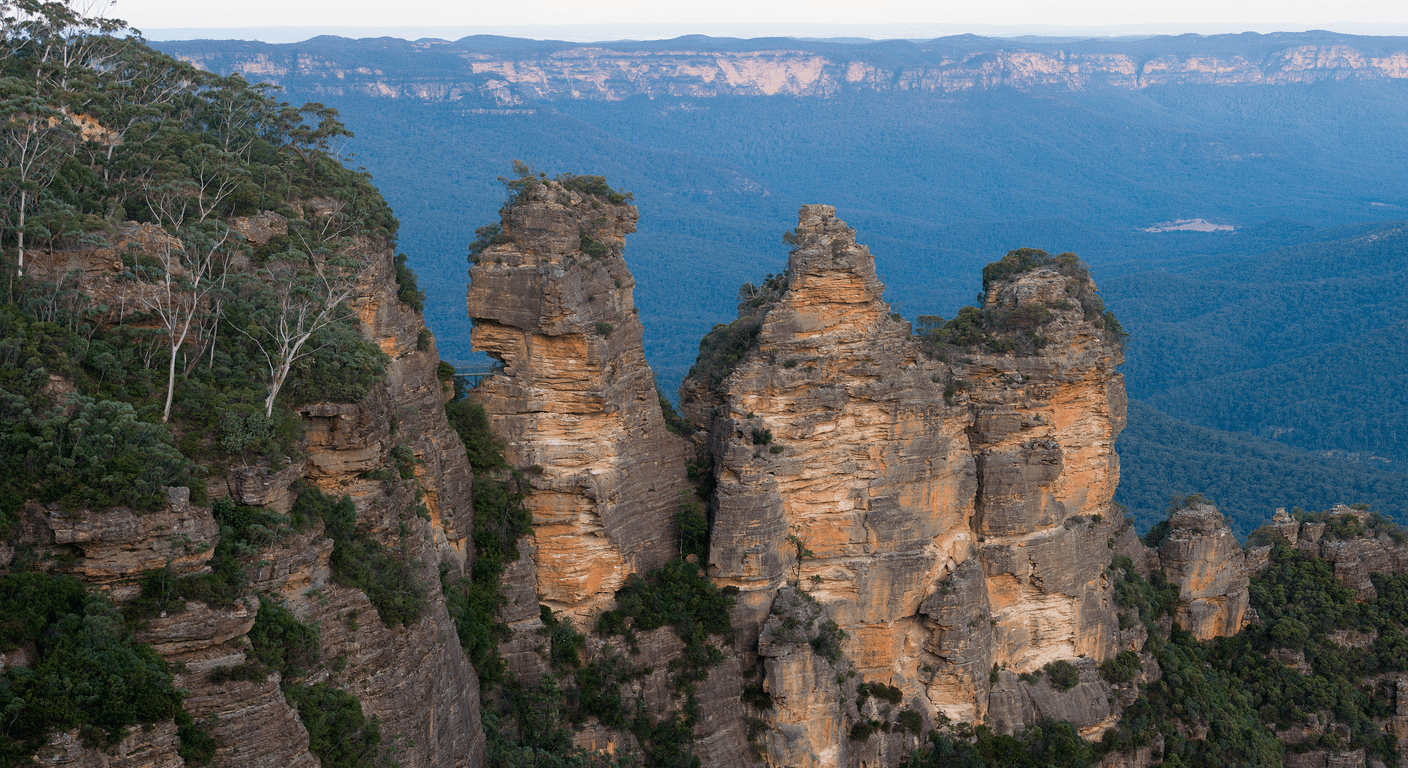
Echo Point is the obvious first stop — it is a short taxi or bus ride from the station, and the lookout platform is fully paved and accessible by wheelchair or walking frame. The view across the Jamison Valley is wide and unhurried, and there are benches for sitting. From Echo Point, the Prince Henry Cliff Walk runs eastward; the first section toward Honeymoon Bridge is flat and well-surfaced, making it manageable for most walkers. The full cliff walk is longer and more uneven, so assess your group's comfort before committing to more than the first kilometre.
Scenic World sits a few minutes' walk or a short shuttle from Echo Point and offers the Scenic Skyway, Scenic Railway, and Scenic Cableway. The Skyway gondola is the most accessible option — you board on a flat platform and the cabin is enclosed and glassed. The Scenic Railway is the steepest passenger railway in the world and tilts dramatically on descent; it is exhilarating but not recommended if anyone in your group has balance concerns or vertigo. Day passes are indicatively around $55–$60 AUD for adults; confirm current pricing at scenicworld.com.au. Lunch options at the Scenic World complex are decent, with indoor seating and a relaxed pace.
Trip 2: The Manly ferry — a full harbour day without the crowds
The Manly ferry from Circular Quay is one of the most pleasurable thirty minutes in Australian public transport. The large, open-deck ferry crosses Sydney Harbour and gives you a perspective of the Opera House, Harbour Bridge, and North Head that no tourist bus can replicate. Services run frequently throughout the day; the ferry terminal at Circular Quay is at Wharf 3, is fully accessible, and has step-free boarding. Check current ferry timetables at transportnsw.info.
Manly itself is an easy beach suburb to spend half a day in. The Corso — the pedestrian mall connecting the ferry wharf to the ocean beach — is flat, wide, and lined with cafes and small shops. The ocean beach has a wide promenade suitable for a gentle stroll, and there are sheltered picnic areas and public toilets near the surf club. For those who want a quieter option, Shelly Beach is a ten-minute walk south along the headland path from the main beach; it is calmer, less crowded, and has a good café.
The full return trip on the ferry costs a standard Opal fare each way — indicatively a few dollars per leg for a full-fare adult, though this depends on your card type and any applicable concessions. The ferry journey alone is worth the fare. A relaxed Manly day might look like: 10 am ferry from Circular Quay, lunch at the Corso or Shelly Beach café, a slow walk along the promenade, and a 3 pm return. That leaves your evening free in Sydney without any rush.
Trip 3: Kiama and the blowhole — the South Coast rail line
Kiama sits around two hours south of Sydney Central on the South Coast Line, and the train journey itself earns its place in the day — the line runs through the Illawarra escarpment and along cliff-top sections with sea views. Kiama Station is a short, flat walk from the main blowhole precinct. Trains run several times a day; check current timetables at transportnsw.info, as South Coast services are less frequent than city lines.
The Kiama blowhole is one of those natural features that is genuinely worth seeing in person. On a swell day, it erupts with considerable force and noise; on a calm day, it is more modest but still interesting. The viewing area is paved and accessible, with good railings and seating nearby. The smaller blowhole, a short walk along the headland path, is less visited and often more atmospheric. The headland path is mostly flat and well-maintained, though there are some uneven stone sections near the water.
Kiama's main street has a good range of cafes and a small farmers' market on Wednesdays and Saturdays. The Pilot's Cottage Museum, run by the National Trust, gives a readable account of the town's maritime history and is worth thirty minutes of anyone's time — check current opening hours at nationaltrust.org.au. A comfortable Kiama day allows for the blowhole, a headland walk, lunch, and a browse before catching the mid-afternoon train back to Sydney.
Trip 4: The Hawkesbury River — a quieter kind of day
The Hawkesbury River northwest of Sydney is the kind of place that rewards travellers who are not chasing a famous landmark. The river is wide, tidal, and fringed with sandstone cliffs and bushland; on a weekday it is largely peaceful. There are two main approaches for a day trip: the town of Windsor, reachable by train on the Richmond Line from Central (around 90 minutes), sits at the upper river and has a historic township worth walking; or the village of Brooklyn, accessible by train to Hawkesbury River Station on the Central Coast Line, sits at the lower estuary and is the departure point for river cruises.
River cruises from Brooklyn vary by operator and season — some are mail-run cruises that deliver supplies to river communities, which is a genuinely unusual and local experience. Indicative fares for a half-day cruise run roughly $35–$75 AUD depending on duration and operator; confirm current availability and pricing through visitnsw.com or directly with operators. Bookings are advisable, particularly in school holidays. The wharf at Brooklyn involves a short walk from the train station, and the terrain is manageable for most walkers, though it is not flat.
Windsor suits those who prefer to stay on land. The historic Macquarie Arms Hotel (dating from 1815) and St Matthew's Anglican Church, designed by Francis Greenway, are both within easy walking distance of the station. The Hawkesbury Museum on Thompson Square provides good local history context. Windsor's main street has cafes and bakeries for a relaxed lunch. The combination of a morning train, a couple of hours in Windsor's historic precinct, and a late-afternoon return is a comfortable and unhurried day.
Trip 5: Royal National Park — gentle walks for confident walkers
The Royal National Park, declared in 1879, is the second-oldest national park in the world and sits about an hour south of Sydney Central by train on the South Coast Line. Alight at either Loftus, Heathcote, or Otford depending on your planned walk. The park is managed by NSW National Parks and Wildlife Service; current trail conditions, maps, and fees are available at nationalparks.nsw.gov.au. Walk-in access to the park is generally free; vehicle entry is around $12 AUD per day for those arriving by car.
The gentlest and most accessible option for a day trip group is the Audley area, reachable by train to Loftus and then a short taxi or rideshare. Audley has a visitor area with flat riverside paths, picnic facilities, accessible toilets, and a historic boatshed. The flat walking track along the Hacking River from Audley to Wattle Forest is around four kilometres return and is suitable for most fitness levels. It is shaded, well-marked, and gives a genuine sense of coastal bushland without any significant elevation.
For those who want more distance, the Bundeena ferry from Cronulla (itself reachable by train) offers access to the park's coastal walks, including sections of the Coast Track. The Cronulla to Bundeena ferry is a pleasant harbour crossing; from Bundeena, the walk to Jibbon Beach and the Aboriginal rock engravings at Jibbon Head is around four kilometres return and is a genuinely significant cultural site. Take plenty of water, wear sun protection, and check current track conditions before departure at nationalparks.nsw.gov.au.
Practical notes: getting around, pacing, and a few honest reminders
An Opal card covers all five of these trips by train and ferry, and is the simplest way to manage fares. You can load it at Central Station or at convenience stores throughout the city. The Gold Opal daily cap of $2.50 applies to NSW Seniors Card holders — if you hold a Victorian Seniors Card, check your current eligibility at transportnsw.info before assuming you qualify. Fares for full-paying adult Opal card users are still reasonable, but the difference matters if you are planning multiple trips.
For travellers with mobility considerations: the Blue Mountains train and Manly ferry are both accessible with step-free options at most major stops, though it is worth confirming your specific station at transportnsw.info. Echo Point and Scenic World are well set up for reduced mobility. The Hawkesbury River walks in Windsor are gentle. The Royal National Park's Audley area is the most accessible park option; the Coast Track near Bundeena involves some uneven terrain. Kiama's blowhole precinct is paved and accessible.
A few honest reminders worth keeping in mind: weather in the Blue Mountains can change quickly, and a light layer is sensible even in summer. The South Coast Line to Kiama can be delayed during periods of heavy rain or infrastructure works — allow buffer time on your return. Carrying a small bag with water, snacks, a portable phone charger, and a printed or downloaded timetable is a habit that takes the stress out of any of these days. None of these trips require you to rush.
Key takeaways
- All five day trips from Sydney are reachable by public transport, mostly on the Opal card network via train or ferry.
- Victorian Seniors Card holders should confirm current interstate eligibility for the NSW Gold Opal $2.50 daily cap at transportnsw.info before travelling.
- Echo Point in the Blue Mountains and Kiama's blowhole precinct are both paved and accessible for travellers with limited mobility.
- The Manly ferry from Circular Quay is a fully accessible, harbour-spanning journey that doubles as a sightseeing experience in its own right.
- The Hawkesbury River offers two distinct approaches — historic Windsor on land, or a river cruise from Brooklyn — suited to different interests and energy levels.
- The Royal National Park's Audley area provides flat, shaded riverside walking suitable for most fitness levels, with accessible picnic and toilet facilities.
Recommended partners and links
Indicative prices only — always confirm with the operator before booking.
Frequently asked questions
Can Victorian Seniors Card holders use the NSW Gold Opal $2.50 daily cap on Sydney trains and ferries?
The Gold Opal daily cap of $2.50 is designed for NSW Seniors Card holders and does not automatically apply to interstate cards including Victorian Seniors Cards. Eligibility rules can change, so check your current status at transportnsw.info before you travel and do not assume concession rates will apply.
How long does the train from Sydney Central to Katoomba take, and is it accessible?
The Blue Mountains Line train from Sydney Central to Katoomba takes around two hours. The service has accessible carriages and step-free boarding at major stations; confirm accessibility at your specific departure station at transportnsw.info.
Is the Kiama blowhole worth visiting on a day trip from Sydney, and how do you get there?
Kiama is around two hours south of Sydney Central on the South Coast Line, and the blowhole precinct is a short flat walk from the station. The viewing area is paved and accessible, with seating nearby. The blowhole is most active during a swell, so it can vary on the day.
What is the most accessible option in the Royal National Park for older walkers?
The Audley area, reachable from Loftus Station by taxi or rideshare, offers flat riverside walking tracks, accessible toilets, and picnic facilities. The flat trail along the Hacking River to Wattle Forest is around four kilometres return and is suitable for most fitness levels.
Do you need to book the Hawkesbury River cruise in advance?
Bookings are advisable for Hawkesbury River cruises, particularly during school holidays and weekends. Operators and availability vary by season; confirm current schedules and fares directly with cruise operators or through visitnsw.com before your travel date.
Got a tip, a price update or a story from this route? The community would love to hear it.
Share your views on our Facebook page— Seniors and Solo Traveller Stories
- Transport for NSW — Opal card, timetables, accessibility
- Scenic World, Katoomba — Blue Mountains attractions
- NSW National Parks & Wildlife Service — Royal National Park
- Visit NSW — Hawkesbury region
- Visit NSW — Kiama
- National Trust of Australia (NSW) — Pilot's Cottage Museum, Kiama
- Visit Victoria — interstate travel planning reference