Richmond and the Coal River Valley sit just 25 minutes from Hobart by car, making them a natural pairing for a gentle, unhurried day out. The village of Richmond offers Australia's oldest intact bridge, sandstone convict-era buildings, and good bakeries, while the Coal River Valley beyond it is home to some of Tasmania's most accessible boutique cellar doors. For travellers who appreciate good wine, quiet countryside, and walking that does not punish the knees, this corner of southern Tasmania is hard to beat.
Why Richmond and the Coal River Valley work so well together
Richmond is one of those places that earns its reputation quietly. It sits in the Coal River Valley about 25 kilometres northeast of Hobart, and the drive out through the rolling farmland already feels like a proper departure from the city. The village itself is compact enough to cover on foot in a couple of hours, and the cellar doors of the Coal River Valley are scattered along the road just beyond it — meaning a single day can hold a leisurely village morning and a relaxed wine afternoon without anyone feeling rushed.
For travellers who prefer a day with a clear shape to it, this pairing is particularly satisfying. Richmond provides the cultural and historical anchor — a genuine convict-era sandstone village with a working community feel — and the valley provides the reward. It is the kind of day that a couple can pace entirely to their own comfort, lingering over a long bakery lunch or sitting longer at a cellar door that takes their fancy.
The terrain is also genuinely forgiving. The village streets are mostly flat, the bridge area is accessible with some care on the riverbank slope, and most of the Coal River Valley cellar doors are set up for seated tastings. Travellers with mild mobility considerations will find this one of the more manageable wine-country days in Australia.
Getting from Hobart to Richmond: what are your options?
The most straightforward way to reach Richmond from Hobart is by car, and the drive takes around 25 minutes via the Tasman Highway and Rokeby Road. The route is well-signed and the roads are in good condition. Parking in Richmond is free and plentiful along Bridge Street and the surrounding village streets, which makes this an easy self-drive day.
If you are not driving, Redline Coaches operates a service from Hobart to Richmond, though the timetable is limited and not designed for day-trippers who want to visit multiple cellar doors. It is worth checking the current schedule at redlinecoaches.com.au before relying on it. A number of Hobart-based tour operators also run guided day trips to Richmond and the Coal River Valley, which can be a practical option if you prefer not to drive or want someone else to handle the navigation between cellar doors.
Rideshare services operate in Hobart, but availability in Richmond itself and between cellar doors in the valley can be unpredictable. For this particular day trip, having a car — or joining a guided tour where transport is included — is genuinely the more comfortable and flexible choice.
Richmond's sandstone village: what is worth your time?
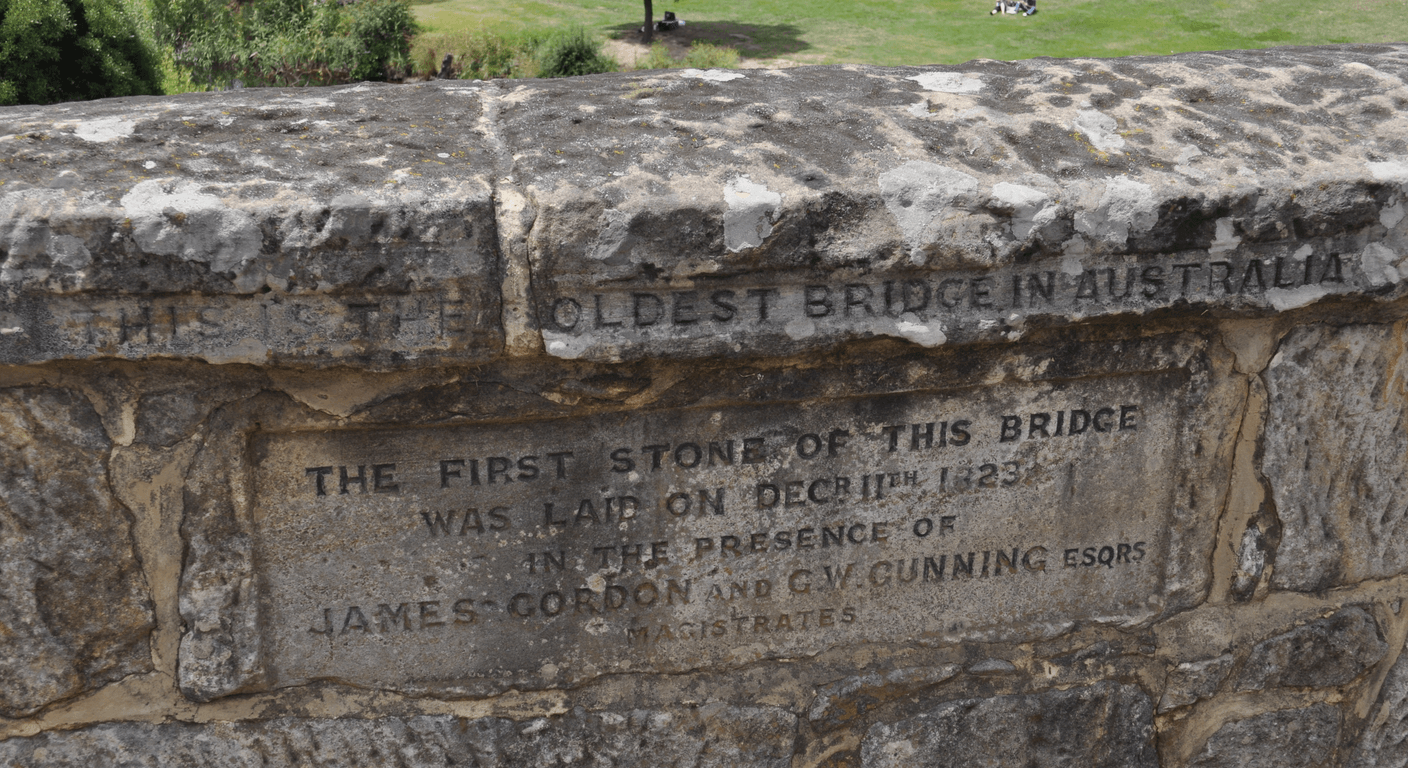
Richmond Bridge is the natural starting point. Built by convict labour between 1823 and 1825, it is Australia's oldest intact bridge still in use, and it crosses the Coal River in an unhurried arc of honey-coloured sandstone. The approach from Bridge Street is flat and paved, and you can walk across the bridge itself without difficulty. The riverbanks beneath are grassy and pleasant, though the slope down to the water's edge requires a little care if the ground is damp.
The village streets radiating from the bridge hold a satisfying concentration of colonial-era buildings — the Richmond Gaol (one of Australia's most intact convict-era jails, managed by a local heritage trust), St John's Catholic Church, and a string of Georgian sandstone cottages that now house galleries, antique shops, and food businesses. None of this requires a great deal of walking, and the pace of the village invites you to slow down rather than tick boxes.
For morning tea or lunch, the Richmond Bakery on Bridge Street has been a local institution for many years, known for its vanilla slice and substantial pies. There are also a handful of cafes along the main street that serve proper sit-down meals. If you are planning to spend the afternoon at cellar doors, a solid lunch in Richmond before heading out into the valley is a sensible way to set up the day.
The Coal River Valley cellar doors: what suits an unhurried pace?
The Coal River Valley is Tasmania's warmest and driest wine-growing region, which sounds counterintuitive given the island's cool reputation, but the sheltered valley floor creates conditions particularly suited to pinot noir, riesling, chardonnay, and sauvignon blanc. The estates here are mostly small and family-run, and the cellar door experience tends to be personal and unrushed — quite different from the production-scale tastings you might encounter in larger mainland regions.
Pooley Wines, on Brinktop Road, is one of the valley's most established names and has a welcoming cellar door with seated tastings and a pleasant outlook over the vineyard. It is a good first stop for those new to the region. Frogmore Creek, on Richmond Road, is another well-regarded estate with a more polished tasting room and a food offering that pairs well with the wines. Both venues are set up for visitors who want to take their time, and staff are generally happy to talk through the wines without pressure to purchase.
Tasting fees at Coal River Valley cellar doors are generally modest — around $5 to $15 per person is indicative, though this can vary and is often waived with a purchase. It is always worth confirming current arrangements directly with the cellar door before you visit. Most venues are open Wednesday to Sunday, but hours can shift seasonally, so checking ahead is a sensible habit. The coalrivervalley.com.au website lists current member cellar doors and is a useful starting point for planning.
How to pace the day so it does not feel hurried
A day that works well for most travellers in this age group might look something like this: arrive in Richmond around 10am, walk the bridge and the main street at leisure, stop for morning tea, visit the Richmond Gaol or a gallery if that appeals, then sit down for lunch before heading out to the valley around 1pm. Two cellar doors in an afternoon is a comfortable number — three starts to feel like a checklist rather than a pleasure.
It is worth deciding before you leave Hobart who is driving and who is tasting. Tasmania has the same drink-driving laws as the mainland, and the roads between cellar doors are rural and not serviced by public transport. Some couples rotate, with one partner tasting and the other driving, then swapping the experience at a future stop with non-alcoholic options. Many cellar doors offer juice, sparkling water, or local apple cider for the designated driver, so it is worth asking.
If energy allows, the late afternoon light over the Coal River Valley is particularly gentle and the valley is quiet by 4pm. Heading back to Hobart before 5pm avoids any peak-hour friction on the Tasman Highway. The drive back is easy and the city is close enough that there is no pressure to rush the end of the day.
Accessibility and comfort: what to know before you go
Richmond village is largely flat and walkable, with sealed footpaths along Bridge Street and the main commercial area. The bridge itself is accessible on foot, though the surface is original stone and can be uneven in places — comfortable, supportive shoes are sensible. The riverbank below the bridge involves a grass slope and is best avoided by anyone with balance concerns or a walking frame.
The Richmond Gaol involves some uneven ground and steps inside the historic building, so it is worth asking at the entry about which sections are accessible before paying admission. Most of the Coal River Valley cellar doors have level or near-level access from car parks to tasting rooms, though it is always worth a quick phone call if mobility is a specific concern — staff are generally helpful and accommodating.
Public toilets are available in Richmond near the bridge area. Cellar doors with food offerings typically have accessible amenities as well. If you are travelling with a walking stick or prefer not to stand for long periods, the seated tasting format that most Coal River Valley venues now offer is genuinely well-suited to an older traveller's pace.
Practical costs and what to budget for the day
This is an indicative guide to costs — always confirm current prices directly with venues before you travel, as figures change. Petrol from Hobart and back is a modest cost given the short distance. Parking in Richmond is free. Entry to the Richmond Gaol is a small fee, roughly in the range of $10–$15 per adult — check with the venue for current pricing. Bakery morning tea for two might run around $20–$30. A sit-down lunch at one of Richmond's cafes could be anywhere from $30 to $60 for two, depending on what you order.
At the cellar doors, tasting fees are modest and often absorbed into a bottle purchase. A bottle of Coal River Valley pinot noir or riesling to take home typically runs from around $25 to $60, depending on the producer and wine. If you choose a guided tour from Hobart that includes transport and cellar door visits, expect to pay indicatively $120–$180 per person — again, confirm this directly with the tour operator.
Overall, a day in Richmond and the Coal River Valley does not need to be expensive. It is the kind of trip where the pleasure comes from the pace and the setting rather than from spending heavily. Bringing a small cooler bag in the car boot for any bottles you purchase is a practical touch that many seasoned travellers swear by.
Key takeaways
- Richmond is just 25 kilometres from Hobart — close enough for a genuinely relaxed day without early starts or long drives.
- Richmond Bridge, built between 1823 and 1825, is Australia's oldest intact bridge still in use.
- The Coal River Valley is Tasmania's warmest wine-growing sub-region, known for pinot noir, riesling, and chardonnay from small family-run estates.
- Most Coal River Valley cellar doors offer seated, guided tastings — a format that suits travellers who prefer to take their time.
- Two cellar doors in an afternoon is a comfortable number; attempting three or more tends to feel rushed rather than enjoyable.
- Decide who is driving before you leave Hobart — rural roads between cellar doors are not serviced by public transport.
Recommended partners and links
Indicative prices only — always confirm with the operator before booking.
Frequently asked questions
How far is Richmond, Tasmania from Hobart?
Richmond is approximately 25 kilometres northeast of Hobart, and the drive takes around 25 minutes via the Tasman Highway. It is one of the closest significant historic villages to the city.
Is Richmond Bridge really Australia's oldest bridge?
Yes. Richmond Bridge was built by convict labour between 1823 and 1825 and is recognised as Australia's oldest intact bridge still in regular use. It crosses the Coal River in the centre of the village.
Are Coal River Valley cellar doors suitable for older or less mobile visitors?
Most Coal River Valley cellar doors offer seated tastings and have accessible car parks and entry points. If mobility is a specific concern, it is worth phoning ahead, as staff are generally accommodating and can advise on which areas are fully accessible.
Can you get from Hobart to Richmond without a car?
Redline Coaches operates a limited service from Hobart to Richmond — check the current timetable at redlinecoaches.com.au before relying on it. Guided day tours from Hobart that include transport are another practical option. Rideshare availability in the village and between cellar doors is unpredictable, so having your own vehicle or joining a tour is the more reliable choice.
How much does a day trip to Richmond and the Coal River Valley cost?
Costs vary, but as a rough guide: parking is free in Richmond, the Richmond Gaol entry is around $10–$15 per adult, a bakery morning tea for two might be $20–$30, and cellar door tasting fees are typically $5–$15 per person (often waived with a purchase). Always confirm current prices directly with venues before you travel.
Got a tip, a price update or a story from this route? The community would love to hear it.
Share your views on our Facebook page— Seniors and Solo Traveller Stories