Queensland in winter is one of the most reliable interstate escapes for Victorians over 50 — dry air, warm days, and a pace that suits unhurried travel. This guide covers four distinct regions: the Sunshine Coast and Noosa for walkable beach towns, Hervey Bay for humpback whale season, Cairns and Port Douglas for the Great Barrier Reef in its best conditions, and the Southern Downs for something cooler and quieter. Expect honest notes on costs, school-holiday crowding, accessibility, and how to pace yourself well.
Why winter is actually Queensland's peak season — and what that means for planning
For Victorians, the appeal is straightforward: while Melbourne sits under grey skies and single-digit mornings, Queensland's dry season runs from roughly June through September with low humidity, clear skies, and daytime temperatures in the mid-to-high 20s across the coast. It is not a secret, which is precisely why this period is the state's busiest tourism window. Anyone planning a June or August trip needs to treat accommodation booking with the same seriousness as an overseas itinerary.
School holidays in Queensland and Victoria overlap significantly in July, and the Sunshine Coast in particular — Noosa especially — becomes noticeably crowded during that fortnight. Restaurant waits lengthen, parking in Noosa Heads becomes genuinely difficult, and prices for accommodation spike. Travelling in June or late August gives you the same weather with considerably less pressure. If July is the only option, book accommodation three to four months ahead and plan to visit popular spots early in the morning.
Indicative return airfares from Melbourne (Tullamarine) to the Sunshine Coast (Maroochydore), Brisbane, Cairns, or Hervey Bay vary considerably by airline, timing, and how far ahead you book. As a rough guide, Melbourne to Cairns return has been sitting around $400–$700 per person in economy in the June and August windows — but fares shift constantly, so treat that only as a planning ballpark and check directly with Jetstar, Virgin Australia, or Qantas. Melbourne to Sunshine Coast or Brisbane tends to be slightly lower.
Noosa and the Sunshine Coast: walkable, unhurried, and genuinely suited to a slower pace
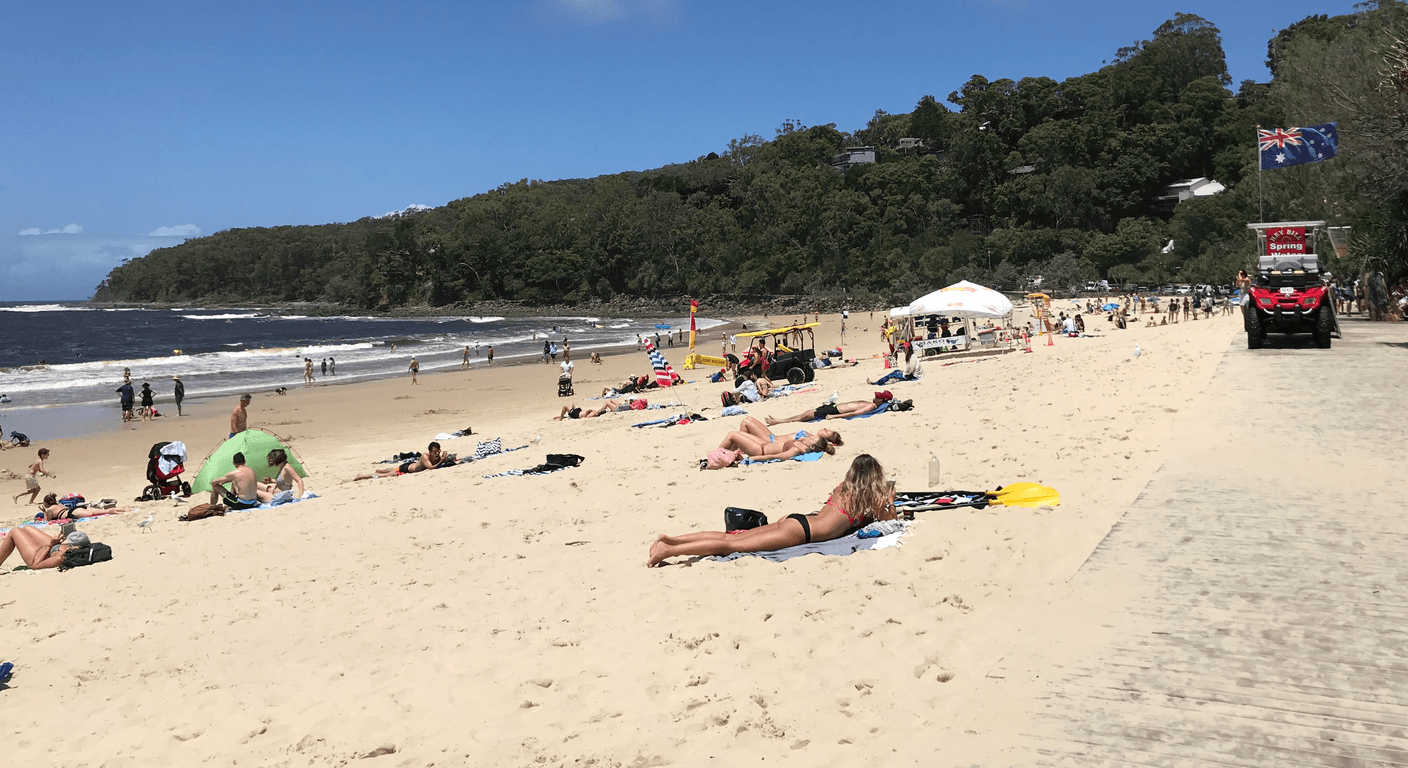
Noosa Heads is one of those towns that rewards the traveller who is not in a hurry. Hastings Street — the main strip running parallel to the beach — is flat, shaded in parts, and compact enough to walk end to end without strain. The shops, cafes, and restaurants are close together, and the Noosa National Park coastal walk begins at the end of the street. The first section to Tea Tree Bay is around 1.8 kilometres of well-maintained path with some gentle undulation; it is accessible for most walkers with reasonable fitness, though not suitable for wheelchairs beyond the park entrance area. Parks and Wildlife Service Queensland maintains the park, and their site (parks.des.qld.gov.au) has current track conditions.
Noosa River is worth at least a morning. The Noosaville stretch along Gympie Terrace is quieter than Noosa Heads, with riverside cafes, flat walking paths, and easy access to hire kayaks or take a short river cruise. For those who prefer to stay closer to the water without the Noosa Heads crowds, Noosaville accommodation tends to be slightly better value and is only a short drive or bus ride from the beach.
Further south on the Sunshine Coast, Mooloolaba has a broad, calm beach, a flat esplanade walk, and a marina precinct with reliable seafood restaurants. Maroochydore is the regional hub with good transport links and a newer river precinct. Neither carries quite the cachet of Noosa but both are easy, accessible, and less pressured. Translink buses connect the coast fairly well, and having a hire car gives significantly more flexibility — consider this if mobility allows, as some of the quieter beaches and hinterland towns are not easily reached by public transport.
Hervey Bay and whale season: one of Australia's most reliable wildlife experiences
Humpback whales migrate through Hervey Bay between roughly late July and early November each year, and the bay's geography — sheltered, shallow, and calm — means the whales often linger and behave with a curiosity that open-ocean whale watching rarely produces. It is genuinely one of the more memorable wildlife encounters available in Australia, and one that suits older travellers well because the bay is protected and the boats are relatively stable compared to ocean swells.
Hervey Bay as a town is low-rise, spread out, and unhurried — qualities that can feel like a relief after the more polished tourism towns further south. The Esplanade runs along the waterfront with flat walking paths, and the town has a practical, lived-in feel. Accommodation ranges from motels and holiday units to a few well-regarded resorts; self-contained units are popular with couples who prefer to cook some meals. Indicative accommodation costs for a decent self-contained unit or motel sit around $160–$250 per night in whale season — confirm directly with providers as these vary significantly.
Tour operators depart from the Urangan Marina, and most half-day tours run three to four hours. Check accessibility arrangements directly with operators before booking — some vessels have steps between deck levels, while others are more level-access friendly. The Spirit of Hervey Bay is one of the larger, established operators and lists accessibility information on their site. If the whale season is the primary reason for the trip, targeting August or September tends to offer a good combination of whale activity and slightly eased crowds compared to the July school holiday peak.
Cairns and Port Douglas: the reef in its best season
The Great Barrier Reef is accessible year-round, but the June-to-September dry season is when conditions are most consistently good — lower wind, better underwater visibility, and none of the stinger and cyclone risks that accompany the wet season. For anyone who has thought about a reef experience and kept deferring it, this is the window that makes the most sense.
Cairns is the main hub, with a large marina precinct, a flat and walkable esplanade, and a wide range of reef day-trip operators. The reef pontoons operated by companies such as Sunlover Reef Cruises are specifically worth noting for accessibility: the pontoons are semi-permanent platforms moored on the outer reef, with facilities including underwater viewing chambers (so you can observe coral and fish without snorkelling or diving), glass-bottom boat tours, and in some cases platform lifts. This makes a genuine reef experience achievable for travellers who cannot snorkel or who have limited mobility in the water. Check each operator's accessibility page before booking, as facilities differ.
Port Douglas, around 70 kilometres north of Cairns along the Captain Cook Highway, offers a quieter and arguably more refined base. It is a small town with a single main street, a good range of restaurants, and its own reef departure point via operators such as Quicksilver Cruises (quicksilver-cruises.com). The drive north from Cairns along the coast road is one of the more scenic in Australia — rainforest meeting the Coral Sea — and is manageable as a hire-car day trip even if you prefer to stay based in Cairns. Indicative accommodation in Cairns for a mid-range hotel or apartment runs roughly $180–$320 per night in the dry season; Port Douglas tends to sit somewhat higher.
The Southern Downs: the Queensland trip most Victorians do not know about
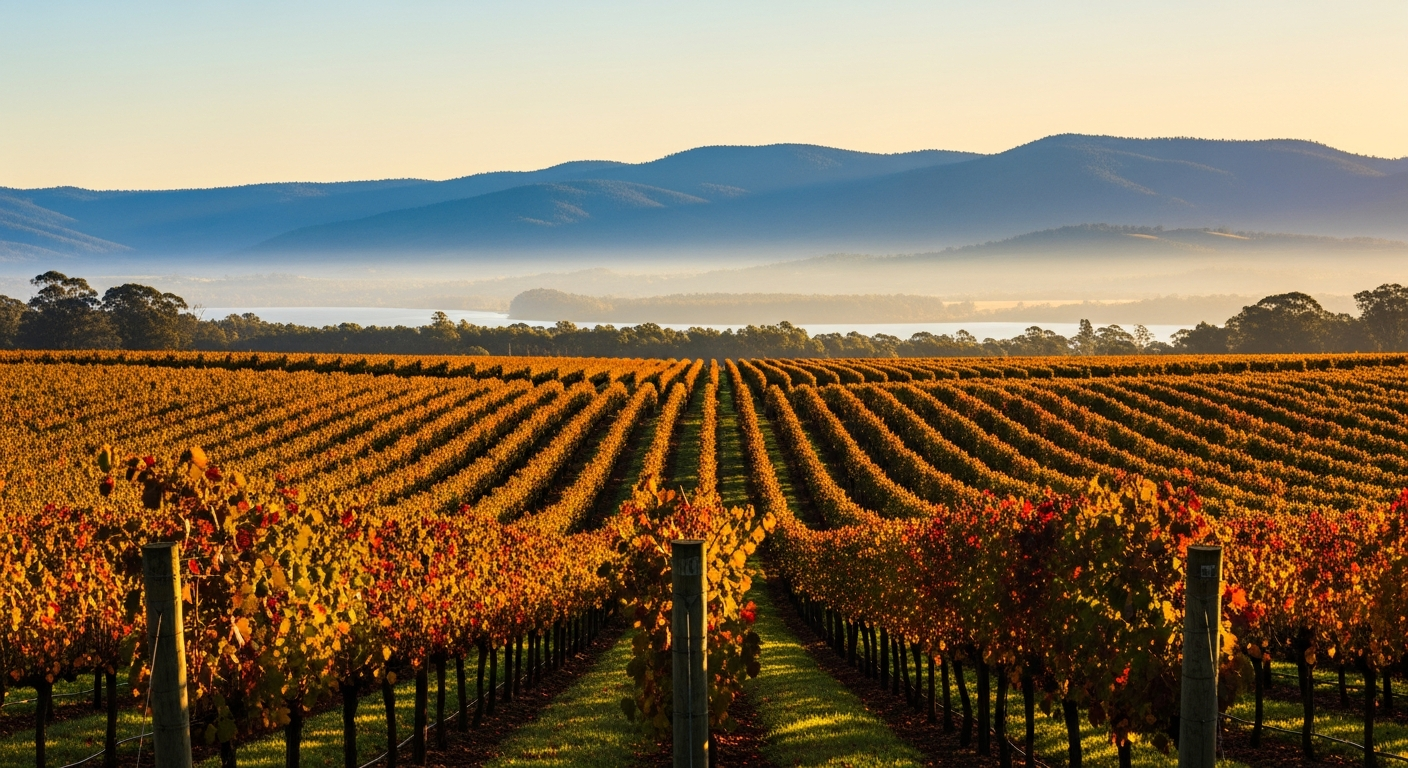
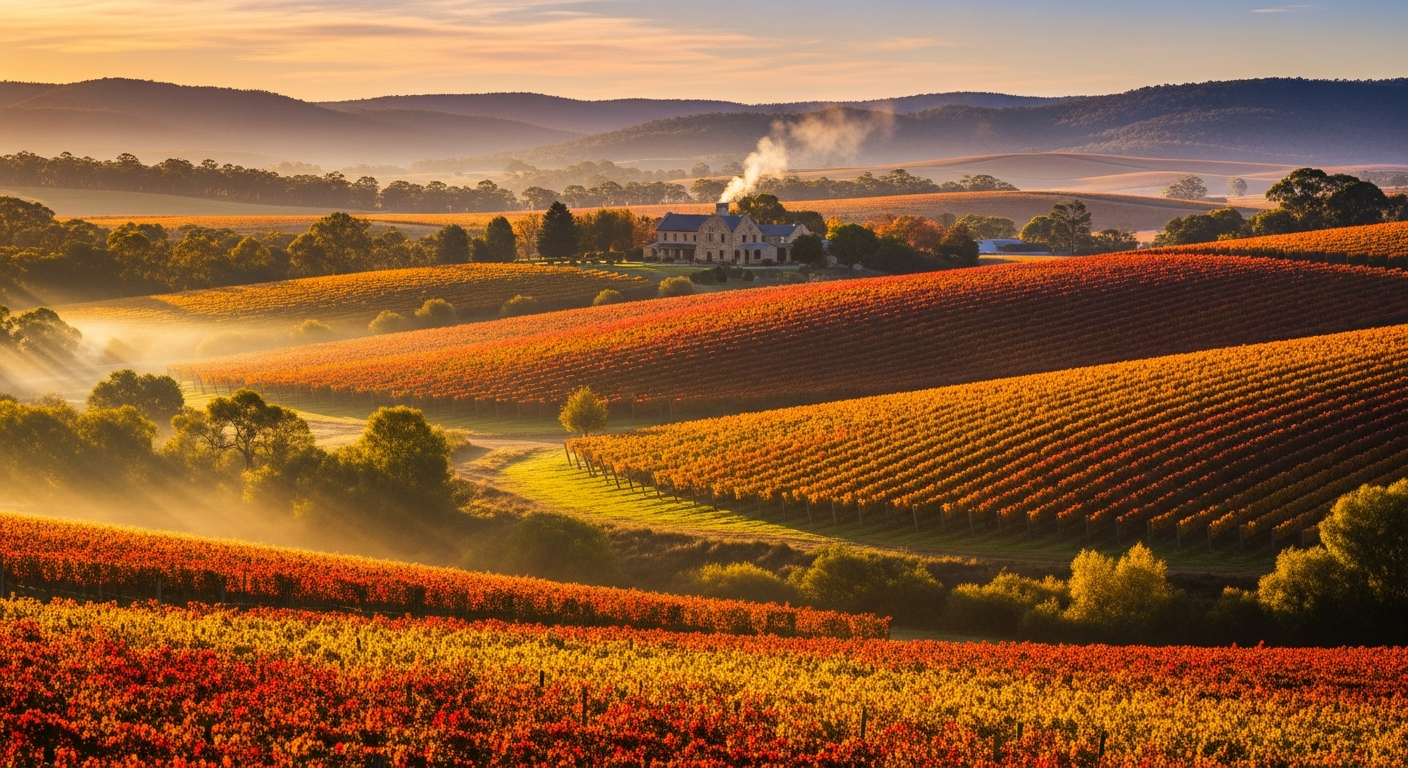
For those who find the idea of beach tourism in June less appealing than a cooler, inland alternative, Queensland's Southern Downs region — centred on Stanthorpe and the Granite Belt — offers something genuinely different. At around 900 metres above sea level, Stanthorpe is Queensland's coldest town, with June and July nights that can drop below five degrees. That is not a deterrent; it is the point. Fires in restaurant hearths, winter reds from local wineries, and misty mornings over granite country give this region a character quite unlike coastal Queensland.
The Granite Belt wine region is Queensland's most established, with dozens of cellar doors operating around Stanthorpe and the surrounding roads. Many are small, family-run operations where you are likely to meet the winemaker directly. The terrain is rolling and open, and most cellar doors are accessible by car; some have gravel paths, so check individual sites if mobility on uneven ground is a consideration. The Stanthorpe and Granite Belt Tourism site (granitebeltwinecountry.com.au) lists current operators and events.
Stanthorpe is around two and a half hours by road from Brisbane, making it feasible to fly into Brisbane and hire a car for the inland leg. Queensland Rail's services do not extend to Stanthorpe, so a hire car or a coach connection is necessary. The town itself has a modest range of accommodation — heritage guesthouses, vineyard cottages, and a small number of well-regarded country-style B&Bs. Indicative costs for a guesthouse or cottage run around $150–$250 per night. This region suits a three-to-four night stay as part of a longer Queensland itinerary, paired with a few days in Brisbane or the Sunshine Coast.
Getting around Queensland: flights, trains, and hiring a car after 60
Queensland is a large state and the regions covered in this guide are spread across considerable distances — Hervey Bay is roughly five hours north of Brisbane by road, Cairns is nearly 1,700 kilometres further north. The practical approach for most itineraries is to fly between the major anchor points rather than drive the full distance. Domestic flights between, say, the Sunshine Coast and Cairns are relatively short and reasonably priced; building an itinerary around two or three separate flights within Queensland is worth considering rather than committing to one base.
Queensland Rail's The Sunlander and Spirit of Queensland services between Brisbane and Cairns are worth knowing about even if you choose not to use them for the whole journey. The overnight train is a genuine experience — and a far less physically demanding way to cover the north Queensland distance than a long driving day. Queensland Rail's travel page (queenslandrail.com.au) covers routes and booking. For those who do plan to drive, the Bruce Highway north of Brisbane is wide and straightforward, though long. Splitting the drive over two days with a stop in Hervey Bay or the Whitsundays is a sensible way to manage fatigue.
Hiring a car in Queensland after 60 is generally straightforward; most major hire companies have no upper age restriction, though some apply a small daily surcharge for drivers over 75 or require additional paperwork. Confirm the policy directly when booking. Automatic transmission vehicles are widely available. If driving is not preferred, the Sunshine Coast and Noosa both have reasonable local bus services via Translink (translink.com.au), and Cairns has a compact enough centre to manage on foot for most day-to-day needs.
Pacing a Queensland winter trip: how to travel well without exhausting yourself
One of the genuine pleasures of the dry season is that the heat is manageable rather than oppressive — but 'manageable' is relative. Cairns in July sits around 25–27 degrees with low humidity, which is comfortable, but full-day reef trips involve sun exposure on open water and can leave you more fatigued than expected. Packing a wide-brimmed hat, high-SPF sunscreen, and a light long-sleeved shirt is not optional. Reef operators will tell you the same thing, but it bears repeating: sun fatigue accumulates on the water faster than it does on land.
Building rest days into the itinerary is not a concession — it is what makes the trip enjoyable rather than a list of things ticked off under pressure. A good rhythm for a ten-to-fourteen day Queensland itinerary might be two or three days in the Sunshine Coast, a travel day north, two days in Hervey Bay, a flight to Cairns, three days around the reef and rainforest, and a quieter final day before flying home. That pace allows for a full reef day followed by a genuinely restful day before any long travel.
For travellers managing health conditions, it is worth noting that Cairns Base Hospital is a well-equipped regional hospital, and the Sunshine Coast University Hospital at Birtinya is one of Queensland's newer major facilities. Travel insurance that covers pre-existing conditions is strongly advised for any interstate trip of this length — and worth reading carefully rather than assuming standard policies are adequate. The Australian Government's Moneysmart site (moneysmart.gov.au) has guidance on comparing travel insurance for older Australians.
Key takeaways
- Queensland's dry season (June–September) offers warm, low-humidity days that suit unhurried travel for Victorians over 50.
- July school holidays push up prices and crowding in Noosa and the Sunshine Coast — June and late August are noticeably quieter.
- Hervey Bay's sheltered bay makes it one of Australia's most accessible whale-watching experiences, with calm water and lingering humpbacks from late July.
- Reef pontoons at Cairns offer underwater viewing chambers and platform access, making a genuine Great Barrier Reef experience available to non-swimmers and those with limited mobility.
- The Granite Belt around Stanthorpe is Queensland's coldest region and offers a wine-country alternative for travellers who prefer a cooler, inland winter escape.
- Building rest days into a Queensland itinerary — rather than moving every day — is what separates a genuinely enjoyable trip from an exhausting one.
Recommended partners and links
Indicative prices only — always confirm with the operator before booking.
Frequently asked questions
When is the best time to visit Queensland for travellers over 50?
June through September is generally considered the best window for older travellers visiting Queensland. The dry season brings low humidity, clear skies, and comfortable daytime temperatures in the mid-to-high 20s across most of the coast. Avoiding the July school holiday fortnight reduces crowding and accommodation costs, particularly in Noosa and on the Sunshine Coast.
Is whale watching in Hervey Bay suitable for older or less mobile travellers?
Hervey Bay is one of the most suitable whale-watching destinations in Australia for older travellers because the bay is sheltered and calm, resulting in a more stable boat experience than open-ocean tours. Tour operators vary in their onboard accessibility, so it is worth contacting operators directly before booking to ask about deck access, seating, and any steps between levels. Whale season runs from roughly late July to early November.
Can you experience the Great Barrier Reef without snorkelling or diving?
Yes. Several Cairns-based reef day-trip operators use semi-permanent pontoons on the outer reef that include underwater viewing chambers, glass-bottom boat tours, and guided snorkel areas with flotation support. These options mean a meaningful reef experience is available to travellers who cannot snorkel or prefer to stay dry. Check each operator's accessibility information before booking, as facilities differ between companies.
How far in advance should you book Queensland accommodation in winter?
For travel in June, July, or August, booking accommodation three to four months ahead is a practical guideline, particularly for Noosa, Hervey Bay during whale season, and Port Douglas. July school holidays are the tightest period. Waiting until one or two months before departure in peak season risks limited availability or significantly higher rates.
Is the Southern Downs worth visiting in winter for Queensland travellers?
The Granite Belt around Stanthorpe is a genuinely different Queensland experience — cooler temperatures, open granite landscapes, and a well-established wine region with small cellar doors. Winter nights can drop below five degrees, so it appeals to travellers who want a contrast to coastal beach tourism. It works well as a three-to-four night addition to a broader Queensland itinerary, reached by hire car from Brisbane.
Got a tip, a price update or a story from this route? The community would love to hear it.
Share your views on our Facebook page— Seniors and Solo Traveller Stories
- Tourism and Events Queensland — official Queensland travel information
- Parks and Wildlife Service Queensland — Noosa National Park
- Translink — South East Queensland public transport
- Queensland Rail Travel — The Spirit of Queensland and train routes
- Sunlover Reef Cruises — accessible reef pontoon day trips from Cairns
- Quicksilver Cruises — reef day trips from Port Douglas
- Spirit of Hervey Bay — whale watching tours
- Granite Belt Wine Country — Stanthorpe and Southern Downs tourism
- Australian Government Moneysmart — travel insurance guidance