New Zealand's thermal pools are one of the genuinely underrated wellness trips available to Australians over 60 — close enough for a short-haul flight, varied enough to fill ten days, and warm enough to ease travel-tired joints at the end of every day. This guide covers the main soaking destinations on both islands, how to pace them realistically, and what everything is likely to cost in the current season.
Why New Zealand's thermal pools suit Australian travellers over 60
There is something quietly satisfying about a wellness destination that requires almost no long-haul endurance to reach. From Melbourne, Auckland is roughly three hours in the air; from Sydney, closer to two and a half. Even Queenstown and Christchurch, which open the South Island, are under four hours from the east coast. That puts New Zealand's geothermal landscape — one of the most active in the world — within the same travel effort as a domestic hop to Cairns or Darwin, but with a genuinely different cultural and physical environment.
For a traveller in his late sixties, the appeal is practical as much as scenic. Thermal pools at the right temperature ease stiff joints, reward modest walking days, and provide a natural rhythm for structuring a trip. You soak in the morning, walk or drive through the afternoon, eat well, and sleep in a comfortable bed. Repeat for ten days. It is not a demanding itinerary, but it does not feel like a passive one either. New Zealand's pool culture — especially in Rotorua and Hanmer Springs — has real depth, drawing on Māori tradition, Victorian-era spa history, and modern wellness thinking.
Winter, which runs June through August in New Zealand, is genuinely the best season for thermal soaking. Cooler air makes the contrast with hot water more pronounced and more pleasurable. Crowds at the major pools are lighter than summer, accommodation prices are generally softer, and the landscape — particularly in the South Island — takes on a sharper, quieter quality that many older travellers find more appealing than the holiday-season bustle.
Getting there: flights, entry requirements, and settling in on arrival
Australian citizens and permanent residents do not need a visa to visit New Zealand, but since 2019 an NZeTA (New Zealand Electronic Travel Authority) has been required. It is a straightforward online application costing around NZD $23 (indicative; confirm at the Immigration New Zealand website, immigration.govt.nz) and is typically approved within 72 hours. Apply well before departure. An International Visitor Conservation and Tourism Levy is also payable at the same time — check the current combined cost when you apply.
Qantas, Air New Zealand, and Jetstar all operate trans-Tasman routes. From Melbourne (Tullamarine), direct flights reach Auckland, Queenstown, and Christchurch. From Sydney, the same applies. Brisbane also has good connections. Indicative return fares in mid-2026 have been sitting anywhere from around AUD $350 on budget carriers to AUD $700 or more on full-service airlines, depending on lead time and flexibility. If you are planning a 7–10 day trip, booking four to six weeks out and choosing mid-week travel tends to offer better value. Always confirm current fares directly with the airline.
On arrival, the jet-lag equivalent of a three-hour flight is negligible for most people, but New Zealand is two to three hours ahead of Victoria depending on daylight saving, so the first afternoon can feel oddly long or short. Use it to your advantage: check in, eat something local, and resist the urge to fill the first evening with activity. If you are starting in Rotorua, the sulphur smell that greets you on arrival is not a problem — you acclimatise within an hour, and after that it simply becomes the background note of the place.
Rotorua and the Polynesian Spa: the North Island's centrepiece
Rotorua sits on the Taupo Volcanic Zone in the central North Island, about three hours by road south of Auckland or a short Air New Zealand or Jetstar domestic flight. The city is the spiritual and commercial heart of New Zealand's geothermal tourism, and the Polynesian Spa on the shores of Lake Rotorua is its most established bathing facility. Operating since 1882 in various forms, it offers a range of pools with varying temperatures and mineral compositions, from the Priest Pools (named after a Catholic priest who sought relief for his arthritis in the 1870s) to the larger Lake Spa pools overlooking the water.
Entry to the public pools is indicatively around NZD $35–$55 for adults, with private pool options at a higher price point — confirm all current pricing at polynesianspa.co.nz before you go. The pools are well maintained, the water is genuine geothermal sourced from on-site springs, and the facility is accessible for most mobility levels, with flat pathways between pools and adequate changing facilities. It is not a luxury resort in the international spa sense, but it is serious, unpretentious, and genuinely restorative. Arrive early morning or late afternoon to avoid the busiest periods.
Beyond the Polynesian Spa, Rotorua offers the Wai-O-Tapu thermal wonderland at Waiotapu (a 30-minute drive south, entry indicatively around NZD $45 for adults — confirm at geonet.org.nz or the operator site), the Te Puia cultural experience centred on the Pohutu Geyser, and Hell's Gate, which includes a mud bath and sulphur spa experience. For a traveller with a genuine interest in the geothermal landscape rather than just the pools, two to three nights in Rotorua is a reasonable allocation. The city itself is compact and walkable, accommodation ranges from motels to mid-range lodges, and the food scene has improved considerably over the past decade.
Kerosene Creek and other free natural soaks: what to know before you go
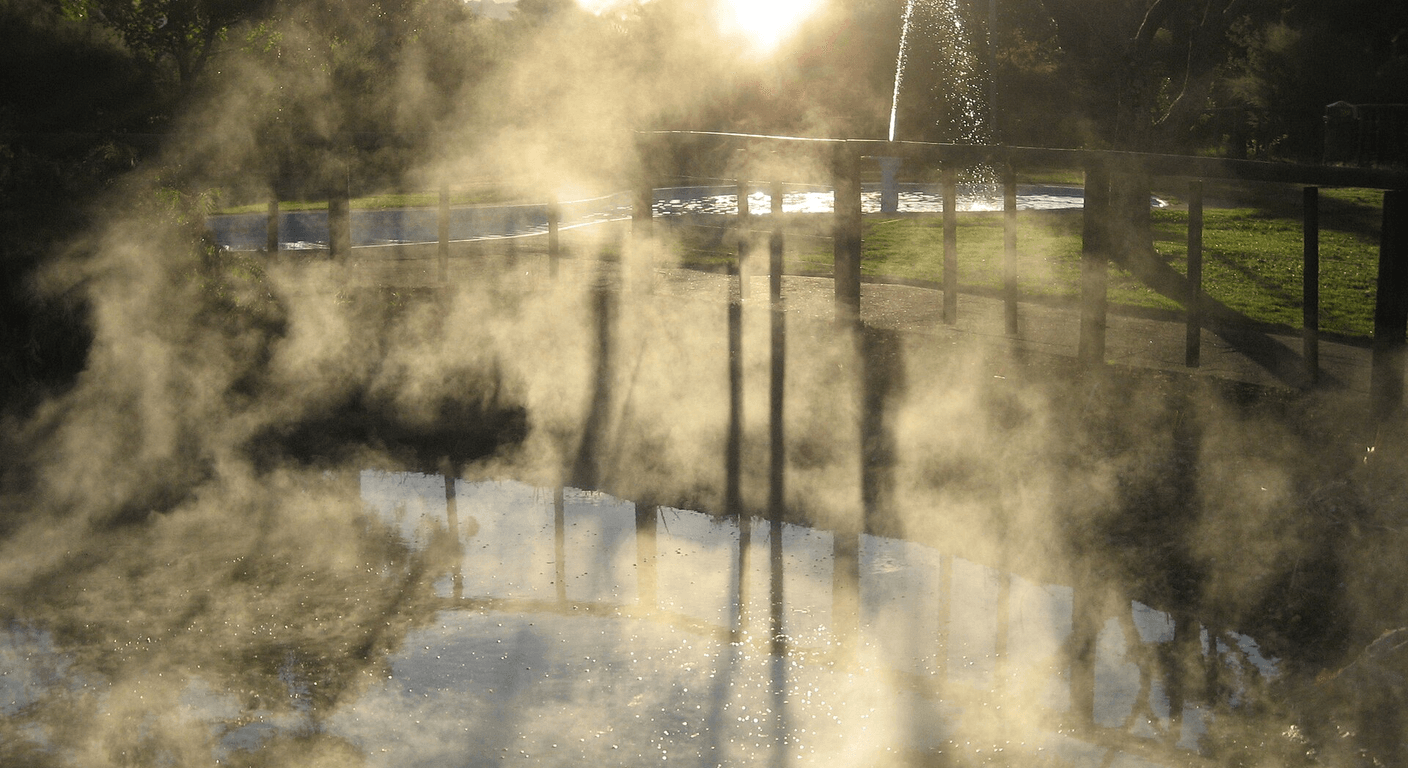
About 30 kilometres south of Rotorua on State Highway 5 toward Taupo, a gravel road leads to Kerosene Creek — a natural thermal stream where geothermally heated water flows into a series of shallow, sandy pools in a bush setting. Entry is free and the experience is genuinely different from a commercial spa: you are sitting in a natural watercourse, surrounded by native trees, with no facilities beyond a basic car park. Temperature varies along the stream, and finding a comfortable spot is part of the ritual.
That said, a few honest notes are warranted for older travellers. The access track involves uneven ground, and the pools themselves have rocky and sandy bases that require care when entering and exiting — wear water shoes if you have them, and take your time. There are no handrails, no lifeguards, and no changing facilities. The site is popular with younger travellers and can be busy on weekends. Weekday mornings in winter are the quietest time. Do not leave valuables in your car.
Other free or low-cost natural options in the North Island include the thermal pools at Tokaanu near Lake Taupo (the public pools here are modest but genuine, and there is a small entry fee — check local signage for current pricing), and various river and stream soaks accessible from the Tongariro area. Tourism New Zealand's website (newzealand.com/au) maintains a useful listing of thermal experiences, both commercial and natural. The key principle for free natural soaks is always the same: go in informed, move carefully, and do not push yourself into terrain that feels uncertain.
Hanmer Springs: the South Island's classic spa town
If the North Island's thermal landscape is dramatic and volcanic, Hanmer Springs in Canterbury offers something quieter: a small alpine town in the Hurunui District, about 90 minutes north of Christchurch, where geothermally heated water fills a well-designed complex of outdoor pools surrounded by pine forest and the Southern Alps. The town has been a thermal resort since the 1880s, and the Hanmer Springs Thermal Pools and Spa (hanmersprings.co.nz) is the central attraction — a series of pools at varying temperatures, sulphur pools, private pools, and a day spa.
Indicative adult entry is around NZD $30–$45 (roughly AUD $27–$41 at current indicative exchange rates — always confirm current pricing and exchange rates before travel). The complex is well set up for older visitors: pathways are sealed, most pool entries have steps with handrails, and the overall pace of the place is unhurried. The town itself is small enough to walk completely, with a handful of good cafes and restaurants, a Forest Walk suitable for easy-to-moderate fitness levels, and accommodation ranging from basic motels to comfortable lodge-style properties.
Hanmer Springs works well as a two-night stay within a South Island loop. Flying into Christchurch, spending a night or two in the city (the rebuilt post-earthquake centre is genuinely interesting to explore on foot), then driving north to Hanmer Springs before continuing on creates a natural rhythm. The drive from Christchurch to Hanmer Springs on State Highway 7 is straightforward and scenic, passing through the Waimakariri Gorge. In winter, the surrounding ranges may carry snow, which adds to the visual appeal of soaking outdoors in warm water.
Franz Josef and the West Coast: glacier country soaking
Franz Josef on the West Coast of the South Island is best known for its glacier, but the village also offers a thermal hot pools experience that has become a significant attraction in its own right. The Te Ara o Waiho Hot Pools (operated by Distinction Franz Josef Glacier Hotel — check current details at distinctionfranzjosefhotel.co.nz or via Tourism New Zealand) sit within a rainforest setting and are heated by a geothermal spring. Indicative entry is around NZD $35–$50 for adults; confirm current pricing and operating hours directly, as this is a smaller operation and hours can vary seasonally.
Getting to Franz Josef requires commitment. From Christchurch, it is roughly a five-hour drive over Arthur's Pass or via the inland route — scenic but long. Many travellers combine it with a fly-drive itinerary, flying Christchurch to Hokitika (a small regional airport served by Air New Zealand Link) and driving the short distance south to Franz Josef. The alternative is a coach tour: InterCity (intercity.co.nz) operates West Coast routes, and while the journey times are long, the driver does the navigation and the scenery is legitimate reward for the hours spent.
For a traveller prioritising ease and pacing, Franz Josef works best as a dedicated detour rather than a through-route. Two nights allows you to soak, walk the glacier valley floor track (a flat, well-maintained path to the glacier viewpoint — approximately 2 kilometres return and accessible for most fitness levels), and experience the remarkable West Coast light and forest before retracing to Christchurch or continuing north to Nelson. It adds distance and effort to a South Island loop, but the combination of glacier landscape and thermal soaking is genuinely distinctive.
Hire car versus coach: how to move between the pools
The honest answer is that a hire car gives you the most flexibility for a thermal pools itinerary, and New Zealand's roads — outside the main centres — are generally well-maintained and not heavily trafficked in winter. For a solo traveller comfortable driving on the left and confident on winding rural roads, hiring a small automatic vehicle from Auckland or Christchurch is straightforward. Indicative costs for a compact automatic car are roughly NZD $60–$120 per day (indicative; confirm with operators such as Rental Cars NZ via rentalcars.com or direct with Hertz, Avis, or Jucy). Fuel and road user charges add to this. New Zealand's age limits for hire cars vary by operator — most accept drivers up to age 75, but check at the time of booking.
Coach travel is a legitimate alternative, particularly for the South Island's West Coast where the scenery rewards not having to drive. InterCity (intercity.co.nz) and Naked Bus cover the main tourist routes and connect the major thermal pool towns. The trade-off is schedule inflexibility: you depart when the coach does, which may not align with the best pool times or your preferred pace. A hybrid approach — hiring a car for the North Island where distances between Rotorua, Taupo, and Auckland are manageable, and using coach or guided tour for the West Coast — suits many older solo travellers well.
Guided tours are worth considering if the administrative weight of planning feels unappealing. Operators such as Scenic Tours (scenictoursgroup.com.au) and AAT Kings (aatkings.com) offer New Zealand small-group tours aimed broadly at the over-50 market, some of which include thermal experiences. These are generally priced at a premium compared with self-drive but include accommodation, transport, and most meals. Read the itinerary carefully: group tours move at a group pace, which may be faster or slower than your own preference.
Key takeaways
- New Zealand is under four hours from Melbourne or Sydney by air, making it one of the most accessible international wellness destinations for older Australians.
- Winter (June–August) is genuinely the best season for thermal pool bathing in New Zealand — cooler air, quieter crowds, and softer accommodation prices.
- The Polynesian Spa in Rotorua and Hanmer Springs Thermal Pools are the two most established and accessible commercial facilities, both well-suited to older travellers.
- Free natural soaks like Kerosene Creek are worthwhile but require care — uneven access, no facilities, and rocky pool bases demand sensible footwear and unhurried movement.
- A hire car gives the most flexibility for a thermal pools itinerary; coach travel is a practical alternative for the West Coast, where the driving is more demanding.
- Australian citizens need an NZeTA (applied for online before departure) rather than a visa — straightforward, but allow at least 72 hours for processing.
Recommended partners and links
Indicative prices only — always confirm with the operator before booking.
Frequently asked questions
Do Australian citizens need a visa to visit New Zealand for a wellness trip?
Australian citizens and permanent residents do not need a visa for New Zealand, but they do need an NZeTA (New Zealand Electronic Travel Authority), which is applied for online before departure. An International Visitor Conservation and Tourism Levy is also payable at the same time. The combined cost is indicatively around NZD $23 or more — confirm current fees at immigration.govt.nz and apply at least 72 hours before your flight.
What is the best time of year for thermal pool soaking in New Zealand?
Winter — June through August — is widely considered the best season for thermal pool bathing in New Zealand. The contrast between cold air and hot water is more pronounced, commercial pools are less crowded than in summer, and accommodation rates are generally more competitive. The South Island's alpine setting at Hanmer Springs is particularly appealing in winter.
Is the Polynesian Spa in Rotorua accessible for older travellers with limited mobility?
The Polynesian Spa has flat, paved pathways between most pools and reasonable changing facilities, making it accessible for many older travellers. However, mobility needs vary significantly — if you use a walking aid or have specific access requirements, contact the spa directly at polynesianspa.co.nz before visiting to confirm current accessibility arrangements.
How many days do you need for a New Zealand thermal pools trip?
A 7–10 day itinerary is realistic for covering the main thermal pool destinations. A North Island focus (Rotorua, Kerosene Creek, Taupo area) works well in 7 days from Auckland. A South Island loop (Christchurch, Hanmer Springs, West Coast and Franz Josef) takes 8–10 days to pace comfortably without rushed driving days. Combining both islands in under two weeks is possible but adds transit fatigue.
Are New Zealand thermal pools expensive for Australians in 2026?
At current indicative exchange rates, commercial pool entry fees translate to roughly AUD $27–$50 for most facilities, which is comparable to similar wellness experiences in Australia. Hire car costs, accommodation, and internal flights are the larger expenses. Always confirm current NZD prices directly with the operator and check the current AUD/NZD exchange rate before budgeting, as rates fluctuate.
Got a tip, a price update or a story from this route? The community would love to hear it.
Share your views on our Facebook page— Seniors and Solo Traveller Stories