Murray River paddlesteamer cruises offer Victorians over 50 a genuine, unhurried cruising experience without a flight, a passport, or the scale of an ocean ship. Short one- to three-night voyages from Echuca or Mildura sit at a fraction of the cost of ocean cruising, with meals, commentary, and shore stops included. For couples wanting to ease into cruising — or simply rediscover a slower pace — the Murray is a compelling alternative.
Why the Murray River Makes Sense for Cruising-Curious Travellers Over 60
For many Victorians over 60, the idea of a cruise is appealing — but ocean voyages can feel like a large commitment: flights to a port city, lengthy itineraries, vast ships with thousands of strangers, and price tags that run into the thousands before a single shore excursion is counted. The Murray River offers a genuinely different proposition. A paddlesteamer voyage from Echuca or Mildura is compact, personal, and entirely doable from Melbourne without stepping onto a plane.
The river itself is the drawcard. The Murray moves slowly — sometimes barely perceptibly — through red gum forests, limestone cliffs, and wide sandy banks where kangaroos come down to drink in the late afternoon. There is a particular quality to this landscape that rewards exactly the kind of unhurried watching that paddlesteamer travel encourages. For couples who enjoy quiet time together with good food and genuine local commentary, this rhythm suits the over-50 traveller particularly well.
The scale also matters. Where an ocean cruise ship might carry two thousand passengers, a Murray paddlesteamer carries between twelve and forty guests. You will know the other travellers by name within a day. The crew are often local, knowledgeable, and genuinely interested in the history they are sharing. For anyone who has felt lost or anonymous on a large ship, this intimacy is a meaningful difference.
What Does a One- to Three-Night Murray Cruise Actually Look Like?
Most overnight cruises on the Murray depart in the late afternoon and follow a gentle schedule built around meals, short shore walks, and on-board talks. A typical day might begin with a cooked breakfast served in the dining saloon while the boat moves quietly through the morning mist. Mid-morning might bring a lock-and-weir stop — the Murray's weir system is a fascinating piece of Australian engineering history, and operators with a strong interpretive focus will give context that stays with you long after the trip.
Shore stops vary by vessel and itinerary, but commonly include landing at a riverside reserve for a short walk, a visit to a historic woolshed or station, or simply time on the bank to watch the birdlife. The pace is deliberately unhurried. There is no pressure to fill every hour. Afternoons on the sun deck with a book, or a conversation over a glass of wine as the light changes on the water, are considered a legitimate use of time.
Evenings are social without being demanding. Dinner is served at a shared table or in small groups, and the conversation tends to be easy — fellow travellers on a Murray cruise are, broadly speaking, people who have chosen to slow down. Some operators include a short after-dinner talk or a local musician. By nine o'clock, most guests are happy to retire. This is not a late-night party cruise, which for many over-50 travellers is precisely the point.
Indicative Costs: How Does It Compare to Ocean Cruising?
As a rough guide, a two-night Murray paddlesteamer cruise from Echuca costs somewhere in the range of $600 to $900 per person in twin share, with meals and on-board activities included. Three-night itineraries can reach around $1,000 to $1,200 per person, again indicative only — always confirm current pricing directly with the operator, as rates change seasonally and with availability. These figures are a fraction of a comparable ocean cruise, and they exclude the cost of flights, port transfers, and the kind of add-on expenses that inflate ocean cruise budgets quickly.
It is worth noting what is typically included. On most Murray overnight cruises, all meals, morning and afternoon tea, and on-board commentary are part of the package. Alcoholic drinks are usually available at an additional cost, though some operators include wine with dinner. There are no shore excursion fees, no specialty dining surcharges, and no formal dress nights. What you see in the price is, broadly, what you pay.
For couples, twin-share cabins on the better-appointed vessels are comfortable rather than luxurious — think of a well-fitted caravan or a compact but thoughtfully designed ship cabin. Space is limited, as it is on any small vessel, but the trade-off is the intimacy of the experience and the fact that the entire cost of a two-night trip for a couple can come in under what a single night in a premium ocean cruise cabin might cost.
Honest Notes on Cabins, Accessibility, and Narrow Stairs
This is where it pays to ask specific questions before booking. Paddlesteamers are heritage vessels, and some were not designed with the mobility needs of older travellers in mind. Several boats have narrow companionway stairs — steep, sometimes with limited handrails — connecting the main deck to sleeping cabins below or above. If either partner has knee issues, balance concerns, or uses a walking aid, it is worth calling the operator directly and asking about the specific cabin layout and stair access before committing.
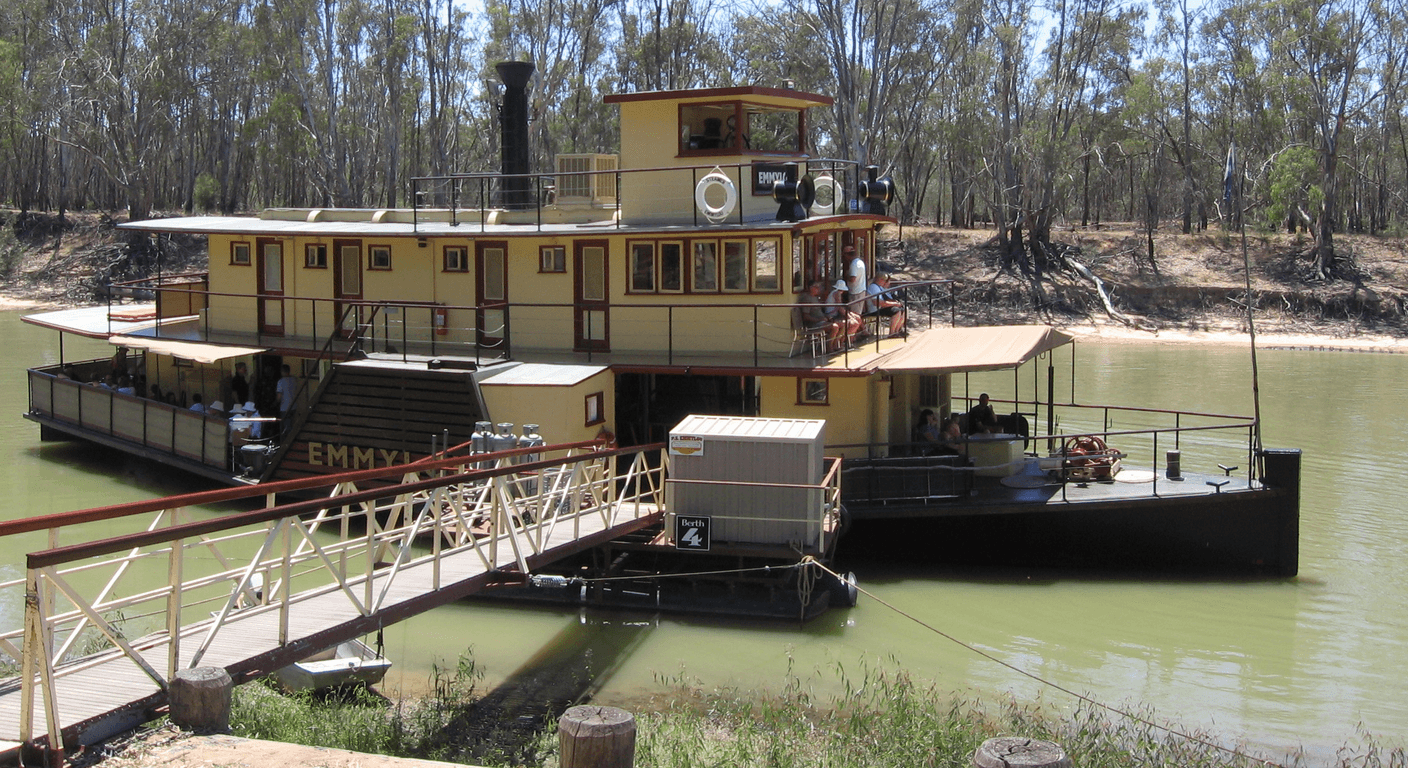
Some vessels have cabins on the main deck level that avoid stairs altogether; these are often the first to book and may carry a slight premium. Enquire whether the bathroom has a grab rail and whether the shower is a step-in or step-over design. These are not fussy questions — they are sensible ones, and any reputable operator will answer them honestly. The PS Emmylou, for example, has been operating overnight cruises from Echuca for many years and has staff accustomed to discussing accessibility needs with older guests.
Deck space is generally flat and manageable, and the boarding process at most Murray wharves is straightforward. The gangway at Echuca's historic wharf involves a short walk along wooden dock boards, which are well-maintained but can be uneven. Wearing flat, closed shoes for boarding and disembarking is a practical detail worth keeping in mind. Overall, for travellers with moderate mobility and no significant balance issues, a Murray cruise is genuinely accessible — but the honest advice is to ask first.
Getting to Echuca from Melbourne: Train, Coach, and Car
Echuca is around three hours from Melbourne by train and coach via V/Line, which is one of the more comfortable regional rail journeys in Victoria. The service runs from Southern Cross Station in Melbourne's CBD, with a connection at Bendigo for the Echuca leg. For travellers without a car, this is a practical and affordable option — indicative fares are roughly $20 to $50 one way depending on concession status, though always check current pricing at vline.com.au, as fares and timetables are updated regularly.
The Echuca train station is a short taxi or rideshare journey from the historic port precinct where most cruise operators are based. Some operators can arrange transfers from the station if asked in advance. For couples who prefer to drive, the trip from Melbourne via the Calder Highway is well-signposted and straightforward, and there is parking available near the port. Arriving the afternoon before departure is a sensible approach — it allows time to explore the Port of Echuca's heritage precinct, have a comfortable dinner, and board the following day without any rush.
Mildura requires a longer journey from Melbourne — roughly six hours by V/Line coach, or a short flight if preferred — but for travellers already in the region or combining the cruise with a broader Murray-Sunraysia itinerary, it is worth the effort. Mildura's riverfront is a genuinely pleasant place to spend a night before or after a cruise, with good dining options along Langtree Avenue and a relaxed, regional-city atmosphere that suits the over-50 pace.
The Lock-and-Weir History: Why the Commentary Matters
One of the unexpected pleasures of a Murray paddlesteamer cruise is the quality of the historical interpretation. The Murray-Darling system's lock-and-weir infrastructure — built between the 1920s and 1930s to regulate river levels for irrigation and navigation — is a substantial engineering achievement that most Australians know little about. Passing through a lock on a small vessel, watching the water level rise or drop around you, and understanding what that system meant for the development of inland Victoria is genuinely engaging.
Good operators weave this into the journey naturally — not as a lecture, but as conversation. The stories of the paddlesteamer era itself are equally rich: the competition between steam operators, the wool bales and dried fruit that were the cargo, the river towns that grew around the trade. For travellers who enjoy history that is grounded in place rather than delivered in a museum, this kind of contextual storytelling is one of the cruise's real strengths.
For Indian Australian travellers or anyone with an interest in the broader cultural history of the Murray region, it is also worth knowing that the river country has deep First Nations significance. Some operators are beginning to incorporate Yorta Yorta or Latji Latji cultural perspectives into their commentary, and this adds a dimension to the experience that goes beyond the European settlement narrative. It is worth asking operators about this when booking.
Is a Murray Cruise the Right Introduction to River Cruising?
For Victorians over 60 who are curious about river cruising but uncertain whether it suits them, a one- to three-night Murray voyage is a low-risk way to find out. The financial commitment is manageable, the journey from Melbourne requires no flight, and the worst outcome — that you find small-vessel travel is not for you — costs far less than discovering the same thing on a European river cruise after a long-haul flight.
Many travellers who do the Murray find it satisfying in its own right, not merely as a stepping stone. The river has a particular beauty that does not need comparison to anything else. Others find it confirms their appetite for river cruising and go on to look at longer Murray itineraries, or eventually the Mekong, the Rhine, or the Irrawaddy. Either outcome is a reasonable result from a comfortable, affordable few days on the water.
What the Murray cruise does particularly well for the over-50 couple is provide a shared experience that has texture — meals, landscapes, conversations, small moments of history — without requiring significant physical effort or logistical complexity. It is a holiday that feels like a holiday, at a pace that allows you to actually absorb it. That is, for many travellers, exactly what cruising is supposed to be.
Key takeaways
- A one- to three-night Murray River paddlesteamer cruise costs roughly $600–$1,200 per person twin share, with most meals included — a fraction of comparable ocean cruise pricing.
- Echuca is accessible from Melbourne by V/Line train and coach in around three hours, with no flight required.
- Passenger numbers on Murray paddlesteamers are typically between twelve and forty guests, making the experience far more personal than ocean cruising.
- Some heritage vessels have narrow or steep stairs to cabins — always ask the operator directly about accessibility before booking if mobility is a consideration.
- The Murray's lock-and-weir system and paddlesteamer history give the cruise genuine interpretive depth beyond scenery alone.
- A short Murray cruise is a practical, low-cost way for over-50 travellers to discover whether river cruising suits them before committing to a longer or international voyage.
Recommended partners and links
Indicative prices only — always confirm with the operator before booking.
Frequently asked questions
How much does a Murray River paddlesteamer cruise cost for a couple?
As a rough guide, expect to pay around $600–$900 per person for a two-night cruise in twin share, or roughly $1,000–$1,200 per person for three nights, with most meals included. These are indicative figures only — confirm current pricing directly with the operator, as rates vary by season and availability.
Can you get to Echuca from Melbourne without a car?
Yes. V/Line runs a train and coach service from Southern Cross Station in Melbourne to Echuca, with a connection at Bendigo. The journey takes around three hours. Indicative fares are roughly $20–$50 one way depending on concession status; check current timetables and prices at vline.com.au.
Are Murray paddlesteamer cruises suitable for travellers with limited mobility?
Many travellers with moderate mobility manage these cruises comfortably, but some heritage vessels have narrow or steep companionway stairs between decks. Always call the operator before booking to ask specifically about cabin access, bathroom grab rails, and boarding arrangements. Requesting a main-deck cabin where available can avoid stair issues.
What is typically included in the price of a Murray River overnight cruise?
Most operators include all meals — breakfast, lunch, dinner, and morning and afternoon tea — as well as on-board commentary and shore stops. Alcoholic beverages are usually at additional cost, though some operators include wine with dinner. There are no shore excursion fees or specialty dining charges as there would be on an ocean cruise.
How does a Murray River cruise differ from an ocean cruise for older travellers?
Murray paddlesteamer cruises carry between twelve and forty guests rather than thousands, require no flight or passport, and follow a quieter daily rhythm focused on landscape, history, and shared meals. The cost is significantly lower than ocean cruising, and the journey from Melbourne is manageable by train. The trade-off is smaller cabin spaces and a simpler onboard offering compared to large ocean ships.
Got a tip, a price update or a story from this route? The community would love to hear it.
Share your views on our Facebook page— Seniors and Solo Traveller Stories