Litchfield National Park sits roughly 1.5 hours south of Darwin and packs waterfalls, swimming holes, and ancient termite mounds into a single manageable day. Entry is free, the main attractions are close to the road, and the walking distances are short enough for travellers who want genuine Top End nature without committing to a multi-day Kakadu itinerary. For a group of friends looking for a rewarding Darwin day trip, it is one of the Northern Territory's most straightforward escapes.
Why Litchfield Works So Well as a Darwin Day Trip for Over-50 Travellers
Kakadu National Park is magnificent, but getting there properly takes at least two days, and the distances between highlights are considerable. Litchfield National Park, by contrast, is compact, well-signposted, and designed for exactly the kind of day trip where you want to arrive, see something genuinely remarkable, have a swim, eat your lunch under a shady tree, and be back in Darwin for an early dinner.
The park covers around 1,500 square kilometres of the Batchelor plateau, but the main circuit road links the headline attractions with short sealed drives between each one. The walking distances to the swimming holes and lookouts are measured in hundreds of metres rather than kilometres, which matters when the dry-season heat is sitting somewhere between 28 and 33 degrees even in the cooler months. For a group of women travelling together, there is also a comfortable social rhythm to the day — you move at your own pace, there is always somewhere to sit in the shade, and nobody feels pressured to keep up.
Entry to Litchfield National Park is free, which remains one of the more pleasant surprises for visitors expecting the kind of fees attached to some other Australian parks. You do not need to book or register in advance to enter. That said, always check current conditions and any temporary closures on the Northern Territory Parks and Wildlife website before you leave Darwin, particularly after unusual weather.
Getting There: Driving Yourself or Joining a Day Tour?
Litchfield sits roughly 100 kilometres south of Darwin, accessed via the Stuart Highway to Batchelor township and then into the park. The drive takes around 1.5 hours in normal traffic, and the roads within the park are mostly sealed and easy to navigate in a standard hire car. The route through Batchelor is well-marked and does not require four-wheel drive for the main attractions. If you are comfortable driving in regional Australia and are happy to navigate with a basic map or phone GPS, self-driving gives you the most flexibility over timing and pace.
For those who would rather leave the driving to someone else — and on a warm day, that is a very reasonable preference — there are several small-group day tour operators based in Darwin who run Litchfield circuits specifically designed for unhurried, older travellers. These typically depart mid-morning, include transport, a guide who explains the landscape and its cultural significance, and return to Darwin by late afternoon. Prices are indicative around $120 to $180 AUD per person; always confirm current pricing directly with the operator before booking.
There is no regular public bus service from Darwin to Litchfield, so if you are not driving or joining a tour, your options become limited. A taxi or rideshare for a day round trip from Darwin would be a significant cost and is not the most practical approach. For a group splitting a hire car or a tour cost, the numbers work out comfortably.
Florence Falls: A Short Walk to One of the Territory's Finest Swimming Holes
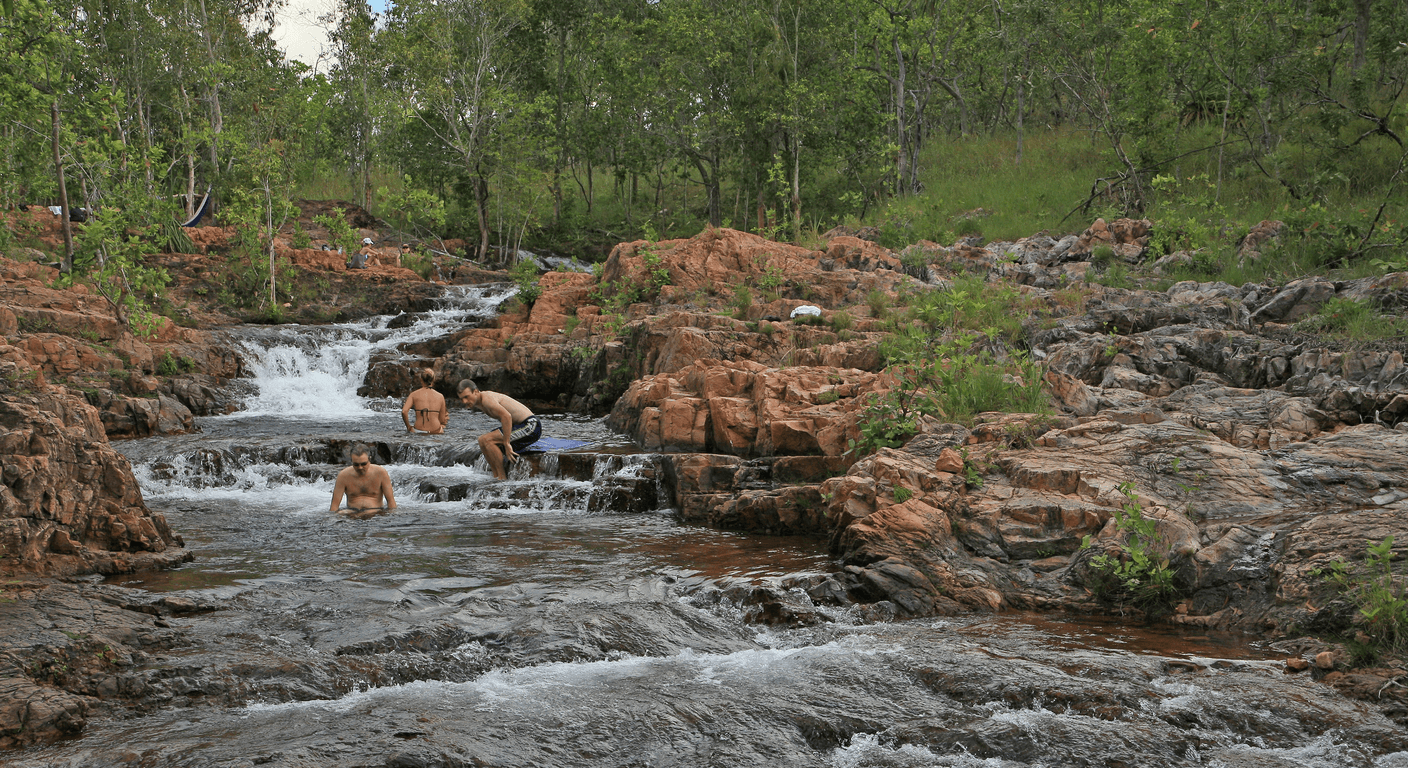
Florence Falls is often the first major stop on the Litchfield circuit, and it earns its reputation. Two plunge pools sit at the base of twin falls dropping into a broad, clear swimming hole shaded by monsoon forest. On a dry-season morning, the light through the paperbark trees and the sound of the water are genuinely calming, and the pool is cool enough to feel like a reward after even a short walk.
The standard walking track to the base of Florence Falls involves a descent of around 135 steps, which takes most people roughly ten to fifteen minutes each way. The steps are well-maintained and have handrails, but they are a genuine descent, so if you have knee concerns or find stairs difficult, it is worth knowing this in advance. There is also a lookout platform near the car park that gives a view of the falls without the full descent — a perfectly dignified alternative that still gives you the visual payoff.
Swimming is permitted at Florence Falls during the dry season when the site is open and no crocodile warnings are in place. This is the critical qualifier: always check the current crocodile warning signs posted at the site itself on the day of your visit. The Northern Territory Parks and Wildlife service monitors and updates these signs, and you should treat them as the authoritative source, not older online information. When the swimming area is clear, it is a genuinely lovely place for a dip.
Wangi Falls: The Park's Most Accessible Swimming Hole
Wangi Falls (pronounced Wong-eye, as locals will gently note) is the most popular spot in Litchfield and, for many travellers, the easiest to enjoy. The falls cascade down a sandstone escarpment into a large, relatively shallow pool with a sandy bottom and good shade around the edges. The walk from the car park to the water is flat, short, and paved for most of its length, making it the most accessible swimming location in the park for those who prefer to avoid stairs or uneven ground.
There are toilets and a kiosk near the Wangi car park, which makes it a natural lunch stop. The kiosk hours can vary seasonally, so it is sensible to bring your own food and water regardless. The picnic tables under the trees around the pool area are a pleasant place to eat and watch the birdlife, which is active and varied throughout the dry season.
The same crocodile warning protocols apply at Wangi as elsewhere in the park. Wangi is closed to swimming during the wet season (roughly November to April) due to flooding and increased crocodile movement, and it may also be closed at other times if a crocodile is detected in the area. Check the signs at the site on arrival. If swimming is not available on the day, the view of the falls from the pool edge is still worth the visit.
Magnetic Termite Mounds: A Remarkable Stop That Requires No Walking at All
Before you reach the waterfalls heading south into the park, a signed turn-off leads to the magnetic termite mound field, and it is worth stopping even if you only spend fifteen minutes there. The mounds are tall, flat, and all oriented on the same north-south axis — a navigational adaptation by the termites to regulate temperature inside the mound. The effect of standing among hundreds of these slate-like structures rising out of the flat grassland is genuinely unusual, the kind of thing that prompts a long conversation over lunch.
The viewing area is flat, grassed, and accessible directly from the car park with only a short, even walk needed to get among the mounds themselves. There are information boards explaining the science and the ecology, and a guide or tour operator will often add detail about the broader cultural and environmental context of the Top End landscape. For anyone with mobility considerations, this is one of the most rewarding stops in the park precisely because it asks very little physically while delivering something you are unlikely to see anywhere else.
Cathedral termite mounds — the tall, rounded variety — are also visible throughout the park from the road and at various stopping points. You do not need to go off-track to see them; they appear regularly as you drive the main circuit, giving the landscape a particular texture that stays with you.
Dry-Season Swimming Safety: What You Actually Need to Know About Crocodiles
The dry season in the Top End runs roughly from May through October, and this is when Litchfield is at its most accessible and most enjoyable. Temperatures are lower, the humidity is manageable, and the designated swimming holes are generally open. It is also the period when the crocodile risk at the main swimming sites is at its lowest — but 'lowest' does not mean absent, and this is where travellers need to be clear-headed.
Saltwater crocodiles, which are the dangerous species, can and do move into freshwater areas, particularly after the wet season. The Northern Territory Parks and Wildlife service monitors the designated swimming holes and posts clear warning signs at each site. If a sign says swimming is closed, that decision is not bureaucratic caution — it reflects an actual assessment of risk. Follow it without argument. The freshwater crocodiles that also inhabit some park waterways are generally much smaller and less aggressive, but the signs at each site will tell you what has been detected.
The practical habit to adopt is simple: read the signs at the entry to each swimming area on the day of your visit, not the information from a travel blog written two years ago. Conditions change. If you are on a guided tour, your guide will have current information and will make the call for the group. If you are self-driving, the NT Parks website and the on-site signage are your authoritative sources.
Practical Packing and Pacing for a Comfortable Day
A day in Litchfield in the dry season is warm and sunny, and the combination of heat, walking, and swimming means your packing list matters. Sunscreen, a hat with a decent brim, and a light long-sleeved shirt for sun protection are essentials. Bring more water than you think you need — at least two litres per person is a sensible baseline in 30-degree heat. Swimmers and a small towel are worth packing even if you are uncertain about swimming, because the pools are genuinely inviting and you may change your mind.
Wear shoes with a reasonable grip for the Florence Falls steps, and consider whether sandals or thongs are adequate for your comfort on uneven ground. Closed shoes are not strictly necessary at Wangi or the termite mounds, but they are worth having available. A small bag with snacks, particularly something salty to replace electrolytes, is useful for a long warm day.
Pace yourself deliberately. The magnetic termite mounds, Florence Falls, and Wangi Falls are the core of a comfortable day, and trying to add too many additional stops can turn a pleasant excursion into an exhausting one. Many travellers find that arriving at the termite mounds early, reaching Florence Falls mid-morning before the crowds build, then spending a longer, more relaxed stretch at Wangi for lunch and a swim, gives the day a natural and satisfying rhythm. Allow time to simply sit and look. The dry-season light in the Northern Territory is particular and worth noticing.
Key takeaways
- Litchfield National Park has free entry and is roughly 1.5 hours by road from Darwin, making it a practical and cost-effective day trip.
- The main attractions — Florence Falls, Wangi Falls, and the magnetic termite mounds — are all close to the sealed road with short or flat walking distances.
- Wangi Falls is the most accessible swimming hole in the park, with a flat, paved path from the car park suitable for travellers with limited mobility.
- Always check the crocodile warning signs posted at each swimming area on the day of your visit; conditions change and signs are updated by NT Parks and Wildlife.
- Dry-season visits (roughly May to October) offer the most reliable swimming access and the most comfortable temperatures for a full day outdoors.
- Small-group guided day tours from Darwin remove the need to self-drive and typically include a guide with current local knowledge about conditions and closures.
Recommended partners and links
Indicative prices only — always confirm with the operator before booking.
Frequently asked questions
Is there an entry fee for Litchfield National Park?
No. Entry to Litchfield National Park is free. There is no ticket, registration, or booking required to enter the park. Confirm this remains current policy before your visit via the Northern Territory Parks and Wildlife website at nt.gov.au.
Is it safe to swim at Litchfield National Park?
Swimming is permitted at designated sites during the dry season when no crocodile warnings are in place. Always read the warning signs posted at the swimming area on the day of your visit — these are updated by NT Parks and Wildlife and are the authoritative source of current conditions. Never swim when a closure sign is posted.
Can you visit Litchfield without a car?
There is no regular public bus service from Darwin to Litchfield. The most practical options for those not driving are a small-group guided day tour departing from Darwin, or arranging private transport. Several operators run Litchfield day tours; check Tourism Top End at tourismtopend.com.au for current options.
Is Litchfield National Park suitable for travellers with limited mobility?
Wangi Falls and the magnetic termite mound viewing area are both accessible with flat or paved paths from their car parks, making them suitable for travellers who find steps or uneven ground difficult. Florence Falls requires descending approximately 135 steps to reach the swimming hole, though a lookout near the car park offers a view of the falls without the descent.
What is the best time of year to visit Litchfield National Park?
The dry season, roughly May through October, is the best time to visit. Temperatures are lower, humidity is manageable, and the designated swimming holes are generally open. The wet season (November to April) brings heavy rain, flooding, and increased crocodile movement, and some areas including Wangi Falls swimming area close during this period.
Got a tip, a price update or a story from this route? The community would love to hear it.
Share your views on our Facebook page— Seniors and Solo Traveller Stories