Launceston offers a rewarding day out for older travellers — a free walk through Cataract Gorge followed by some of the best café and restaurant eating in regional Australia. The gorge reserve sits minutes from the city centre, the terrain is manageable for most mobility levels, and the food strip along Brisbane and Charles streets punches well above its size. Whether you drive up from Hobart or fly in, it is a day worth planning properly.
Why Launceston works so well as a day trip for over-50 travellers
Launceston is Tasmania's second city but it carries itself with a confidence that surprises first-time visitors. The centre is compact, walkable in parts, and structured around a handful of key streets that hold most of what a day tripper needs — good coffee, serious food, a market or two, and one of the most accessible pieces of wild gorge scenery in Australia.
For a couple travelling at a relaxed pace, the city rewards a simple structure: arrive mid-morning, walk the gorge before the day warms up, then spend the afternoon eating and browsing. There is nothing rushed about it. The food culture here draws on Tasmanian produce — the salmon, the cheeses, the cool-climate wines — and the chefs on Brisbane Street know how to use it. You do not need a booking list as long as your arm; two or three good options is enough.
The city also has a strong Greek Cypriot and broader Mediterranean community going back generations, and that cultural familiarity — the emphasis on sitting, eating slowly, sharing a carafe — fits naturally into how Launceston's better cafés and restaurants actually operate. It is not a city that rushes you out the door.
How do you get to Launceston from Victoria?
From Melbourne, the most direct option is a short flight — around one hour — into Launceston Airport, which sits roughly 15 kilometres south of the city centre. Rex Airlines operates Melbourne to Launceston services; indicative fares run from around $120 to $200 one way depending on how far in advance you book, though you should confirm current pricing directly with Rex at rex.com.au. The airport is small and manageable, with accessible facilities, and a taxi or rideshare into the city centre takes around 20 minutes.
If you are already in Tasmania — say, based in Hobart for a longer trip — Launceston is roughly 2.5 hours by car along the Midland Highway (the A1), which is a straightforward, well-maintained route through Tasmania's central midlands. The drive itself is pleasant without being spectacular; rolling agricultural country, the occasional heritage town, and very little traffic compared to mainland highways. Petrol costs will vary; check current prices before you leave.
There is no direct passenger rail between Hobart and Launceston. Tassielink operates coach services between the two cities, with the journey taking around two and a half to three hours depending on stops — check current timetables and fares at tassielink.com.au. For a day trip from Hobart, hiring a car or travelling with another couple who drives gives you the most flexibility, particularly if you want to stop at the gorge early and explore at your own pace.
Cataract Gorge: what to expect on the First Basin walk
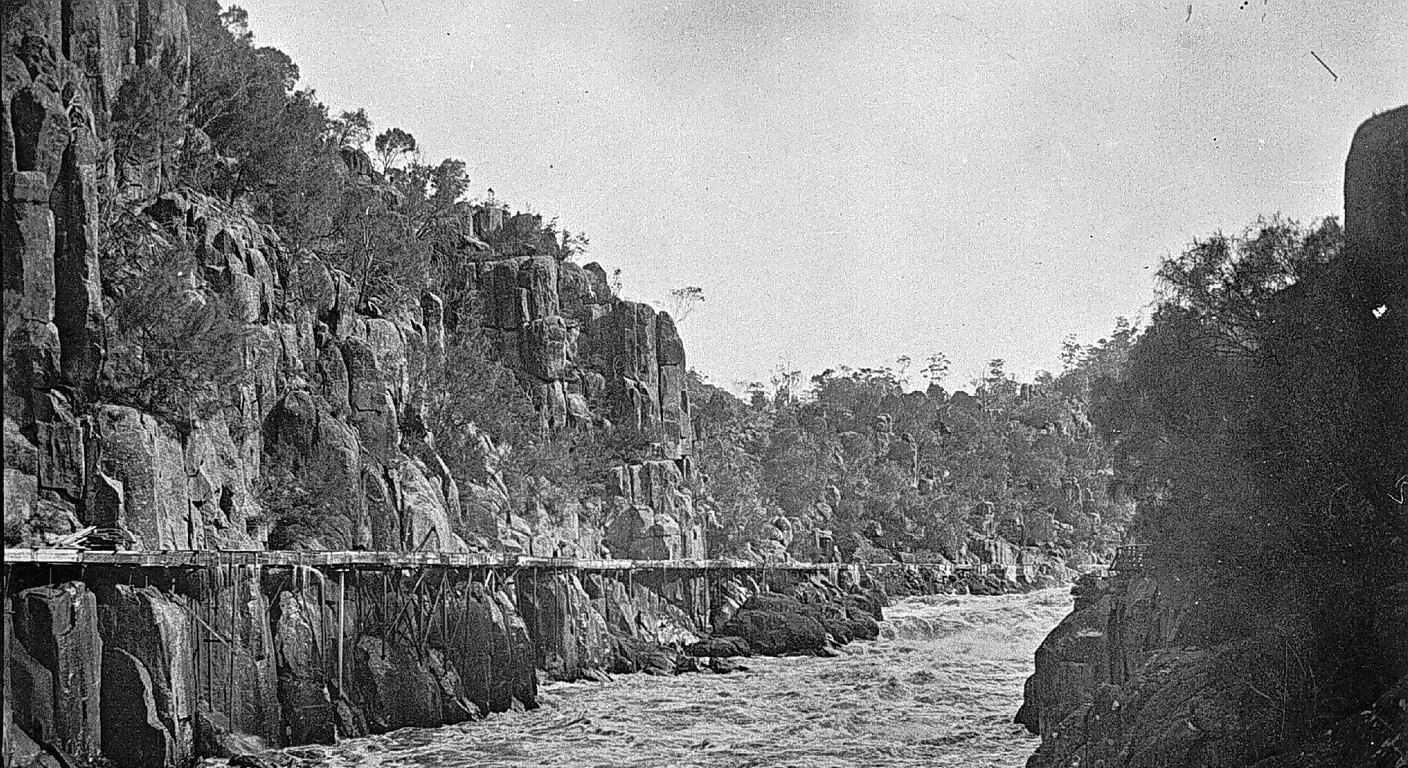
Cataract Gorge Reserve is one of the genuinely remarkable things about Launceston — a deep dolerite gorge carved by the South Esk River that begins almost at the edge of the city's CBD, around a 15-minute walk from the centre or a short drive to the Kings Bridge carpark. Entry to the reserve is free, which remains one of the better travel facts in Australian tourism. The reserve opens daily and is well maintained by Launceston City Council.
The main walk for most visitors is the First Basin circuit — a loop of roughly 2 kilometres that takes in both the cliffside path (the South Walk, which has some narrow sections and uneven ground) and the flatter, wider North Walk along the river. For travellers with mobility considerations or who prefer a more comfortable surface, the North Walk is the better choice — it is paved in sections, less exposed, and still delivers the full gorge atmosphere. Expect to take around 45 minutes to an hour at a comfortable pace.
At First Basin itself there is a swimming pool, café kiosk, peacocks wandering freely (they have been a fixture here for decades), and the lower terminal of the chairlift. The chairlift crosses the gorge to the upper reserve and offers a genuine aerial view of the basin below — it is a short ride, around five minutes, and while it involves an open chairlift seat, most travellers find it straightforward. The indicative cost is around $20–$25 return per adult, though you should confirm current pricing on-site or via the Launceston City Council website before visiting. The upper reserve has gardens, a restaurant, and good picnic spots if you want to extend the morning.
Accessibility at Cataract Gorge — what the guides do not always tell you
The honest picture on accessibility: the gorge is more manageable than it looks from photographs, but it is not uniformly flat. The North Walk is the accessible route and is suitable for most people who can walk comfortably for 30–40 minutes on a gentle path with some steps at entry and exit points. The South Walk involves narrow ledges, some steep sections, and uneven rock surfaces — it is scenic but genuinely unsuitable for anyone with balance concerns or joint problems.
The chairlift requires the ability to board and exit a moving seat at a low height — there is no full stop at boarding. If that presents a concern, the First Basin itself and the surrounding gardens are rewarding without the chairlift. The kiosk café at First Basin has seating, accessible toilets are available in the reserve, and there is adequate shade in the garden areas. On warmer days, arriving before 10am makes the walk noticeably more comfortable.
The carpark near Kings Bridge is the most practical arrival point if you are driving. It is a short, flat walk from the carpark to the reserve entrance. If you are coming from the CBD on foot, be aware that the approach involves a downhill gradient; the return walk back to town is uphill and takes around 20 minutes at a steady pace.
Brisbane Street and Charles Street: where to eat and drink in Launceston
The main food and café strip in central Launceston runs along Brisbane Street and spills into the surrounding blocks, including Charles Street. This is where the city's best-known venues have gathered over the past decade, and the quality is consistent enough that you are unlikely to make a wrong choice if you walk the strip and pick what appeals. The focus is on Tasmanian produce — expect to see local salmon, oysters from the Tamar Valley, Bruny Island cheese, and cool-climate wines from the Tamar and Pipers River regions.
For coffee, Launceston has a strong café culture and the standard is high. A flat white and a piece of cake at a Brisbane Street café will run to around $15–$20 indicatively; confirm current pricing when you visit. For a sit-down lunch, a main course at a mid-range restaurant runs roughly $30–$45, with wine by the glass around $12–$18 — these are indicative figures only and prices change, so treat them as a rough guide when budgeting your day.
The Harvest Market, held on Saturday mornings at the Cimitiere Street carpark, is worth timing a visit around if your trip falls on a weekend — it is one of the better regional produce markets in Australia and a good place to pick up Tasmanian cheeses, smallgoods, and preserves to bring back. Check current dates and hours at harvestmarket.org.au before you go, as schedules can vary.
How to structure a full day in Launceston
A practical structure for the day: arrive in the city between 8.30 and 9am, head directly to Cataract Gorge before the day warms and before tour groups arrive. Walk the North Walk at your own pace, take the chairlift if it appeals, and allow yourself an hour and a half in the reserve. By late morning you will be ready for a proper coffee, and the walk back toward the CBD or a short drive puts you on Brisbane Street in time for a 10.30 or 11am café stop.
Lunch is the main event food-wise. Take your time over it — the better restaurants on the strip are set up for a two-course lunch with wine, and there is no need to rush. Early afternoon is a good time to browse the blocks around Brisbane and Charles streets; there are bookshops, providores, and a couple of small galleries that reward a slow wander. By 3pm you have a natural window to begin making your way back if you are driving to Hobart, or to the airport if you are flying.
One practical note for travellers driving the Midland Highway back to Hobart in the afternoon: the road is well-lit and straightforward but can see kangaroos on the verges from dusk onward. If you are not comfortable driving after dark in unfamiliar country, aim to leave Launceston by 3.30 to 4pm to give yourself comfortable daylight for the return.
Practical notes on costs, timing, and what to bring
The gorge is free to enter every day of the year. The chairlift is a paid extra — around $20–$25 return per adult indicatively, confirm on-site. A full day in Launceston including a café stop, a two-course lunch with wine, and the chairlift might run to roughly $100–$140 per person as a general indication, not counting transport. These are rough planning figures; confirm all costs directly with venues and operators.
Wear comfortable, closed walking shoes for the gorge — the paths are uneven in places even on the North Walk, and sandals or smooth-soled shoes are not ideal. Bring a light layer even in summer; the gorge can be cooler than the city above it, and the wind off the water is noticeable. A small water bottle and sunscreen are worthwhile for the walk.
Launceston's better restaurants on Brisbane Street do not generally require booking far in advance for lunch on a weekday, but on weekends it is worth calling ahead. If you are travelling as a couple and want a specific table or a window seat, a quick phone call the morning of your visit is enough. Most venues are happy to accommodate two.
Key takeaways
- Cataract Gorge Reserve is free to enter and sits minutes from Launceston's CBD, making it one of the most accessible pieces of wild gorge scenery in regional Australia.
- The North Walk at First Basin is the practical choice for older travellers — paved in sections, flatter, and fully rewarding without the exposed ledges of the South Walk.
- The chairlift across First Basin costs around $20–$25 return per adult indicatively — confirm current pricing on-site before you queue.
- Brisbane and Charles streets hold Launceston's strongest concentration of cafés and restaurants, with a consistent focus on Tasmanian produce and cool-climate wine.
- Driving from Hobart takes around 2.5 hours on the Midland Highway; flying from Melbourne with Rex Airlines takes roughly one hour with indicative fares from around $120 one way.
- A full day combining the gorge walk and a proper sit-down lunch runs to roughly $100–$140 per person as a general planning guide, not including transport — confirm all costs directly.
Recommended partners and links
Indicative prices only — always confirm with the operator before booking.
Frequently asked questions
Is Cataract Gorge free to visit?
Yes. Cataract Gorge Reserve in Launceston is free to enter every day of the year. The reserve is maintained by Launceston City Council. The chairlift across First Basin is a separate paid attraction — indicative cost around $20–$25 return per adult, but confirm current pricing on-site or via the Launceston City Council website.
Is the Cataract Gorge walk suitable for older travellers or those with mobility concerns?
The North Walk along the river is the more accessible route — it is wider, flatter, and paved in sections, and is manageable for most people who can walk comfortably for 30–40 minutes. The South Walk involves narrow ledges and uneven rock surfaces and is not recommended for anyone with balance or joint concerns. Accessible toilets are available in the reserve.
How do you get from Hobart to Launceston for a day trip?
The most flexible option is to drive — the Midland Highway (A1) connects Hobart and Launceston in around 2.5 hours and is a straightforward, well-maintained route. Tassielink operates coach services between the two cities; check current timetables and fares at tassielink.com.au. There is no passenger rail service on this route.
What is the best area to eat in Launceston?
Brisbane Street and the surrounding blocks, including Charles Street, form Launceston's main food and café precinct. The concentration of quality venues here is high for a regional city, with a consistent focus on Tasmanian produce — salmon, local cheeses, cool-climate wines from the Tamar and Pipers River regions. Most venues are set up for a relaxed, two-course lunch.
Can you visit Launceston as a day trip from Melbourne?
Yes. Rex Airlines operates flights from Melbourne to Launceston in around one hour, with indicative fares from around $120–$200 one way depending on timing — confirm current pricing directly with Rex at rex.com.au. Launceston Airport is small and accessible, and the city centre is around 20 minutes by taxi or rideshare.
Got a tip, a price update or a story from this route? The community would love to hear it.
Share your views on our Facebook page— Seniors and Solo Traveller Stories