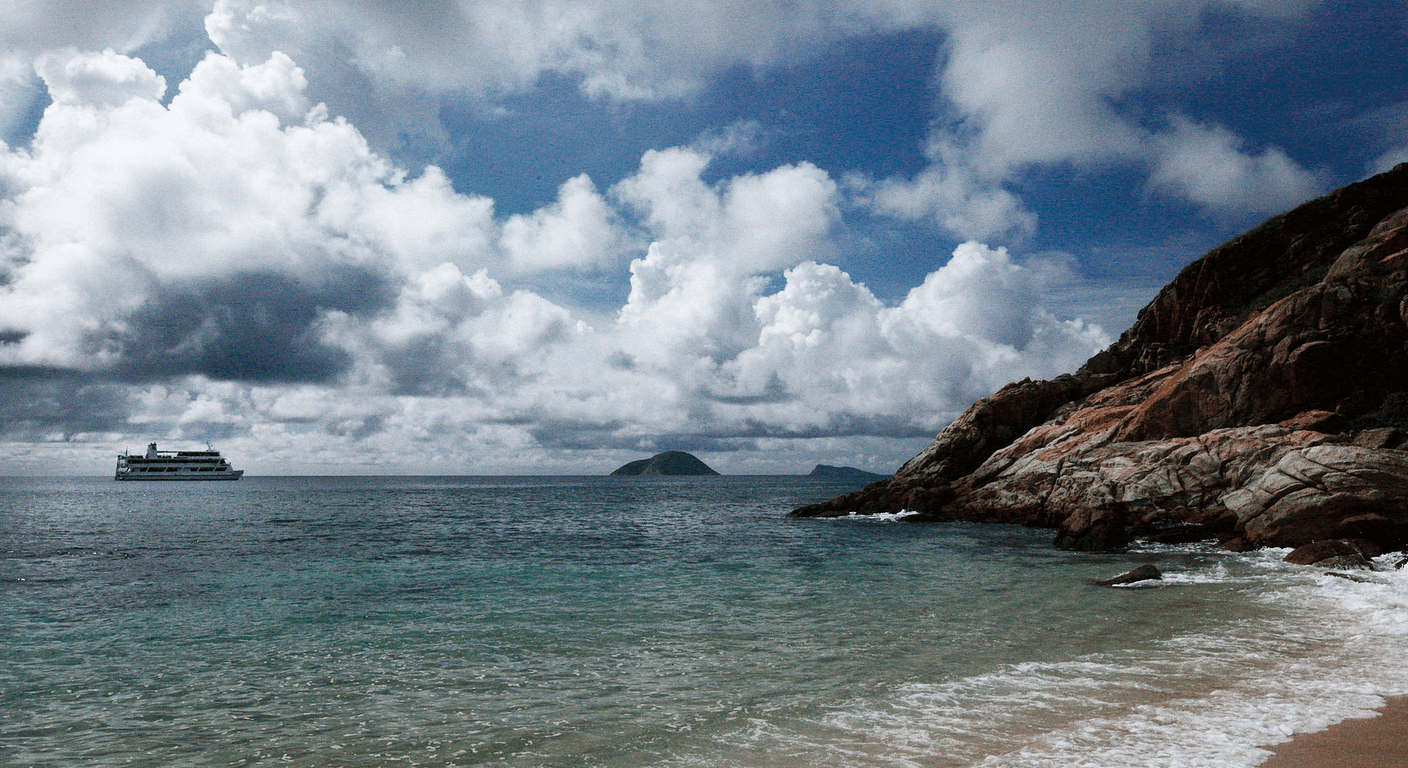
The Great Barrier Reef is entirely within reach for snorkellers in their 50s, 60s and 70s — provided you choose the right operator, the right season and the right level of support. This guide walks you through pontoon day trips versus smaller vessels, departure points from Cairns and Port Douglas, what stinger suits and flotation aids actually mean for your comfort in the water, and honest alternatives if you'd rather watch the reef than swim through it.
Why the Great Barrier Reef works particularly well for over-50 travellers
There is a quiet confidence that comes with travelling later in life — you know what you want, you are willing to ask for help, and you are far less likely to push yourself into situations that feel unsafe. That mindset suits reef snorkelling perfectly. The outer reef, accessed by day trips from Cairns or Port Douglas, rewards patience and calm movement in the water far more than athletic ability. Fish do not care how old you are; they respond to slow, unhurried swimmers who do not thrash.
For travellers in their 50s, 60s and 70s, the key is choosing an operator and a vessel type that builds support into the experience rather than treating it as an afterthought. The good news is that the major outer-reef operators have been running guided snorkel programs with flotation aids, stinger suits and in-water guides for many years — and those features are standard inclusions, not premium extras. You do not need to be a strong swimmer to enjoy the reef, and you do not need to be in the water at all if you would rather not be.
Pontoon day trips versus smaller boats: which suits you better?
The most significant practical decision you will make is choosing between a large pontoon-based day trip and a smaller vessel. Pontoons are permanently moored floating platforms anchored at outer reef sites. They are spacious, stable and equipped with ladders, railings, shaded seating, freshwater showers, toilets, on-site staff and often an underwater observatory or semi-submersible. For travellers who are not confident in open water, or who find the idea of climbing in and out of a small boat at sea daunting, a pontoon is almost always the better choice.
Smaller vessels — typically fast catamarans carrying 20 to 60 passengers — reach reef sites that pontoons cannot, and they often attract a more adventurous, snorkel-focused crowd. The experience can be wonderful, but the logistics are more demanding: you enter and exit the water from a small platform at the stern, the boat moves with the swell, and there is less staff available per passenger. If you are a confident snorkeller and a reasonably strong swimmer, a small-boat trip to a less-visited reef site can be genuinely special. If you have any uncertainty about your swimming stamina or comfort in open water, the pontoon is the more sensible starting point.
Operators such as Quicksilver Cruises (departing Port Douglas) and Sunlover Reef Cruises (departing Cairns) both run pontoon-based programs with guided snorkel groups, in-water guides who stay close to less confident swimmers, and flotation noodles or vests offered freely without any fuss. Asking for a flotation aid is normal and expected — the guides hand them out routinely and no one gives it a second thought.
Cairns or Port Douglas: which departure point makes more sense?
Both towns are legitimate bases for reef day trips, and the choice often comes down to where you are already staying. Cairns is the larger city, with more accommodation options across every price range, direct flights from Melbourne and other capitals, and a busy marine terminal at the Reef Fleet Terminal on the Cairns waterfront. It is well set up for independent travellers and couples, with good restaurants, a pleasant esplanade and easy access to the Skyrail and Kuranda railway if you want a rainforest day in between reef days.
Port Douglas is smaller, quieter and arguably more relaxed — a genuine village feel with a main street of cafes and boutiques, and a marina that feels less industrial than Cairns. The drive between the two is around an hour along the Captain Cook Highway, one of Australia's more scenic coastal roads. Some travellers base themselves in Cairns and do a day trip to Port Douglas specifically to join a Quicksilver departure; others do the reverse. Neither is wrong. What matters more than the departure point is the operator's safety record, the vessel type, and whether the reef site they visit is currently in good health.
Stinger season, stinger suits and what you actually need to know
The dry season — roughly May through October — is generally considered the best time to visit the reef from north Queensland. Water temperatures are comfortable (around 22–26 degrees Celsius), visibility is typically excellent, and the risk from box jellyfish and Irukandji jellyfish is significantly lower than in the wet season (November through April). This does not mean stinger risk disappears entirely in the dry season, particularly for Irukandji, which are tiny and can be present year-round at outer reef sites.
All reputable outer-reef operators provide full-length lycra stinger suits as a standard inclusion, and most will insist you wear one. The suits cover your arms, legs and torso, reducing — though not eliminating — the risk of contact with jellyfish. They also provide a small amount of sun protection, which matters given the intensity of tropical UV. Wearing a suit feels a little odd for the first few minutes and then you stop noticing it. Do not skip it to avoid looking awkward in photos.
If you are travelling in the shoulder months of April or November, speak to your operator directly about current stinger conditions at their reef site. Conditions vary by year and by location, and a good operator will give you an honest current answer rather than a reassuring non-answer.
Not a swimmer? Glass-bottom boats, underwater observatories and semi-submersibles
One of the genuinely underrated aspects of the major pontoon operators is what they offer for people who choose not to snorkel at all. Semi-submersible vessels — essentially small boats with an underwater viewing chamber — take passengers on a slow circuit of the reef site at a depth of a metre or two, with large windows on either side. The fish, coral and occasional turtle are visible at close range without getting wet. It is not the same as floating above the reef yourself, but it is a real and worthwhile experience, and it means a travelling companion who is not comfortable in the water can still see the reef properly rather than sitting on the pontoon waiting.
Underwater observatories, where they exist, work similarly — a fixed chamber below the pontoon's waterline, reached by stairs, where you stand and watch the reef life move around you. Quicksilver's Agincourt Reef pontoon has one of the better-known examples. For travellers with limited mobility, these options can be genuinely accessible in ways that snorkelling is not — check with the specific operator about stair configurations and step heights before you book.
Medical declarations and fitness: what operators ask and why it matters
Most outer-reef day-trip operators include a medical declaration as part of the booking or check-in process. You may be asked whether you have certain heart conditions, respiratory conditions, recent surgery, or other health factors that could be relevant in a marine environment. Answer honestly — these declarations exist to keep you safe, and the staff are not there to judge. If you disclose a condition, the operator may ask you to speak with their on-site first-aid officer before entering the water, which is a reasonable and sensible step.
This guide is not medical advice, and nothing here should substitute for a conversation with your GP before the trip. If you have not been swimming regularly, or if you have any cardiovascular, respiratory or joint concerns, it is worth raising the reef trip specifically with your doctor beforehand. The question to ask is not 'can I snorkel?' in the abstract but 'can I snorkel in a stinger suit, in open water, with a flotation aid if needed, for around 30–45 minutes at a time?' That framing helps your GP give you a practical answer.
It is also worth noting that snorkelling is genuinely low-impact exercise when done calmly and with support. You are horizontal, buoyant and moving slowly. It is not equivalent to lap swimming or open-water swimming. Many people who would not describe themselves as swimmers find it entirely manageable with a flotation noodle and a guide nearby. The guided snorkel groups that the major operators run are specifically designed for this level of participation.
Reef health: an honest picture
The Great Barrier Reef has experienced significant bleaching events in recent years, and it would not be honest to write a guide like this without acknowledging that. Mass bleaching in 2022, 2024 and ongoing thermal stress have affected large sections of the reef, particularly inshore and mid-shelf sites. The outer reef sites visited by the major day-trip operators — Agincourt Reef near Port Douglas, and Moore, Norman and Hardy Reefs near Cairns — have generally fared better than inshore sites, but conditions vary and change from year to year.
What this means practically is that your experience of the reef will depend partly on where and when you visit, and on managing your own expectations honestly. You may see sections of bleached or recovering coral alongside genuinely vibrant, colourful reef. Fish populations at well-managed outer sites remain diverse and active. The Great Barrier Reef Marine Park Authority (gbrmpa.gov.au) publishes reef health updates and is the most reliable source for current conditions. Reading their information before you travel will give you a grounded sense of what to expect and help you appreciate what you do see rather than measuring it against an idealised version of the reef from decades past.
Choosing a responsible operator matters here too. Operators who follow marine park guidelines, limit the number of visitors at each site, and brief passengers on reef-safe behaviour contribute to the long-term resilience of the sites they visit. Ask your operator about their environmental accreditation — Ecotourism Australia's ECO Certification is one marker worth looking for.
Key takeaways
- The dry season (May to October) offers the most comfortable conditions for reef snorkelling, with lower stinger risk and typically good water visibility.
- Pontoon day trips are generally the better choice for less confident swimmers, offering stable platforms, in-water guides, flotation aids and non-snorkelling alternatives such as semi-submersibles.
- Full-length stinger suits are a standard inclusion on all reputable outer-reef operators and should always be worn, even in the dry season.
- Indicative costs for outer-reef day trips from Cairns or Port Douglas are roughly $220–$320 AUD per adult; always confirm current pricing directly with the operator.
- Medical declarations on reef day trips are standard and should be answered honestly — speak with your GP before the trip if you have any cardiovascular, respiratory or joint concerns.
- Outer reef sites near Port Douglas and Cairns have generally fared better than inshore sites in recent bleaching events, though conditions vary; check current reef health updates at gbrmpa.gov.au.
Recommended partners and links
Indicative prices only — always confirm with the operator before booking.
Frequently asked questions
Do I need to be a strong swimmer to snorkel the Great Barrier Reef after 60?
No. The major pontoon-based day-trip operators provide flotation noodles and vests freely, and in-water guides stay close to less confident swimmers throughout the snorkel session. Snorkelling from a pontoon is low-impact and manageable for many people who would not describe themselves as strong swimmers, provided they are comfortable putting their face in the water and breathing through a snorkel. If you have any doubts about your fitness for swimming, speak with your GP before booking.
When is the best time of year for seniors to snorkel the Great Barrier Reef?
The dry season, roughly May through October, is widely considered the best time. Water temperatures are comfortable (around 22–26 degrees Celsius), visibility is typically at its best, and the risk from box jellyfish is lower than in the wet season. Irukandji jellyfish can be present year-round at outer reef sites, which is why stinger suits are always recommended regardless of season.
What if I do not want to snorkel — is there still something to see at the reef?
Yes. The major pontoon operators offer semi-submersible vessels and underwater observatories that allow non-swimmers to view the reef at close range without entering the water. These are real and worthwhile experiences, not consolation options. Glass-bottom boat tours are also offered at some sites. Confirm which non-swimming options are available on your specific departure when you book.
Why do reef operators ask for a medical declaration, and what happens if I disclose a health condition?
Medical declarations are standard practice on reef day trips and exist to keep passengers safe in a marine environment. If you disclose a relevant health condition, the operator may ask you to speak with their on-site first-aid officer before entering the water. This is a sensible precaution, not a barrier to participation. Answer honestly — your safety depends on it. If you have cardiovascular, respiratory or joint concerns, raise the reef trip specifically with your GP before travelling.
Is the Great Barrier Reef still worth visiting given recent bleaching?
Yes, with honest expectations. Outer reef sites near Port Douglas and Cairns have generally been less affected by recent bleaching events than inshore sites, and fish populations at well-managed locations remain diverse. You may see sections of bleached or recovering coral alongside healthy reef. Check current reef health updates at gbrmpa.gov.au before your trip so you know what to expect, and choose an operator with recognised environmental accreditation.
Got a tip, a price update or a story from this route? The community would love to hear it.
Share your views on our Facebook page— Seniors and Solo Traveller Stories