Flat-water kayaking is one of the gentler ways to spend a half-day outdoors, and Victoria has some genuinely beautiful stretches of calm water suited to paddlers who are new to it or returning after a long break. From the Yarra through inner Melbourne to the Gippsland Lakes and Western Port's quiet mangrove channels, guided tours handle the logistics, supply the gear, and keep the pace sensible. This guide covers what to expect, what it costs, and how to decide whether your shoulders and knees are ready for it.
Why flat-water kayaking works well for over-50 travellers
Kayaking has a reputation for being athletic, but that reputation belongs to whitewater paddling and long ocean crossings. Flat-water kayaking on a sheltered lake, estuary or slow-moving river is a different proposition entirely. The effort is rhythmic and low-impact, the pace is yours to set, and you are seated the whole time. For travellers in their sixties and seventies who want to be genuinely active without punishing their joints, it sits in a sweet spot alongside walking and cycling.
The key is choosing the right water and the right guide. Guided half-day tours on calm, protected waterways are designed for people who have never paddled before or who last sat in a kayak decades ago. A good operator will spend fifteen to twenty minutes on shore covering technique, posture and what to do if you tip — which on flat water almost never happens in a stable double kayak. The scenery does a lot of the work: you are moving through landscapes that are simply not accessible by foot or road.
For solo women travelling independently, a guided group tour also solves the confidence question. You are not navigating alone, you are not responsible for the equipment, and there is usually a ratio of one guide to six or eight paddlers at most. That social element — sharing a boat ramp with a small group of strangers who all end up laughing about their first clumsy strokes — is part of what makes these days memorable.
What does a guided half-day kayak tour actually involve?
Most guided flat-water half-days run between two and a half and three and a half hours on the water, with a shore briefing beforehand and time to change and warm up after. You arrive, complete a brief health declaration (standard practice, not a medical assessment), are fitted with a personal flotation device, and receive a paddle and a dry bag for your phone, keys and any medication you want to keep close. The kayaks are typically wide, stable sit-in doubles — the kind where a first-timer feels settled rather than wobbly within a few minutes.
The guide leads from the front or paddles alongside, pointing out wildlife, managing any wind changes and keeping an eye on the group's pace. Rest stops are built in. You might pull up to a sandbar, a pontoon or a quiet bank for water and a brief stretch. The total distance paddled on a half-day is usually between four and eight kilometres depending on conditions and group fitness — far less than it sounds, because the pace is conversational.
All essential gear is included in the tour price. You do not need to bring or hire anything beyond what you are wearing. Operators typically ask you to leave valuables locked in your car or stored at the base. Some tours include a light snack or hot drink at the end; check when booking. Gratuity for guides is appreciated but never expected.
The Yarra River through Melbourne: urban paddling with genuine character
Paddling the Yarra through inner Melbourne is an oddly peaceful experience given how close you are to the city. Launching from Birrarung Marr or Fairfield Boathouse, you move through a corridor of river red gums and introduced willows, past rowing clubs and the occasional heron standing in the shallows. The water is slow and the banks buffer most of the wind. It is a good introduction to kayaking precisely because there are no surprises — if something feels wrong, you are never far from shore.
The Melbourne stretch appeals to travellers who are combining a paddling morning with the rest of a city day. You can finish on the water by midday, walk back to the tram network or the City Circle, and have the afternoon free for the NGV or the Queen Victoria Market. For someone based in the inner suburbs or staying in the CBD, it requires no overnight travel at all.
Check current tour availability through established Melbourne paddle operators. The Yarra is also managed by Melbourne Water, and water quality advisories are issued after heavy rain — a reputable operator will reschedule or redirect if conditions are not appropriate. Current tour schedules and launch points can be found via visitvictoria.com or directly through operators.
The Gippsland Lakes: Victoria's most scenic flat-water paddling
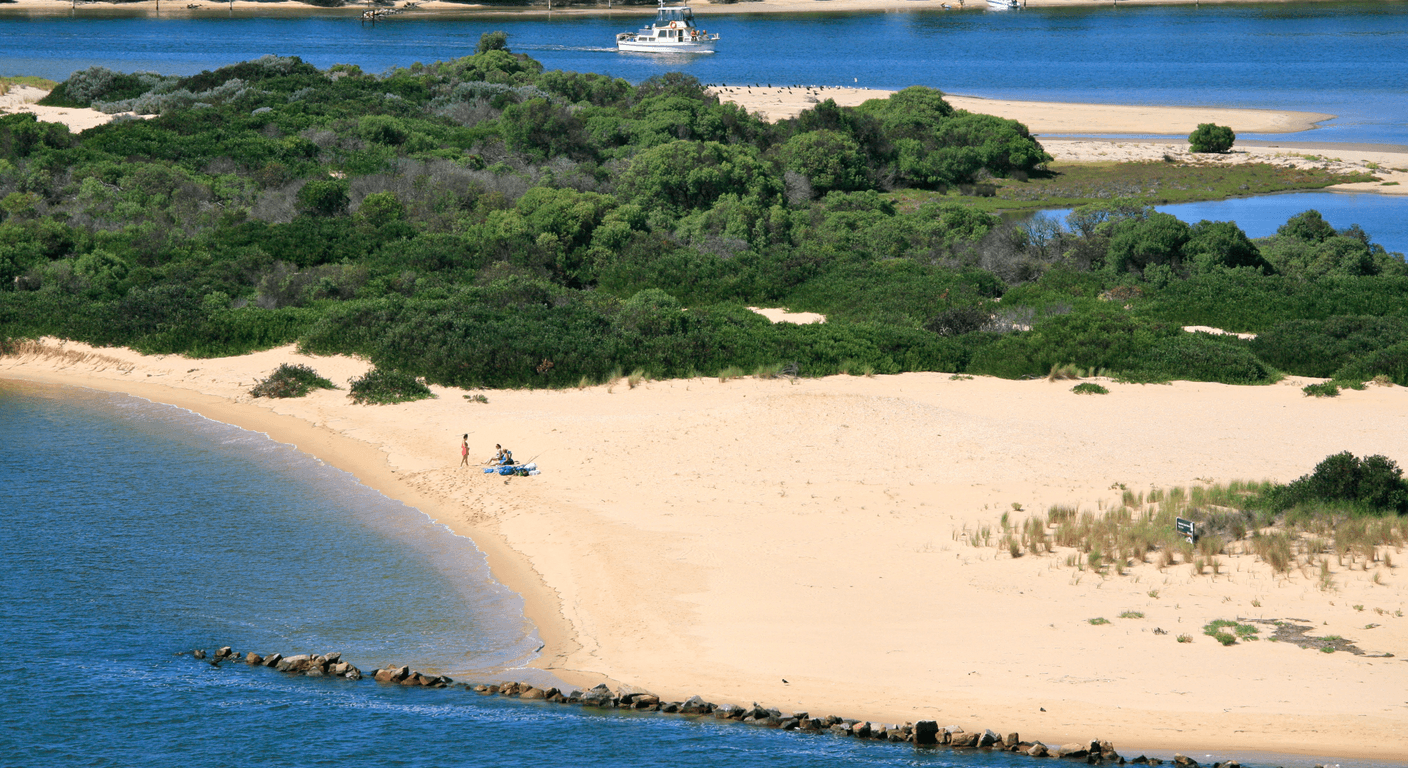
The Gippsland Lakes system — Lakes Entrance, Lake King, Lake Victoria and the connecting channels — is one of the largest coastal lake systems in Australia, and from a kayak it looks extraordinary. The water is typically glass-calm in the early morning, the light on the dunes and the pelicans is genuinely lovely, and the scale of the landscape gives you a sense of being somewhere remote even when you are twenty minutes from a caravan park. This is the destination most Victoria-based paddling guides point to when asked where to take a first-timer who wants to feel genuinely moved by the experience.
Guided tours typically launch from around Lakes Entrance or Paynesville. Paynesville, in particular, has a relaxed, low-key feel that suits independent travellers — there are good cafes, the town is flat and walkable, and accommodation ranges from motels to self-contained units. A half-day paddle from Paynesville might take you through the quiet channels around Raymond Island (home to a well-known koala population) before returning for lunch. The distance from Melbourne is around three hours by car, or you can take a V/Line train to Bairnsdale and arrange a transfer or hire car from there.
The Gippsland Lakes Coastal Park is managed by Parks Victoria. The launch areas have been progressively improved and most have firm, flat surfaces rather than muddy banks — helpful for anyone whose knees prefer a predictable surface. Wind is the main variable in this region; morning starts are almost always calmer than afternoon, and a good operator will advise accordingly.
Western Port's mangrove channels: quiet water, birdlife and genuine solitude
Western Port Bay, roughly ninety minutes south-east of Melbourne via the Mornington Peninsula Freeway, contains some of the most protected mangrove paddling in Victoria. The channels around Hastings, Tooradin and the northern shore of French Island are narrow, sheltered and almost entirely flat regardless of what the bay itself is doing. Paddling through mangroves is a different sensory experience from open water — the canopy closes in, the sounds change, and the birdlife (herons, ibis, cormorants, the occasional sea eagle) is close and unhurried.
This region is less well-known than the Gippsland Lakes for kayaking, which means tours tend to be smaller and the atmosphere is quieter. It suits travellers who prefer to be away from the more popular circuits. Tooradin, a small town on the northern shore of Western Port, has a boat ramp, a pub and a handful of local operators who run estuary tours. The drive down the South Gippsland Highway is straightforward, and the area can be combined with a stop at the Mornington Peninsula on the way home.
Accessibility at Western Port launch points varies. Some ramps have pontoons or floating docks that allow you to step into the kayak at water level rather than lowering yourself from a bank — worth asking about specifically when booking if getting in and out gracefully is a concern. More on this below.
Getting in and out of a kayak gracefully: the practical details no one tells you
For many over-50 paddlers, the part that feels most uncertain is not the paddling itself but the getting-in and getting-out. The good news is that this is manageable with the right setup, and a quality operator will have thought about it. Pontoon launches — floating docks at water level — allow you to sit on the edge of the dock and swing your legs into the cockpit, rather than stepping down from a bank or wading in. If this matters to you, ask the operator directly before booking: 'Do you use a pontoon launch, or do I need to step off a bank?'
Double kayaks are significantly more stable than single kayaks; for a first-timer or someone returning to paddling after years away, they are the right choice. You sit slightly reclined with your back supported, knees gently bent, and paddle with a low, relaxed stroke rather than a powerful one. The shoulder is the joint most commonly mentioned by older paddlers as the one to be aware of — if you have a rotator cuff history or recent shoulder surgery, have a conversation with your GP before booking and tell the operator. This guide is not medical advice, but the honest note is that paddling for two or three hours does use the shoulders and upper back repetitively.
What to wear: quick-dry synthetic or merino layers rather than cotton, which becomes heavy and cold if wet. Secure footwear you do not mind getting wet — old runners or neoprene water shoes. A hat with a brim and a chin strap or toggle (wind takes hats). Sunscreen applied before you arrive, including the backs of your hands. Polarised sunglasses reduce glare off the water significantly. Most operators provide or sell wet weather ponchos if the forecast changes.
Noosa Everglades: the bucket-list mention for when you head north
The Noosa Everglades in Queensland are not Victoria, but they deserve a mention in any guide aimed at Australian travellers over fifty who are thinking seriously about kayaking. The Everglades — the upper reaches of the Noosa River system in Great Sandy National Park — are one of only two everglades systems in the world (the other being in Florida), and paddling them is genuinely unlike anything available in Victoria. The water is tannin-dark, the reflections are mirror-perfect, the tea trees press close, and the silence is almost complete.
Guided overnight and multi-day tours from Noosa are well-established, but a half-day option is also available for those who want the experience without committing to camping. Several Noosa-based operators run guided half-day tours into Lake Cootharaba and the lower Everglades, returning by lunchtime. The drive or fly to Noosa from Melbourne is straightforward, and the town has excellent accommodation at every price point. This is the kind of paddling that stays with you — the sort of day that justifies planning a trip around it.
For Victorian travellers, the Noosa Everglades trip works well as part of a longer Queensland stay rather than a standalone journey. Combine it with a few nights on the Sunshine Coast, where the pace is slower than the Gold Coast and the dining options are genuinely good. Tourism Noosa (tourism.noosa.com.au) lists accredited guided tour operators in the region; look for those with experience guiding groups of mixed fitness levels.
Key takeaways
- Flat-water kayaking on guided tours is suited to over-50 beginners: stable double kayaks, all gear supplied, no prior experience needed.
- Indicative half-day tour costs in Victoria run roughly $80–$150 per person; always confirm current pricing directly with operators.
- The Gippsland Lakes and Western Port mangrove channels are Victoria's most rewarding flat-water paddling destinations for older beginners.
- Pontoon launches make getting in and out of a kayak significantly easier — ask operators specifically whether they use one before booking.
- Shoulders and upper back do the work in kayaking; anyone with a rotator cuff history should speak to their GP first and inform the operator.
- The Noosa Everglades in Queensland is a genuine bucket-list flat-water paddle and accessible as a half-day guided tour from Noosa township.
Recommended partners and links
Indicative prices only — always confirm with the operator before booking.
Frequently asked questions
Do I need kayaking experience to join a guided flat-water tour in Victoria?
No prior experience is needed for guided flat-water tours. Operators provide a full briefing on shore covering basic paddle technique, posture and safety before you get on the water. Most tours use wide, stable double kayaks that are forgiving for first-timers.
How physically demanding is a half-day flat-water kayak tour?
A half-day flat-water tour involves two to three hours of gentle, rhythmic paddling at a conversational pace. It is low-impact on knees and hips but does use the shoulders and upper back. Anyone with a recent shoulder injury or surgery should consult their GP before booking and mention it to the operator.
What is the best season for flat-water kayaking in Victoria?
Spring (October–November) and autumn (March–May) offer the most reliable conditions in Victoria: mild temperatures, calmer winds and manageable daylight hours. Summer is warm but afternoon sea breezes can make open sections choppy; winter tours run but require warmer layering and shorter windows of comfortable paddling.
How do I get into a kayak if I have limited mobility or knee problems?
Ask operators whether they use a pontoon or floating dock launch, which allows you to sit on the edge and swing your legs into the cockpit rather than stepping down from a bank. This is a practical and important question to ask before booking, and a good operator will give you a direct, honest answer.
Can I do a guided kayak tour on the Gippsland Lakes without a car?
V/Line trains run from Melbourne Southern Cross Station to Bairnsdale, which is the main town near the Lakes Entrance and Paynesville area. From Bairnsdale you would need to arrange a hire car or taxi transfer to the launch point, as local public transport connections are limited. Check vline.com.au for current timetables and confirm transfer options with your tour operator.
Got a tip, a price update or a story from this route? The community would love to hear it.
Share your views on our Facebook page— Seniors and Solo Traveller Stories