The Coorong is a 130-kilometre stretch of lagoons, dunes and wetlands south of Adelaide, protected under both Australian and international wildlife agreements. For over-50 travellers who value wildlife and wide, quiet landscapes over crowds, it delivers a genuinely memorable day without demanding long walks or strenuous effort. This guide covers the most accessible entry points, a boat cruise option, the two main driving routes, and what to realistically expect in a day.
What exactly is the Coorong, and why does it matter?
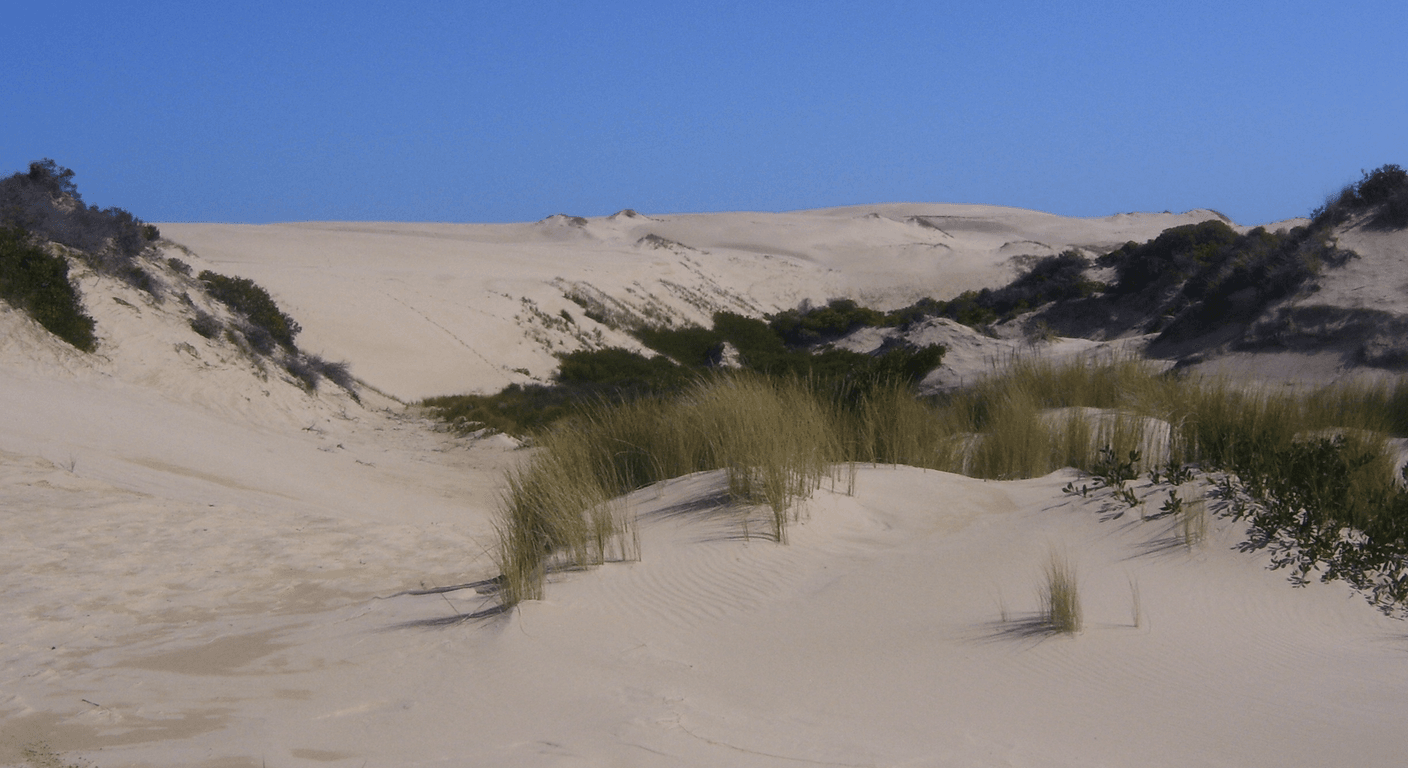
The Coorong is a long, slender system of lagoons and estuaries that runs roughly parallel to the South Australian coast south-east of Adelaide, separated from the Southern Ocean by the Younghusband Peninsula — a narrow strip of sand dunes. It forms part of Coorong National Park and sits at the mouth of the Murray River, which is itself one of the great waterways of the Australian continent. The area holds Ramsar wetland status, meaning it is internationally recognised as a site of ecological significance, particularly for migratory wading birds.
For travellers who have spent time around coastal wetlands in Victoria — the Gippsland Lakes, say, or Corner Inlet — the Coorong will feel familiar in spirit but quite different in scale and character. It is drier, more exposed, and carries a particular stillness. The birdlife is extraordinary in density if not always in obvious display: pelicans, ibis, spoonbills, stilts, and dozens of migratory species use these waters as a feeding and resting ground. The landscape was also central to the culture of the Ngarrindjeri people for thousands of years, and that history is present in the names, stories, and interpretation you encounter here.
A day trip does not exhaust the Coorong — the park is too large and varied for that — but it gives you a solid, satisfying encounter with the place. Most over-50 visitors find that one well-chosen stop for a walk, combined with a cruise or a long scenic drive, makes for a full and unhurried day.
How do you get to the Coorong from Adelaide?
Adelaide sits roughly two hours from the northern end of the Coorong by car, depending on which route you take and where you stop. There is no direct public transport to the national park itself, so for a day trip from Adelaide — or from a regional base like Victor Harbor or Goolwa — a hire car or your own vehicle is the practical choice. Travellers based in Victoria who are making a longer South Australian trip often approach from the east via the Princes Highway, which runs alongside sections of the Coorong on its way toward Meningie.
The two most useful driving approaches for a day trip are the Fleurieu Peninsula route and the inland route via the Murray Mouth. The Fleurieu route takes you south from Adelaide through McLaren Vale and Victor Harbor, then along the Encounter Coast to Goolwa and across the Hindmarsh Island bridge — this is the more scenic of the two and passes through attractive small towns. From Goolwa, you follow the road along the south side of Lake Alexandrina toward the Murray Mouth area, where the river meets the sea. It is a beautiful, low-traffic drive.
The inland route follows the South Eastern Freeway out of Adelaide and then the Princes Highway south through Tailem Bend and on toward Meningie, which sits on the western shore of Lake Albert. This road runs close to the Coorong for a long stretch and gives you good views of the lagoon from the highway itself. Many couples do a loop — in via one route, back via the other — which works well and avoids repetition. Confirm current road conditions with the South Australian Department for Infrastructure and Transport before travelling, particularly if you plan to use any unsealed tracks within the park.
Which lookouts and boardwalks are manageable for older travellers?
Accessibility at the Coorong ranges from very easy to quite demanding, and it is worth being selective. The Salt Creek Visitor Area, roughly halfway along the Princes Highway section of the park, has a short boardwalk trail and interpretive signage that most people with reasonable mobility will manage comfortably. The terrain is flat, the surface is firm, and the views across the lagoon are rewarding without requiring any significant distance. This is a good first stop if you are approaching from the Meningie direction.
Near Goolwa, the Hindmarsh Island area and the lookout points around the Murray Mouth offer excellent views of the river-meets-sea landscape with minimal walking. The Goolwa Barrage — a series of water control structures across the Murray's distributary channels — is accessible from the road and interesting to walk along at a slow pace. The Barrage area has parking close by and the walking surface is level. Pelicans are almost always visible here. This is a particularly good stop for couples who want to take their time without feeling rushed by terrain.
Meningie itself, a small town on the lake, has a foreshore area that is easy to walk and gives a good sense of the broader landscape. The town has a café and basic facilities, making it a practical lunch stop. Parks SA publishes accessibility information for Coorong National Park on their website; it is worth checking before you go, as facilities and track conditions can change seasonally.
Is a boat cruise worth doing, and what should you expect?
A cruise on the Coorong lagoon adds a dimension that a drive simply cannot. From the water, the scale of the system becomes clearer, the birdlife comes much closer, and the dune peninsula separating the lagoon from the ocean looks genuinely dramatic. Coorong Wilderness Cruises, operating out of Goolwa, is a well-established operator with a long history on these waters. Their cruises typically run for several hours and include commentary on the ecology and Ngarrindjeri culture. Indicative pricing is in the range of $100–$130 per person, but you should confirm current rates and availability directly with the operator, as schedules vary by season.
For couples who are not keen on long walks, a cruise can be the centrepiece of the day rather than an add-on. The boats are generally comfortable and do not require passengers to be particularly agile to board, though it is sensible to ask the operator about boarding conditions when you book, particularly if either person has hip or knee concerns. Mornings tend to offer calmer water and better light for bird observation. The Coorong can be windy, especially in the afternoon, so layering is wise regardless of the season.
It is worth noting that cruise numbers are not enormous, so this is not a crowded or rushed experience. The pace suits travellers who want to observe and reflect rather than tick off sights at speed. If you are travelling from Victoria specifically to see the Coorong, combining a morning cruise with an afternoon drive along the Princes Highway gives you a well-rounded picture of the whole system.
What wildlife can you realistically expect to see?
The Coorong's reputation rests substantially on its birdlife, and it does not disappoint. Australian pelicans are abundant and visible almost anywhere along the lagoon — they gather in large groups and are entirely unperturbed by calm human observation. Wading birds including the royal spoonbill, ibis, and a range of stilts and sandpipers work the shallow water at the lagoon edges. If you are visiting between October and March, migratory shorebirds from the northern hemisphere add considerably to the variety.
Kangaroos and emus are present in the park and are sometimes seen from the road, particularly in the early morning or late afternoon. The park is also home to southern hairy-nosed wombats in some areas, though these are shy and mostly nocturnal. Fish — including mullet and bream — move through the system, and the Murray Mouth area has historically been significant for both recreational and Indigenous fishing.
Managing expectations honestly: the Coorong is not a zoo or a curated wildlife encounter. On some days the birds are immediately obvious; on others you need to be patient and look carefully. Binoculars are genuinely useful here, and a basic field guide to Australian birds adds considerably to the experience. The landscape itself — the long flat light, the dunes, the silences — is part of what people come for, and that is always present.
Where do you stop for food, and what are the practical logistics?
The Coorong is not well served by food options within the park itself, so planning ahead matters. Goolwa has a good selection of cafés and a bakery, and it is an appealing town to spend an hour in — the historic wharf precinct along the Murray is worth a short walk. Victor Harbor, if you are taking the Fleurieu route, has more options including some comfortable spots suited to a relaxed lunch. Meningie has basic café facilities and is a practical midday stop if you are on the Princes Highway route.
Packing a thermos and some food from Adelaide is a sensible fallback, particularly if you are planning an early start for a morning cruise. Toilet facilities are available at Salt Creek, Meningie foreshore, and Goolwa, but are limited or absent at more remote points within the park. Fuel up in Adelaide or a regional town before entering the park — there are no petrol stations within the national park itself.
Mobile phone coverage is patchy to absent in parts of the Coorong. Download offline maps before you leave, and let someone know your rough itinerary if you are travelling without a companion. The roads within and around the park are generally good on the sealed sections, but some access tracks are unsealed and best avoided in a standard hire car after rain. Always check with Parks SA for current access conditions.
How does this day trip suit a couple travelling together?
The Coorong works particularly well for couples who share an interest in natural environments and are comfortable with a day that has a slower, more contemplative rhythm. There is no single 'main attraction' demanding a queue or a performance time — the day unfolds according to your own pace and interests. That suits many over-50 travellers well, especially those who have moved past the phase of racing through itineraries.
For couples where one person has more mobility or stamina than the other, the mix of drive-to viewpoints, short boardwalks, and a seated boat cruise means both people can engage without one feeling held back or the other feeling pushed. It is the kind of day where sitting in the car with the window down, watching pelicans work a shallow bay twenty metres away, counts as a genuine highlight rather than a consolation.
If you are based in Victoria and considering the Coorong as part of a broader South Australian trip, it pairs naturally with a night or two in the Fleurieu Peninsula wine country — McLaren Vale is comfortable and has good accommodation suited to couples — before heading south to the Coorong and then back to Adelaide. That broader itinerary gives the day trip proper context and avoids the pressure of a very long single day of driving.
Key takeaways
- The Coorong is around two hours from Adelaide by car and has no direct public transport access, making a hire car or private vehicle essential for a day trip.
- Salt Creek Visitor Area and the Goolwa Barrage area offer accessible, flat walking options that suit older travellers with varying mobility levels.
- A Coorong boat cruise with an established operator like Coorong Wilderness Cruises adds a close-water perspective that a road trip alone cannot replicate.
- Australian pelicans are the most reliably visible wildlife; binoculars significantly improve the birdwatching experience across the lagoon system.
- Food and fuel options are limited within the park — plan to carry supplies or stop in Goolwa, Meningie, or Victor Harbor.
- A loop drive combining the Fleurieu Peninsula route in with the Princes Highway route back gives the most complete picture of the Coorong in a single day.
Recommended partners and links
Indicative prices only — always confirm with the operator before booking.
Frequently asked questions
Can you visit the Coorong as a day trip from Adelaide?
Yes. The northern entry points of the Coorong are roughly two hours from Adelaide by car. A day trip is very manageable if you pick one or two key stops — such as the Goolwa Barrage area and Salt Creek — and combine them with a boat cruise or a scenic drive along the Princes Highway.
Is the Coorong accessible for seniors or travellers with limited mobility?
Several areas are accessible without demanding significant walking. The Salt Creek boardwalk is flat and short, the Goolwa Barrage area has level surfaces and close parking, and a boat cruise allows you to see the lagoon from a seated position on the water. Confirm specific accessibility details with Parks SA before visiting, as conditions can change.
Do you need to pay to enter Coorong National Park?
A vehicle entry fee may apply for Coorong National Park. Current fees should be confirmed with Parks SA at parks.sa.gov.au before your visit, as pricing is subject to change.
What is the best time of year to visit the Coorong?
Spring (September to November) and autumn (March to May) offer mild temperatures and good birdwatching conditions. Summer can be very hot and windy. Winter visits are possible and often quiet, but afternoon winds can be cold on the water. Migratory shorebirds are present from roughly October through March.
Is mobile phone reception reliable in the Coorong?
Coverage is unreliable to absent in much of the Coorong National Park. Download offline maps before you leave, carry a paper map as backup, and inform someone of your planned route and return time, particularly if travelling without a companion.
Got a tip, a price update or a story from this route? The community would love to hear it.
Share your views on our Facebook page— Seniors and Solo Traveller Stories