Bruny Island, a short ferry crossing from Kettering south of Hobart, packs a serious food trail into one long day: local cheese, cold-water oysters, small-batch whisky, and a scenic pause at The Neck. For travellers aged 60 and over who enjoy a relaxed pace with genuine produce at its source, this is one of Tasmania's most satisfying day trips.
Why Bruny Island Works So Well as a Food Day Trip
There are day trips, and then there are day trips that feel like a proper occasion. Bruny Island falls firmly into the second category. Just south of Hobart, it combines a genuine ferry crossing, world-class cool-climate produce, and enough open road to feel like you have left the crowds well behind — without the exhaustion of a long-haul drive.
For travellers in their sixties and seventies, particularly those travelling as a couple, the pace works well. You are not rushing between attractions on a fixed tour bus schedule. You drive your own car onto the ferry, cross in about 15 minutes, and then move between producers at whatever speed suits you. A leisurely morning with cheese and oysters, a midday pause at The Neck, and a whisky tasting in the afternoon before the return ferry — it is a day that feels both indulgent and unhurried.
The island divides into North Bruny and South Bruny, connected by a narrow isthmus called The Neck. Most of the food producers are clustered in the south, which means you will do some driving on unsealed or narrow roads. That is worth knowing in advance, not as a deterrent, but as practical information for pacing the day.
Getting to Kettering: The Drive from Hobart
The Kettering ferry terminal sits roughly 35 kilometres south of Hobart's city centre, which translates to around 40 to 50 minutes by car depending on traffic. You take the Channel Highway south through Margate and Kingston — a pleasant drive through small townships with water views appearing as you approach Kettering. There is no rail or regular public bus service that connects conveniently to the ferry, so having a car is effectively essential for this particular day trip.
Parking at Kettering is available near the terminal. The ferry is operated by Sealink Tasmania, and vehicles drive on and off at both ends — no reversing or complicated manoeuvres required. The crossing to Roberts Point on Bruny Island takes around 15 minutes, and ferries run throughout the day at regular intervals. It is worth checking the current timetable on the Sealink website before you go, particularly for the last return sailing, so you are not caught short in the afternoon.
If you are travelling from Melbourne, Hobart is the base. A direct flight from Melbourne to Hobart takes roughly one hour, and car hire is straightforward from the airport. Many travellers choose to stay a night or two in Hobart before tackling Bruny Island as a full day excursion — that approach suits the pace well and leaves time to enjoy Salamanca Market or the waterfront without feeling rushed.
On the Ferry: What the Crossing Is Like
The Bruny Island ferry crossing is short — around 15 minutes — but it signals a genuine shift in atmosphere. You drive your car into the hull, step up to the passenger deck, and watch the D'Entrecasteaux Channel pass beneath you as North Bruny comes into view. It is not a grand ocean voyage, but it has just enough of that island-arrival feeling to make the day feel special.
Ferry fares are charged per vehicle and include passengers. Indicatively, expect to pay somewhere in the range of $40 to $55 return for a standard vehicle with two passengers, though fares change and you should confirm current pricing directly with Sealink Tasmania before travel. There is no need to pre-book the vehicle ferry for a weekday visit in the quieter months, but in peak summer season (December to February) it is sensible to check whether bookings are advisable.
The passenger deck has seating, shelter, and basic amenities. For travellers who find steps or uneven surfaces a consideration, the boarding ramps vary slightly with tide, so wearing flat, comfortable shoes makes the short walk easier. Staff are generally helpful if you need a moment to settle.
The Food Trail: Cheese, Oysters, and Whisky
Bruny Island Cheese Co. is often the first stop for good reason. Located on the north end of the island not far from the ferry, it produces hand-made cheeses using milk from a small local herd. The tasting room is relaxed and genuinely welcoming — you can work through a platter of their signature styles, pick up accompaniments, and take your time without feeling hurried. Indicative tasting platters run roughly $20 to $30 per person, though you should confirm current pricing directly. The cheese makes an excellent take-home purchase, and they package it well for travel.
Further south, Get Shucked Oyster Farm offers the chance to eat freshwater-cold Bruny Island oysters straight from the lease. The setting is informal and honest — picnic tables, direct views over the channel, and oysters that have not travelled far at all. For travellers who enjoy oysters, this is about as close to the source as it gets in Australia. Prices are indicative and vary by quantity, so check their current menu on arrival or via their website before visiting.
Bruny Island House of Whisky is a destination in its own right, stocking an extensive range of Tasmanian and Australian single malts alongside international expressions. Tastings are available, and the knowledgeable staff can guide you through the differences between distilleries without any pressure to purchase. For a traveller who enjoys whisky, or who wants to bring back something genuinely Tasmanian, this is a considered stop rather than a tourist gimmick. Confirm opening hours before visiting, as they can vary by season.
The Neck: A Scenic Pause Worth Taking
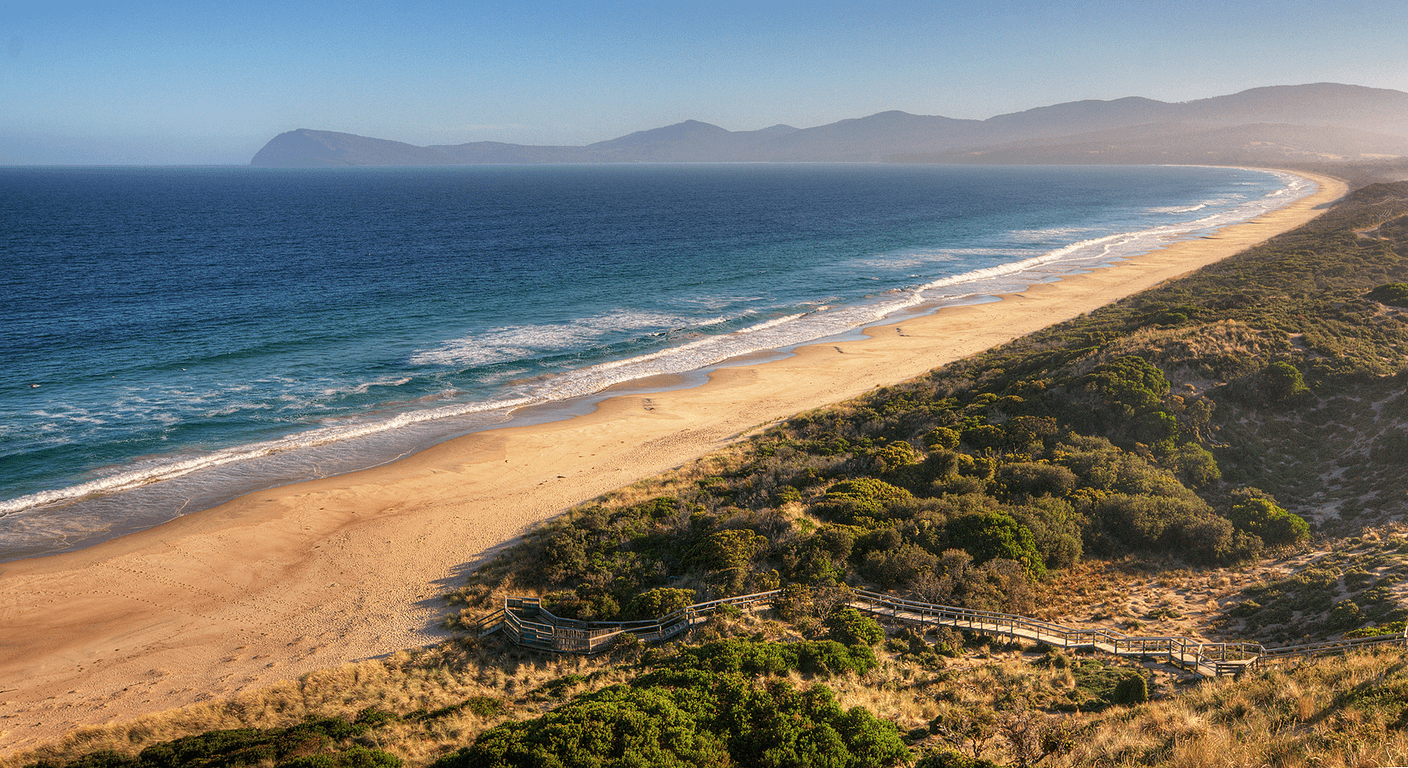
Between North and South Bruny, the land narrows to a thin strip of sand and dune known as The Neck. There is a lookout here, reached by a boardwalk and a set of wooden steps — around 270 steps to the top — that offers views across both sides of the island simultaneously. On one side lies the D'Entrecasteaux Channel, on the other the Southern Ocean. It is a genuinely striking piece of geography.
For travellers with limited mobility or who prefer to avoid steep stair climbs, the base of The Neck is still worth stopping at. The beach itself and the dune vegetation are accessible from the car park, and the view from ground level across the isthmus gives a clear sense of just how narrow this land bridge is. Little penguins nest in burrows along The Neck, and while a daytime visit will not yield penguin sightings (they come ashore after dark), the ecological significance of the site is evident.
Parks Victoria manages conservation areas in Victoria, but The Neck on Bruny Island falls under Parks & Wildlife Service Tasmania. Entry to the lookout area is currently free, though it is worth confirming any changes to access via the Parks & Wildlife Service Tasmania website before your visit. Allow around 30 to 45 minutes here if you are doing the full stair climb, or 15 to 20 minutes for a ground-level stop.
Honest Notes on Driving Distances and Road Conditions
Bruny Island is larger than most people expect from a map. North Bruny is relatively compact and roads are sealed. South Bruny stretches considerably further, and some roads leading to producers or scenic spots are gravel or unsealed. They are generally manageable in a standard car, but if heavy rain has fallen recently, some tracks can become muddy. A standard hire car handles the main routes well; a four-wheel drive is not required for the food trail circuit.
From the ferry terminal to Bruny Island Cheese Co. is a short drive — around five minutes. Getting to Get Shucked in the south takes closer to 30 to 40 minutes. Adding The Neck and the House of Whisky means a day that involves a reasonable amount of driving, perhaps 60 to 80 kilometres on the island in total. For travellers who find long stints behind the wheel tiring, it is worth building in genuine rest stops rather than pushing from one producer to the next.
There are limited petrol facilities on the island, so fill up in Hobart or Kettering before crossing. Mobile phone coverage is patchy in some parts of South Bruny, so downloading an offline map or picking up a local paper map at the ferry terminal is a sensible precaution. Food options beyond the producers themselves are limited, which is actually part of the appeal — the trail is the meal.
Pacing the Day: A Practical Approach for Over-50 Travellers
A comfortable Bruny Island food day starts with an early departure from Hobart — leaving by 8.00 am puts you at Kettering in time for one of the morning ferries. This gives you the bulk of the day on the island before the late-afternoon return crossing. If you prefer a slower morning, a 9.00 am departure still works, but aim to check the last return ferry time so you build in a buffer.
A sensible sequence: cheese tasting first (close to the ferry), then a drive south with a stop at The Neck, oysters at Get Shucked for lunch or an early afternoon snack, and the whisky tasting as a relaxed late-afternoon stop before heading north to the ferry. This structure means you are not doubling back unnecessarily. Comfortable walking shoes, a light layer for the ferry crossing and The Neck lookout, and a cooler bag for cheese purchases round out the practical checklist.
For travellers who find a full day of driving and walking tiring, it is entirely reasonable to visit two or three producers rather than all of them. Bruny Island Cheese Co. and The Neck alone make for a satisfying half-day. The island does not need to be ticked off comprehensively to be enjoyed — picking a pace that suits you is the right approach.
Key takeaways
- The Bruny Island ferry crossing from Kettering takes around 15 minutes and includes your car — no public transport option makes this trip viable without a vehicle.
- Kettering is roughly 40 to 50 minutes by car south of Hobart, making Bruny Island a genuine full-day excursion rather than a half-day.
- The food trail covers Bruny Island Cheese Co., Get Shucked oysters, and Bruny Island House of Whisky — all operating independently with their own opening hours and pricing.
- The Neck lookout involves around 270 steps to the top; the ground-level stop is accessible and still worthwhile for travellers who prefer to avoid the climb.
- South Bruny roads include some unsealed sections — manageable in a standard hire car but worth knowing about before you go.
- Mobile coverage is patchy on parts of the island; download an offline map or collect a paper map at the ferry terminal before heading south.
Recommended partners and links
Indicative prices only — always confirm with the operator before booking.
Frequently asked questions
Do you need to book the Bruny Island ferry in advance?
For weekday visits in the quieter months, advance booking is generally not required for the vehicle ferry. In peak summer season between December and February, it is worth checking with Sealink Tasmania whether bookings are recommended, as demand can be higher. Always confirm the last return sailing time before you start your day.
How much does the Bruny Island ferry cost for a car and two passengers?
Ferry fares are charged per vehicle and include passengers. As an indicative guide, a return crossing for a standard vehicle with two passengers is roughly $40 to $55, but fares change and you should confirm current pricing directly with Sealink Tasmania at sealink.com.au before travel.
Is Bruny Island suitable for travellers with limited mobility?
The food producers — Bruny Island Cheese Co., Get Shucked, and the House of Whisky — are accessible at ground level and do not require significant walking. The Neck lookout involves around 270 steps to reach the top viewpoint, which is not suitable for everyone; however, the base area and beach are reachable from the car park and still offer a sense of the landscape. Roads to some southern attractions are unsealed, which is worth factoring in.
Can you do Bruny Island as a day trip from Hobart without a hire car?
In practical terms, a hire car is essential for this day trip. There is no regular public transport service that connects Hobart to Kettering and then continues onto the island. Some guided day tour operators run Bruny Island excursions from Hobart that include transport — searching current options via Tourism Tasmania's website is a good starting point if driving is not preferred.
What is the best time of year to visit Bruny Island for the food trail?
The food producers operate year-round, making Bruny Island viable in any season. Autumn and spring (March to May, September to November) offer mild weather, fewer crowds than summer, and comfortable conditions for The Neck lookout. Summer is popular but busier. Winter visits are quieter and the landscape has its own appeal, though days are shorter, so an early start matters more.
Got a tip, a price update or a story from this route? The community would love to hear it.
Share your views on our Facebook page— Seniors and Solo Traveller Stories