Australia has a handful of genuine natural hot springs scattered across remote and not-so-remote corners of the country, and several of them are cheap or free to visit. This guide works through six of the best — from the lush tropics of the Northern Territory to a limestone cave pool in southern Tasmania — with honest detail on access, effort, water temperature, and best timing for travellers in their 50s, 60s and 70s.
Why natural hot springs belong on an over-50 travel list
There is something quietly satisfying about lowering yourself into warm water that has been rising through the earth for thousands of years, with no resort branding, no swim-up bar, and no one trying to sell you a package upgrade. Australia's natural thermal springs offer exactly that — and the fact that several cost next to nothing makes them even more appealing for the traveller who prefers spending money on getting there rather than on entry fees.
For travellers aged 60 and over, the appeal is practical as well as atmospheric. Warm water eases stiff joints after long drives, the pacing is entirely your own, and most of these sites sit inside national parks where the surrounds reward a slow walk or a quiet hour with binoculars. None of this is medical advice — if you have a heart condition, circulatory issues, or any health concern affected by heat, check with your doctor before soaking in thermal water. That said, thousands of older Australians visit these places every year without incident.
This guide covers six sites worth building a trip around: Mataranka and Bitter Springs in the Northern Territory, Yarrangobilly Caves thermal pool in the Snowy Mountains, Innot Hot Springs in Far North Queensland, Dalhousie Springs on the edge of the Simpson Desert, and Hastings Caves thermal pool in southern Tasmania. They vary enormously in remoteness, effort, and cost — which is part of the point.
Mataranka and Bitter Springs, Northern Territory: the tropical benchmark
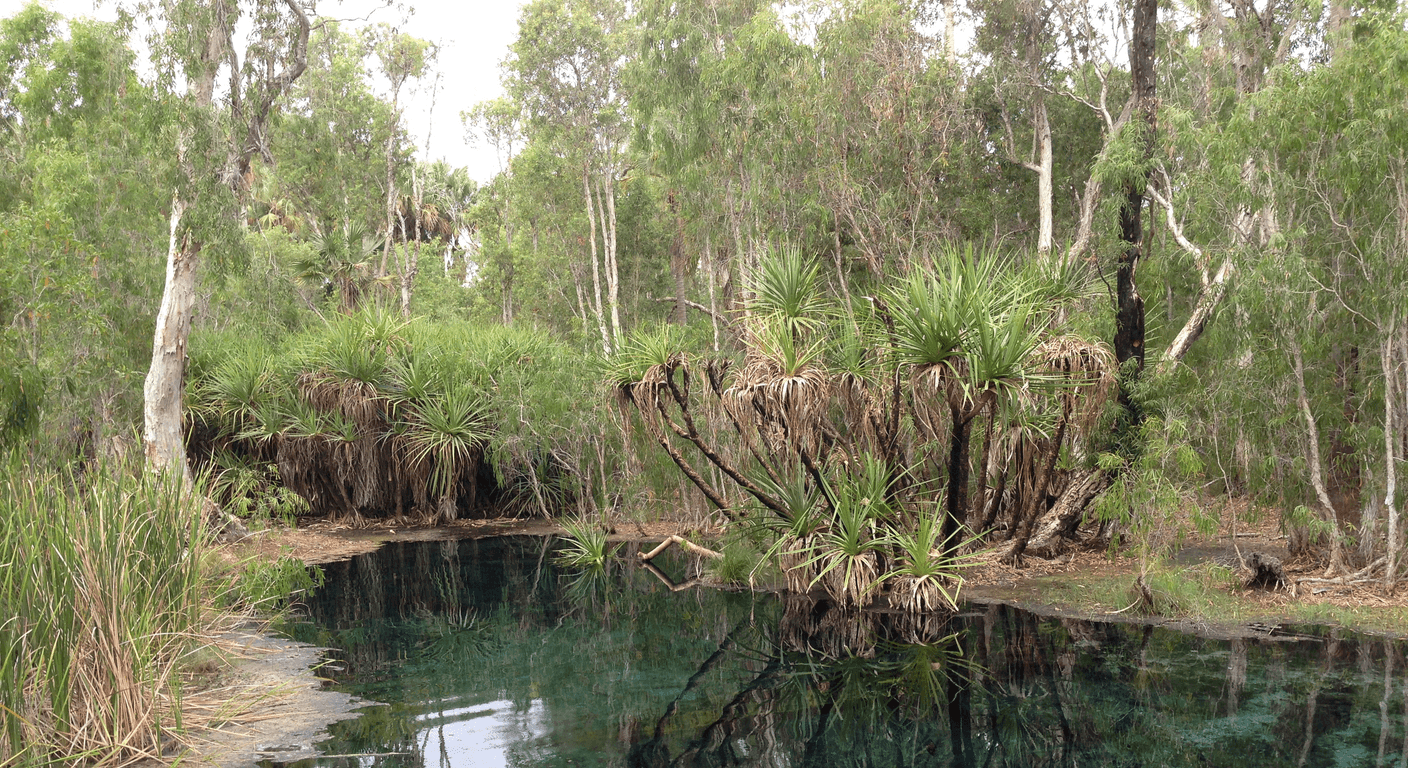
Mataranka sits about 100 kilometres south of Katherine on the Stuart Highway, and its thermal pools have been drawing travellers since the 1920s. The main pool at Elsey National Park — fed by springs that push water up at a consistent 34°C — is set inside a grove of palms and paperbarks that filters the light and keeps the air cool even in the dry season. The water is crystal clear, the current gentle, and the depth ranges from waist-high to over your head depending on where you drift. It is genuinely beautiful without needing any adjectives.
Bitter Springs, a few kilometres away on the Roper Highway, is often preferred by those who have been to Mataranka before. The water is similar in temperature but the experience is different: you can float downstream through a narrow, palm-lined channel, then walk back along the bank and do it again. The current does the work. It is unhurried, low-effort, and one of the more unusual free experiences in the Territory. There are no facilities beyond basic amenities, so bring water, snacks, and sun protection.
The best time to visit is the dry season, roughly May to September, when humidity drops and the water temperature feels perfect against the warm air. The wet season (October to April) brings flooding risks, road closures, and the very real possibility that access is cut. Flying into Katherine from Darwin (around 1 hour by road from Katherine to Mataranka) is the easiest approach for those not driving their own vehicle or campervan. Mataranka has basic accommodation and caravan parks; Katherine has a wider range. Confirm current entry fees and road conditions with Parks NT before travelling.
Yarrangobilly Caves thermal pool, Snowy Mountains NSW: a cold-country surprise
Most people associate thermal springs with tropical or outback settings, which is part of what makes Yarrangobilly such a pleasant surprise. Inside Kosciuszko National Park, about 100 kilometres south of Tumut on the Snowy Mountains Highway, a natural pool fed by 27°C spring water sits at the base of a short walking track through limestone country. The air temperature at this altitude can be brisk even in summer, which makes stepping into the warm water feel like a genuine reward.
The pool is small and the water is not hot — 27°C is warm rather than therapeutic, roughly the temperature of a cool bath. But the setting, inside a limestone gorge with native bush on all sides, is worth the drive alone. The walking track from the car park to the pool is around 500 metres each way, with some steps and an uneven surface, so it is not suitable for anyone with significant mobility limitations. There is no handrail for the full descent; take your time. Swimwear is required and changing facilities are basic.
Yarrangobilly is open year-round, though the Snowy Mountains Highway can be affected by snow and ice in winter — check Live Traffic NSW before heading out. Entry to the thermal pool requires a Kosciuszko National Park vehicle pass plus a small per-person fee; confirm current costs at nationalparks.nsw.gov.au. The nearest town with accommodation is Tumut to the north or Cooma to the east. There are no food or beverage facilities on site, so pack accordingly.
Innot Hot Springs, Far North Queensland: roadside and honest
Innot Hot Springs is a small township on the Atherton Tablelands, roughly 80 kilometres south-west of Cairns, and it is one of the more accessible natural hot spring sites in Australia for independent travellers. The springs emerge from the ground at temperatures ranging from around 50°C to over 60°C in places — genuinely hot, not warm — and flow into the local creek where they mix with cooler water to create a range of temperatures you can test with your foot before committing. Locals have used the area for generations.
The experience here is unpretentious and a little rough around the edges, which is either a plus or a minus depending on what you are looking for. There is no resort, no day spa, and no manicured pool deck. What there is: a creek, some rocks, thermal water, and the sound of the bush. A basic caravan park operates in the area and some travellers base themselves there for a few nights to use the springs morning and evening. The surrounding tablelands — Millaa Millaa Falls, Crater Lakes, and the Atherton Tablelands food trail — give you plenty to do between soaks.
Access is by car; there is no regular public transport to Innot Hot Springs from Cairns. The drive from Cairns takes roughly 90 minutes to two hours depending on your route. The best time to visit is the dry season, May to October, when the Tablelands are at their most temperate. Summer brings humidity and the possibility of heavy rain. Entry to the springs area is generally free or very low cost — confirm the current situation with Tablelands Regional Council or local visitor information before you go, as arrangements can change.
Dalhousie Springs, South Australia: the serious outback option
Dalhousie Springs sits inside Witjira National Park in the far north of South Australia, roughly 700 kilometres north of Coober Pedy and on the edge of the Simpson Desert. It is one of the largest groups of mound springs in the world, fed by the Great Artesian Basin, and the main soaking pool reaches around 38°C — genuinely hot, especially when the desert air is already warm. The setting is extraordinary: flat red country in every direction, a fringe of reeds and coolabah trees, and a silence that takes some getting used to.
This one requires honest planning. The road in — the Oodnadatta Track — is unsealed and can be corrugated, sandy, or worse after rain. A high-clearance 4WD is not optional, it is essential. A solo traveller of any age should carry a satellite communicator (PLB or equivalent), enough water for several days beyond their planned stay, recovery gear, and a realistic understanding of how remote this is. The nearest fuel and supplies are at Oodnadatta, roughly 200 kilometres to the south, and phone coverage is non-existent. None of this is said to discourage the trip — many older travellers make it successfully every year — but it demands preparation that a day trip to the Snowy Mountains does not.
The springs are free to visit; national park fees may apply. There is a basic campsite at Dalhousie with pit toilets but no power or running water — bring everything you need. The best seasons are autumn (April-May) and spring (August-September) when daytime temperatures are manageable. Summer in the far north SA is genuinely dangerous for unprepared travellers. Check road conditions with the South Australian outback road report and inform someone reliable of your itinerary before you leave. For detailed planning, the SA Parks website (parks.sa.gov.au) and the Outback Communities Authority are useful starting points.
Hastings Caves thermal pool, Tasmania: the southern surprise
Tasmania is not the first state that comes to mind for thermal springs, which is precisely why the pool at Hastings Caves is worth knowing about. Located in the Huon Valley, about 100 kilometres south of Hobart, the thermal pool sits beside the Newdegate Cave complex and is fed by water that emerges at a consistent 28°C. Like Yarrangobilly, this is warm rather than hot — more like a heated outdoor swimming pool than a volcanic soak — but the surrounding cool-temperate forest and the general quietness of this corner of Tasmania make it a very pleasant way to spend a couple of hours.
The pool is managed by Parks Tasmania and is open seasonally — generally from around October to April, though you should confirm current opening dates and hours before making the drive. Entry involves a modest fee; current prices are listed at parks.tas.gov.au. The site includes basic change facilities and a picnic area. The walking track from the car park is short and relatively flat, making it one of the more accessible thermal pool experiences in this guide for travellers with mild mobility concerns. The cave tours depart from the same site and are worth combining if you have the energy.
Getting there without a car is difficult; there is no regular public transport from Hobart to Hastings. The drive takes around 90 minutes to two hours. The Huon Valley itself is a worthwhile destination — the apple country around Huonville, the wooden boat scene at Franklin, and the walking tracks around Tahune Forest all add substance to a multi-day trip from Hobart. Accommodation options in the valley range from basic cabins to small guesthouses; Hobart offers the full range.
Practical notes for planning a multi-stop thermal springs trip
None of these six sites are close to each other, which means a trip to multiple springs is either a loop done over several weeks or a series of separate journeys. For a Victorian-based traveller, a logical sequence might be: Yarrangobilly as a long weekend drive from Melbourne; Hastings Caves as part of a Tasmanian road trip; Mataranka and Bitter Springs on a Northern Territory campervan loop; Innot Hot Springs combined with a Cairns-based trip to Far North Queensland; and Dalhousie Springs as a dedicated outback expedition requiring serious preparation and ideally a travel companion or convoy.
Costs vary widely. Yarrangobilly and Hastings Caves have modest entry fees (indicative range: $5–$10 per person, confirm current prices with the respective parks agencies). Mataranka has park entry fees that change periodically — check with Parks NT. Bitter Springs and Innot Hot Springs are currently free or very low cost. Dalhousie Springs has no entry charge though national park fees may apply. Accommodation near each site ranges from free bush camping to guesthouses; budget accordingly and book ahead in peak season, particularly for Tasmania in summer and the NT in the dry season.
A few practical notes that apply across all sites: bring more water than you think you need, particularly in remote areas. Wear reef-safe or plain sunscreen rather than heavily scented products in shared natural pools out of consideration for other visitors and the water quality. If you take regular medication that is affected by heat or dehydration, carry it in a cool bag and stay hydrated. And as noted throughout — this is not medical advice. If you have any doubt about whether thermal soaking is appropriate for your health, speak to your GP before the trip.
Key takeaways
- Bitter Springs in the NT is one of Australia's best free travel experiences — a gentle float downstream through a palm-lined thermal channel.
- Dalhousie Springs on the edge of the Simpson Desert requires a 4WD, a PLB, and serious preparation; it is not a casual detour.
- Yarrangobilly Caves thermal pool in the Snowy Mountains is a genuine surprise — 27°C spring water inside a limestone gorge, a short walk from the car park.
- Innot Hot Springs on the Atherton Tablelands is honest and unpretentious — a creek fed by genuine 50°C-plus springs, with no resort attached.
- Hastings Caves thermal pool in Tasmania is open seasonally and best combined with a Huon Valley road trip from Hobart.
- Several of Australia's best natural hot springs are free or cost under $10 to access — the expense is in getting there, not in entry fees.
Recommended partners and links
Indicative prices only — always confirm with the operator before booking.
Frequently asked questions
Which Australian natural hot spring is easiest to access for older or less mobile travellers?
Hastings Caves thermal pool in Tasmania has a short, relatively flat walk from the car park and basic change facilities, making it one of the more accessible options. Mataranka in the NT is also straightforward — the path to the pool is well-maintained and the terrain is flat. Yarrangobilly in the Snowy Mountains involves steps and uneven ground, which can be difficult for anyone with knee or balance issues.
Is Dalhousie Springs suitable for solo older travellers?
Dalhousie Springs is genuinely remote and requires a high-clearance 4WD, a personal locator beacon or satellite communicator, substantial water and food reserves, and a reliable contact who knows your itinerary. It is not recommended as a solo trip for anyone unfamiliar with outback driving and self-rescue procedures. Travelling with another vehicle or as part of a small convoy is strongly advisable.
What time of year is best to visit the Northern Territory hot springs at Mataranka and Bitter Springs?
The dry season, roughly May to September, is the best time. Humidity is low, temperatures are comfortable, and road access is reliable. The wet season (October to April) brings flooding, road closures, and the risk of access being cut entirely. Most travellers doing a NT road trip time it for June to August.
Are there any medical concerns with soaking in natural hot springs?
This guide does not provide medical advice. Travellers with heart conditions, circulatory problems, low or high blood pressure, or any condition affected by heat or immersion should consult their GP before visiting thermal springs. Stay hydrated, limit your time in the water if you feel lightheaded, and exit slowly — particularly from hotter pools.
How much does it cost to visit Australia's natural hot springs?
Costs vary considerably. Bitter Springs (NT) and Innot Hot Springs (QLD) are currently free or very low cost to access. Yarrangobilly (NSW) and Hastings Caves (TAS) charge indicative fees of around $5–$10 per person, though you should confirm current prices with NSW National Parks and Parks Tasmania respectively. Dalhousie Springs (SA) has no entry fee though national park charges may apply. All figures are indicative — confirm before you travel.
Got a tip, a price update or a story from this route? The community would love to hear it.
Share your views on our Facebook page— Seniors and Solo Traveller Stories
- Parks NT – Elsey National Park (Mataranka)
- NSW National Parks – Yarrangobilly Caves, Kosciuszko National Park
- SA Parks – Dalhousie Springs, Witjira National Park
- Parks Tasmania – Hastings Caves and Thermal Springs
- Tourism NT – Bitter Springs
- Tropical North Queensland – Innot Hot Springs
- Visit Victoria – wellness and nature travel