Adelaide Central Market is one of the finest undercover produce markets in the Southern Hemisphere, and when you pair it with a Chinatown wander and a relaxed lunch on Rundle Street's East End, you have a full day that feeds both appetite and curiosity. For travellers who take food seriously — and know the difference between a good pecorino and a mediocre one — this corner of Adelaide delivers. The day is largely walkable, mostly low-cost, and paced comfortably for those who prefer to linger rather than rush.
Why Adelaide suits a food-focused day for older travellers
Adelaide has a particular quality that suits travellers who are done with rushing. The city is compact, the locals are unhurried, and the food culture has genuine depth — not the performed kind. For someone who grew up eating well and knows what fresh actually means, the Adelaide Central Market is the kind of place that earns genuine respect rather than polite admiration.
The day outlined here — market in the morning, Chinatown at midday, East End in the afternoon — covers no more than two kilometres of walking in total, with plenty of natural pauses built in. You can do it all on foot from the CBD, or use Adelaide's free city tram to save your legs for the parts that matter. There are seats, shade, and cafés at every turn.
For a solo traveller, Adelaide has another advantage: it feels safe and easy to navigate alone. The Central Market in particular has a communal, convivial atmosphere where striking up a conversation with a stallholder about their olives or their sourdough is completely natural. You are not a tourist here; you are a customer who knows what they are looking at.
Getting to the Central Market: tram, bus, and parking
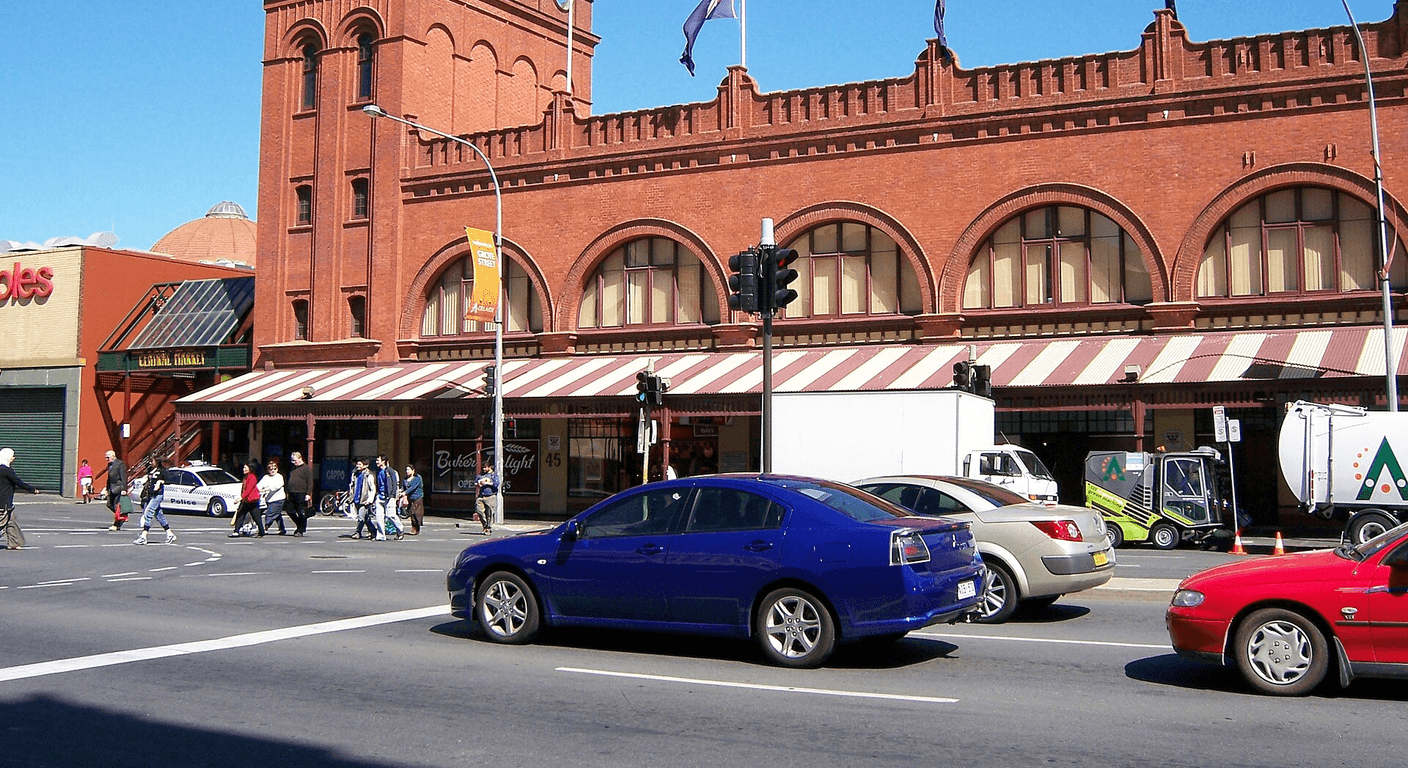
The Adelaide Central Market sits on Gouger Street, just south of the CBD grid, between Grote Street and Gouger Street in the city's market precinct. The free City Connector tram (part of the Adelaide Metro network) runs along King William Street and is the easiest option from most CBD hotels. Alight at the Stop 9 – Central Market / Adelaide Casino stop on King William Street and it is a short, flat walk west to the market entrance on Gouger Street. Confirm current tram routes and stops at adelaidemetro.com.au before you travel, as service patterns do occasionally change.
Several bus routes also serve the area, and the Central Bus Station on Franklin Street is nearby for those arriving from further afield. Paid parking is available in the Gouger Street Car Park beneath the market, which is useful if you are driving in from regional South Australia or a suburban base, though spaces fill quickly on market mornings. If you are staying in the CBD, walking or the tram is the more comfortable and stress-free choice.
Accessibility is reasonable throughout the market precinct. The main market hall is on one level with wide aisles, though some sections near the perimeter stalls can become congested on peak days. The Chinatown laneways just to the north are flat and paved. Rundle Street East is a standard footpath with kerb cuts at crossings. Anyone using a walking stick or preferring to avoid crowds will find a Tuesday or Thursday morning visit considerably more comfortable than a Saturday.
Morning at Adelaide Central Market: what to look for and when to arrive
The Central Market opens Tuesday to Friday from around 7am and Saturday from around 7am, closing in the early afternoon on most days (hours vary by day and stallholder, so check the current schedule at adelaidecentralmarket.com.au before visiting). For a relaxed experience without the Saturday shoulder-to-shoulder crowds, a Tuesday or Wednesday morning between 8am and 10am is close to ideal. The light is good, the stallholders are attentive, and you can actually stop and look at things.
The market has more than 70 stalls, ranging from fruit and vegetable growers to artisan cheese counters, smallgoods, seafood, bakers, coffee roasters, and small eat-in food stalls. For a traveller with a background in Italian-Australian cooking, the produce quality here is worth noting: you will find varieties of tomato, eggplant, and leafy greens that simply do not appear in supermarkets, alongside local olive oils, aged balsamic-style vinegars, and house-made pasta from a handful of specialist stalls. The Central Market Arcade connects through to Gouger Street and houses additional food retailers and a good coffee bar.
Budget around $15 to $25 for a morning of grazing and small purchases — a pastry and coffee at one of the café stalls, a small piece of aged cheese, perhaps a bag of stone fruit or figs in season. This is not a market where you need to spend much to feel satisfied. It is worth allowing at least 90 minutes here, not because there is a checklist to complete, but because the pleasure is in the unhurried looking.
Chinatown Adelaide: a short walk with genuine character
Directly adjacent to the Central Market, running through Moonta Street and Gouger Street itself, is Adelaide's Chinatown precinct — one of the oldest in Australia and a working neighbourhood rather than a tourist set piece. The short walk from the market's northern entrance takes you through the ceremonial gateway arch on Moonta Street and into a strip of roast meat shops, herbal medicine dispensaries, Asian grocery stores, and dim sum restaurants.
For a mid-morning pause, several of the Chinatown bakeries sell fresh pork buns, egg tarts, and sesame balls at prices that sit well under $5 each. The grocery stores are worth a look even if you are not buying — the variety of dried mushrooms, preserved vegetables, and fresh tofu can be genuinely interesting for anyone curious about ingredients. Prices here are among the most reasonable in the city.
The laneways are compact and the footpaths can be uneven in a couple of spots, so take your time. On weekday mornings the precinct has a quiet, purposeful atmosphere — locals shopping, restaurant staff preparing for lunch service. It is not a performance for visitors, which is exactly what makes it worth the detour. Allow 30 to 45 minutes here before making your way east toward lunch.
Lunch on Rundle Street East: what the East End offers
Rundle Street East — the stretch of Rundle Street roughly between Frome Street and East Terrace — is Adelaide's most established outdoor dining strip and has been a reliable lunch destination for decades. It is not the flashiest part of Adelaide's food scene, but it has continuity and genuine neighbourhood character. The street is lined with plane trees, and the footpath tables are pleasant from late morning through early afternoon when the sun is not yet fierce.
The range of venues covers Lebanese, modern Australian, Italian, Thai, and Greek, with several long-running spots that have earned their regulars honestly. Lunch main courses at most venues run roughly $22 to $35 indicative, though several places offer set lunch menus or daily specials that come in lower — always worth asking. For a lighter option, a few providores and deli-style spots on the street sell antipasto plates, cheese boards, and good bread that you can take to one of the park benches nearby in Rundle Park (also called Kadlitpina).
A note on timing: Rundle Street East is noticeably quieter on weekday lunchtimes than on Friday evenings or Sunday sessions. If you are visiting midweek, arriving between noon and 1pm means you can choose your table rather than queue for one. Solo diners are genuinely welcome at the bar seats or window tables of most venues here — this is not a street that makes single diners feel conspicuous.
Coffee culture and afternoon options
Adelaide takes its coffee seriously, and the Central Market precinct and Rundle Street both have strong options. Within the market itself, several roaster-retailers operate small espresso bars where the coffee is made by people who care about it. The East End has a number of independent cafés along and just off Rundle Street where a flat white or long black is a genuine pleasure rather than an afterthought.
If the afternoon stretches pleasantly, Rundle Park at the eastern end of Rundle Street is a well-maintained open green space with good shade and seating — a comfortable place to sit with a takeaway coffee and do nothing in particular for half an hour. The South Australian Museum and the Art Gallery of South Australia are a short walk further west along North Terrace, both free to enter, and both worth knowing about if the afternoon heat or tiredness suggests moving indoors.
For those wanting to extend the food theme, the Central Market runs guided tours on selected days (check the market website for current tour schedules and prices, which are indicative around $30–$40 per person). These are led by stallholders and cover the history of the market as well as tastings, and they move at a comfortable pace. Booking ahead is advisable as group sizes are limited.
Practical tips: timing, comfort, and what to bring
The single most useful timing decision is to avoid Saturday mornings if crowds and noise affect your enjoyment. The Central Market on a Saturday is lively to the point of being difficult to move through comfortably, particularly in the central produce aisles. Tuesday, Wednesday, and Thursday mornings offer the same produce and stallholders with a fraction of the pressure. The market is closed on Sundays and Mondays, so plan accordingly.
Wear comfortable, flat shoes — the market floor is smooth but the Chinatown laneways and some Rundle Street sections have older pavement. Bring a small insulated shopping bag or a compact tote if you plan to purchase cheese, smallgoods, or anything perishable; the market sells bags at the entrance but bringing your own is more practical. A small water bottle is worth having, particularly in warmer months when Adelaide's heat can be significant.
For solo travellers, the day is structured so that you are always in well-populated public spaces with easy access to seating, toilets (available inside the Central Market and in Rundle Park), and transport back to the CBD. The free tram along King William Street runs frequently and is a reliable fallback if fatigue sets in earlier than expected. There is no obligation to do the full day — even three hours at the market and a quiet lunch on Rundle Street makes for a very satisfying visit.
Key takeaways
- Adelaide Central Market is open Tuesday to Saturday and is significantly quieter — and more enjoyable — on a weekday morning than on Saturdays.
- The free City Connector tram along King William Street connects the CBD to the Central Market precinct with no fare required; confirm current routes at adelaidemetro.com.au.
- A morning of grazing at the Central Market — coffee, pastry, cheese tasting — can be done comfortably for under $20 indicative.
- Adelaide's Chinatown, directly adjacent to the market on Moonta Street, is a working neighbourhood precinct with genuine produce stores and bakeries rather than a tourist construction.
- Rundle Street East is most comfortable for solo diners on weekday lunchtimes, when tables are available without queuing and the atmosphere is unhurried.
- The full day covers under two kilometres of flat walking and includes multiple natural rest points, making it well-suited to travellers who prefer a comfortable, unrushed pace.
Recommended partners and links
Indicative prices only — always confirm with the operator before booking.
Frequently asked questions
What days is Adelaide Central Market open?
Adelaide Central Market is generally open Tuesday to Saturday; it is closed on Sundays and Mondays. Opening and closing times vary by day — Tuesday and Thursday typically open around 7am and close in the early afternoon, while Saturday hours are similar but the market becomes very busy. Always confirm current trading hours at adelaidecentralmarket.com.au before your visit, as individual stallholder hours can differ.
How do you get to Adelaide Central Market on public transport?
The Adelaide Metro free City Connector tram runs along King William Street through the CBD; alight at Stop 9 (Central Market / Adelaide Casino) and walk a short distance west to the Gouger Street entrance. Several bus routes also serve the area. Confirm current routes, stops, and fares at adelaidemetro.com.au, as service details can change.
Is Adelaide Central Market accessible for travellers with mobility considerations?
The main market hall is on a single level with wide central aisles and is generally accessible for those using walking aids or preferring flat surfaces. Some perimeter sections can become congested on busy days. The adjacent Chinatown laneways are flat but have older pavement in places. Visiting on a Tuesday or Wednesday morning significantly reduces crowd pressure and makes the experience more comfortable.
What is the East End of Rundle Street and where does it start?
Rundle Street East refers to the section of Rundle Street roughly between Frome Street and East Terrace in Adelaide's CBD fringe, east of the main Rundle Mall shopping precinct. It is a tree-lined outdoor dining and café strip with a mix of cuisines. It is walkable from the Central Market in around 15 minutes heading east, or accessible by tram to the Rundle Street area.
Can you do this food day on a budget of under $50?
Yes, comfortably. A coffee and pastry at the Central Market runs around $8–$12 indicative, small produce or cheese purchases add another $10–$15, and a set lunch or lighter meal on Rundle Street East can be found for around $20–$28 at several venues. Tram travel within the CBD free zone adds nothing to the cost. All figures are indicative; confirm current prices with individual stallholders and venues.
Got a tip, a price update or a story from this route? The community would love to hear it.
Share your views on our Facebook page— Seniors and Solo Traveller Stories